

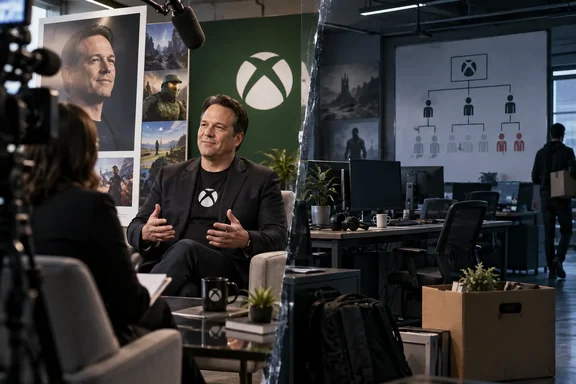
The strongest question here is not whether a chief executive deserves a profile. It is whether the portrait helps readers evaluate the business—or mostly helps them recognize its preferred spokesperson.
What Aftermath is criticizing
Plunkett objects to passages describing Sharma sharing her phone number with journalists and influencers, a strategy executive explaining Xbox’s economics to reporters, and her deft avoidance of questions about earlier strategic mistakes. He also contrasts the profile’s attention to hobbies, travel and motivational language with its placement of recent layoffs in its final two paragraphs.
That is a criticism of emphasis and framing, not evidence that the Times concealed the cuts. Aftermath itself reproduces a closing passage acknowledging them. Its characterization of the profile as journalistic negligence is Plunkett’s judgment; the quoted excerpts do not establish Microsoft’s control over the article or the Times’ editorial intent. The complete Times profile was not available for independent inspection, so conclusions about its overall balance must remain qualified.
A corporate briefing is not inherently improper. Understanding a company’s economics can improve reporting. The accountability test comes afterward: does the journalist examine those explanations, or simply relay them?
The restructuring behind the argument
Microsoft’s own announcement supplies a firmer benchmark than either flattering portraiture or an angry response.
In a September 22 message published on Xbox Wire, chief content officer Matt Booty announced 268 role eliminations across Halo Studios, other first-party studios, and Xbox Game Studios management and central functions. He said the actions completed since July, including studio divestitures, brought the previously announced restructuring roughly three-quarters of the way through—not to completion.
The organizational changes were substantial:
- Halo: Activision will develop the next title through a new team separate from Call of Duty development. A smaller Halo Studios team will support existing games and the community.
- Publishing oversight: Activision will also oversee Rare and World’s Edge; Bethesda’s remit will expand to Obsidian.
- Studio consolidation: Playground Games and Turn 10 will become one studio focused on Forza and Fable.
- Ninja Theory: Microsoft will consult employees on a proposed closure after two agreements fell through, while exploring alternatives.
These distinctions matter. Moving future Halo development is not the same as ending support for existing Halo games. A proposed closure is not a completed shutdown.
GeekWire’s Todd Bishop independently reported the September cuts and explained that they belong to the larger Xbox restructuring announced in July. They should not be casually added to previously announced targets as though every figure represents a separate reduction.
The practical takeaway: Xbox’s restructuring is an ongoing operational change, not merely a communications challenge.
A better yardstick: Sharma’s own commitments
Microsoft announced Sharma’s appointment on February 20, 2026, succeeding the retiring Phil Spencer. Its announcement emphasized her experience at Microsoft, Instacart and Meta, presenting her platform-business background alongside Booty’s game-development expertise.
More useful than debating whether that résumé sounds sufficiently “gamer” is examining what she promised to do.
In her introductory employee message, Sharma committed to supporting studios, investing in established franchises, backing new ideas and improving Xbox across console, PC, mobile and cloud. She also rejected pursuing short-term efficiency at the expense of human-created games.
Those commitments provide an evidence-backed comparison with September’s reductions and consolidation. They do not prove that restructuring contradicts every promise: Microsoft could argue that fewer organizational layers will strengthen development. But they establish questions worth answering:
- How will smaller teams retain the expertise needed to deliver and support games?
- What resources accompany the new publishing arrangements?
- What measurable improvements should players and developers expect?
- How will leadership distinguish sustainable investment from another round of cost cutting?
A turnaround cannot be judged by the number of flights its CEO takes. Nor can it be declared a failure solely because its messaging sounds corporate.
Access is useful; outcomes are decisive
Our assessment is that Aftermath’s most defensible criticism concerns the difference between describing leadership performance and evaluating business performance.
A profile can legitimately explore personality. It can also recognize racist or sexist abuse without treating legitimate scrutiny of executive decisions as the same thing. Neither sympathy nor skepticism should substitute for evidence.
For Xbox and Windows PC readers, the useful story is whether Microsoft’s changes produce dependable support, stronger development teams and a clearer platform strategy. Executive optimism may explain the intended direction. It cannot demonstrate that the company has arrived.
The scoreboard is not the CEO’s charisma. It is what happens to the people making the games—and what they can deliver afterward.
References
- The New York Times Is Taking The Absolute Piss With This Xbox Puff Piece - Aftermath Aftermath · 2026-09-30T23:01:26+00:00
- Microsoft cuts hundreds more jobs, shifts next 'Halo' game to Activision in Xbox overhaul – GeekWire geekwire.com
- Asha Sharma named EVP and CEO, Microsoft Gaming - The Official Microsoft Blog blogs.microsoft.com