

Dynamics 365 Drops Release Waves for the AI at Work Roadmap
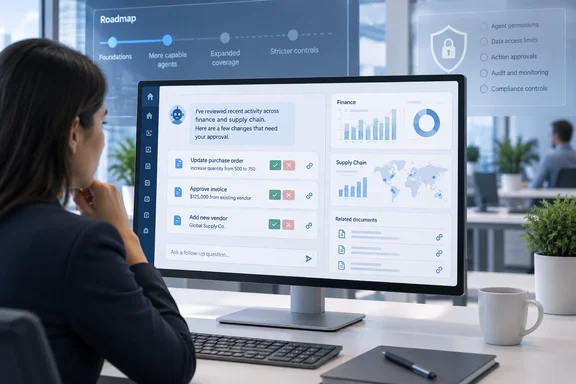
Dynamics 365 customers have long planned upgrades around release waves, which were published plans covering six-month windows. Microsoft now says it is "moving beyond release waves" and will publish ERP features on what it calls the AI at Work roadmap, an always-on list that is updated as work progresses. According to Microsoft Learn, new Dynamics 365, Power Platform and Dataverse capabilities go on that roadmap starting in September 2026. The old release plans remain available as historical reference "until further notice." The last of them, 2026 release wave 1, covered April through September 2026.
The September 23 post is effectively the first ERP highlights snapshot under the new model, covering features that are new or coming through March 2027. Microsoft timed it to a partner event. Directions for Enterprise runs from 23 to 25 September 2026 at the Tivoli Hotel & Congress Center in Copenhagen, and 2026 is the first edition. The organizers describe it as the conference for the global Microsoft Dynamics 365 Finance & Supply Chain Management partner community. Microsoft chose the city on purpose: its ERP portfolio's roots are in Copenhagen, going back more than 30 years.
The conference's direction was clear in advance. In a June preview, MSDynamicsWorld reported that Microsoft had recently revised its product outlook and described the increasingly agent-focused ERP roadmap as aiming to apply AI across all business processes. The September post confirms that direction. It also shows what the roadmap model costs planners: firm dates. Microsoft Learn warns that delivery dates can change and that planned functionality may never ship. Most items in the announcement are labelled "coming," "next" or "on the roadmap," without a month attached.
Copilot Cowork's ERP Plugin and the ERP MCP Server Are Generally Available Now
The part of the announcement that works today is the connection between Microsoft 365 Copilot tooling and finance and operations data. Microsoft says the Dynamics 365 ERP plugin for Copilot Cowork and the Dynamics 365 ERP MCP server are both generally available. Together they let agents "reason over and work with ERP data, actions, and attachments." Copilot responses include citations and deep links back to the underlying ERP records.
Microsoft's Learn documentation calls Copilot Cowork an agentic orchestrator: a Copilot experience that carries out multi-step tasks across data sources. MCP, or Model Context Protocol, is how the plugin reaches Dynamics 365. Cowork connects to the finance and operations environment through the ERP MCP server, which exposes three types of tools:
- Data tools read, create, update and delete records in finance and operations data entities.
- Form tools navigate application pages, set field values and select actions the way a user would in the client.
- Action tools invoke custom business logic that developers choose to expose through the MCP server.
Cowork combines these with what Microsoft calls Work IQ features, meaning email, calendar, documents and spreadsheets. Microsoft's own example shows how far that goes. A sourcing manager asks Cowork to evaluate bids for a request for quotation (RFQ). Cowork pulls the RFQ lines, vendors and scoring criteria from Dynamics 365. It reads vendor emails and PDF attachments in Outlook, cross-checks the bid details and flags discrepancies, then scores the bids against the configured ERP criteria and writes a recommendation document. Once the user approves, it creates the purchase order in Dynamics 365 and drafts the award email.
So "agentic ERP" in Microsoft's current usage includes changing system state, not just answering questions. The Learn page states plainly that Cowork can perform write operations in Dynamics 365, such as updating bid records, creating purchase orders or sending emails, when asked. It advises users to review the agent's proposed actions before approving them.
Security Roles Bound the Dynamics 365 ERP Plugin, and Tighter Agent Limits Are Still Coming
Today's security model is easy to describe. According to Microsoft Learn, everything done through Copilot Cowork respects the security roles and privileges the user holds in the finance and operations environment. Users can't reach data through Cowork that they couldn't reach in the application. That is a reasonable baseline, but it also means an agent acting for a user can currently do anything that user can do.
Microsoft's announcement addresses this as a future item. It says new role-based access control capabilities "will allow organizations to define additional restrictions when a user is operating through Copilot Cowork or agents." In other words, an agent could eventually get a narrower set of permissions than the person who invoked it. The post gives no availability date or preview status for this feature.
Microsoft also plans business skills: reusable process definitions and instructions for ERP agents, with access governed through Dynamics 365 security roles. The company says it will ship its own skills for processes such as procure-to-pay. Organizations will be able to write their own, giving them what Microsoft calls a "more centralized and governed way" to define how agents carry out work. Like the new RBAC restrictions, business skills are described in future tense.
My read, as inference: organizations enabling the GA plugin now are relying on their existing role design and on users reviewing each write before approving it. If a finance and operations environment has broad or poorly maintained roles, that problem becomes more serious once users can issue natural-language requests that create and change records.
Checking prerequisites before enabling the plugin
Microsoft Learn lists concrete requirements and limits for the Dynamics 365 ERP apps plugin:
- An administrator must enable the plugin for the organization before users can use it.
- The environment must run finance and operations apps version 10.0.45 or later, with all quality updates installed.
- The environment cannot be a Cloud Hosted Environment (CHE). The MCP server doesn't support CHE, which matters for partner and developer sandboxes built that way.
- The organization must be in a region where Copilot Cowork is deployed.
- The first time a user works with ERP data, Cowork prompts them to sign in or consent. That authorization persists until the user or an administrator revokes it.
When setup has worked, Cowork can connect to the environment's MCP server and the ERP tools become available in conversation. Microsoft notes that complex form interactions can take several tool calls and run slower than simple data lookups. It also recommends naming the legal entity in prompts, for example "in USMF," when an environment has more than one company.
Dynamics 365 Finance and Supply Chain Management Aim Agents at Exceptions
Much of the Finance news is conventional ERP work. Microsoft says the financial journals experience is being rebuilt to handle higher transaction volumes and cross-legal-entity complexity. Teams will be able to view intercompany transactions, create accruals and preview allocations before posting. Accounts payable automation will use AI to capture invoices and suggest finance entries, which Microsoft says will mean more touchless processing.
The agent work targets exception handling. The Account Reconciliation Agent is due to resolve exceptions in bulk, be enabled per legal entity and per module, gain limits and notifications, and produce fuller summaries of its suggestions. Per-entity enablement and limits are also governance controls: they let a finance team introduce the agent one company at a time instead of across the whole tenant. Finance Agent is getting skills for reconciliation, data preparation, variance analysis, collections and business intelligence. It will be available in Copilot, Excel, Outlook and Teams, with native Dynamics 365 Finance connectivity and connectors to other systems.
Two Finance items are generally available now. The Business Performance Planning demo data and starter kit bundles revenue, workforce, operating expense, capital expenditure and allocation scenarios. France e-invoicing and e-reporting support has also reached GA. Support for the next phase of Brazil's tax reform is on the roadmap with no date.
In Supply Chain Management, delivery states vary by feature:
| Capability | Status | What it does |
|---|---|---|
| Procurement agent impact analysis | Public preview | Traces supplier-proposed purchase order changes to affected sales, production and transfer orders and projected inventory |
| Demand planning generative insights | GA since August 2026 | Seasonality, trend and signal-correlation insights, plus external signals such as inflation, pricing and weather |
| AI explanations of forecast drivers | Planned | Explains what is driving a forecast |
| Supplier Engagement | Public preview | Onboarding, RFQs, purchase orders and invoicing in one workspace and supplier portal across legal entities |
| Dynamic item placement (WMS) | Coming next | More control over where inventory is stored and how storage policies apply |
| Rental management | Coming to public preview | Rental lifecycle from quote and contract through inspection, return and billing |
Impact analysis stands out for planners. When a supplier proposes changing a purchase order, the agent traces the downstream effect before anyone accepts the change. The same kind of work already appears in the GA Cowork RFQ example, which suggests procurement is where Microsoft's agent approach is furthest along.
Project Operations, Field Service and Commerce Connect Work Across Applications
The service-oriented apps mostly get changes that connect one application to another. The most concrete is already generally available: Dynamics 365 Field Service work orders can now be created directly from, or linked to, Dynamics 365 Project Operations tasks. This ties field execution to project scope and task-based billing. Microsoft presents it as part of connected workflows across Field Service, Project Operations and Finance, aimed at organizations that currently reconcile those systems by hand. A mobile-first notes experience, also GA, lets technicians attach text, images and video directly to a work order.
Field Service's agent is in preview. The Scheduling Operations Agent optimizes multiple resources against defined objectives and lets dispatchers review proposed changes before applying them. Recurring scheduled optimizations will come later. The design keeps a human approving changes, like the Cowork plugin.
Project Operations has several items on the way. Change order management is coming to public preview, providing a structured, auditable process for folding contract changes into billing schedules. Subscription billing will add recurring schedules, invoice generation, and flexible and tiered pricing. Organizations will be able to recognize revenue against the original cost estimate instead of a changing estimate at completion, where that accounting approach is appropriate. A new time-phased staffing view puts task assignments, bookings and available capacity on one timeline.
Commerce focuses on B2B. Self-service B2B buyers will get one sign-in to shop, order and track purchases across multiple outlets, with on-account and credit validation. Trade POS brings B2B selling to the store counter for wholesalers and distributors. It covers bulk order capture, contacts on POS orders and quotations for cases where the buyer at the counter isn't the account holder, order release straight from POS to the warehouse, and streamlined pickup. Retail stores get Tap to Pay on Android, label printing and faster checkout. On the agent side, a separate Dynamics 365 Commerce MCP server is now in public preview. Microsoft plans to add more tools and extensibility so customers and partners can build their own scenarios.
Human Resources and Sustainability Updates in Dynamics 365 Are Mostly Roadmap
Dynamics 365 Human Resources gets a long list of planned features across the hire-to-retire cycle, none marked generally available in the announcement. Recruiting gets talent pools and referrals. Digital offers and preboarding cover the move from candidate to employee. Learning, succession and performance are listed for retention, and benefits, leave, HR-aware time entry and HR reporting for ongoing workforce administration.
The agent features follow the same pattern as the rest of the portfolio. Candidate assessment and onboarding are described as agentic experiences, and new HR business skills are meant to open more hire-to-retire workflows to Microsoft Copilot, Copilot Cowork and agents. Microsoft's example is an HR professional starting a workforce process in Cowork in plain language while business skills perform the actions in Dynamics 365 Human Resources. Given how sensitive HR data is, the planned agent-specific RBAC restrictions matter more here than in most modules.
Dynamics 365 Sustainability's next release focuses on audit readiness. Snapshot-based data trails will record the source activity data, emission factors, global warming potential versions, filters and calculation logic behind each reported figure, and export them to Excel for audit review. Reporting period controls will lock data by reporting year and entity, both during disclosure preparation and after reports are finalized. Governed ESG data collection adds structured requests, due dates, reminders, supporting evidence, reviews and approvals. These are process controls, not AI features. They are the kind of evidence trail assurance providers ask for.
What this means for you
The decision in front of most Dynamics 365 finance and operations teams is whether to enable the GA Copilot Cowork ERP plugin now or wait for the planned agent-specific restrictions. The rest of the announcement is mainly planning input. Organizations with well-scoped security roles, an environment on 10.0.45 or later, and users who can be trusted to review proposed writes can pilot the plugin now, starting with read-heavy scenarios. Organizations whose role design has drifted should fix that first, because the plugin gives each user's permissions to an agent that acts on natural-language instructions. Teams tracking specific features such as change orders, rental management or HR business skills should know that the release-wave PDF they used to plan from is gone, and future dates will come from the AI at Work roadmap.
- The Dynamics 365 ERP plugin for Copilot Cowork and the Dynamics 365 ERP MCP server are generally available. They require finance and operations apps 10.0.45 or later with all quality updates, and they don't work on Cloud Hosted Environments.
- Copilot Cowork can create, update and delete ERP records with the invoking user's permissions. The planned role-based restrictions for agent activity have no published date.
- Generally available now: France e-invoicing and e-reporting, the Business Performance Planning starter kit, demand planning generative insights (since August 2026), Field Service work orders linked to Project Operations tasks, and mobile work-order notes.
- In public preview: procurement agent impact analysis, Supplier Engagement, the Scheduling Operations Agent and the Commerce MCP server. Test them outside production.
- Brazil tax reform support, change order management, rental management, subscription billing and most HR features are roadmap items that Microsoft says may change or slip.
- Starting September 2026, new Dynamics 365, Power Platform and Dataverse features appear on the AI at Work roadmap instead of release-wave plans. Planning calendars built around April and October waves need updating.
Microsoft has put two agent components into general availability and shown a roadmap full of agents that report back to humans before acting: reconciliation agents with limits, schedulers that propose changes, and procurement analysis that runs before a PO change is accepted. The governance pieces that would let IT scope an agent more narrowly than its user are among the items still listed as "will." Until they appear on the AI at Work roadmap with a date, security roles and user review of each proposed write are the only controls between an agent and a posted transaction. Directions for Enterprise runs through September 25, and partners will likely leave with more detail than the blog post provides.
Update: Additional details (September 25, 2026)
ERP Today reports that Microsoft???s Release Planner is set to retire by November 15. That gives Dynamics administrators a specific cutoff for moving recurring planning reviews to the continuously updated AI at Work roadmap.
References
- Build the future of agentic ERP with new Microsoft Dynamics 365 capabilities - Microsoft Microsoft · 2026-09-23T16:00:00+00:00
- Use Copilot Cowork with Dynamics 365 ERP - Finance & Operations | Dynamics 365 | Microsoft Learn learn.microsoft.com