

NEC Moves Ohio's Integra-ID MBIS From State Servers to Azure Government
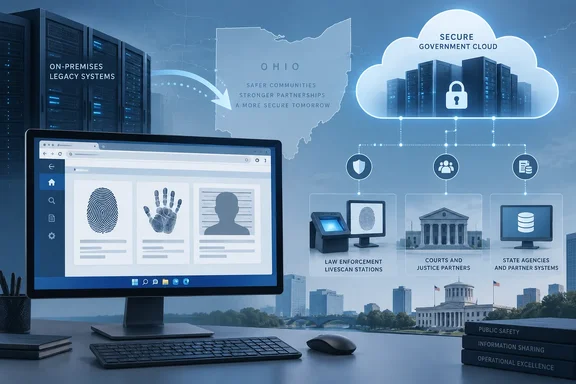
NEC's announcement, distributed through Business Wire and republished by 01net, FinancialContent and other outlets, says the project transitions the State of Ohio's existing on-premises Integra-ID MBIS environment to a fully managed SaaS architecture designed to simplify operations, improve scalability, and enhance long-term system performance. MBIS stands for multimodal biometric identification system, meaning a system that can match more than one kind of biometric, such as fingerprints and faces. The upgrade project began in 2026 and is anticipated to be completed in less than nine months.
These are all copies of one press release, so the multiple copies don't count as independent confirmation. No statement from the Ohio Attorney General's Office has turned up in coverage so far. NEC hasn't published a contract value, a firm go-live date or a migration schedule.
The hosting choice is the part that matters most to IT readers. Azure Government is Microsoft's separate cloud for U.S. government workloads. NEC places Integra-ID 7 there instead of in commercial Azure and ties it to criminal-justice security rules. The company says the upgrade gives Ohio a secure, modern biometric platform aligned with the latest FBI CJIS Security Policy requirements. CJIS is the FBI's Criminal Justice Information Services division, and its Security Policy sets the controls for systems that handle criminal-justice data. The FBI's current published edition is CJIS Security Policy v6.1, dated June 25, 2026. NEC's release says the platform is "aligned" with the latest requirements, but it doesn't describe an Ohio-specific audit or assessment. Treat that as a vendor statement.
OABIS Is a Statewide System With Hundreds of Connections
BCI supports state and local law enforcement agencies across the State of Ohio through criminal investigations, forensic services, criminal record management, and biometric identification operations. It maintains official records of convicted felons and operates Ohio's Automated Biometric Identification System (OABIS), which provides biometric information used by law enforcement agencies for criminal background checks and investigative support. The bureau sits under the Attorney General's Office and is based in London, Ohio.
NEC gives these figures for the current system. The categories are different things, so it's worth keeping them apart:
| OABIS metric (per NEC) | Reported figure |
|---|---|
| Biometric records | More than 6 million |
| Events | Over 41 million |
| Subjects linked to those events | About 25 million |
| Connected livescan systems | Nearly 600 |
| External matching systems | Eight local AFIS systems plus the FBI's Next Generation Identification (NGI) system |
A livescan is a digital fingerprint-capture station of the kind used at booking or for background checks. AFIS means automated fingerprint identification system. NGI is the FBI's national biometric repository. Taken together, the table shows that most of the migration risk sits in the connections, not the storage. Moving a few million records to the cloud is routine work. Keeping hundreds of capture devices, eight county or city matchers and the federal link working through a change of hosting model is the hard part. NEC hasn't said how it will validate those connections, whether the old and new systems will run in parallel, or what the downtime plan is.
This is NEC's second large project in Ohio. The company says it previously deployed a successful AFIS replacement project for the State of Ohio in 2021 following a competitive procurement process, and that project included replacement of both the legacy AFIS and Computerized Criminal History (CCH) systems, including the migration of tenprint, latent, palmprint, and mugshot records from the previous platform. So the 2026 work moves NEC's own on-premises product to NEC's hosted service. It doesn't replace another vendor's system, which should make the data-format side easier than a cross-vendor migration.
Windows 11 and the Browser Replace a Dedicated Client
The Windows detail is a single sentence in the release, but it has real consequences. NEC says the system supports fingerprint, palmprint, and mugshot biometric processing while leveraging any Windows 11 workstation using a secure web browser for efficient statewide access, management, monitoring, and reporting.
That fits how NEC describes the product line in general. The company's Integra-ID service literature says modern Windows workstations capture, enroll, and submit fingerprints, palm prints, and latent prints, as well as faces, irises, and signatures. It also says that with Azure hosting the entire suite of Integra-ID technology will be deployed and managed by NEC, leaving agencies more time to manage local ID operations.
The practical result is that the security of the user's endpoint becomes part of the system's security. With a browser-delivered application, the Windows 11 device, its browser, its identity controls and its network path to Azure Government are the front door to a criminal-justice database. NEC's announcement doesn't name supported browsers or versions. It also doesn't say how users sign in or whether every examiner function, such as latent-print editing, works fully in the browser. Agencies connecting to OABIS will need those details from BCI or NEC before they change any workstation builds.
"Any Windows 11 workstation" should also be read narrowly. It describes client access to this system. It isn't a Microsoft certification or a statement about Windows 10. Any agency still running Windows 10 on identification-unit PCs is outside what NEC has described.
NEC's everBlu Model Replaces Upgrade Projects With Continuous Updates
NEC's main argument for SaaS is update cadence. The company says the hosted environment provides enhanced resiliency, operational efficiency, secure U.S.-based data residency, and continuous access to the latest biometric innovations, software enhancements, and security updates without the disruption of traditional upgrade cycles. Eugene le Roux, senior vice president at NEC National Security Systems, said in the release that Integra-ID 7 is "powered by our everBlu continuous innovation framework," which he described as delivering NEC's latest algorithms, software enhancements and security updates through an "evergreen" platform.
For a biometric system, updates carry more weight than they would for most business software. A change to the matching algorithm can change search results. NEC hasn't said how much say Ohio will have over the timing of updates, how algorithm changes will be tested against the state's data before they go live, or what rollback options exist. Those questions decide whether "evergreen" is purely a benefit for an agency whose matches can end up as evidence.
Ohio isn't the only customer taking this route. In March 2026, ID Tech reported that the Western Identification Network, a multistate identification network in the western U.S., was upgrading to Integra-ID 7, and that NEC said the project will shift WIN from a more traditional on-premises model to a cloud-native architecture designed for faster updates, improved scalability and lower operational burden. In that announcement, NEC said Integra-ID 7 uses a microservices-based architecture and adds a web-based Integrated Biometric Workspace, modular testing and deployment, and more regular feature and security releases with less disruption than conventional upgrade cycles. Two large public-safety customers moving the same way in one year suggests NEC is actively steering its install base toward hosted Azure deployments.
The Platform Offers Face and Iris, but Ohio's Scope Is Narrower
NEC describes Integra-ID 7 as a platform designed to support fingerprint, palmprint, facial, and iris recognition within a highly secure, browser-based architecture. The Ohio passage, however, covers only fingerprint, palmprint and mugshot processing. The release doesn't say Ohio will turn on facial or iris recognition, so reading the platform's full feature list as the state's plans would overstate the announcement. A mugshot stored as a booking record is different from a face-recognition search capability. Readers following biometric-policy debates should keep those apart until Ohio says otherwise.
What this means for Ohio agencies and government IT teams
Whether you need to act depends on whether you run workstations that touch OABIS. Those teams should plan around a browser-and-cloud access model. Everyone else can treat this as a reference case for moving CJIS workloads to Azure Government.
- Ohio agencies with identification units should ask BCI which browsers, versions and sign-in methods Integra-ID 7 will support before the cutover, because NEC's announcement names only Windows 11 and "a secure web browser."
- Departments that operate any of the nearly 600 livescan stations or one of the eight local AFIS systems should confirm when their connections move and how they'll be tested, because NEC hasn't published those details.
- Windows 10 machines used for identification work fall outside what NEC described and should be moved up the Windows 11 migration list.
- Security teams should treat OABIS workstations as endpoints inside the CJIS scope and check them against CJIS Security Policy v6.1, the FBI's current edition.
- Procurement and governance staff at other agencies weighing a similar move should get update-control, rollback, data-residency and incident-notification terms in writing, because none of them appear in NEC's public claims.
NEC expects the work to finish in less than nine months from its 2026 start. Once it's done, Ohio's statewide criminal biometric system will run as a vendor-operated service on Azure Government, reached through Windows 11 browsers instead of state-run servers. The next concrete signs of how it's going will come from BCI: guidance on supported client configurations and a cutover date for agencies. Until then, the resilience, compliance and continuous-improvement benefits are NEC's word.