

Why the history matters
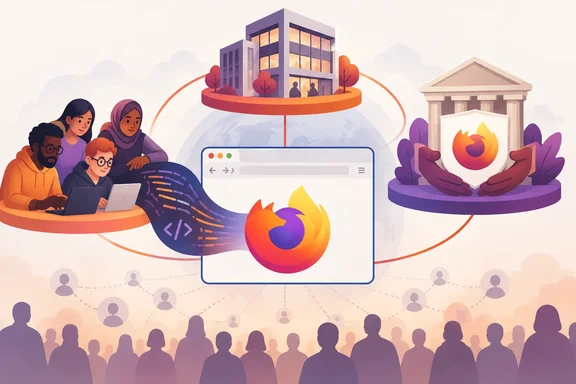
BGR describes Firefox as a browser launched in 2002 and developed by the nonprofit Foundation. That compresses several different chapters into one. According to Mozilla’s history, community members released Phoenix, the browser that would later become Firefox, in 2002. The Mozilla Foundation was established in 2003, Firefox 1.0 arrived in 2004, and Mozilla Corporation was established in August 2005. The earliest browser therefore predates both the Foundation and the Corporation; today’s development structure cannot simply be projected backward onto its first release.
Mozilla is also a project and community, not just a company name. Its 2007 Manifesto sets out principles for an open internet and describes community participation as part of how Mozilla builds software. Those principles explain the organizations’ stated purpose, but the Manifesto is not evidence that the Foundation alone writes or ships Firefox. Mozilla’s organizational description assigns development of the browser to the Corporation working with the community.
Can anyone make a Firefox-based browser?
The code and the name have different rules. Mozilla makes Firefox source code available under open-source licenses, including the Mozilla Public License. Those licenses allow people to use, modify and distribute code subject to their terms; they do not automatically grant the right to use the Firefox name or logo. Mozilla identifies both as Foundation trademarks.
That distinction has a practical consequence for PC developers and anyone distributing a customized browser: Mozilla’s distribution policy says a modified build cannot continue to be distributed under the Firefox name without prior written permission. An independently branded browser built from Mozilla code should not be mistaken for an official Firefox release. Open source opens the workshop; it does not hand over the sign above the door.
For users installing the ready-to-run browser, Mozilla’s Firefox Terms of Use name Mozilla Corporation as the other party to the agreement. The terms distinguish that executable version from the source code governed by open-source licenses—one more illustration of why “who owns Firefox?” depends on whether you mean the organization behind the product, the people contributing code, or the Firefox brand.
References
- Who Owns Firefox, The Popular Web Browser? bgr.com · 2026-09-29T00:47:00+00:00
- Organizations — Mozilla mozilla.org
- History of the Mozilla Project — Mozilla mozilla.org