

Tbreak also covered the plans, drawing on Windows Latest’s reporting. That provides no independent confirmation of Rogers’ comments, so these remain reported development plans rather than a documented rollout.
Which interfaces are changing?
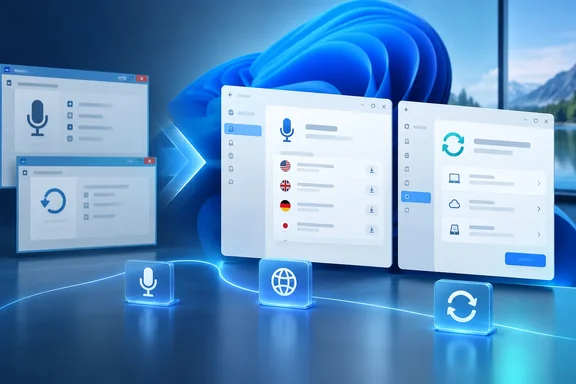
The Voice packages dialog appears under Settings > Time & language > Speech when users add voices. Windows Latest describes the current interface as a separate window containing a language search box, checkboxes, and available voice packages, visually distinct from the surrounding Windows 11 Settings application.
“We are gradually working our way through modernizing older UI in Windows and the voice packages dialog is on our list,” Rogers wrote, according to Windows Latest. That identifies the dialog as a modernization target, but does not establish a finished design or additional language support.
Reset this PC is the second named target. Windows Latest reports that Rogers confirmed work on older recovery interfaces, including the reset flow that offers choices about keeping personal files or removing everything. The publication describes its current appearance as following Windows 8.1’s design language.
For support teams, the meaningful potential change is to the screens users encounter while making recovery decisions. The reporting does not establish changes to what those choices do, so a visual redesign should not be treated as a new recovery capability or a change in data-removal behavior.
What a WinUI 3 rewrite means
According to Windows Latest, Rogers described the broader project in May as “working through our list of all older dialogs and rewriting them in WinUI 3.”
Microsoft’s own documentation defines WinUI 3 as a native framework for building Windows desktop interfaces. It is part of the Windows App SDK and supplies controls and styles based on Microsoft’s Fluent Design System. Developers can use it with C# or C++, with XAML markup describing the interface.
That helps explain the intended improvement: rebuilding an older dialog with a common set of contemporary controls can make it fit more naturally alongside newer Windows interfaces. WinUI 3 is a desktop framework, not a web-based replacement.
However, the framework alone establishes neither the finished layout nor the behavior behind its buttons. Its use does not demonstrate faster resets, better speech quality, new voices, or improved accessibility in these particular dialogs. Those would require details or testing specific to the finished implementations.
Windows Latest also describes Microsoft’s wider modernization effort as incremental, with some interfaces receiving smaller visual changes and others being rebuilt. The two newly identified targets therefore do not amount to a dated replacement plan for every legacy Windows window.
What users and administrators should do now
There is no supported installation or enablement procedure for either redesign in the reporting. No minimum Windows 11 version, Insider build, or delivery channel is identified.
For deployed PCs, the practical response is to keep existing recovery procedures and speech-package instructions in place. Administrators can anticipate reviewing screenshots and user-facing guidance when an actual release identifies the changed screens, but there is no basis yet for changing deployment requirements or recovery policy.
The useful milestone will be release information that ties each redesigned interface to an available build and describes any functional differences. Until then, this is a specific expansion of Microsoft’s reported interface-modernization plans, with no immediate configuration change required.