

The pitch: where the world plays
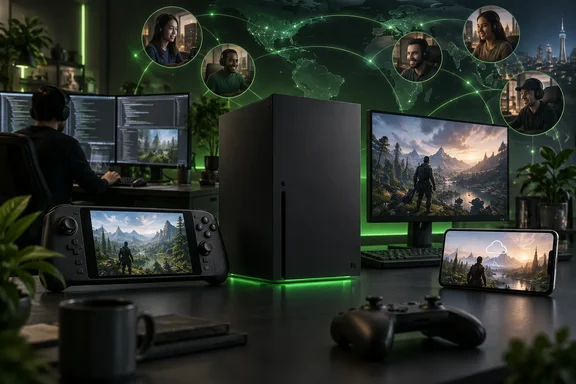
Sharma reportedly framed Xbox's purpose as being "where the world plays." She said success would be a billion daily active people, and that Xbox has a "right to win" because it is now focused on fans and franchises. She also named four priorities, the "four C's": core, content, creation and connection.
Treat the billion-daily-actives figure as an ambition. The report gives no time frame, no definition and no methodology for it.
It is also easy to confuse with another number. In a June 10 internal message published on Xbox Wire, Sharma and Matt Booty said more than a billion players choose to play Xbox and its games each year. That is an annual figure and excludes much of China. The town hall target, as reported, is a daily one, which is a much higher bar. Her July 6 "Resetting Xbox" message also stated a goal of entertaining more than a billion people each day, so the target isn't new.
Reported business health
According to Windows Central, Sharma said Xbox was declining in hours spent, players and revenue at the start of the year. She said hours spent have since stabilized and the business has returned to growth. She reportedly described the old Game Pass-led approach as sending the balance sheet into "freefall."
Her quoted line was that after an "all time low," Xbox had "started to return to growth, more than 2 to 3 times what we were." That wording is ambiguous. The report doesn't say which metric is growing, what "2 to 3 times" compares, or over what period. I would not turn it into a growth rate.
She also reportedly pointed to strong starts for Gears of War: E-Day, Minecraft Dungeons 2 and World of Warcraft Forever. She cited a 30% rise in positive brand sentiment over the past year. No underlying data was given for any of these claims, so they are management's own assessment.
The June message offers some independent context. It said Game Pass had started to grow again after 8+ months of decline. The same message said the fiscal year would end at about a 3% accountability margin, down year over year. It also said that, excluding Activision Blizzard King, Xbox had spent more than $20 billion over five years on content, platform and hardware subsidy while annual revenue fell by nearly half a billion dollars.
Consoles first, and Gen 9 isn't dead
The most notable reported shift is that Sharma put console back at the center. She reportedly acknowledged the console segment isn't growing across the industry, but argued Xbox's market position means it should invest more there. She said Xbox doesn't have the "right" to grow beyond console if it can't serve its most valuable players well.
For Xbox Series X|S owners, she reportedly named three things as key to strengthening Gen 9:
- Xbox Cloud Gaming.
- The disc-to-digital program.
- Growth in Xbox Play Anywhere.
The report gives no new features, dates, eligibility rules or account requirements for any of these, so nothing here is a confirmed change you can act on yet.
She also reportedly hinted that Game Pass will become "flexible for more players." This echoes earlier talk of letting users tailor what they pay for. No tiers, prices or launch timing have been announced.
Helix: a family, with a console first
On Gen 10, Sharma reportedly said Xbox is moving to a family of devices. In the quoted passage, "There is not one device that fits all," and Xbox will "certainly have a great console first," while knowing many players will be on the go. She added that Xbox will build some things itself and partner on others, and that the operating system is "starting to look really good."
This is consistent with earlier public comments. In an August BBC News interview at Gamescom, Sharma said Xbox had been working on "a great next generation and a great family of devices for Helix". Reporting at the time noted that she didn't explain what the wider family includes, and Xbox hadn't said what the other devices are.
Public Helix details so far come from the March announcement. At GDC, Xbox said Helix would use a custom AMD SoC and play Xbox console and PC games, with alpha hardware shipping to developers in 2027.
The town hall adds no device count, form factors, specs, prices, launch window or partner names. "Family" could mean tiered consoles like Series X and S. It could also mean a handheld or partner-built hardware. Sharma hasn't said which.
Her mention of partnering also fits the June message. That message cited a component cost crisis and said Xbox needs "a new business model and partnerships for hardware" while staying committed to Helix.
PC, Battle.net and developers
This section matters most to Windows readers. Windows Central reports that Sharma wants to grow Battle.net as a platform. She reportedly said its retention is almost on par with Steam, and that the CD Projekt Red partnership, including bringing The Witcher 3, will help it grow. She promised to do it "the right way for those communities."
The reporter reads this as a sign Battle.net will stay more curated than Steam or the Xbox PC app. That is his inference, not a stated store policy. The retention comparison also comes with no figures or definitions.
Sharma also reportedly said the Xbox PC app is the number one PC gaming storefront in China. She said Xbox will keep investing in other PC apps where there is a distinct audience, with Steam named as an example. Again, no market-share data or definition of "storefront" was supplied, so it should be read as her claim.
For developers, she reportedly said Xbox is simplifying its publishing targets and streamlining APIs. The aim is to make it easier to ship on Xbox Series X|S, Helix and Xbox PC. Windows Central calls this a long-standing sore point. No specific APIs, documentation or timelines were given, so nothing has shipped on this basis.
The June message gives a hint of the engineering motivation. It described overly complex systems spanning hundreds of dependencies and said Xbox would rebuild its stack. Whether that translates into a simpler build and certification path for Windows and console developers is something to watch for at developer events.
The restructuring backdrop
The town hall followed a painful summer. On July 6, Sharma announced the most significant restructure in Xbox history, with about 3,200 job reductions across FY27. About 1,600 of those were role eliminations that day, and four studios were to leave Xbox for new management. She also said Xbox would cut management layers to no more than five and reduce vendor spend by 50%.
Windows Central also credits the reset with a return to exclusives, a Game Pass price cut and Call of Duty's removal from the service. The reset has also brought renewed marketing and features for Series X|S. The report says Sharma remained cautious about the economy, the memory-price squeeze it calls the "RAMpocalypse," and wider disruption in entertainment.
What to make of it
Three things stand out.
- The strategy is more console-centric than the last few years. That's a notable reversal from a "play anywhere" message that left many Series X|S owners feeling like an afterthought.
- The evidence for recovery is thin. An internal town hall is partly a morale exercise. The growth and sentiment claims are unaudited, and the June message's own numbers, a 3% margin and declining revenue, show how far there is to go.
- The Windows angle is real but vague. Battle.net expansion, Xbox PC's China position and API streamlining all affect PC gamers and developers. None has concrete deliverables yet.
Most of the specifics will have to wait for Microsoft's next public announcements. Until then, this is a strategy outline from the CEO, not a product roadmap.
References
- EXCLUSIVE: Xbox CEO Asha Sharma speaks at internal town hall on the future - Windows Central Windows Central · 2026-10-06T17:02:46+00:00
- Xbox Project Helix Is A 'Family Of Devices,' CEO Reveals tech.yahoo.com
- Xbox Project Helix is a 'family of devices,' CEO reveals - Engadget engadget.com