

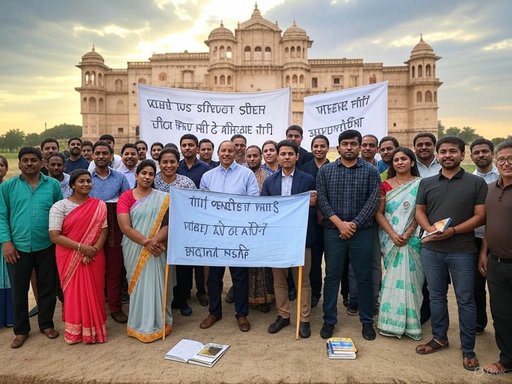
A simmering debate over access to education for India’s historically marginalized communities has come to a boil, as concerns mount about implicit and explicit threats to the constitutional guarantees made to Dalits, tribals, and OBCs. The issue was brought into sharp focus during the latest event in the Babasaheb-Periyar Lecture Series at Tapadia Natya Mandir, where eminent journalists, thinkers, and activists voiced urgent warnings of a concerted attempt to fundamentally erode the educational rights of marginalized groups—a move that could have long-lasting social and economic ramifications across the nation.
For decades, India’s education system has been shaped by constitutional mandates aimed at undoing the entrenched inequities of caste, class, and community. Landmark reforms—chief among them reservation policies in educational institutions—were enacted to ensure that Dalits (Scheduled Castes, SCs), Adivasis (Scheduled Tribes, STs), and members of Other Backward Classes (OBCs) could access opportunities historically denied to them. The successes of these measures are impossible to ignore. By the turn of the millennium, millions from deprived backgrounds entered schools, colleges, and eventually, the professional ecosystem of a fast-modernizing country.
Yet, as veteran Delhi journalist Naveen Kumar articulated in his address, new and insidious threats have emerged. “A plot is being hatched to deprive Dalits, tribals and OBCs of education in this country,” Kumar warned at the lecture. He alleged a systematic undermining of educational access, culminating in risks not only to education but also the jobs and reservations that have acted as lifelines for marginalized Indians. Specifically, Kumar pointed to the workings of what he called “Manuwad”—an ideology opposing egalitarian and constitutional values in favor of a hierarchical order rationalized by the ancient Manusmriti.
While direct evidence of an official conspiracy remains elusive, the anxiety expressed was far from isolated. Senior journalist Sanjeev Chandan and Ambedkarite thinker Dr. Prakash Sirsat echoed Kumar’s unease, highlighting a larger trend: the persistence, and in recent years, resurgence of narratives seeking to delegitimize the very foundations of affirmative action and inclusive education.
Naveen Kumar’s invocation of Manuwad resonates with a long-standing apprehension among Dalit, tribal, and OBC advocacy groups—that hard-earned gains may be quietly reversed, not always by overt legal changes, but through systemic neglect or policy subversions.
Chandan, in his remarks, argued that, “Currently, a narrative of falsehood against the truth, unconstitutional against constitutional is being spread on a large scale,” urging his audience to uphold the rational, egalitarian philosophies of Phule, Ambedkar, and Periyar—historic leaders whose ideas formed the bedrock of assertive anti-caste and pro-education movements.
On university campuses, student groups cite the decline in fellowships, delays in scholarship funding, and procedural hurdles that discourage or outright block access to higher education. For women from these communities, the barriers are doubly potent, with intersectional discrimination compounding systemic exclusion.
What can be verified, as reflected in both government data and independent research, are patterns of exclusion shaped by economic liberalization, bureaucratic inertia, and shifting social priorities. The steady decline in reserved faculty appointments, the growing weight of private (often ‘legacy-based’) sectors in education, and the ambivalence of mainstream policy toward affirmative action all validate the essence of the warnings raised at the Babasaheb-Periyar Lecture Series.
The future, then, hinges on vigilance: of courts, civil society, and most critically, ordinary citizens who cherish constitutional values. As the speaker quoted at the event put it, the “power to choose the right one between these two lies in the thoughts of Phule, Ambedkar, and Periyar”—a timely reminder that in India’s ongoing battle between equality and hierarchy, education will always be the fiercest battleground and most potent weapon.
Source: lokmattimes.com Plot being hatched to end educational facilities of deprived classes - www.lokmattimes.com
 Roots of the Current Alarm: A Legacy of Exclusion and Struggle
For decades, India’s education system has been shaped by constitutional mandates aimed at undoing the entrenched inequities of caste, class, and community. Landmark reforms—chief among them reservation policies in educational institutions—were enacted to ensure that Dalits (Scheduled Castes, SCs), Adivasis (Scheduled Tribes, STs), and members of Other Backward Classes (OBCs) could access opportunities historically denied to them. The successes of these measures are impossible to ignore. By the turn of the millennium, millions from deprived backgrounds entered schools, colleges, and eventually, the professional ecosystem of a fast-modernizing country.Yet, as veteran Delhi journalist Naveen Kumar articulated in his address, new and insidious threats have emerged. “A plot is being hatched to deprive Dalits, tribals and OBCs of education in this country,” Kumar warned at the lecture. He alleged a systematic undermining of educational access, culminating in risks not only to education but also the jobs and reservations that have acted as lifelines for marginalized Indians. Specifically, Kumar pointed to the workings of what he called “Manuwad”—an ideology opposing egalitarian and constitutional values in favor of a hierarchical order rationalized by the ancient Manusmriti.
While direct evidence of an official conspiracy remains elusive, the anxiety expressed was far from isolated. Senior journalist Sanjeev Chandan and Ambedkarite thinker Dr. Prakash Sirsat echoed Kumar’s unease, highlighting a larger trend: the persistence, and in recent years, resurgence of narratives seeking to delegitimize the very foundations of affirmative action and inclusive education.
Contextualizing Manuwad and the Caste-Bias Debate
The term ‘Manuwad’ refers to an ideology drawn from the Manusmriti, an ancient legal text often cited as upholding the caste system. Critics argue that interpretations of Manuwad are antithetical to modern constitutional values of equality and social justice. In the context of education, Manuwad is used pejoratively to flag policies or social currents believed to perpetuate caste-based discrimination and exclusion.Naveen Kumar’s invocation of Manuwad resonates with a long-standing apprehension among Dalit, tribal, and OBC advocacy groups—that hard-earned gains may be quietly reversed, not always by overt legal changes, but through systemic neglect or policy subversions.
Chandan, in his remarks, argued that, “Currently, a narrative of falsehood against the truth, unconstitutional against constitutional is being spread on a large scale,” urging his audience to uphold the rational, egalitarian philosophies of Phule, Ambedkar, and Periyar—historic leaders whose ideas formed the bedrock of assertive anti-caste and pro-education movements.
The Threats—Concrete or Speculative?
To understand whether these warnings are founded, it’s crucial to examine both recent policy moves and prevailing social attitudes toward reservation and educational access.1. Shrinking Public Education Budgets
Several independent reports have linked declining government investment in public education to negative consequences for marginalized communities, who remain disproportionately dependent on these institutions. According to UNESCO (2023), India’s public expenditure on education as a percentage of GDP has hovered below the 6% target, falling to 2.9% in 2020-21. Cuts and stagnation in funding directly impact the infrastructure, quality, and reach of higher education, limiting access for those unable to afford private alternatives.2. Privatization and Commercialization
The proliferation of private schools and colleges—many of which do not fall under the purview of government reservation policies—has led to a de facto exclusion of marginalized groups, as admissions and fee structures privilege the already well-resourced. The All India Survey on Higher Education (AISHE) data shows that as private sector share rises, OBC, SC, and ST enrollment rates lag behind national averages, reflecting a systemic bias in both entry and outcomes.3. Policy Ambiguities and Bureaucratic Evasion
Dalit and OBC organizations have highlighted instances of reservation ‘dilution’—where legally mandated quotas are bypassed by loopholes or ineffective implementation. In 2022, for example, the Supreme Court flagged irregularities in faculty recruitment at central universities, with reserved posts being left vacant or ‘de-reserved’ in contravention of established rules.4. Anti-Reservation Sentiment in Public Discourse
A growing backlash against reservation policies has been noted in popular discourse—spurred by social media, sections of the press, and even some political leaders. This sentiment is not new, but scholars warn that the present climate is more challenging, with increased calls for ‘merit-based’ admissions that often ignore structural inequalities.5. New Education Policy (NEP) 2020 and Its Critics
India’s NEP 2020 has been hailed for many progressive steps, but critics—especially from marginalized communities—point out that it places more burden on state governments (where implementation is uneven) and opens the door for further privatization. Notably, concerns exist about the policy’s silence on reservation, threatening to sideline the constitutional mechanisms underpinning affirmative action unless explicitly safeguarded.Perspectives from Marginalized Communities
In conversations beyond the lecture event, advocates and educators from Dalit, tribal, and OBC backgrounds express a palpable fear. “Our children find doors closing again,” says an OBC parent from Maharashtra, highlighting the financial and social barriers now exacerbated by rising tuition fees and competitive entrance tests often skewed toward urban, English-medium students.On university campuses, student groups cite the decline in fellowships, delays in scholarship funding, and procedural hurdles that discourage or outright block access to higher education. For women from these communities, the barriers are doubly potent, with intersectional discrimination compounding systemic exclusion.
Strengths of India’s Affirmative Action Framework
Despite mounting apprehensions, it is crucial to note the enduring strengths of India’s affirmative action and social justice edifice.- Constitutional Safeguards: Articles 15, 16, and 46 of the Indian Constitution commit the state to promote educational and employment interests of the weaker sections.
- Judicial Oversight: The Supreme Court and High Courts have routinely acted against attempts to dilute reservation policies, reaffirming their crucial remedial function.
- Social Mobilization and Vigilance: A vibrant civil society, media, and student activism continue to push back against attempts—perceived or real—to undermine educational access.
- Governmental Interventions: Recent moves, such as the extension of scholarships and schemes for OBC and EWS (Economically Weaker Sections), reflect ongoing public policy focus on inclusivity.
Potential Risks and Emerging Fault Lines
Yet, formidable risks remain. Without sustained commitment and rigorous implementation, the following dangers loom large:- Silent Erosion of Access: Underfunding, privatization, and policy ambiguities could lead to the quiet undoing of reservation and representation, making progress reversible.
- Entrenchment of Inequality: As elite institutions grow less accessible and public institutions face resource crunches, a new caste-class divide risks becoming entrenched.
- Loss of Social Trust: If deprived communities perceive mainstream society and the state as complicit or apathetic, the social contract could fray, deepening tensions.
- Instrumentalization of Anti-Reservation Narratives: Political actors might leverage anti-reservation rhetoric to consolidate sections of the urban and upper-caste middle class, creating polarization detrimental to democratic values.
Critical Analysis: Are Fears of a ‘Cunning Plot’ Justified?
The phrase “plot being hatched” carries rhetorical weight, serving as a rallying cry for advocacy even as it may raise eyebrows regarding the evidence threshold. While it’s difficult to substantiate the existence of an orchestrated conspiracy against Dalits, tribals, and OBCs, the cumulative impact of structural changes, regressive legal interpretations, and hostile social climate mirrors the effects of a ‘plot’—intentional or otherwise.What can be verified, as reflected in both government data and independent research, are patterns of exclusion shaped by economic liberalization, bureaucratic inertia, and shifting social priorities. The steady decline in reserved faculty appointments, the growing weight of private (often ‘legacy-based’) sectors in education, and the ambivalence of mainstream policy toward affirmative action all validate the essence of the warnings raised at the Babasaheb-Periyar Lecture Series.
Voices of Resistance and Hope
Despite setbacks, the struggle for educational justice is far from static. Student groups, civil rights lawyers, digital activists, and grassroots educators are harnessing both tradition and technology to amplify their cause:- Legal Redress: Public Interest Litigations (PILs) challenging the under-implementation of reservations routinely bring about policy corrections.
- Alternative Institutions: Community-led informal schools, coaching centers, and digital platforms are springing up to mitigate the gaps left by state and market.
- Cultural Assertion: Literary festivals, films, and digital campaigns continue to popularize anti-caste thinkers—from Phule and Ambedkar to Periyar—keeping the flame of dissent alive.
Recommendations for Safeguarding Educational Access
Sustaining and advancing the educational rights of Dalits, tribals, and OBCs will require more than constitutional lip service. Key recommendations, echoed by activists and policy experts alike, include:- Increase Public Funding: Meeting or exceeding the 6% GDP target for education is crucial to bolster public institutions and keep education affordable.
- Tighten Reservation Implementation: Regular audits, strict penalties for non-compliance, and transparent public reporting can stem ‘de-reservation’ and bureaucratic sabotage.
- Protect and Expand Scholarships: Seamless disbursement of scholarships to SC, ST, and OBC students can prevent dropouts.
- Monitor Privatization: Amend regulatory frameworks to ensure private institutions meaningfully implement reservation and do not become enclaves of privilege.
- Promote Social Dialogue: Counter anti-reservation narratives with robust data, success stories, and open debate to foster understanding and social cohesion.
- Empower Grassroots Advocacy: Support community organizations to act as watchdogs and advocates.
Conclusion: India at a Crossroads
The warnings voiced at the Babasaheb-Periyar Lecture Series may employ the charged language of “plots” and “cunning conspiracy,” but they stem from a profound and legitimate anxiety—that, in the quest for modernity and economic ascendance, India may inadvertently jettison the social justice commitments that are its moral core. The evidence, while not always damning of an organized scheme, nevertheless points to a steady erosion of educational protections for deprived classes.The future, then, hinges on vigilance: of courts, civil society, and most critically, ordinary citizens who cherish constitutional values. As the speaker quoted at the event put it, the “power to choose the right one between these two lies in the thoughts of Phule, Ambedkar, and Periyar”—a timely reminder that in India’s ongoing battle between equality and hierarchy, education will always be the fiercest battleground and most potent weapon.
Source: lokmattimes.com Plot being hatched to end educational facilities of deprived classes - www.lokmattimes.com
