

Google’s Pixel update problem has become a trust problem after months of reports in 2026 that routine Pixel patches triggered boot loops, battery drain, display glitches, connectivity failures, sluggish performance, and delayed notifications across multiple device generations. Android Authority’s argument lands because this is no longer just a fan grievance about imperfect phones. It is a warning about what happens when a platform owner sells software reliability as a premium feature, then lets routine updates feel like risk events.
The Pixel has always asked buyers to believe in a compact bargain: tolerate Google’s uneven hardware history and you get Android at its cleanest, fastest, and most directly supported. That bargain worked when software was the obvious reason to buy a Pixel. It looks much weaker when the update channel itself becomes the thing users fear.
For WindowsForum readers, the dynamic is familiar. We have seen entire eras of Windows defined not by the features Microsoft wanted to advertise, but by whether users trusted the next cumulative update enough to click install. Google is now confronting its own version of that credibility gap, and the uncomfortable part is that Pixel owners were supposed to be the safest Android users in the room.
The Pixel was never simply another Android handset. It was Google’s reference device, a consumer product wrapped around a platform argument: this is what Android should feel like when the company that builds the operating system also controls the update pipeline, the core apps, the cloud services, and increasingly the silicon.
That is why update failures hit Pixel harder than they would hit a random midrange Android phone. A buggy update on a bargain handset is frustrating. A buggy update on a premium Pixel is a breach of the product’s central promise.
Google did not sell Pixel owners only cameras, screens, and Tensor chips. It sold first access, long support windows, feature drops, security updates, and the implied prestige of being closest to Android’s source. The enthusiast pitch was simple: if you want the least compromised Android software experience, buy the phone from Google.
That pitch becomes fragile when users start treating monthly updates as a gamble. Once the install button carries a mental warning label, the Pixel has lost something more valuable than a benchmark comparison. It has lost the presumption that Google’s build is the safe build.
Some of these issues appear to affect subsets of users rather than every device. That matters, because responsible reporting should not turn every support thread into a universal crisis. But it does not absolve Google. Modern phone platforms are judged by tails as much as averages, because the user whose device will not boot does not care that most installs were uneventful.
Boot loops are particularly corrosive. Battery drain is miserable; delayed notifications can be professionally damaging; display flicker makes a premium device feel cheap. But a phone that cannot reliably boot after a monthly update crosses from annoyance into operational failure.
For ordinary users, the phone is an authentication device, a payment device, a work device, a car key, a transit pass, a medical alert relay, and the only camera they carry. For IT administrators, it may be part of a managed fleet. For families, it may be the device used to reach someone in an emergency. The phrase “software update” cannot be allowed to mean “possible loss of the device.”
That does not make the job easy. Phones are radios, cameras, payment terminals, biometric devices, machine-learning accelerators, and battery-management systems packed into glass slabs. Carrier interactions, regional differences, modem behavior, app compatibility, and staged rollouts all complicate the equation.
But Google’s degree of control is exactly why users expect better. Samsung has to ship across a sprawling portfolio, multiple chip families, and countless regional variants. Microsoft has to support a Windows universe of self-built desktops, enterprise images, ancient peripherals, third-party drivers, and decade-old assumptions. Pixel is not trivial, but it is not the wild west either.
This is the core accountability problem. If the Android platform owner cannot make its own premium Android phones feel safe to update, then the update promise becomes less a competitive advantage than a marketing liability.
This is not unique to Google. Microsoft has faced similar tension with Copilot, Recall, Windows search, Settings migrations, and the long tail of unfinished UI work. Apple markets intelligence features while still being judged by battery life, notification behavior, and iCloud reliability. The industry has a habit of treating stability as boring until instability becomes the story.
For Pixel owners, the contrast is especially sharp. AI-generated interface flourishes, contextual search features, image tricks, and agentic conveniences are impressive only if the phone underneath remains dependable. A handset that can summarize, generate, identify, and automate still fails the test if it cannot last the day or deliver notifications on time.
The accusation is not that Google should stop working on AI. That would be absurd. The accusation is that the company appears more eager to showcase the future than to earn confidence in the present.
That forgiveness has limits. The moment a device becomes unreliable after an official update, the user’s relationship with the brand changes. The phone is no longer a trusted tool with occasional quirks; it becomes a managed risk.
This is where Google’s position gets precarious. Pixel does not have Samsung’s retail dominance, Apple’s ecosystem lock-in, or Xiaomi’s global price aggression. It has brand cachet among Android enthusiasts, strong camera identity, and Google’s software halo. If the halo dims, the Pixel has to compete much more directly on hardware execution, thermal performance, modem reliability, battery longevity, repairability, and resale value.
That is a harder fight. Google has improved Pixel hardware significantly, but the line’s reputation has always been mixed on heat, battery, modems, and quality control. Software reliability was the compensating strength. If software becomes the doubt, buyers have fewer reasons to stay loyal.
Samsung’s One UI era changed that story. It did not become perfect, and Samsung still ships its own clutter and occasional bugs. But the company professionalized the experience, improved update cadence, expanded long-term support commitments, and made its software feel coherent across a huge range of devices.
That transformation matters because it proves reputations are not fixed. Samsung climbed out of the software penalty box through years of iterative work, not one spectacular keynote. It made boring reliability part of the brand.
Google now risks drifting in the opposite direction. The company that once represented clean Android discipline is being criticized for letting its own update channel feel under-tested. That inversion is brutal because it undermines the Pixel’s original identity.
A smartphone can fail at many things and still be a usable product. It can ship with an underwhelming assistant, a mediocre ultrawide camera, a dull design, or a feature that feels half-finished. It cannot be casually unreliable at calling, connectivity, alerts, or booting.
This is why Google cannot treat these incidents as normal software churn. Phones occupy a privileged category of trust. They are not optional gadgets in the way tablets, smart speakers, and wearables often are. They are the device people reach for when everything else has gone wrong.
For an IT audience, the lesson is straightforward. Availability is a feature. Reliability is a feature. Emergency behavior is a feature. If the release process treats those as background assumptions rather than first-class test targets, the product is already in trouble.
But the current criticism is not asking for magic. It is asking for proportional seriousness. A bug that traps devices in boot loops should trigger the same institutional urgency as a security incident, because for the affected user, the practical result is device denial-of-service.
The fix is not merely to patch faster after the fact. Google needs a release culture that treats regression prevention as a product feature. That means broader hardware matrix testing, more conservative staged rollouts when early telemetry looks suspicious, clearer public status pages, stronger rollback paths, and a support process that does not leave users triangulating answers from Reddit threads and news reports.
Rollback is the hard part. Mobile OS vendors have good security reasons to prevent easy downgrades, especially when patches close exploitable vulnerabilities. But users also need credible recovery options when a signed, official update damages their device. Security cannot become a one-way door into unrecoverable instability.
A shaky update reputation complicates that story. Administrators do not evaluate devices only by features; they evaluate them by the predictability of their lifecycle. If a monthly update can plausibly create support spikes, emergency replacements, authentication lockouts, or field-device downtime, the cost of ownership changes.
This is where the Windows comparison becomes especially useful. Microsoft learned, painfully, that update quality is not just an engineering concern. It is an operational contract with every admin who has to plan patch windows, maintain rollback procedures, answer help-desk tickets, and explain downtime to leadership.
Google needs to think the same way about Pixel. A phone update that breaks a consumer’s weekend is bad. A phone update that strands a fleet of managed devices is a governance problem.
The problem is that users judge the stable channel by stable-channel outcomes. If serious regressions escape into production, the existence of beta channels starts to look less like diligence and more like process theater. It suggests either the tests are not catching the right failures, the telemetry is not being interpreted aggressively enough, or the release criteria are too permissive.
There is also a subtle social contract at play. Enthusiasts who join beta programs accept risk. Mainstream users on stable builds do not. When stable users feel like they are involuntary testers, resentment follows quickly.
That resentment is amplified by the language of modern software. Companies call products “stable,” “release,” “production,” and “general availability” because those words imply a threshold has been crossed. If the threshold becomes porous, users stop believing the labels.
What they do not tolerate well is ambiguity. Is the update safe? Which models are affected? Should users delay installation? Is there a fix? Will the fix preserve data? Is support aware? Are repair centers aligned? Does the company consider the issue widespread or isolated?
When answers are scattered across issue trackers, support comments, community reports, and secondhand coverage, users fill the vacuum themselves. That is how “some users are affected” becomes “never update your Pixel,” even when the underlying problem is narrower. The absence of clear official framing becomes its own accelerant.
Google is not a small OEM learning crisis communications for the first time. It is one of the largest software companies in the world, stewarding an operating system used globally. If it wants Pixel owners to keep trusting fast updates, it needs to communicate like a company that understands the consequences of fast updates.
A buyer spending flagship money is not merely buying peak specifications. They are buying the expectation that the device will fade into the background and work. That expectation is boring until it is violated.
The Pixel’s problem is that its differentiators increasingly depend on cloud services, AI features, and software updates. That makes quality control central to the product, not peripheral. If Google wants software to be the reason people choose Pixel, then software defects will also be the reason people leave.
This is the same trap Microsoft faces whenever Windows ships a headline feature while users still complain about inconsistent settings, broken printers, driver regressions, or update failures. Ambition does not excuse neglect. It raises the bar.
The answer is visible only in behavior. If Google slows a feature drop to harden core reliability, that is accountability. If it publishes clearer known-issue guidance and recovery instructions, that is accountability. If it expands testing around battery, boot, radios, notifications, and emergency calling, that is accountability. If it gives users safer recovery paths after bad updates, that is accountability.
A polished keynote apology would be less meaningful than three dull months of updates that simply do not break things. In platform software, boring is often the highest compliment. Users do not need every month to feel new; they need every month to feel safe.
Google also has to resist the temptation to define success by aggregate install rates. If millions update successfully and thousands suffer severe failures, the story is not over. The edge cases are still real users with real devices, real data, and real costs.
Instead of asking only what the new assistant can do, buyers may ask whether the modem is stable, whether the battery lasts, whether updates are safe, whether notifications arrive, whether Bluetooth survives the next patch, and whether support will help if the phone fails. Those are not glamorous questions. They are buying questions.
Google can still recover. The Pixel brand is not broken beyond repair, and many owners remain satisfied with their devices. Android enthusiasts want Pixel to succeed because the platform benefits from a strong first-party device that pushes camera software, update policy, security features, and clean Android design.
But goodwill is not a renewable resource if it is spent carelessly. Each bad update teaches users to wait. Each unclear response teaches them to distrust the release notes. Each severe regression teaches them that the safest Pixel is the one not yet patched.
The Pixel has always asked buyers to believe in a compact bargain: tolerate Google’s uneven hardware history and you get Android at its cleanest, fastest, and most directly supported. That bargain worked when software was the obvious reason to buy a Pixel. It looks much weaker when the update channel itself becomes the thing users fear.
For WindowsForum readers, the dynamic is familiar. We have seen entire eras of Windows defined not by the features Microsoft wanted to advertise, but by whether users trusted the next cumulative update enough to click install. Google is now confronting its own version of that credibility gap, and the uncomfortable part is that Pixel owners were supposed to be the safest Android users in the room.
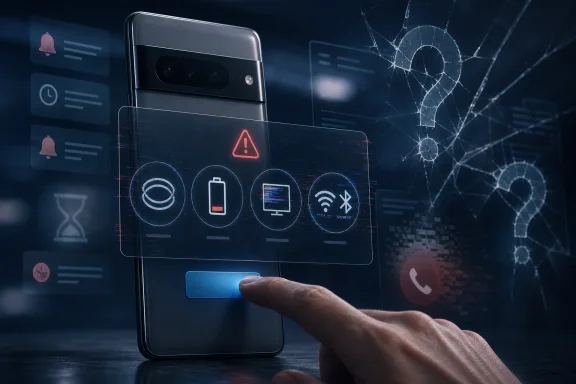 The Pixel Promise Was Always Bigger Than the Phone
The Pixel was never simply another Android handset. It was Google’s reference device, a consumer product wrapped around a platform argument: this is what Android should feel like when the company that builds the operating system also controls the update pipeline, the core apps, the cloud services, and increasingly the silicon.That is why update failures hit Pixel harder than they would hit a random midrange Android phone. A buggy update on a bargain handset is frustrating. A buggy update on a premium Pixel is a breach of the product’s central promise.
Google did not sell Pixel owners only cameras, screens, and Tensor chips. It sold first access, long support windows, feature drops, security updates, and the implied prestige of being closest to Android’s source. The enthusiast pitch was simple: if you want the least compromised Android software experience, buy the phone from Google.
That pitch becomes fragile when users start treating monthly updates as a gamble. Once the install button carries a mental warning label, the Pixel has lost something more valuable than a benchmark comparison. It has lost the presumption that Google’s build is the safe build.
A Routine Patch Should Not Feel Like Firmware Roulette
The most damaging part of the current Pixel criticism is not any single bug. It is the pattern. Android Authority points to complaints about reduced battery life, glitchy displays, boot loops, sluggishness, broken connectivity, delayed notifications, and even past emergency-calling failures as evidence that Pixel updates have become regressions rather than repairs.Some of these issues appear to affect subsets of users rather than every device. That matters, because responsible reporting should not turn every support thread into a universal crisis. But it does not absolve Google. Modern phone platforms are judged by tails as much as averages, because the user whose device will not boot does not care that most installs were uneventful.
Boot loops are particularly corrosive. Battery drain is miserable; delayed notifications can be professionally damaging; display flicker makes a premium device feel cheap. But a phone that cannot reliably boot after a monthly update crosses from annoyance into operational failure.
For ordinary users, the phone is an authentication device, a payment device, a work device, a car key, a transit pass, a medical alert relay, and the only camera they carry. For IT administrators, it may be part of a managed fleet. For families, it may be the device used to reach someone in an emergency. The phrase “software update” cannot be allowed to mean “possible loss of the device.”
Google’s Advantage Makes the Failures Harder to Excuse
The Pixel line should be one of the easier Android fleets to update well. Google does not have to support the entire Android ecosystem when it patches Pixel. It controls the hardware configurations, the OS branch, the default apps, the Play services layer, and the update distribution model.That does not make the job easy. Phones are radios, cameras, payment terminals, biometric devices, machine-learning accelerators, and battery-management systems packed into glass slabs. Carrier interactions, regional differences, modem behavior, app compatibility, and staged rollouts all complicate the equation.
But Google’s degree of control is exactly why users expect better. Samsung has to ship across a sprawling portfolio, multiple chip families, and countless regional variants. Microsoft has to support a Windows universe of self-built desktops, enterprise images, ancient peripherals, third-party drivers, and decade-old assumptions. Pixel is not trivial, but it is not the wild west either.
This is the core accountability problem. If the Android platform owner cannot make its own premium Android phones feel safe to update, then the update promise becomes less a competitive advantage than a marketing liability.
The AI Roadshow Makes the Bugs Look Worse
The Android Authority piece frames the issue against Google’s accelerating AI push, and that framing is potent because it captures the mood around modern platform companies. Users are being shown demos of increasingly ambitious AI systems while the basics of reliability seem to slip out from under them.This is not unique to Google. Microsoft has faced similar tension with Copilot, Recall, Windows search, Settings migrations, and the long tail of unfinished UI work. Apple markets intelligence features while still being judged by battery life, notification behavior, and iCloud reliability. The industry has a habit of treating stability as boring until instability becomes the story.
For Pixel owners, the contrast is especially sharp. AI-generated interface flourishes, contextual search features, image tricks, and agentic conveniences are impressive only if the phone underneath remains dependable. A handset that can summarize, generate, identify, and automate still fails the test if it cannot last the day or deliver notifications on time.
The accusation is not that Google should stop working on AI. That would be absurd. The accusation is that the company appears more eager to showcase the future than to earn confidence in the present.
Enthusiasts Forgive Early; Mainstream Buyers Remember Late
Pixel fans have historically been unusually forgiving. They tolerated generations of hardware compromises because they liked the camera processing, the clean Android build, the fast updates, and the feeling that Pixel was where Google’s software ideas arrived first. Enthusiast communities often absorb pain that mainstream buyers never would.That forgiveness has limits. The moment a device becomes unreliable after an official update, the user’s relationship with the brand changes. The phone is no longer a trusted tool with occasional quirks; it becomes a managed risk.
This is where Google’s position gets precarious. Pixel does not have Samsung’s retail dominance, Apple’s ecosystem lock-in, or Xiaomi’s global price aggression. It has brand cachet among Android enthusiasts, strong camera identity, and Google’s software halo. If the halo dims, the Pixel has to compete much more directly on hardware execution, thermal performance, modem reliability, battery longevity, repairability, and resale value.
That is a harder fight. Google has improved Pixel hardware significantly, but the line’s reputation has always been mixed on heat, battery, modems, and quality control. Software reliability was the compensating strength. If software becomes the doubt, buyers have fewer reasons to stay loyal.
Samsung’s Redemption Makes Google’s Excuses Smaller
The comparison with Samsung is uncomfortable for Google because Samsung used to be the cautionary tale. TouchWiz was synonymous with bloat, lag, duplication, and slow updates. Enthusiasts bought Nexus and later Pixel devices partly to escape it.Samsung’s One UI era changed that story. It did not become perfect, and Samsung still ships its own clutter and occasional bugs. But the company professionalized the experience, improved update cadence, expanded long-term support commitments, and made its software feel coherent across a huge range of devices.
That transformation matters because it proves reputations are not fixed. Samsung climbed out of the software penalty box through years of iterative work, not one spectacular keynote. It made boring reliability part of the brand.
Google now risks drifting in the opposite direction. The company that once represented clean Android discipline is being criticized for letting its own update channel feel under-tested. That inversion is brutal because it undermines the Pixel’s original identity.
The Emergency-Calling Shadow Is Impossible to Ignore
Not every Pixel complaint carries the same weight. Battery drain and sluggishness are serious quality problems, but emergency-calling failures sit in a different category. When users invoke prior reports about phones being unable to dial 911, they are not merely escalating rhetoric. They are pointing at the most basic public-safety function of a mobile device.A smartphone can fail at many things and still be a usable product. It can ship with an underwhelming assistant, a mediocre ultrawide camera, a dull design, or a feature that feels half-finished. It cannot be casually unreliable at calling, connectivity, alerts, or booting.
This is why Google cannot treat these incidents as normal software churn. Phones occupy a privileged category of trust. They are not optional gadgets in the way tablets, smart speakers, and wearables often are. They are the device people reach for when everything else has gone wrong.
For an IT audience, the lesson is straightforward. Availability is a feature. Reliability is a feature. Emergency behavior is a feature. If the release process treats those as background assumptions rather than first-class test targets, the product is already in trouble.
The Update Model Needs More Than Faster Fixes
Google’s likely defense is that software bugs are inevitable and that staged rollouts, beta programs, issue trackers, and rescue updates exist precisely to manage them. That is true as far as it goes. No serious platform can promise zero defects.But the current criticism is not asking for magic. It is asking for proportional seriousness. A bug that traps devices in boot loops should trigger the same institutional urgency as a security incident, because for the affected user, the practical result is device denial-of-service.
The fix is not merely to patch faster after the fact. Google needs a release culture that treats regression prevention as a product feature. That means broader hardware matrix testing, more conservative staged rollouts when early telemetry looks suspicious, clearer public status pages, stronger rollback paths, and a support process that does not leave users triangulating answers from Reddit threads and news reports.
Rollback is the hard part. Mobile OS vendors have good security reasons to prevent easy downgrades, especially when patches close exploitable vulnerabilities. But users also need credible recovery options when a signed, official update damages their device. Security cannot become a one-way door into unrecoverable instability.
Enterprises Will Read This as a Management Risk
Pixel phones are not just consumer devices. They live in businesses, schools, government offices, developer teams, and security-conscious households. Google has spent years building Android Enterprise credibility, and Pixel devices often serve as clean examples of what modern Android management can look like.A shaky update reputation complicates that story. Administrators do not evaluate devices only by features; they evaluate them by the predictability of their lifecycle. If a monthly update can plausibly create support spikes, emergency replacements, authentication lockouts, or field-device downtime, the cost of ownership changes.
This is where the Windows comparison becomes especially useful. Microsoft learned, painfully, that update quality is not just an engineering concern. It is an operational contract with every admin who has to plan patch windows, maintain rollback procedures, answer help-desk tickets, and explain downtime to leadership.
Google needs to think the same way about Pixel. A phone update that breaks a consumer’s weekend is bad. A phone update that strands a fleet of managed devices is a governance problem.
The Beta Program Cannot Become a Liability Laundromat
Google has public betas, developer previews, canary channels, and staged releases. In theory, this should reduce risk. Experimental users absorb early breakage, telemetry catches patterns, and stable builds arrive with the worst defects removed.The problem is that users judge the stable channel by stable-channel outcomes. If serious regressions escape into production, the existence of beta channels starts to look less like diligence and more like process theater. It suggests either the tests are not catching the right failures, the telemetry is not being interpreted aggressively enough, or the release criteria are too permissive.
There is also a subtle social contract at play. Enthusiasts who join beta programs accept risk. Mainstream users on stable builds do not. When stable users feel like they are involuntary testers, resentment follows quickly.
That resentment is amplified by the language of modern software. Companies call products “stable,” “release,” “production,” and “general availability” because those words imply a threshold has been crossed. If the threshold becomes porous, users stop believing the labels.
Google’s Silence Often Does More Damage Than the Bug
A technical failure is one thing. A communication failure is another. Users can tolerate a surprising amount of inconvenience if they believe the vendor understands the problem, owns it plainly, and gives them realistic next steps.What they do not tolerate well is ambiguity. Is the update safe? Which models are affected? Should users delay installation? Is there a fix? Will the fix preserve data? Is support aware? Are repair centers aligned? Does the company consider the issue widespread or isolated?
When answers are scattered across issue trackers, support comments, community reports, and secondhand coverage, users fill the vacuum themselves. That is how “some users are affected” becomes “never update your Pixel,” even when the underlying problem is narrower. The absence of clear official framing becomes its own accelerant.
Google is not a small OEM learning crisis communications for the first time. It is one of the largest software companies in the world, stewarding an operating system used globally. If it wants Pixel owners to keep trusting fast updates, it needs to communicate like a company that understands the consequences of fast updates.
The Premium Phone Market Punishes Broken Basics
Premium phones are now mature products. The obvious upgrade leaps are smaller, the cameras are all good, the screens are all bright, and performance is sufficient for most people. That makes trust more important, not less.A buyer spending flagship money is not merely buying peak specifications. They are buying the expectation that the device will fade into the background and work. That expectation is boring until it is violated.
The Pixel’s problem is that its differentiators increasingly depend on cloud services, AI features, and software updates. That makes quality control central to the product, not peripheral. If Google wants software to be the reason people choose Pixel, then software defects will also be the reason people leave.
This is the same trap Microsoft faces whenever Windows ships a headline feature while users still complain about inconsistent settings, broken printers, driver regressions, or update failures. Ambition does not excuse neglect. It raises the bar.
Accountability Means Changing Incentives, Not Issuing Apologies
Holding Google accountable should not mean demanding that every engineer be perfect or that every update be delayed indefinitely. It means asking whether the organization rewards the right outcomes. Does it prize launch cadence over defect reduction? Does it celebrate AI demos more than stability metrics? Does it treat support escalations as public-relations irritants or as product-quality signals?The answer is visible only in behavior. If Google slows a feature drop to harden core reliability, that is accountability. If it publishes clearer known-issue guidance and recovery instructions, that is accountability. If it expands testing around battery, boot, radios, notifications, and emergency calling, that is accountability. If it gives users safer recovery paths after bad updates, that is accountability.
A polished keynote apology would be less meaningful than three dull months of updates that simply do not break things. In platform software, boring is often the highest compliment. Users do not need every month to feel new; they need every month to feel safe.
Google also has to resist the temptation to define success by aggregate install rates. If millions update successfully and thousands suffer severe failures, the story is not over. The edge cases are still real users with real devices, real data, and real costs.
The Next Pixel Has to Sell Confidence Before Intelligence
The rumored next wave of Pixel devices will almost certainly lean hard into AI. That is the market Google wants to shape, and Pixel is the natural showroom for its model-side ambitions. The danger is that the audience may now listen for a different message.Instead of asking only what the new assistant can do, buyers may ask whether the modem is stable, whether the battery lasts, whether updates are safe, whether notifications arrive, whether Bluetooth survives the next patch, and whether support will help if the phone fails. Those are not glamorous questions. They are buying questions.
Google can still recover. The Pixel brand is not broken beyond repair, and many owners remain satisfied with their devices. Android enthusiasts want Pixel to succeed because the platform benefits from a strong first-party device that pushes camera software, update policy, security features, and clean Android design.
But goodwill is not a renewable resource if it is spent carelessly. Each bad update teaches users to wait. Each unclear response teaches them to distrust the release notes. Each severe regression teaches them that the safest Pixel is the one not yet patched.
The Install Button Now Carries Google’s Reputation
The practical lessons from this run of Pixel update complaints are not complicated, which is exactly why they are so damaging. Google’s challenge is execution, not imagination.- Pixel’s premium promise depends on update trust as much as camera quality or AI features.
- Severe regressions such as boot loops and broken connectivity should be treated as product emergencies, not routine support noise.
- Stable-channel users should never feel as if they are involuntary beta testers for Google’s monthly release process.
- Google needs clearer public communication when update issues emerge, including affected models, mitigation steps, and recovery expectations.
- AI features will not compensate for failures in battery life, notifications, calling, boot reliability, and basic device availability.
- The fastest way for Google to rebuild confidence is to ship a stretch of boring, dependable Pixel updates that make users forget they were ever nervous.
References
- Primary source: Android Authority
Published: Sat, 13 Jun 2026 09:03:49 GMT
Loading…
www.androidauthority.com - Related coverage: androidcentral.com
Loading…
www.androidcentral.com - Related coverage: notebookcheck.net
Loading…
www.notebookcheck.net - Related coverage: phonearena.com
Loading…
www.phonearena.com - Official source: 9to5google.com
Loading…
9to5google.com - Related coverage: livemint.com
Loading…
www.livemint.com