
Treyarch announced on June 17, 2026, that 2010’s Call of Duty: Black Ops and 2012’s Call of Duty: Black Ops II are being ported to PlayStation consoles in July by Iron Galaxy, while saying nothing publicly about matching fixes for the existing Xbox and PC versions. The announcement solves a real PlayStation problem: PS4 and PS5 owners have lacked native access to two defining seventh-generation shooters. But it also exposes an increasingly awkward Xbox problem. Microsoft now owns Activision, owns the platform where these games have remained playable for years, and still appears more ready to produce new PlayStation ports than to modernize the versions its own customers already bought.
The immediate read is simple: PlayStation owners are getting a convenient, native way to play two beloved Black Ops games. That matters because the PlayStation 3 remains Sony’s great backwards-compatibility wall. PS4 and PS5 users can stream some PS3-era titles through PlayStation Plus Premium, but streaming is not ownership, not preservation, and not the same experience as a local port.
For Microsoft, though, the optics are much thornier. The company spent years arguing that acquiring Activision Blizzard would not turn Call of Duty into an Xbox cudgel. Bringing legacy Call of Duty games to modern PlayStation hardware fits that public posture perfectly. It says: the franchise is bigger than one box, and Xbox is now a publisher that meets players where they are.
The trouble is that Xbox players have already been where they are for nearly a decade. Black Ops has been playable on Xbox One since May 2016 through backward compatibility, and Black Ops II followed in April 2017. Those releases were once triumphs of the Xbox platform strategy: bring the library forward, preserve the past, and make old discs matter in a way Sony did not.
That advantage now cuts the other way. If Microsoft’s answer to classic Call of Duty is “Xbox already has it,” players are entitled to ask why “has it” still means low-resolution emulation, old multiplayer vulnerabilities, fragmented DLC, and no obvious Game Pass treatment. Backward compatibility was a brilliant bridge. It was never supposed to become an excuse to leave the bridge unmaintained.
That left PlayStation users in a uniquely inconvenient position. A person who owned Black Ops II on PS3 could not simply put the disc into a PS5. They could not download a native PS4 or PS5 version because none existed. Their most modern official route was cloud streaming, assuming the game was available in their region and the player was paying for the right subscription tier.
A local port fixes that in the most direct possible way. It gives Sony’s current consoles a product they can sell, patch, classify, and run without depending on PS3 server blades in a data center. It also gives Activision another chance to monetize two games that remain culturally durable inside the Call of Duty catalog.
Iron Galaxy is a logical choice for that work. The studio has built a long business around technical ports, support development, and getting older or platform-specific code running elsewhere. That does not guarantee brilliance, and players will remember both strong and troubled port histories across the industry. But the assignment itself is not mysterious: make two PS3-era shooters behave like contemporary PlayStation products.
The unresolved question is what kind of products they will be. Treyarch’s announcement confirmed the ports and the July window, but the important commercial and technical details remain unspoken. Price, upgrade paths for previous owners, DLC bundling, resolution targets, frame-rate behavior, save migration, trophy handling, and multiplayer infrastructure are all the difference between a preservation-minded release and a clean new checkout button.
That was especially powerful with Call of Duty. These games were not obscure curiosities. Black Ops and Black Ops II were enormous cultural products, multiplayer hangouts, Zombies fixtures, and annual-release-era milestones. Their arrival on Xbox One helped make the console feel less like an isolated generation and more like a living archive.
The program also reinforced a broader identity for Xbox. Microsoft could say it cared about compatibility because it had done the unglamorous engineering work. It could point to discs booting, saves carrying over, achievements remaining intact, and Xbox 360 multiplayer still functioning across generations. In a console market obsessed with fresh exclusives, this was a surprisingly durable form of goodwill.
But preservation is not a single event. It is maintenance. A backward-compatible listing that never improves, never gets security attention, and never joins the subscription ecosystem starts to feel less like a platform promise and more like a museum display with the lights flickering.
That is the heart of the frustration around this PlayStation announcement. Xbox players are not angry that PlayStation users get to play Black Ops. Most people understand why native PlayStation ports are needed. They are angry because Microsoft’s own version of the game appears to have been filed under “available” rather than “looked after.”
Against that backdrop, reports that these Black Ops titles remain constrained by basic Xbox 360-era presentation on modern Xbox hardware sting more than they otherwise would. A 2010 shooter running at roughly the same visual envelope it had on old hardware is not shocking in isolation. It becomes shocking when the platform holder has spent a decade telling customers that old games can be treated better.
There are technical caveats, of course. Not every backward-compatible game received Xbox One X enhancements. Not every engine tolerates resolution changes cleanly. Multiplayer titles can be especially sensitive because visual clarity, frame pacing, field of view, and even old assumptions about performance may interact with competitive balance or anti-cheat systems.
Still, users do not experience caveats. They experience the product in front of them. If a new PlayStation port arrives with cleaner image quality or a better front-end experience while the Xbox version remains a low-resolution backward-compatible package, the message will be obvious even if the engineering story is complicated.
Microsoft should understand this better than anyone. Xbox’s old library is not a footnote for its most loyal customers. It is part of the reason many of them stayed. When those players see rival-platform ports getting active development attention, the problem is not envy. It is a feeling that loyalty has become operationally invisible.
This is where the PlayStation ports become more than a preservation story. If these ports connect to the old multiplayer ecosystem with little intervention, PlayStation players may simply inherit the mess. If they arrive with cleaner network handling, updated platform integration, or better moderation pathways, Xbox and PC users will ask why that work was not applied more broadly.
Activision has an unenviable task here. Old Call of Duty multiplayer is not just “a server” that can be polished with a press of a button. These games include legacy networking assumptions, old platform APIs, player-hosted behavior, aging account systems, and exploit knowledge accumulated over more than a decade. Fixing them properly may require more than a porting pass.
But that is exactly why silence is damaging. If Xbox, Treyarch, or Activision said plainly that the PlayStation versions are local compatibility ports using existing services, expectations would settle accordingly. If they said a wider security and multiplayer cleanup was underway, Xbox and PC players would have a reason to wait. Saying nothing lets the most cynical interpretation dominate.
The cynical interpretation is not irrational. Microsoft is trying to sell Call of Duty everywhere while protecting the franchise’s annualized machine. The company has incentives to revive old games just enough to generate nostalgia and revenue, but not enough to let them compete too comfortably with the current premium release, current battle pass, or current store. Players sense that tension even when companies do not say it aloud.
That expectation is not entitlement in the abstract. It is a consequence of Microsoft’s own messaging. Xbox has spent years telling players that Game Pass is the place where its first-party ecosystem becomes more accessible, more durable, and more valuable over time. After the Activision acquisition closed, the question was never whether Call of Duty would affect Game Pass, but how extensively and how quickly.
The continued absence of Black Ops and Black Ops II from the service, if unchanged when PlayStation ports arrive, creates a strange split-screen. On one side, Microsoft is investing in new PlayStation versions of two legacy Activision games. On the other, Xbox subscribers still have no clear bundled access to the same titles through the subscription that defines the platform’s value proposition.
DLC makes the issue sharper. The old Call of Duty map-pack economy was built for a different era, when splitting the multiplayer population into paid content pools was normal business. In 2026, charging separately for decade-plus-old map packs feels increasingly hostile, particularly if the base game itself is being freshly marketed to another platform.
There are licensing and store-management complexities here, but the consumer-facing answer is simple. If Microsoft wants to present these games as living classics, it should package them like living classics. That means sensible pricing, bundled content, and subscription availability that reflects the age of the games rather than the stubbornness of their original monetization model.
That excuse expired with the deal. Microsoft now owns Xbox, Activision, Treyarch, the platform services, and the strategic relationship with PlayStation. No single team is magically responsible for every legacy problem, but the corporate line of accountability is much cleaner than it used to be. The buck no longer has to cross a publisher-platform boundary.
This is why the announcement lands differently than it would have in 2019. A third-party Activision porting old Call of Duty games to PlayStation while Xbox backward-compatible versions languished would have been irritating but predictable. An Xbox-owned Activision doing it in 2026 raises a more pointed question: what does Xbox stewardship mean when Xbox customers are not the first beneficiaries?
The answer may be that Xbox is no longer primarily a console-first business. Microsoft’s gaming strategy now stretches across console, PC, cloud, subscriptions, mobile ambitions, and rival-platform publishing. In that world, the old idea that Xbox hardware owners should always get the best version of Microsoft-owned games is no longer guaranteed.
That may be strategically defensible. It is also emotionally expensive. Console ecosystems are built on accumulated trust, and trust is not only about exclusive games. It is about whether buying into a platform feels like joining a durable relationship or merely choosing one storefront among many.
Still, platform politics are unavoidable. Microsoft spent the regulatory battle over Activision insisting that Call of Duty would remain broadly available. The company signed agreements, made public commitments, and positioned itself as a steward of access rather than a gatekeeper. Porting Black Ops and Black Ops II to PlayStation fits that bargain.
But access is not the same as parity. If the PlayStation versions become the cleanest way to play these games on modern hardware, Microsoft will have created a bizarre hierarchy: Sony users get the new product, Xbox users get the old compatibility wrapper, and PC users get the version most exposed to the long tail of legacy security headaches.
That hierarchy may not be intentional. It may simply reflect where the technical need was most urgent. PlayStation required a port because Sony lacks native PS3 compatibility; Xbox did not because Microsoft already had a working emulation path. But consumers judge outcomes, not org charts.
The right move for Microsoft is not to cancel the PlayStation ports or resent their existence. The right move is to use them as a trigger for a broader classic Call of Duty cleanup. If a studio is already touching the code, assets, certification process, and store packaging, the company should explain what happens next for every platform where these games still have an audience.
Activision and Microsoft cannot simply pretend that the PC versions are archival artifacts. They are commercial products in a live storefront environment. They sit beside modern games, accept real money, and attract players who may not know the state of the multiplayer ecosystem before clicking buy.
The PC community is also less forgiving because it has seen alternatives. Fan patches, community servers, private clients, and unofficial fixes often emerge precisely because publishers abandon old infrastructure. Those efforts can be legally messy and technically uneven, but they demonstrate demand. People do not build workarounds for games they do not care about.
For Microsoft, this should be familiar terrain. Windows is the world’s messy compatibility platform. The company has spent decades learning that running old software is not the same as safely supporting old software. If Xbox wants to bring Activision’s back catalog into its broader Windows-and-services future, it cannot ignore the maintenance debt attached to that catalog.
The irony is that a serious PC cleanup would do more for Microsoft’s reputation than another nostalgia trailer. Fixing vulnerabilities, improving matchmaking integrity, clarifying server status, and bundling DLC would send a signal that ownership has practical consequences. It would say the acquisition produced stewardship, not just bigger quarterly content pipelines.
But the more important point is not whether Iron Galaxy can produce acceptable PlayStation versions. It is what the assignment says about priorities. Someone decided that two old Call of Duty games deserved fresh platform work in 2026. That decision required funding, planning, certification, and public marketing.
Once that machinery exists, the absence of any public Xbox or PC plan becomes louder. Microsoft does not have to promise a remaster. It does not have to rebuild multiplayer from scratch. But it should be able to say whether the existing versions will receive resolution improvements, security updates, DLC changes, Game Pass availability, or even a basic compatibility review.
The silence is especially odd because this is not a niche franchise. Call of Duty is arguably the most politically sensitive asset Microsoft acquired. Every move around it is interpreted through the lens of platform fairness, regulatory promises, subscription strategy, and Xbox’s identity crisis. A vague tweet about PlayStation ports was never going to remain a small preservation announcement.
The communications lesson is blunt. When you own the platform and the publisher, you do not get to announce benefits for one audience while leaving another to infer neglect. The modern gaming audience is too connected, too technically literate, and too aware of corporate incentives for that to work.
But Xbox still sells consoles, controllers, subscriptions, and a sense of belonging. It still asks users to invest in a library. It still benefits from the emotional residue of achievements, friends lists, saved games, and decades of purchases. If those customers conclude that Xbox hardware is merely one endpoint among many, Microsoft must give them another reason to feel prioritized.
Backward compatibility used to be that reason. It was an area where Xbox plainly outclassed PlayStation. It gave the platform an adult, library-conscious identity at a time when the industry often treated previous generations as disposable. Letting that advantage decay would be a strategic own goal.
The Black Ops ports make this visible because they invert the expected hierarchy. PlayStation, the platform with the compatibility gap, is getting the active fix. Xbox, the platform with the compatibility advantage, is getting reassurance by implication at best. PC, the platform Microsoft should theoretically understand most deeply, is left waiting for basic clarity about safety and support.
That does not mean Microsoft has betrayed Xbox users by porting games to PlayStation. It means the company has raised the standard for what it must do next. A multiplatform Xbox can work only if its home audience believes “multiplatform” means expansion, not abandonment.
If Microsoft wants to be the steward of Call of Duty rather than merely its landlord, July should be the beginning of a wider repair job: better communication, cleaner packaging, safer multiplayer, and platform treatment that makes sense in 2026. The future Xbox keeps describing is one where games follow players across devices; the test is whether the players who kept those games alive on Xbox and PC are carried forward too, or simply thanked for their patience while the next port goes somewhere else.
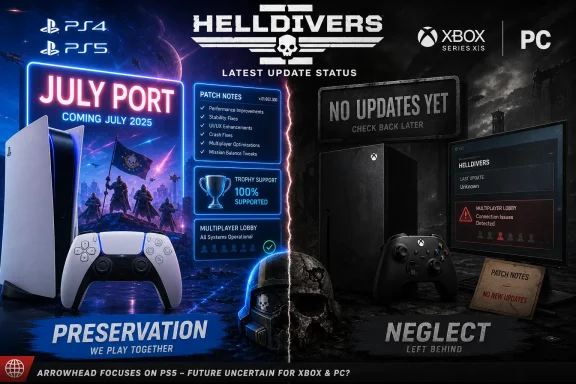 Microsoft’s Call of Duty Truce Is Starting to Look Like a One-Way Street
The immediate read is simple: PlayStation owners are getting a convenient, native way to play two beloved Black Ops games. That matters because the PlayStation 3 remains Sony’s great backwards-compatibility wall. PS4 and PS5 users can stream some PS3-era titles through PlayStation Plus Premium, but streaming is not ownership, not preservation, and not the same experience as a local port.For Microsoft, though, the optics are much thornier. The company spent years arguing that acquiring Activision Blizzard would not turn Call of Duty into an Xbox cudgel. Bringing legacy Call of Duty games to modern PlayStation hardware fits that public posture perfectly. It says: the franchise is bigger than one box, and Xbox is now a publisher that meets players where they are.
The trouble is that Xbox players have already been where they are for nearly a decade. Black Ops has been playable on Xbox One since May 2016 through backward compatibility, and Black Ops II followed in April 2017. Those releases were once triumphs of the Xbox platform strategy: bring the library forward, preserve the past, and make old discs matter in a way Sony did not.
That advantage now cuts the other way. If Microsoft’s answer to classic Call of Duty is “Xbox already has it,” players are entitled to ask why “has it” still means low-resolution emulation, old multiplayer vulnerabilities, fragmented DLC, and no obvious Game Pass treatment. Backward compatibility was a brilliant bridge. It was never supposed to become an excuse to leave the bridge unmaintained.
PlayStation Gets the Port Because Sony Never Built the Bridge
The PlayStation side of this story is not hard to understand. Black Ops and Black Ops II launched on PlayStation 3, Xbox 360, and PC at a time when cross-generation continuity was not a serious platform promise. When the PS4 arrived, Sony largely severed native PS3 compatibility. The PS5 inherited that gap.That left PlayStation users in a uniquely inconvenient position. A person who owned Black Ops II on PS3 could not simply put the disc into a PS5. They could not download a native PS4 or PS5 version because none existed. Their most modern official route was cloud streaming, assuming the game was available in their region and the player was paying for the right subscription tier.
A local port fixes that in the most direct possible way. It gives Sony’s current consoles a product they can sell, patch, classify, and run without depending on PS3 server blades in a data center. It also gives Activision another chance to monetize two games that remain culturally durable inside the Call of Duty catalog.
Iron Galaxy is a logical choice for that work. The studio has built a long business around technical ports, support development, and getting older or platform-specific code running elsewhere. That does not guarantee brilliance, and players will remember both strong and troubled port histories across the industry. But the assignment itself is not mysterious: make two PS3-era shooters behave like contemporary PlayStation products.
The unresolved question is what kind of products they will be. Treyarch’s announcement confirmed the ports and the July window, but the important commercial and technical details remain unspoken. Price, upgrade paths for previous owners, DLC bundling, resolution targets, frame-rate behavior, save migration, trophy handling, and multiplayer infrastructure are all the difference between a preservation-minded release and a clean new checkout button.
Xbox Once Won This Exact Argument
It is easy to forget how dominant Microsoft’s backward-compatibility message once felt. In the middle of the Xbox One generation, when the platform was still recovering from its disastrous 2013 launch strategy, backward compatibility gave Xbox a rare and sincere consumer-friendly win. The pitch was not merely that old games could be resold. It was that your old library still mattered.That was especially powerful with Call of Duty. These games were not obscure curiosities. Black Ops and Black Ops II were enormous cultural products, multiplayer hangouts, Zombies fixtures, and annual-release-era milestones. Their arrival on Xbox One helped make the console feel less like an isolated generation and more like a living archive.
The program also reinforced a broader identity for Xbox. Microsoft could say it cared about compatibility because it had done the unglamorous engineering work. It could point to discs booting, saves carrying over, achievements remaining intact, and Xbox 360 multiplayer still functioning across generations. In a console market obsessed with fresh exclusives, this was a surprisingly durable form of goodwill.
But preservation is not a single event. It is maintenance. A backward-compatible listing that never improves, never gets security attention, and never joins the subscription ecosystem starts to feel less like a platform promise and more like a museum display with the lights flickering.
That is the heart of the frustration around this PlayStation announcement. Xbox players are not angry that PlayStation users get to play Black Ops. Most people understand why native PlayStation ports are needed. They are angry because Microsoft’s own version of the game appears to have been filed under “available” rather than “looked after.”
The 720p Problem Is Really a Respect Problem
Resolution complaints can sound trivial until you remember what Microsoft has trained its audience to expect. Xbox has spent years touting FPS Boost, Auto HDR, higher-resolution emulation, and the Series X’s ability to make old games look better without requiring developers to fully remaster them. The company made compatibility feel not only convenient, but enhanced.Against that backdrop, reports that these Black Ops titles remain constrained by basic Xbox 360-era presentation on modern Xbox hardware sting more than they otherwise would. A 2010 shooter running at roughly the same visual envelope it had on old hardware is not shocking in isolation. It becomes shocking when the platform holder has spent a decade telling customers that old games can be treated better.
There are technical caveats, of course. Not every backward-compatible game received Xbox One X enhancements. Not every engine tolerates resolution changes cleanly. Multiplayer titles can be especially sensitive because visual clarity, frame pacing, field of view, and even old assumptions about performance may interact with competitive balance or anti-cheat systems.
Still, users do not experience caveats. They experience the product in front of them. If a new PlayStation port arrives with cleaner image quality or a better front-end experience while the Xbox version remains a low-resolution backward-compatible package, the message will be obvious even if the engineering story is complicated.
Microsoft should understand this better than anyone. Xbox’s old library is not a footnote for its most loyal customers. It is part of the reason many of them stayed. When those players see rival-platform ports getting active development attention, the problem is not envy. It is a feeling that loyalty has become operationally invisible.
Multiplayer Rot Is the Harder Problem to Ignore
The resolution debate is cosmetic compared with the multiplayer problem. Classic Call of Duty lobbies have long carried complaints about hackers, compromised sessions, mod menus, and in some cases security concerns on older PC entries. The older the game and the lighter the active moderation, the more the experience becomes a lottery.This is where the PlayStation ports become more than a preservation story. If these ports connect to the old multiplayer ecosystem with little intervention, PlayStation players may simply inherit the mess. If they arrive with cleaner network handling, updated platform integration, or better moderation pathways, Xbox and PC users will ask why that work was not applied more broadly.
Activision has an unenviable task here. Old Call of Duty multiplayer is not just “a server” that can be polished with a press of a button. These games include legacy networking assumptions, old platform APIs, player-hosted behavior, aging account systems, and exploit knowledge accumulated over more than a decade. Fixing them properly may require more than a porting pass.
But that is exactly why silence is damaging. If Xbox, Treyarch, or Activision said plainly that the PlayStation versions are local compatibility ports using existing services, expectations would settle accordingly. If they said a wider security and multiplayer cleanup was underway, Xbox and PC players would have a reason to wait. Saying nothing lets the most cynical interpretation dominate.
The cynical interpretation is not irrational. Microsoft is trying to sell Call of Duty everywhere while protecting the franchise’s annualized machine. The company has incentives to revive old games just enough to generate nostalgia and revenue, but not enough to let them compete too comfortably with the current premium release, current battle pass, or current store. Players sense that tension even when companies do not say it aloud.
Game Pass Silence Makes the Ownership Pitch Feel Hollow
Then there is Game Pass, the subscription service that now sits beneath nearly every Xbox conversation like a second operating system. Microsoft bought Activision Blizzard in a $68.7 billion deal and gradually began folding parts of the catalog into its subscription strategy. For many Xbox users, classic Call of Duty games seemed like obvious candidates.That expectation is not entitlement in the abstract. It is a consequence of Microsoft’s own messaging. Xbox has spent years telling players that Game Pass is the place where its first-party ecosystem becomes more accessible, more durable, and more valuable over time. After the Activision acquisition closed, the question was never whether Call of Duty would affect Game Pass, but how extensively and how quickly.
The continued absence of Black Ops and Black Ops II from the service, if unchanged when PlayStation ports arrive, creates a strange split-screen. On one side, Microsoft is investing in new PlayStation versions of two legacy Activision games. On the other, Xbox subscribers still have no clear bundled access to the same titles through the subscription that defines the platform’s value proposition.
DLC makes the issue sharper. The old Call of Duty map-pack economy was built for a different era, when splitting the multiplayer population into paid content pools was normal business. In 2026, charging separately for decade-plus-old map packs feels increasingly hostile, particularly if the base game itself is being freshly marketed to another platform.
There are licensing and store-management complexities here, but the consumer-facing answer is simple. If Microsoft wants to present these games as living classics, it should package them like living classics. That means sensible pricing, bundled content, and subscription availability that reflects the age of the games rather than the stubbornness of their original monetization model.
The Activision Deal Changed the Standard of Care
Before the acquisition, Xbox could at least point across the table. Activision owned the games. Activision controlled the servers. Activision decided whether the DLC pricing changed, whether PC security got attention, and whether classic titles entered a subscription service. Microsoft provided the compatibility layer, but it did not own the whole stack.That excuse expired with the deal. Microsoft now owns Xbox, Activision, Treyarch, the platform services, and the strategic relationship with PlayStation. No single team is magically responsible for every legacy problem, but the corporate line of accountability is much cleaner than it used to be. The buck no longer has to cross a publisher-platform boundary.
This is why the announcement lands differently than it would have in 2019. A third-party Activision porting old Call of Duty games to PlayStation while Xbox backward-compatible versions languished would have been irritating but predictable. An Xbox-owned Activision doing it in 2026 raises a more pointed question: what does Xbox stewardship mean when Xbox customers are not the first beneficiaries?
The answer may be that Xbox is no longer primarily a console-first business. Microsoft’s gaming strategy now stretches across console, PC, cloud, subscriptions, mobile ambitions, and rival-platform publishing. In that world, the old idea that Xbox hardware owners should always get the best version of Microsoft-owned games is no longer guaranteed.
That may be strategically defensible. It is also emotionally expensive. Console ecosystems are built on accumulated trust, and trust is not only about exclusive games. It is about whether buying into a platform feels like joining a durable relationship or merely choosing one storefront among many.
PlayStation Ports Are Good Preservation and Awkward Platform Politics
There is a temptation to treat every Microsoft release on PlayStation as a referendum on the future of Xbox hardware. That overstates the case here. These are old Call of Duty games filling a compatibility hole on Sony’s side, not a brand-new Xbox exclusive being redirected at launch.Still, platform politics are unavoidable. Microsoft spent the regulatory battle over Activision insisting that Call of Duty would remain broadly available. The company signed agreements, made public commitments, and positioned itself as a steward of access rather than a gatekeeper. Porting Black Ops and Black Ops II to PlayStation fits that bargain.
But access is not the same as parity. If the PlayStation versions become the cleanest way to play these games on modern hardware, Microsoft will have created a bizarre hierarchy: Sony users get the new product, Xbox users get the old compatibility wrapper, and PC users get the version most exposed to the long tail of legacy security headaches.
That hierarchy may not be intentional. It may simply reflect where the technical need was most urgent. PlayStation required a port because Sony lacks native PS3 compatibility; Xbox did not because Microsoft already had a working emulation path. But consumers judge outcomes, not org charts.
The right move for Microsoft is not to cancel the PlayStation ports or resent their existence. The right move is to use them as a trigger for a broader classic Call of Duty cleanup. If a studio is already touching the code, assets, certification process, and store packaging, the company should explain what happens next for every platform where these games still have an audience.
PC Players Have the Least Patience for Nostalgia Without Patches
PC is the uncomfortable third rail in this story. Console backward compatibility has its own constraints, but PC users expect old games to be patched, secured, and made to run sensibly on modern hardware. When a classic multiplayer game remains available for purchase but carries a reputation for unsafe or compromised online play, nostalgia becomes a liability.Activision and Microsoft cannot simply pretend that the PC versions are archival artifacts. They are commercial products in a live storefront environment. They sit beside modern games, accept real money, and attract players who may not know the state of the multiplayer ecosystem before clicking buy.
The PC community is also less forgiving because it has seen alternatives. Fan patches, community servers, private clients, and unofficial fixes often emerge precisely because publishers abandon old infrastructure. Those efforts can be legally messy and technically uneven, but they demonstrate demand. People do not build workarounds for games they do not care about.
For Microsoft, this should be familiar terrain. Windows is the world’s messy compatibility platform. The company has spent decades learning that running old software is not the same as safely supporting old software. If Xbox wants to bring Activision’s back catalog into its broader Windows-and-services future, it cannot ignore the maintenance debt attached to that catalog.
The irony is that a serious PC cleanup would do more for Microsoft’s reputation than another nostalgia trailer. Fixing vulnerabilities, improving matchmaking integrity, clarifying server status, and bundling DLC would send a signal that ownership has practical consequences. It would say the acquisition produced stewardship, not just bigger quarterly content pipelines.
Iron Galaxy Is Not the Story, but Its Assignment Is
Some players will inevitably focus on Iron Galaxy. Port studios are easy targets because their names become attached to compromises often created by budget, schedule, source-code condition, and publisher requirements. The internet remembers bad ports far more vividly than competent ones.But the more important point is not whether Iron Galaxy can produce acceptable PlayStation versions. It is what the assignment says about priorities. Someone decided that two old Call of Duty games deserved fresh platform work in 2026. That decision required funding, planning, certification, and public marketing.
Once that machinery exists, the absence of any public Xbox or PC plan becomes louder. Microsoft does not have to promise a remaster. It does not have to rebuild multiplayer from scratch. But it should be able to say whether the existing versions will receive resolution improvements, security updates, DLC changes, Game Pass availability, or even a basic compatibility review.
The silence is especially odd because this is not a niche franchise. Call of Duty is arguably the most politically sensitive asset Microsoft acquired. Every move around it is interpreted through the lens of platform fairness, regulatory promises, subscription strategy, and Xbox’s identity crisis. A vague tweet about PlayStation ports was never going to remain a small preservation announcement.
The communications lesson is blunt. When you own the platform and the publisher, you do not get to announce benefits for one audience while leaving another to infer neglect. The modern gaming audience is too connected, too technically literate, and too aware of corporate incentives for that to work.
Xbox’s Future Depends on Whether “Everywhere” Still Includes Xbox First
The deeper anxiety here is not really about two old shooters. It is about Xbox’s evolving promise. Microsoft increasingly behaves like a publisher that happens to own a console, not a console maker that happens to publish games. That shift may be inevitable, even wise, given the economics of game development and the limits of hardware exclusivity.But Xbox still sells consoles, controllers, subscriptions, and a sense of belonging. It still asks users to invest in a library. It still benefits from the emotional residue of achievements, friends lists, saved games, and decades of purchases. If those customers conclude that Xbox hardware is merely one endpoint among many, Microsoft must give them another reason to feel prioritized.
Backward compatibility used to be that reason. It was an area where Xbox plainly outclassed PlayStation. It gave the platform an adult, library-conscious identity at a time when the industry often treated previous generations as disposable. Letting that advantage decay would be a strategic own goal.
The Black Ops ports make this visible because they invert the expected hierarchy. PlayStation, the platform with the compatibility gap, is getting the active fix. Xbox, the platform with the compatibility advantage, is getting reassurance by implication at best. PC, the platform Microsoft should theoretically understand most deeply, is left waiting for basic clarity about safety and support.
That does not mean Microsoft has betrayed Xbox users by porting games to PlayStation. It means the company has raised the standard for what it must do next. A multiplatform Xbox can work only if its home audience believes “multiplatform” means expansion, not abandonment.
The July Ports Turn Old Lobbies Into a New Test for Xbox
The practical stakes are now narrow enough to measure. By the time these PlayStation ports arrive in July, players should be able to judge whether Microsoft is treating classic Call of Duty as a living catalog or as a convenient nostalgia mine.- The PlayStation versions need clear details on price, platforms, performance targets, DLC, ownership upgrades, trophies, and whether multiplayer uses old or updated infrastructure.
- Xbox players need to know whether the backward-compatible versions will receive any technical improvements beyond their existing Xbox 360-era presentation.
- PC players need a direct answer on multiplayer security, exploit mitigation, and whether the legacy releases remain safe and responsible products to sell.
- Game Pass subscribers need clarity on whether Microsoft’s ownership of Activision will make the classic Call of Duty catalog meaningfully more accessible.
- Activision should treat DLC fragmentation as a legacy design problem, not as a sacred business model that must be preserved forever.
- Microsoft should explain its classic-game policy before player speculation hardens into the accepted story of neglect.
If Microsoft wants to be the steward of Call of Duty rather than merely its landlord, July should be the beginning of a wider repair job: better communication, cleaner packaging, safer multiplayer, and platform treatment that makes sense in 2026. The future Xbox keeps describing is one where games follow players across devices; the test is whether the players who kept those games alive on Xbox and PC are carried forward too, or simply thanked for their patience while the next port goes somewhere else.
References
- Primary source: Windows Central
Published: 2026-06-17T20:52:07.177736
Loading…
www.windowscentral.com - Related coverage: cq-esports.com
Loading…
cq-esports.com - Related coverage: harianbasis.co
Loading…
www.harianbasis.co - Related coverage: fanzade.com
Loading…
fanzade.com - Related coverage: ultimaficha.com.br
Loading…
ultimaficha.com.br - Related coverage: 3djuegos.com
Loading…
www.3djuegos.com
- Related coverage: insider-gaming.com
Loading…
insider-gaming.com - Related coverage: geek.reporteindigo.com
Loading…
geek.reporteindigo.com - Related coverage: dexerto.com
Loading…
www.dexerto.com - Related coverage: tweakers.net
Loading…
tweakers.net - Related coverage: asatunews.co.id
Loading…
www.asatunews.co.id - Related coverage: news.xbox.com
Loading…
news.xbox.com - Related coverage: gamespot.com
Loading…
www.gamespot.com - Related coverage: notebookcheck.net
Loading…
www.notebookcheck.net - Related coverage: forbes.com
Loading…
www.forbes.com - Related coverage: gamerevolution.com
Loading…
www.gamerevolution.com - Related coverage: pushsquare.com
Loading…
www.pushsquare.com - Related coverage: shacknews.com
Loading…
www.shacknews.com - Related coverage: gamesradar.com
Loading…
www.gamesradar.com