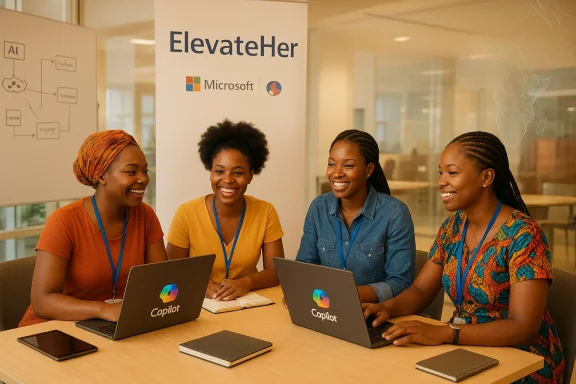
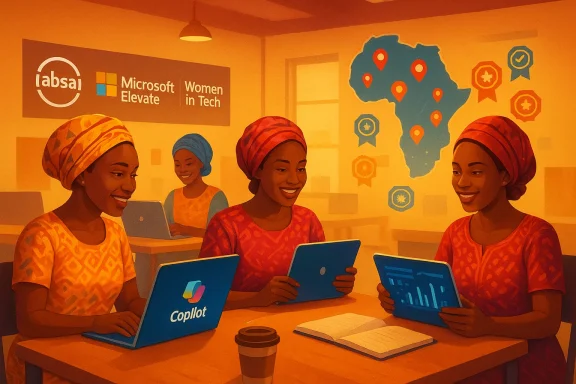
Absa’s decision to scale its ElevateHer AI programme from a South African pilot to nine additional African markets signals a major corporate push into continent-wide AI skilling for women — a move that combines a bank’s regional footprint, Microsoft’s global Elevate skilling stack and Women in Tech’s gender-focused networks to target employability, entrepreneurship and digital inclusion at scale.
Since late 2025, Absa — an established pan‑African bank with operations in a dozen African markets — has been piloting an AI skilling pathway branded as ElevateHer. The pilot, run in partnership with Microsoft Elevate and Women in Tech (WiT), reportedly reached more than 10,000 learners during its initial phase. On February 5, 2026, industry reporting confirmed Absa’s plans to roll the programme into nine additional African markets, aiming to close an acute AI skills gap across the Global South that global forums and development agencies have repeatedly flagged as urgent.
This announcement comes at a moment when major technology companies and international bodies are publicly committing to mass skilling initiatives. Microsoft’s recent global pledges — announced through the Microsoft Elevate initiative and registered as part of the ITU’s Partner2Connect pledging platform — include a multi‑billion dollar investment intended to credential millions of learners in AI skills over the coming years. At the same time, forums like Davos and multilateral programs such as the World Economic Forum’s Reskilling Revolution have prioritized closing the AI and digital divide as fundamental to inclusive economic growth.
That said, two operationally critical items remain imprecise in public reporting to date:
From a policy and funding standpoint, that alignment reduces the risk that a single programme will operate in isolation. When corporate skilling aligns with regional education and labour market initiatives, the potential for systemic impact increases — assuming credible monitoring and alignment with national qualifications frameworks.
The headline numbers and global pledges are encouraging: technology companies and development bodies are mobilizing unprecedented resources for AI skilling. Yet the real litmus test is whether those resources translate into verifiable jobs, higher incomes, resilient micro‑businesses and widened participation across urban and rural divides.
To realize that promise, Absa and its partners should move beyond launch announcements and publish transparent rollout plans, measurable outcome targets and independent evaluations. Only then will ElevateHer move from an important pilot into a durable model for inclusive AI skilling across Africa — one that equips women not only to use AI tools, but to shape the rules, ethics and economic outcomes of an AI‑driven future.
Source: TechTrendsKE Absa Expands ElevateHer AI Programme Across Africa
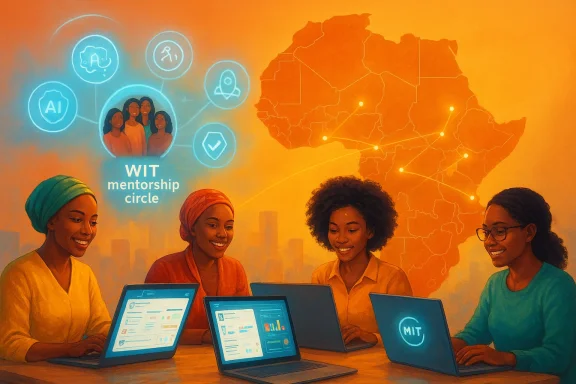 Background
Since late 2025, Absa — an established pan‑African bank with operations in a dozen African markets — has been piloting an AI skilling pathway branded as ElevateHer. The pilot, run in partnership with Microsoft Elevate and Women in Tech (WiT), reportedly reached more than 10,000 learners during its initial phase. On February 5, 2026, industry reporting confirmed Absa’s plans to roll the programme into nine additional African markets, aiming to close an acute AI skills gap across the Global South that global forums and development agencies have repeatedly flagged as urgent.This announcement comes at a moment when major technology companies and international bodies are publicly committing to mass skilling initiatives. Microsoft’s recent global pledges — announced through the Microsoft Elevate initiative and registered as part of the ITU’s Partner2Connect pledging platform — include a multi‑billion dollar investment intended to credential millions of learners in AI skills over the coming years. At the same time, forums like Davos and multilateral programs such as the World Economic Forum’s Reskilling Revolution have prioritized closing the AI and digital divide as fundamental to inclusive economic growth.
What Absa is promising — and what it actually delivers
The programme in brief
Absa’s ElevateHer AI programme, as described in public reporting, targets three interlinked outcomes: employability, entrepreneurship, and economic participation. The curriculum is reported to include:- Practical modules on AI productivity and automation using Microsoft tools such as Microsoft 365 Copilot.
- Hands‑on exercises on idea generation, automating routine reports and workflows, and responsibly applying AI to business and day‑to‑day tasks.
- Credentialing upon completion in the form of Microsoft digital badges, which function as verifiable micro‑credentials for employers and networks.
- A focus on digital confidence alongside technical skill — positioning AI literacy as a complement to financial literacy and leadership.
Verified facts and open questions
Several elements of the announcement can be corroborated by multiple public sources: Microsoft is actively expanding its Elevate programmes and has publicly pledged major funding through global pledging platforms to credential millions in AI skills; Women in Tech has longstanding partnerships with corporate sponsors to scale female participation in technology; and Absa’s historical community and skills work is well documented across its country operations.That said, two operationally critical items remain imprecise in public reporting to date:
- The exact list of the nine additional markets Absa will add to the ElevateHer roll‑out is not specified in the initial press coverage. Absa’s pan‑African footprint suggests likely candidates (see below), but no definitive country list has been published by Absa at the time of writing.
- The claim that the pilot “reached over 10,000 learners” is reported in media coverage of the announcement; independent confirmation from Absa program dashboards or Microsoft enrollment data is not publicly available in the same announcement, and should be considered a programme figure pending direct release of enrollment records or verification.
Why this matters: scale, timing and strategic fit
The continent-level case for targeted AI skilling
Three converging trends make Absa’s move strategically significant:- AI is reshaping everyday work: business leaders and economic bodies have stressed that a significant portion of routine and knowledge‑work tasks will be transformed by AI over the next decade. Where skilling lags, workers and micro‑entrepreneurs risk losing income or being shut out of productivity gains.
- Women are underrepresented in digital and ICT roles: closing the gender gap in tech has clear economic and social returns. Programmes that intentionally target women can accelerate inclusion if barriers — access, time, social norms, and credential recognition — are addressed.
- Corporate delivery can be a rapid pathway to scale: banks and large enterprises have distribution channels, physical and digital customer bases, and community programmes that can reach learners who are difficult to reach through traditional education systems.
Timing: global pledges and local demand
This roll‑out arrives precisely when major global commitments — including Microsoft’s $4 billion elevation pledge to credential learners through the ITU Partner2Connect framework — are pushing resources into skilling in the Global South. The World Economic Forum’s recent convenings (January 2026) reinforced that reskilling at scale is central to preventing widening inequality as AI diffuses.From a policy and funding standpoint, that alignment reduces the risk that a single programme will operate in isolation. When corporate skilling aligns with regional education and labour market initiatives, the potential for systemic impact increases — assuming credible monitoring and alignment with national qualifications frameworks.
Anatomy of the partnership: roles and responsibilities
Understanding how the three partners position themselves clarifies both potential strengths and operational gaps.- Absa: provider of distribution, brand trust, community outreach and possible funding for local facilitation. Absa’s presence in countries across Africa gives the programme immediate reach into markets where it already operates.
- Microsoft Elevate: curriculum provider, platform owner, and digital credential issuer. Microsoft brings Microsoft 365 Copilot, learning pathways, certification infrastructure and technical support.
- Women in Tech (WiT): community mobilizer and gender lens specialist. WiT supplies recruitment channels, mentorship frameworks and contextualized outreach for women and girls.
What makes this programme strong
- Bold scale ambition grounded in local partners. Absa’s regional footprint and WiT’s grassroots networks can reach more diverse learner cohorts than a single global tech platform alone.
- Use of job‑relevant tools. Training learners on Microsoft Copilot and other productivity‑oriented solutions increases the immediate employability signal for participants — provided employers recognize those badges.
- Credentialing and digital badges. Verified micro‑credentials can lower hiring friction if they are recognized by local employers and recruitment platforms.
- Alignment with global pledges. Microsoft’s larger Elevate ambitions and the ITU Partner2Connect commitments mean there are resources and a broader ecosystem to draw on, from platform support to funding leverage.
- Combined focus on employability and entrepreneurship. The dual orientation helps learners translate skills into immediate workplace productivity as well as small business applications.
Where risks and weaknesses cluster
Despite the promise, the programme faces several real risks. These fall into operational, structural and reputational categories.Operational risks
- Connectivity and device access: much of Africa still faces uneven broadband access and device shortages. Online modules, video content and interactive Copilot use assume internet access and relatively modern hardware — constraints that often fall hardest on learners who most need upskilling.
- Local language and context adaptation: Microsoft’s materials are being localized in many places, but effective learning at scale requires translation, culturally relevant case studies and facilitator‑led support where literacy levels vary.
- Credential recognition: digital badges only translate to jobs if employers understand and value them. Without employer engagement and validated employer pathways, badges may not improve economic outcomes.
- Data privacy and compliance: using AI tools like Copilot raises questions about learner data, corporate data handling and local regulatory compliance. Clear policies, data minimization and consent frameworks must be in place.
Structural and social risks
- Reinforcing urban bias: programmes delivered primarily through digital platforms or urban branches risk reaching mostly urban and already‑connected women, leaving rural women behind.
- Time poverty and caregiving responsibilities: women disproportionally shoulder unpaid care work, which constrains time available for training. Programmes that do not build flexible, microlearning pathways and childcare considerations may see uneven completion rates.
- Overreliance on a single corporate stack: heavy dependence on a single vendor’s tools and credentials can create vendor lock‑in and may not prepare learners for a diverse AI tooling landscape.
Reputational risks
- Claims vs verifiable outcomes: the public narrative that the pilot “reached over 10,000 learners” or that nine markets will be added requires independent verification through published dashboards, third‑party evaluation or audited outcome reporting. Unverified claims can attract scrutiny and erode trust.
- Equity optics: corporate skilling initiatives can be criticized as PR unless transparently evaluated and scaled with clear measures of who benefits and how.
Implementation checklist — practical measures to increase impact
For banks, tech vendors and NGOs embarking on continent‑scale skilling, the devil is in the delivery. The following operational steps will materially increase the chance that ElevateHer delivers sustained outcomes.- Map and publish the nine target markets and local rollout timelines, including language and delivery modality (online, blended, in‑branch).
- Partner with local employers and recruiters before scale‑up to ensure badge recognition and to co‑design recruitment pathways.
- Offer low‑bandwidth and offline learning alternatives (downloadable modules, community hubs, USB/OER packages).
- Provide micro‑learning and modular schedules that fit around caregiving and informal work commitments; include weekend and asynchronous options.
- Set clear, public outcome metrics: completion rates, credential earners, job placements, business starts and median income change.
- Institute third‑party evaluation and a public dashboard to enhance transparency and continuous improvement.
Measuring success: what to watch for
A meaningful accountability framework should track both outputs and outcomes, including:- Enrollment by demographic (age, urban/rural, education level).
- Completion and pass rates for modules and badges.
- Short‑term employment outcomes (job placements, promotions) and entrepreneurship indicators (business registrations, revenue).
- Employer engagement metrics (number of employers recognizing badges, number of internships/apprenticeships created).
- Platform usage metrics: Copilot sessions per learner, feature adoption in workplace tasks.
- Equity indicators: proportion of rural and lower‑income women served.
Comparative context: where ElevateHer sits in a crowded field
Several global and regional initiatives offer useful comparators.- Microsoft Elevate (global) — Microsoft’s own Elevate programs are being deployed across multiple countries, often in partnership with governments and broadcasters (for example, national partnerships in South Africa to reach learners through public platforms).
- Public‑private national accelerators — the World Economic Forum’s Reskilling Revolution and national skills accelerators are channeling private commitments into national workforce pipelines.
- Cloud provider skilling programs — AWS, Google and other cloud providers run regionally targeted training with different emphases (cloud fundamentals, developer certifications).
- NGO-led bootcamps and apprenticeships — these often provide high‑touch local mentorship and employer placement services but usually operate at smaller scale.
Policy implications and public sector levers
The private sector can scale training fast, but public policy can amplify and sustain impact. Policymakers should consider:- Recognizing vendor badges within national qualifications and apprenticeship systems to make micro‑credentials stackable toward formal apprenticeships or degrees.
- Subsidizing device access and community connectivity points to reduce access barriers for marginalized learners.
- Incentivizing employer participation through tax credits, apprenticeship funding and public procurement preferences for certified hires.
- Mandating transparent reporting from large-scale corporate skilling programs to ensure public value for private commitments.
Conclusion — cautious optimism
Absa’s expansion of the ElevateHer AI programme is a strategically sensible and timely exercise in corporate social investment. The combination of Absa’s reach, Microsoft’s curriculum and Women in Tech’s mobilization creates a credible platform to accelerate women’s participation in the AI economy — but the programme’s ultimate value will be determined by delivery details.The headline numbers and global pledges are encouraging: technology companies and development bodies are mobilizing unprecedented resources for AI skilling. Yet the real litmus test is whether those resources translate into verifiable jobs, higher incomes, resilient micro‑businesses and widened participation across urban and rural divides.
To realize that promise, Absa and its partners should move beyond launch announcements and publish transparent rollout plans, measurable outcome targets and independent evaluations. Only then will ElevateHer move from an important pilot into a durable model for inclusive AI skilling across Africa — one that equips women not only to use AI tools, but to shape the rules, ethics and economic outcomes of an AI‑driven future.
Source: TechTrendsKE Absa Expands ElevateHer AI Programme Across Africa