

Apple’s AI organization has a new technical steward: Amar Subramanya, an Indian‑origin researcher‑engineer whose appointment as Vice President of AI signals a decisive shift in Apple’s push to marry foundation‑model capability with the company’s longstanding privacy and on‑device performance priorities. The hire — announced as part of a broader executive reshuffle that moves John Giannandrea into an advisory role ahead of his planned retirement — places Subramanya in charge of Apple Foundation Models, machine‑learning research, and AI safety and evaluation, reporting directly to Senior Vice President Craig Federighi.
Amar Subramanya arrives at Apple with a profile that blends deep academic credentials, a long tenure at Google, and recent senior experience at Microsoft. He is widely reported to have spent roughly 16 years at Google — moving from research roles into engineering leadership and taking on responsibilities tied to Google’s Gemini assistant — before a brief, high‑profile stint as Corporate Vice President of AI at Microsoft in 2025. Apple’s corporate announcement confirms his remit and reporting line and frames the move as a planned transition to accelerate Apple’s AI work while preserving continuity. Apple’s interest in Subramanya is strategic: the company needs leaders who can translate research into production‑grade models optimized for Apple Silicon and capable of operating under strict privacy constraints. The appointment lands at a moment of elevated pressure on Apple — public expectations for a much more capable Siri and system‑wide “Apple Intelligence” features have been delayed, and executives have publicly reshuffled responsibilities to close execution gaps.
Source: Jagran Josh Who is Amar Subramanya? Check Education, Career and Achievements of New Apple AI Chief
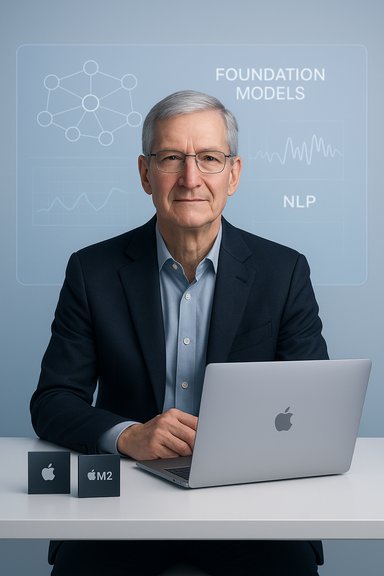 Background / Overview
Amar Subramanya arrives at Apple with a profile that blends deep academic credentials, a long tenure at Google, and recent senior experience at Microsoft. He is widely reported to have spent roughly 16 years at Google — moving from research roles into engineering leadership and taking on responsibilities tied to Google’s Gemini assistant — before a brief, high‑profile stint as Corporate Vice President of AI at Microsoft in 2025. Apple’s corporate announcement confirms his remit and reporting line and frames the move as a planned transition to accelerate Apple’s AI work while preserving continuity. Apple’s interest in Subramanya is strategic: the company needs leaders who can translate research into production‑grade models optimized for Apple Silicon and capable of operating under strict privacy constraints. The appointment lands at a moment of elevated pressure on Apple — public expectations for a much more capable Siri and system‑wide “Apple Intelligence” features have been delayed, and executives have publicly reshuffled responsibilities to close execution gaps. Education and academic background
Roots and degrees
- Amar Subramanya completed his undergraduate studies in Electronics and Communications Engineering at Bangalore University (now part of the University of Bangalore system), graduating around 2001, according to multiple profiles.
- He earned a PhD in Computer Science from the University of Washington, where his doctoral research focused on semi‑supervised learning, graph‑based methods, and scalable models for speech and natural language tasks. That PhD (completed in the late 2000s) is a consistent element across media and academic records.
Recognitions and scholarly work
Subramanya’s academic record includes:- A Microsoft Research Graduate Fellowship during his doctoral studies, an award that recognizes promising doctoral students in computer science and related fields.
- Co‑authorship of work and technical monographs on graph‑based semi‑supervised learning, a body of research that remains relevant for data‑efficient, privacy‑aware approaches to training models when labeled data is scarce. His publications span venues and topics including semi‑supervised learning, entity resolution, speech technologies, and natural language processing.
Career trajectory: from research to product engineering
Google — deep and consequential tenure
Subramanya’s most substantial industry experience came at Google, where he spent roughly 16 years and progressed from staff research scientist positions into senior engineering leadership. During that period he worked on large language and assistant initiatives and is widely reported to have been a senior leader (including “head of engineering”) on Google’s Gemini assistant project — Google’s flagship generative AI effort. His work at Google connected applied research with large‑scale model training and product deployment, giving him direct experience with both the academic and engineering sides of contemporary AI systems. Why that matters: modern consumer assistants require engineering that extends far beyond model architecture alone — they demand runtime optimization, latency management, safety testing, and deep OS integration. Subramanya’s Google track record positions him to tackle those engineering tradeoffs inside Apple’s tightly coupled hardware and software ecosystem.Microsoft — a short but high‑visibility stop
In mid‑2025 Subramanya joined Microsoft as Corporate Vice President of AI, a senior role intended to accelerate foundation‑model and product efforts across Microsoft’s consumer and enterprise portfolio. The tenure was brief — measured in months rather than years — but served to further underscore the intense competition for senior AI talent among the largest platform companies. Media coverage reports the move to Microsoft and his subsequent recruitment by Apple in the same year.Apple — a new remit at a pivotal moment
Apple’s December 1 corporate announcement places Subramanya as Vice President of AI reporting to Craig Federighi, with explicit leadership over:- Apple Foundation Models
- Machine‑Learning Research
- AI Safety & Evaluation
Key achievements and technical contributions
Research and publications
Subramanya’s academic contributions — particularly in graph‑based semi‑supervised learning — are part of the public record. He co‑authored influential technical works and a practitioner‑facing monograph that continue to be cited in ML literature. Those contributions demonstrate a long‑standing interest in methods that can produce strong performance with limited labeled data, a capability that aligns with privacy‑conscious and on‑device learning strategies.Product engineering at scale
During his time at Google, Subramanya moved from research into engineering leadership — a transition that implies responsibility for:- Turning research prototypes into deployable models
- Scaling training and inference pipelines
- Leading cross‑disciplinary teams that include model engineers, infrastructure, and product managers
Awards and fellowships
The Microsoft Research Graduate Fellowship during Subramanya’s doctoral studies is a notable academic honor, and his publication record — including peer‑reviewed conference papers and coauthored books — is frequently cited in profiles of his career. These achievements reinforce his credibility on both the research and engineering fronts.What Subramanya’s hire means for Apple: strategic implications
1) A signal to accelerate model engineering and product velocity
Placing a model‑builder with hands‑on production experience in charge of Apple Foundation Models is a clear indication that Apple wants to compress the gap between research and shipped features. The reporting line to Federighi — who oversees software engineering across Apple platforms — will likely reduce handoffs between research teams and OS‑level implementers, enabling faster iteration on system‑wide AI features.2) A hybrid architecture is the likely technical path
Apple’s declared approach to AI has been a privacy‑first, on‑device‑centric model balanced with cloud compute for heavier workloads. Subramanya’s background in data‑efficient learning and assistant engineering makes him a practical leader for hybrid architectures that combine:- Compact, distilled models running on device (for latency and privacy)
- A private cloud compute (PCC) layer for heavy inference, personalization, or tasks that exceed device capacity
3) Safety and evaluation will be front and center
Apple explicitly assigned AI Safety & Evaluation to Subramanya’s remit, signaling that the company intends to align capability development with rigorous governance, red‑teaming, and monitoring. In practice, that will mean investments in evaluation suites, continuous monitoring, and operational tooling to detect regressions, hallucinations, and privacy leaks in customer‑facing features.Strengths Subramanya brings — and why they matter
- Research‑to‑product fluency: His career path crosses both academia and production engineering, which is essential for converting model advances into usable OS features.
- Assistant systems experience: Leadership on large assistant projects like Gemini gives him domain knowledge in conversational AI, multimodal inputs, and large‑scale deployment.
- Credibility to recruit and lead talent: Hiring a high‑profile leader from Google/Microsoft sends a signal to potential hires and may help Apple attract top ML engineers.
- Data‑efficient modeling expertise: His academic focus on semi‑supervised and graph‑based methods matches technical needs for privacy‑sensitive personalization and reduced training dependence on labeled personal data.
Risks, constraints and open questions
No hire is a guarantee, and several real constraints and risks could limit how quickly Subramanya’s impact is felt.On‑device compute and model size tradeoffs
Modern foundation models are computationally intensive. While Apple has advantages in custom silicon and runtime integration (Apple Silicon, Apple Neural Engine), even highly distilled models can struggle to match cloud‑scale capabilities for certain tasks. Expect engineering tradeoffs between model capability, latency, battery life, and privacy guarantees. These tradeoffs are fundamental and will demand long‑term engineering investment.Timeline pressure and expectations
Apple’s more advanced Siri enhancements were publicly delayed into 2026, and investors and customers are watching for measurable progress. Organizational changes that reassign responsibilities are necessary but not sufficient: success will be measured by delivered features and user experience improvements, not by titles. The next 6–12 months will be particularly telling.Unverified or lightly supported claims
Media profiles sometimes report numeric specifics (team sizes, parameter counts for internal models, or exact months at companies) that are not independently verifiable from public records. These claims should be treated with caution until confirmed by primary sources — for example, company SEC filings, peer‑reviewed publications, or direct statements from Apple or Subramanya. Where media reports differ on minor biographical details (e.g., exact undergraduate institution naming conventions or internship timelines), those should be flagged as reported but not independently verified.Cultural and organizational integration
Apple’s engineering culture — with strong vertical integration and conservative release standards — differs from the cloud‑first, release‑fast cultures at other platform companies. Subramanya’s past in large, fast‑moving teams gives him a playbook, but adapting to Apple’s cadence while increasing velocity is a non‑trivial organizational challenge.What success looks like — measurable signals to watch
- Tangible Siri improvements: Responsiveness, contextual continuity across apps, and more natural conversational behavior arriving on the schedule Apple commits to — particularly the spring 2026 target for deeper Siri personalization.
- Foundation‑model rollouts: Evidence of Apple Foundation Models powering differentiated features — small, demonstrable wins where on‑device inference plus PCC yields measurable user benefit without data exposure.
- Safety and transparency artifacts: Publication of evaluation metrics, safety audits, or red‑teaming summaries that show an operationalized safety posture rather than ad‑hoc testing.
- Developer and ecosystem adoption: Clear tooling and APIs that allow third‑party developers to integrate Apple Intelligence features safely and effectively.
- Talent retention and growth: Stabilization of AI and ML teams at Apple and successful hiring that demonstrates confidence in the new leadership.
A balanced assessment
Amar Subramanya is an experienced leader whose profile checks many boxes Apple needs right now: technical depth in foundation models and NLP, real‑world production experience at Google and Microsoft, and a scholarly record tied to data‑efficient ML methods. His appointment is a pragmatic bet — not a dramatic philosophical shift — that Apple will prioritize execution speed on foundation models while attempting to preserve its privacy commitments. At the same time, the job is inherently difficult. Apple must reconcile the resource demands of modern foundation models with device constraints and privacy promises. The leadership change addresses organization and ownership, but execution depends on cross‑discipline collaboration across silicon, OS, services, and cloud infrastructure. Real progress will require demonstrating that hybrid architectures and aggressive model compression can deliver noticeable user benefit without compromising privacy or battery life.Final takeaways
- Amar Subramanya’s appointment as Apple’s Vice President of AI is a clear signal that Apple intends to accelerate foundation‑model engineering and productization while keeping safety and privacy visible in the leadership remit.
- His academic pedigree (PhD, University of Washington) and research on semi‑supervised and graph‑based learning align with Apple’s technical needs for data‑efficient, privacy‑aware personalization.
- The practical test will be whether Apple can ship meaningful Siri and Apple Intelligence improvements on a faster cadence without eroding the company’s privacy guarantees; the next year will make that clear.
Source: Jagran Josh Who is Amar Subramanya? Check Education, Career and Achievements of New Apple AI Chief
