

Asia‑Pacific M&A is surging, but beneath the deal‑courting headlines a quiet, technical contagion is spreading: fragmented data estates, uncontrolled “shadow AI,” and brittle integration patterns are already turning many acquisitions into value‑destruction exercises rather than growth accelerators. The hard fact for deal teams and chief data officers is simple — you can buy revenue, customers, and technology, but if you don’t know what AI and data you’re actually acquiring, those assets can become liabilities that erode EBITDA, create regulatory exposure, and extend integration timelines by months or years.
Mergers and acquisitions have always been integration wars of people, processes, and systems. The arrival of production AI — distributed, democratized, and often undocumented — elevates those wars into a whole new domain. Organizations bringing two companies together now face not only mismatched ERPs and CRMs but multiple, independently trained models, agentic automations, and data pipelines that assume different master‑data schemas, identifiers, and access controls.
The scale of the problem is made stark by recent industry research and practitioner observations: a prominent study found that the overwhelming majority of enterprise generative‑AI pilots produced little measurable financial return, highlighting integration and data readiness — not model capability — as the central obstacle. That same pattern shows up in M&A contexts, where integration complexity multiplies and formerly contained AI pilots become enterprise‑level risk vectors.
This manifests in real ways: inconsistent product recommendations, conflicting service prioritization, and analytics that produce opposing guidance for the same account. Those contradictions do not just confuse frontline staff — they reduce executive trust in analytics and lead to costly reversals of automation decisions.
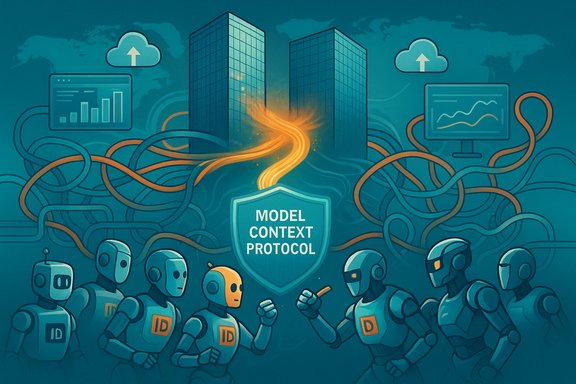
Emerging interoperability standards like the Model Context Protocol (MCP) promise a different architecture: a standardized way for agents to discover and invoke tools across environments. MCP and agent protocols can reduce bespoke wiring and enable runtime portability, but these protocols are still evolving and often lack baked‑in security, rate limiting, and audit features — meaning organizations must layer governance on top to make them safe in M&A contexts.
However, MCP remains immature in important respects:
Deal teams and C‑suite leaders in APAC must recognize that the headline multiples and market optimism around M&A are built on fragile technical foundations. The pragmatic path — comprehensive pre‑close AI diligence, short‑term stabilization measures, and longer‑term architectural investments — turns a potential sabotaging force into a source of differentiated advantage.
Those who act early, enforce governance, and treat data as a strategic asset will capture the upside of AI in M&A. Those who don’t will spend post‑close cycles chasing down silent failures that chip away at the very synergies they paid for.
Conclusion: the promise of AI in M&A is real, but the price of complacency is steep — and measurable.
Source: CDOTrends Can Data and AI Sabotage M&A Dreams? Yes They Can
 Background
Mergers and acquisitions have always been integration wars of people, processes, and systems. The arrival of production AI — distributed, democratized, and often undocumented — elevates those wars into a whole new domain. Organizations bringing two companies together now face not only mismatched ERPs and CRMs but multiple, independently trained models, agentic automations, and data pipelines that assume different master‑data schemas, identifiers, and access controls.The scale of the problem is made stark by recent industry research and practitioner observations: a prominent study found that the overwhelming majority of enterprise generative‑AI pilots produced little measurable financial return, highlighting integration and data readiness — not model capability — as the central obstacle. That same pattern shows up in M&A contexts, where integration complexity multiplies and formerly contained AI pilots become enterprise‑level risk vectors.
Where AI and Data Break M&A: Four Failure Modes
1. Stranded assets and interoperability deficit
When two companies merge, they seldom share a common data model or the same systems for core processes like customer management, billing, or scheduling. Each legacy environment may host its own AI and automation — from chatbot assistants to scheduling agents — that were optimized for local constraints and flows. That creates three immediate hazards:- Non‑aligned identifiers mean the same person appears multiple ways across systems (CRM ID vs HR number vs support email), undermining entity resolution and customer 360 programs.
- Competing AI workflows can actively fight over the same resources (for example, multiple scheduling agents offering conflicting appointments), degrading customer experience and operational stability.
- Hardwired integrations (point‑to‑point queries from an agent into a specific ERP) break when systems are consolidated, causing silent failures or, worse, agents acting on stale or migrated data.
2. Unquantified Technical Debt (UTD) and governance leakage
Modern AI is democratized. Line‑of‑business teams routinely create agents, deploy plug‑and‑play copilots, or subscribe to cloud AI services outside central IT procurement. That “shadow AI” creates ungoverned sprawl:- Marketing teams generate content with generative models using corporate data dumps.
- Sales teams spin up forecasting agents that call external APIs and store outputs in third‑party documents.
- Operations teams buy low‑cost automation and connect it to internal systems without IAM oversight.
3. Contradictory insights and customer‑360 failure
AI is not magically “smart” — it is highly sensitive to the context and the quality of its training and input data. In M&A, context fragmentation leads to conflicting model outputs: one model’s “high‑value customer” becomes another’s “credit risk” because each was trained on siloed, inconsistent data. Without effective master data management and large‑scale entity resolution, merged organizations often end up with AI that is locally optimal but globally wrong.This manifests in real ways: inconsistent product recommendations, conflicting service prioritization, and analytics that produce opposing guidance for the same account. Those contradictions do not just confuse frontline staff — they reduce executive trust in analytics and lead to costly reversals of automation decisions.
4. Post‑close brittleness and value dilution
After the deal closes the hardest phase begins: system consolidation. If integrations were point‑to‑point, agents frequently break when the underlying schema or host moves. Because many AI agents are not built with robust discovery, authentication, or failover behaviours, migration of the underlying ERP or data lake can make agents fail silently, continue to operate on stale copies, or — worse — continue to take action based on outdated assumptions.Emerging interoperability standards like the Model Context Protocol (MCP) promise a different architecture: a standardized way for agents to discover and invoke tools across environments. MCP and agent protocols can reduce bespoke wiring and enable runtime portability, but these protocols are still evolving and often lack baked‑in security, rate limiting, and audit features — meaning organizations must layer governance on top to make them safe in M&A contexts.
Anatomy of the Risk: A Practical Example from Healthcare
Healthcare acquisitions in APAC illustrate the problem in microcosm. Picture two hospital networks merging:- Network A runs a modern EHR with a scheduling agent that optimizes for equipment utilization and regulatory workflows.
- Network B uses a legacy clinical system with a different patient identifier scheme and a separate AI assistant deployed in outpatient portals.
Why Due Diligence Must Expand: The Pre‑Close AI Audit
Traditional legal and financial due diligence focuses on contracts, intellectual property, and historical performance. In an AI‑and‑data era, that checklist must be expanded to include a focused technical and operational sweep:- Automated scans for deployed agents and copilots across common platforms (Salesforce Agent Force, Microsoft Copilot instances, ServiceNow Automations).
- Cloud billing reviews to detect undocumented AI consumption and unexpected inference charges.
- Interviews and process reviews to expose line‑of‑business automations and any local vendor services.
- Verification of data residency and training commitments (does the vendor or service provider use tenant data to train public models?.
- Checks for master data and entity resolution patterns: are customer IDs, supplier records, and employee identifiers reconciled or siloed?
Technical and Governance Remedies: An Integration Playbook
No single technical miracle solves these issues. Instead, successful acquirers adopt a disciplined, phased approach that combines inventory, short‑term stabilization, and long‑term architecture work.Phase 1 — Discovery and Triage (pre‑close if possible)
- Run an automated inventory for active agent patterns and instrumented APIs across cloud tenants and SaaS consoles.
- Scan cloud bills for model or inference line items to reveal unrecorded usage.
- Conduct targeted interviews with business units to find shadow AI and ad‑hoc automations.
- Identify high‑risk workflows that touch regulated data, PII, or critical revenue processes.
Phase 2 — Stabilize and Govern (first 90–180 days post‑close)
- Implement a temporary least‑privilege policy that constrains agent access to critical systems until governance is in place.
- Add audit logging and observability for agent actions so the org can see who or what touched which records.
- Introduce a central agent registry / catalog where all agents must be registered, authorized, and assigned an owner.
- Apply quick master‑data reconciliation for high‑risk domains like customers, suppliers, and employees.
Phase 3 — Replatform and Rationalize (6–18 months)
- Consolidate systems where feasible, but adopt a protocol‑based integration layer (for example, MCP‑enabled tool registries and a governed API gateway) to decouple agents from fixed backends.
- Establish Model Governance: model inventory, provenance metadata, retraining policies, and human‑in‑the‑loop thresholds for high‑impact decisions.
- Bake observability into the CI/CD pipeline for agents — include telemetry, cost accounting, and automated drift detection so models don’t silently degrade after a migration.
- Migrate to single source of truth architectures for high‑value entities, but do so with incremental cutovers and dual‑write or reconciliation processes to prevent data loss.
The MCP Question: Promise and Caution
The Model Context Protocol and related agent standards (A2A/Agent2Agent) are promising because they let agents discover and call tools in a uniform way, reducing bespoke connector proliferation. That technical shift matters for M&A because it can make agents less brittle to system migrations.However, MCP remains immature in important respects:
- Many early MCP implementations lack robust authentication, rate limiting, or audit hooks by default.
- Registry surfaces become high‑value attack targets if not hardened; tool manifests can leak capabilities or credentials if mishandled.
- Operational SLAs and latency characteristics differ across MCP servers — important for front‑office, low‑latency use cases.
Commercial and Financial Implications: EBITDA and Cost Surprises
AI introduces new cost dynamics that finance teams must understand in M&A models:- Consumption‑based billing can create runaway monthly costs when previously dormant agents scale after integration. FinOps teams report that consumption surprises are a leading cause of post‑deal disappointment.
- Hidden cloud egress and hosting charges can mean that a vendor’s “apparent” SaaS price hides additional upstream cloud infrastructure fees, multiplying total cost.
- Remediation and reengineering of shadow AI and brittle integrations are not negligible line items. They can consume engineering and data‑science resources for months, affecting planned synergy capture timelines.
Boardroom Imperatives and Legal Checklist
Boards and transaction committees must demand specific artifacts and warranties before moving forward:- A comprehensive AI and data inventory certified by both parties, showing agents, models, connectors, and cloud spend lines.
- Data handling commitments: explicit statements on whether tenant data was used to train external models, with contractual non‑training clauses where necessary.
- Remediation escrow: funds or holdbacks for remediation of undisclosed AI liabilities discovered post‑close.
- Regulatory attestation for cross‑border data flows, especially critical in APAC where data residency and sectoral regulations vary widely.
- A defined post‑close integration plan with timelines, owners, and success metrics for MDM, identity unification, and model governance.
What Success Looks Like: A Mature Post‑Merger AI Stance
Organizations that turn AI from a liability into a strategic asset after M&A do a few things consistently:- They treat data liquidity and quality as strategic assets and invest in master data services and MDM sooner rather than later.
- They put agent inventory and governance at the same level of priority as IP and contract diligence.
- They adopt protocol‑aware architectures that decouple agents from brittle backends and enforce security, quotas, and observability at the integration layer.
- They align FinOps, Security, and Data teams into cross‑functional integration squads that own the most valuable entity domains (customers, products, suppliers).
Practical Checklist for Deal Teams (Actionable)
- Require an AI & Data Inventory as a signing condition.
- Scan cloud billing for AI inference charges and require disclosure of third‑party model usage.
- Mandate non‑training clauses for sensitive tenant data when purchasing SaaS products that use public models.
- Insist on an agent registry and an incident response plan for AI‑initiated actions touching regulated data.
- Budget remediation holdbacks or escrow for undisclosed AI liabilities.
- Pilot MCP or protocol gating only after security controls (RBAC, signing, audit logging) are demonstrated.
Final Analysis: Opportunity Amid Risk
AI is a tool that can dramatically accelerate post‑merger integration — but only when it is governed, grounded in quality data, and integrated via resilient architectures. The prevalent pattern in many organizations is the opposite: AI sprawl, poor data liquidity, and brittle integrations that will quietly consume value if left unchecked.Deal teams and C‑suite leaders in APAC must recognize that the headline multiples and market optimism around M&A are built on fragile technical foundations. The pragmatic path — comprehensive pre‑close AI diligence, short‑term stabilization measures, and longer‑term architectural investments — turns a potential sabotaging force into a source of differentiated advantage.
Those who act early, enforce governance, and treat data as a strategic asset will capture the upside of AI in M&A. Those who don’t will spend post‑close cycles chasing down silent failures that chip away at the very synergies they paid for.
Conclusion: the promise of AI in M&A is real, but the price of complacency is steep — and measurable.
Source: CDOTrends Can Data and AI Sabotage M&A Dreams? Yes They Can
