

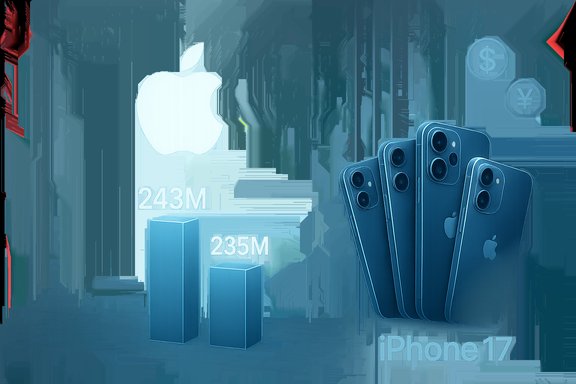
Apple’s return to the top of the global smartphone shipment rankings in 2025 is no accident: a combination of a booming iPhone 17 launch, a swelling upgrade wave among pandemic-era buyers, and favourable macro tailwinds has pushed the company past Samsung in annual shipments for the first time since 2011. Counterpoint Research’s latest market outlook projects Apple shipping roughly 243 million iPhones in 2025 versus 235 million for Samsung—putting Apple at an estimated 19.4% global share and Samsung at 18.7%—and multiple industry outlets reporting on the firm’s data agree this is the most significant leaderboard shift in over a decade.
Background
The numbers, in plain sight
Counterpoint’s market tracker indicates a roughly 10% year‑over‑year increase in iPhone shipments for 2025 versus about 4.6% growth for Samsung, while the overall smartphone market is forecast to expand by ~3.3% in the same period. These projections translate into Apple reclaiming the crown it last held in 2011, reversing a 14‑year stretch of Samsung leadership. The data underpinning this conclusion combine quarterly sell‑through tracking, channel inventory checks, and company shipment disclosures aggregated by the research house.Why shipments matter (but don’t tell the whole story)
Shipments measure units delivered to channels—retailers, carriers, distributors—not necessarily activated sales to end users the instant they ship. They remain a critical indicator of manufacturer and retailer confidence, supply‑chain strength, and channel demand forecasting. But shipments can be influenced by inventory timing, pre‑holiday provisioning, or strategic stock moves to beat tariff windows; analysts and buyers must therefore distinguish shipments from real‑time sell‑through and long‑term activations. Several trackers reporting on Counterpoint’s outlook explicitly note this methodological nuance.Overview: What’s driving Apple’s 2025 surge
iPhone 17: product momentum and market reception
The iPhone 17 family is the single most visible driver of Apple’s improved shipment outlook. Counterpoint’s sell‑through tracker shows the iPhone 17 lineup posted double‑digit uplifts in major markets following launch: early channel and retail sales data show the U.S. sell‑through in the first month was materially higher than the iPhone 16 series, while the Chinese market exhibited even stronger relative gains. Reported figures include a ~12% jump in U.S. first‑four‑week sales and an ~18% increase in China over the comparable iPhone 16 launch window—numbers that analysts say reflect both design/feature resonance and stronger promotional activity. These gains are notable because the U.S. and China together represent the bulk of high‑end smartphone demand; a robust showing across both markets compounds Apple’s ability to convert premium ASP (average selling price) strength into volume and market share.The replacement cycle inflection
Counterpoint highlights a structural replacement cycle effect: millions of users who purchased smartphones during the COVID‑19 period (roughly 2020–2021) are now reaching the 3–5 year replacement window. That cohort—sitting on a large base of aging devices—represents a natural surge in upgrade demand. The research firm also points to a sizeable second‑hand iPhone ecosystem: an estimated 358 million pre‑owned iPhones changed hands between 2023 and mid‑2025, producing an entry funnel of users likely to upgrade to new iPhones over the coming quarters. This used‑device tail is a material long‑term demand amplifier for Apple.Macro tailwinds: trade dynamics and currency
A softer U.S. dollar in parts of 2025 and a relative easing of U.S.–China trade frictions contributed to improved purchasing power in emerging markets and reduced tariff pressure on supply chains. Counterpoint notes these dynamics helped stabilise manufacturing and reduced the need for aggressive price increases in some regions—both supportive of higher demand and smoother distribution. Analysts caution that currency moves and trade agreements can reverse, but in 2025 they served as helpful structural tailwinds for Apple.Samsung’s position and market pressure
Mid‑range competition and volume pressure
Samsung remains a dominant force, but its volume leadership strategy leans heavily on the mid‑range and entry segments where Chinese OEMs—led by brands that have aggressively improved hardware and software—are growing fast. Counterpoint flags intensifying pressure on Samsung’s A‑series and value tiers from Chinese rivals that offer compelling specs at lower price points, compressing Samsung’s room for margin expansion and complicating its volume play. The 4.6% growth projection for Samsung in 2025 indicates healthy performance, but not enough to match Apple’s premium‑led momentum.Premium defence and strategic tradeoffs
Samsung’s premium flagships and foldable portfolio remain strategic strengths, especially in mature markets where brand breadth and carrier partnerships matter. But defending the premium also requires balancing innovation (foldables, camera systems) with price segmentation to prevent mid‑tier defections—an increasingly difficult task when competitors can undercut on price while delivering near‑flagship features.The structural case for sustained Apple leadership — and the caveats
Strengths that favour Apple
- Ecosystem stickiness: iOS, services, and trade‑in programs retain customers and raise lifetime value.
- Resale and second‑hand channel: A deep pre‑owned iPhone market boosts future upgrade propensity, effectively seeding future first‑time buyers who often convert to new purchases.
- Product tier expansion: Rumoured and planned moves into a budget iPhone tier (iPhone 17e) and a foldable offer Apple levers to widen its addressable market.
Why the lead may still be fragile
- Shipments ≠ instantaneous demand: Channel fills and strategic pre‑shipping around tariffs or holiday seasons can temporarily inflate shipment numbers relative to end‑user uptake. Analysts explicitly warn about reading shipments as equivalent to end‑sales without cross‑checking sell‑through.
- Macro volatility: Exchange‑rate movements, a harsher than expected economic slowdown in emerging markets, or renewed trade tensions could erode the tailwinds Apple benefited from.
- Supply yield and product risk: Execution risk grows with complex new hardware (e.g., foldables). Yield problems and high returns or repairs could dent momentum—an area where Samsung’s foldable experience offers a potential advantage.
- Competitive retaliation: Samsung and Chinese OEMs could respond with aggressive pricing, bundled services, or faster innovation cycles that blunt Apple’s mid‑term gains.
Verifying the core claims (cross‑checks and uncertainty flags)
- Counterpoint’s shipment projection (Apple ~243M vs Samsung ~235M; Apple 19.4% vs Samsung 18.7%) is widely reported across reputable outlets and was disseminated via industry press—this is the principal basis for the “Apple overtakes Samsung” narrative. Multiple independent news organisations summarised Counterpoint’s figures and commentary.
- The reported U.S. and China early sell‑through uplift for the iPhone 17 (roughly +12% in the U.S., +18% in China in early windows) appears consistently across Counterpoint’s sell‑through commentary and secondary reporting, but these are short‑window comparisons (first 4–10 days or first month) and therefore should be interpreted as early momentum indicators rather than full‑quarter conclusions. Analysts caution that early launch vigor can cascade or fade depending on channel stock and promotion cadence.
- The 358 million pre‑owned iPhones figure between 2023 and Q2 2025 is cited repeatedly as a supporting datapoint for Apple’s long‑run upgrade funnel, but the phrasing (sold, exchanged hands, or traded) varies by outlet. The underlying data likely aggregate refurbisher, carrier trade‑in, and second‑hand market activity; while the magnitude is credible, the exact metric definition and measurement window should be treated with caution unless Counterpoint’s original dataset is consulted directly. This is a high‑importance datapoint that should be considered directional rather than an iron‑clad, audit‑grade statistic.
- Future product predictions (iPhone 17e in 2026, a foldable iPhone, and a 2027 redesign) are Counterpoint forecasts and industry rumours aggregated from supply‑chain signals and Bloomberg reporting. They are plausible and repeatedly reported, but they remain forward‑looking and contingent on Apple’s strategic choices, manufacturing readiness, and market response—treat them as analyst projections, not confirmed product roadmaps.
- The claim that easing U.S.–China tensions and currency effects materially helped Apple’s 2025 position is supported in Counterpoint commentary and corroborated by macro coverage; however, geopolitics can swing quickly and policy moves should be considered a variable risk factor rather than a structural certainty.
Technical and market implications for stakeholders
For carriers and retailers
- Reassess channel inventory strategies: prepare for higher Apple demand in the premium tier while guarding against potential overstock in mid‑range SKUs.
- Leverage trade‑in and resale programs: improved pre‑owned flows create a fertile cross‑sell environment—tighten refurbishment partnerships and certification processes.
- Tune promotions by region: China and the U.S. are key battlegrounds; regional promotions and carrier financing can materially shift sell‑through.
For Samsung and other Android OEMs
- Accelerate value differentiation in mid‑range segments: focus on features that matter to price‑sensitive buyers (battery, charging, camera value, update guarantees).
- Double down on foldable and premium innovations where Apple lags—rapidly iterate on software experience to make foldables a productivity proposition rather than a novelty.
- Explore aggressive channel and service bundling to maintain perceived value and lock in customers.
For developers and the Windows ecosystem
Apple’s momentum matters beyond handset sales; it influences developer priorities, cross‑platform frameworks, and accessory markets. A larger iPhone installed base (new and pre‑owned) drives stronger app monetization, iCloud usage, and demand for cross‑platform tooling that integrates with iOS and macOS ecosystems. Windows developers and peripheral makers should watch these trends to ensure interoperability and accessory compatibility (e.g., iCloud for Windows, cross‑device authentication flows, accessory firmware/driver support).Strategic risks the industry can’t ignore
- Regulatory and antitrust scrutiny: Apple’s growing market power raises regulatory attention in multiple jurisdictions which could lead to policy constraints on app stores, payments, or bundling that affect monetisation.
- Component and supply constraints: New hardware classes (foldables, larger batteries) rely on high‑precision supply chains; yield shortfalls can cause shipment volatility and channel strain.
- Services saturation: Growth in hardware shipments must be matched by services expansion to sustain ARPU gains; failure to convert device buyers into higher services revenue can limit long‑term margins.
- Macroeconomic reversal: A sudden global slowdown or a stronger U.S. dollar would compress emerging market demand—one of the newfound pillars supporting Apple in 2025.
Practical takeaways and recommendations
- Maintain measured optimism: Apple’s 2025 lead looks credible based on Counterpoint’s data and multiple independent reports, but it is not unassailable. Treat the figures as a signal of momentum, not irreversible dominance.
- Track sell‑through, not just shipments: for accurate demand assessment, prioritise retail activation and churn indicators in addition to manufacturer shipment reports.
- Prepare for product diversification: Apple’s potential moves into a budget 17e and a foldable could reshape ASP dynamics—competitors should model pricing responses now.
- Strengthen refurbishment channels: the second‑hand market is an under‑leveraged growth engine—retailers and carriers should formalise refurbishment and certified pre‑owned programs to capture upgrade flows.
Conclusion
Counterpoint’s 2025 projection—echoed by multiple major outlets—marks a meaningful turning point: Apple has the momentum to top the smartphone shipments chart for the first time in 14 years, thanks largely to iPhone 17 demand, a significant upgrade cycle among pandemic‑era owners, and favourable macro factors. Yet the story is nuanced. Shipments are a powerful indicator of channel and supply confidence, but they do not automatically equal immediate end‑user sales. Sustaining this lead will require Apple to execute on new product tiers, maintain supply reliability for complex devices, and convert a growing installed‑base into evergreen services revenue. At the same time, Samsung and ambitious Chinese OEMs retain pathways back to the top through price competition, innovation in form factors, and expanded global distribution.For industry watchers, carriers, and developers, the immediate implication is clear: expect a shifting competitive landscape in 2026 as manufacturers respond to Apple’s momentum—prepare strategies that emphasize flexibility, tight inventory control, and smart reuse/refurb channels to capture the next wave of smartphone demand.
Source: The Hans India Apple Set to Outpace Samsung in 2025 on Back of Soaring iPhone 17 Demand
