

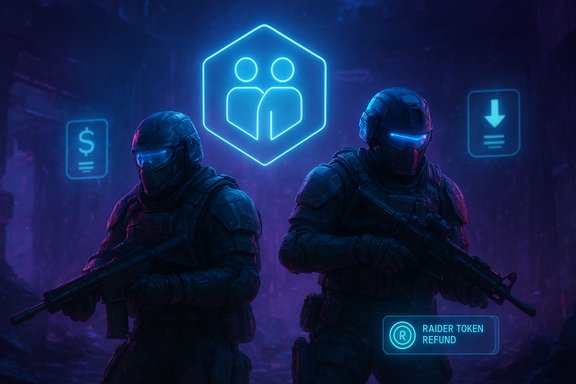
Embark Studios has quietly but decisively answered two of ARC Raiders’ loudest community grievances: overpriced cosmetic bundles and the absence of a workable duo matchmaking option. The studio announced a mid‑November push that lowers select store prices, promises automatic refunds in Raider Tokens for players who bought items at the old rates, and enables duo‑prioritized matchmaking so two‑player squads are more likely to face other duos instead of full trios or quads.
ARC Raiders exploded onto the market with rare early momentum for a new IP, combining frantic extraction‑shooter PvPvE with an accessible, third‑person presentation. The game’s launch numbers quickly became headline material: multiple outlets reported multi‑million sales and six‑figure concurrent peaks, and industry analysts flagged ARC Raiders as one of the year’s fastest early successes. Those figures — and the attention that came with them — both accelerated community feedback and magnified every design and monetization decision the studio made in the first weeks. The community response followed a predictable arc. Players praised the core gameplay loop, the pacing of raids, and the feel of its high‑stakes exfil moments. At the same time, two recurring complaints gained traction and became particularly loud: (1) some cosmetic bundles in the store were priced at levels players felt were disproportionate for a paid $40 title, with certain bundles effectively costing roughly $20 in real‑money terms; and (2) the matchmaking system had no robust way to prioritize two‑player teams, so duos frequently landed in matches against trios or squads and felt structurally disadvantaged. These criticisms drove social media chatter, forum threads, and a measurable negative sentiment spike around monetization and match balance. Embark’s response — implemented via an official post and follow‑ups — tackles both problems head‑on. The company lowered select cosmetic prices, set the reduced prices to go live at 10:30 CET on November 13, 2025, and promised automatic refunds of Raider Tokens for earlier purchases at higher prices. Simultaneously, the studio enabled Duo prioritized matchmaking, a system that first separates solos and full squads, then attempts to match duos with duos and trios with trios, with the caveat that it’s not an absolute guarantee.
The next chapters will test whether these changes are the start of a long habit of transparent, player‑centered iteration or a one‑time course correction. For now, ARC Raiders’ trajectory looks healthier: a strong launch, active community engagement, and a developer willing to adjust course. Players who care about fairness, value, and persistent content should keep watching Embark’s patch notes — and consider holding off on large token purchases until the new prices and deck structures settle into place.
Source: Windows Central https://www.windowscentral.com/gami...-prices-and-finally-adds-doubles-matchmaking/
 Background / Overview
ARC Raiders exploded onto the market with rare early momentum for a new IP, combining frantic extraction‑shooter PvPvE with an accessible, third‑person presentation. The game’s launch numbers quickly became headline material: multiple outlets reported multi‑million sales and six‑figure concurrent peaks, and industry analysts flagged ARC Raiders as one of the year’s fastest early successes. Those figures — and the attention that came with them — both accelerated community feedback and magnified every design and monetization decision the studio made in the first weeks. The community response followed a predictable arc. Players praised the core gameplay loop, the pacing of raids, and the feel of its high‑stakes exfil moments. At the same time, two recurring complaints gained traction and became particularly loud: (1) some cosmetic bundles in the store were priced at levels players felt were disproportionate for a paid $40 title, with certain bundles effectively costing roughly $20 in real‑money terms; and (2) the matchmaking system had no robust way to prioritize two‑player teams, so duos frequently landed in matches against trios or squads and felt structurally disadvantaged. These criticisms drove social media chatter, forum threads, and a measurable negative sentiment spike around monetization and match balance. Embark’s response — implemented via an official post and follow‑ups — tackles both problems head‑on. The company lowered select cosmetic prices, set the reduced prices to go live at 10:30 CET on November 13, 2025, and promised automatic refunds of Raider Tokens for earlier purchases at higher prices. Simultaneously, the studio enabled Duo prioritized matchmaking, a system that first separates solos and full squads, then attempts to match duos with duos and trios with trios, with the caveat that it’s not an absolute guarantee. What changed — the facts, clearly
Store prices: what was announced
- Embark reviewed and lowered prices on cosmetics “where applicable.” The revised prices were scheduled to go live on November 13 at 10:30 CET. Players who already purchased cosmetics at the old pricing will automatically receive the difference in Raider Tokens during the following week.
- The pricing rollback addresses bundles that many players felt were too expensive for a premium, buy‑to‑play title. Independent coverage highlighted examples where a single bundle or outfit equated to roughly $20 worth of in‑game currency, a common flashpoint in community complaints.
Duo prioritized matchmaking: how it works
- The matchmaking change is a prioritized queue, not a hard separation. The system attempts to:
- separate Solos and Squads first,
- then prioritize Duos to match against other Duos,
- and prioritize Trios to play with Trios.
Embark noted the system isn’t 100% guaranteed — mixed constellations may still occur — but early silent testing showed the change reduced the frequency of duos facing larger squads.
Raider Decks and pay‑to‑win assurances
- Embark reiterated that Gameplay Items are contained within the free Raider Deck, while premium Raider Decks (the paid battle‑pass‑style offerings) are focused on cosmetics and convenience only — no pay‑to‑win items will be placed behind a paywall. This was an explicit commitment to preserve competitive fairness as monetization expands.
Why this matters: player economics and match fairness
For an extraction shooter, balance and feel are everything. A duo running into a trio or squad can meaningfully change tactical choices — from the decision to go loud to the willingness to contest extracted loot — and that imbalance was a major friction point for players who prefer two‑player co‑op. Enabling duo prioritization lowers the psychological and mechanical penalty for bringing a single friend into the raid, which should improve retention among that cohort. Early reports from the field and press coverage indicate players noticed the change quickly. On the monetization side, cosmetic prices that look more at home in a free‑to‑play environment can create dissonance when attached to a paid game. The anchoring effect — releasing high nominal prices and later “discounting” them — is a well‑worn commercial tactic, and Embark’s prompt course correction demonstrates the studio’s sensitivity to community sentiment. Automatic refunds in Raider Tokens are the right play from a goodwill perspective, but the long‑term test is whether the new pricing feels sustainable and fair as more Raider Decks and premium options roll out.Cross‑checked figures: scale, peaks, and context
Two of the most load‑bearing facts about ARC Raiders’ early run are its sales and concurrent player peaks. Several outlets reported consistent but not identical numbers; that’s typical when totals aggregate across storefronts and platforms.- Public reporting tied ARC Raiders to roughly 4 million sales early after launch and publicized concurrent peaks that varied by outlet — numbers quoted in coverage ranged from ~460k concurrent on Steam alone to more than 700k concurrent across all platforms in aggregate. These variations stem from platform‑specific telemetry and aggregation methods.
- Industry coverage also flagged a record Steam peak in the 460k range that beat another extraction shooter’s high‑water mark, underscoring the strong launch interest on PC even as console and cloud platforms contributed additional load. That cross‑platform aggregation is attractive headline fodder but should be treated cautiously until platform owners or the publisher publish consolidated telemetry.
Developer responsiveness: what Embark did well
Embark’s actions reflect a proactive, feedback‑driven posture:- Quick listening: the studio acknowledged feedback publicly and committed to concrete changes (price reviews, refunds, matchmaking tweaks) with an explicit timeline. That transparency reduces rumor and speculation and restores trust more effectively than silence.
- Measured fixes: the duo matchmaking change is deliberately prioritized rather than a rigid mode. Prioritization allows matchmaking to maintain healthy queue times while improving balance for duos. The compromise balances playability and technical practicality.
- Safeguarding fairness: Embark reaffirmed the separation of gameplay items (free progression) from premium cosmetic decks — a move most players and critics prefer to see to avoid pay‑to‑win accusations when a game has a paid base cost.
Remaining questions and risks
No change is risk‑free. Here are the most important open items to watch:- 1) Price re‑anchoring and long‑term monetization: lowering prices after an initial high anchor patch is positive, but it also hints at volatility. Players who invested early still get refunded, but the underlying question is whether Embark will maintain reasonable price floors or continue to treat cosmetics as high‑margin revenue streams. If premium decks expand aggressively into new cosmetic seasons, players may still feel pushed toward repeated spending. Monitor future Raider Deck pricing and what exactly “convenience” will include.
- 2) Matchmaking guarantees: prioritized matchmaking improves outcomes but does not guarantee pure duo vs duo matches. In low‑population regions or off‑peak hours, duos could still be slotted into mixed lobbies, which means some players may still experience the previous pain points. The system’s flexibility is both its strength and its limit.
- 3) Telemetry transparency: public figures about concurrent players and sales are useful marketing points, but discrepancies across reports show why transparent, periodic publisher telemetry is valuable. Embark/Nexon should consider publishing consolidated figures if they want a single authoritative narrative. Until then, analysts will continue to reconcile multiple partial sources.
- 4) Cosmetic design and progression: even with lowered prices, players voiced complaints about cosmetic design choices (mix‑and‑match options, locked colors, and small token packages inside Deluxe editions). Those design and UX choices influence long‑term willingness to spend and will require iterative fixes beyond headline price adjustments. Community conversations on forums and Reddit made those patterns clear.
- 5) Gameplay balance (weapons and AI variety): players and reviewers flagged certain weapons (for example, the Venator) and enemy pairings for attention. Embark’s roadmap includes weapon balancing and new ARC enemies, but delivering meaningful balance changes without destabilizing the meta remains a careful, ongoing task.
Practical guidance for players (short, actionable)
- Wait 24–48 hours before buying large token bundles if you can — price cuts go live on November 13 at 10:30 CET and refunds for prior purchasers are being processed automatically. Buying hard currency right before a price change risks spending more than necessary.
- If you already purchased cosmetics at the old price, expect Raider Token refunds to be credited automatically in the coming week; keep an eye on your account or in‑game mailbox for confirmation.
- Try duo play now that prioritized matchmaking is live, but manage expectations in off‑peak hours — the system is prioritization‑first, not an absolute separation. If you routinely play at odd hours, consider finding a third or using solo play to avoid mismatches.
- Track patch notes and the roadmap for balance patches: weapon nerfs/buffs and AI additions will materially change the meta in the short term. If a weapon currently feels oppressive, be patient — the team has signaled a commitment to tuning.
Roadmap highlights: what’s coming and why it matters
Embark’s publicly posted roadmap through the end of 2025 commits to sustained content cadence: a new map named Stella Montis, new ARC enemy types (Matriarch and Shredder), community events (a “Breaking New Grounds” style unlock), new gameplay items, quests, and a new Raider Deck in December. Those additions will expand variety, address AI monotony, and provide new hooks for returning players. Two practical follow‑ups to watch:- Stella Montis’ level design will likely alter mid‑ and late‑game tactics because map geometry (tunnels vs open battlegrounds) changes risk profiles significantly.
- The December Raider Deck introduction will be the first substantial test of Embark’s pay model beyond the initial launch offering; pricing, cosmetics, and the promised absence of pay‑to‑win mechanics in premium decks will be under close scrutiny.
Critical analysis: strengths, cautionary notes, and a verdict
Embark’s reactive moves show several strengths. The studio demonstrated fast, public listening and shipped tangible changes: a real price rollback, automatic refunds, and duo matchmaking prioritization. That combination addresses both an economic complaint (perception of overpriced cosmetics) and a core gameplay fairness issue (duo vs squad imbalance). The roadmap signals the company intends to keep beefing the game with new maps, enemies, and systems that sustain long‑term retention. But the changes also illuminate longer‑term hazards:- Monetization optics matter more than mechanics. Even with no pay‑to‑win items in premium decks, treating a paid game like a live F2P ecosystem — with high‑ticket cosmetic items and multiple premium decks — risks alienating a subset of the player base unless prices and cosmetic variety consistently feel fair. The initial high anchor followed by a rollback helps, but only if price stability and perceived value follow.
- Prioritization systems can buy time without solving the underlying population distribution problem. Only sustained population health and carefully tuned queue logic will ensure duos consistently face appropriate opponents across all regions and hours. The current approach improves outcomes but is not a definitive structural fix.
- Communication must continue. Players rewarded Embark’s quick corrections with grateful, if cautious, praise. To convert that praise into long‑term loyalty, the studio should keep publishing concise, data‑backed updates on matchmaking performance, refund totals, and the practical impact of balance patches. Independent telemetry and clear patch notes reduce rumor, speculation, and the chatter that can sour perceptions.
Conclusion
The mid‑November updates mark an important early case study in how modern live games should — and can — respond to community pressure. Embark Studios trimmed cosmetic prices, arranged automatic Raider Token refunds, and implemented prioritized duo matchmaking to make two‑player raids viable and more enjoyable. Those are pragmatic, player‑friendly moves that address two of ARC Raiders’ most visible pain points. The studio’s roadmap for new maps, ARC enemies, and balance work rounds out the picture: this is a team that plans to iterate and invest.The next chapters will test whether these changes are the start of a long habit of transparent, player‑centered iteration or a one‑time course correction. For now, ARC Raiders’ trajectory looks healthier: a strong launch, active community engagement, and a developer willing to adjust course. Players who care about fairness, value, and persistent content should keep watching Embark’s patch notes — and consider holding off on large token purchases until the new prices and deck structures settle into place.
Source: Windows Central https://www.windowscentral.com/gami...-prices-and-finally-adds-doubles-matchmaking/
