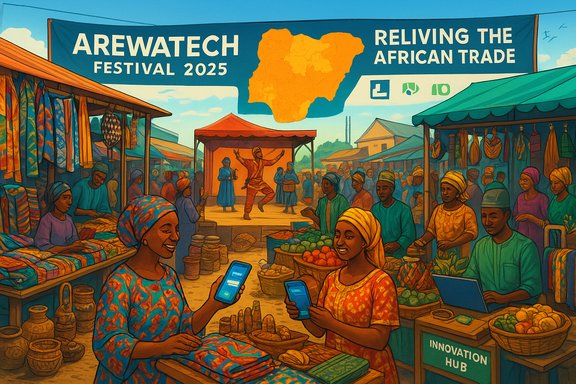
The Arewa Festival 2025 arrives with ambition and scale: a two‑day, regionwide cultural and commercial mobilization conceived by Tripoint Academy and supported by GEN Nigeria that aims to reconnect Northern Nigeria’s historic trade networks with modern entrepreneurial ecosystems under the banner “Reliving the African Trade.”
Northern Nigeria’s markets—once nodes on trans‑Saharan trade routes—shaped the economic geography of West Africa for centuries. The Arewa Festival frames itself as a 21st‑century revival of that marketplace logic: coordinated trade fairs, creative showcases, and agribusiness linkages staged across all 19 Northern states, with a major hub scheduled in Kano on 22–23 November 2025. The organisers say the event will run simultaneously across the region and tie into Global Entrepreneurship Week activities. Tripoint Academy, the convener, is presented as the event’s organizing nucleus. The group—part of the Tripoint business network that has been rolling out training and internship initiatives under the Tripoint Academy brand—positions the festival within a broader agenda of youth skills, tourism and enterprise development. Tripoint’s founders and partners have used recent internship and academy programmes as evidence of organisational capacity to run multi‑stakeholder initiatives.
Source: Nigeria Communications Week Arewa Festival 2025 to Showcase Entrepreneurial Acumen of Northern Nigeria
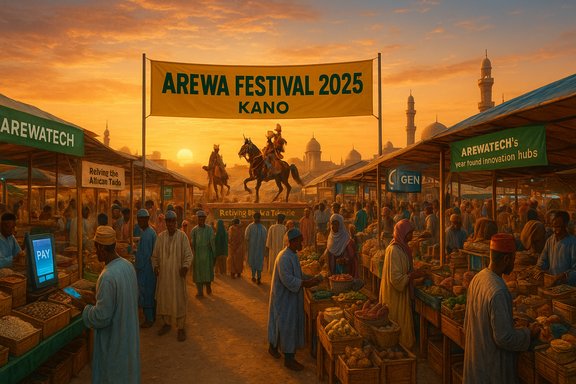 Background
Northern Nigeria’s markets—once nodes on trans‑Saharan trade routes—shaped the economic geography of West Africa for centuries. The Arewa Festival frames itself as a 21st‑century revival of that marketplace logic: coordinated trade fairs, creative showcases, and agribusiness linkages staged across all 19 Northern states, with a major hub scheduled in Kano on 22–23 November 2025. The organisers say the event will run simultaneously across the region and tie into Global Entrepreneurship Week activities. Tripoint Academy, the convener, is presented as the event’s organizing nucleus. The group—part of the Tripoint business network that has been rolling out training and internship initiatives under the Tripoint Academy brand—positions the festival within a broader agenda of youth skills, tourism and enterprise development. Tripoint’s founders and partners have used recent internship and academy programmes as evidence of organisational capacity to run multi‑stakeholder initiatives. What was announced at the Lagos briefing
At a Lagos press briefing, Tripoint Academy’s founder, Mrs. Shuhda Muhammed, described Arewa Festival as a strategic platform to “revive” the North’s commercial legacy by creating opportunities for entrepreneurs, creatives and agribusiness operators across the region. The Global Entrepreneurship Network (GEN) Nigeria signed on as a key partner, and representatives from the banking, telco and consumer goods sectors were present at the launch. The organisers also unveiled a multi‑year blueprint named AREWATECH—an acronym for Africa Rebuilds Economy With Agriculture, Trade, Entrepreneurship, Education, Creatives and Hospitality—intended to extend the festival into year‑round innovation hubs, export pathways and marketplaces. Key claims from the briefing include:- A projected attendance of more than 200,000 visitors and direct benefits to over 5,000 small and medium enterprises (SMEs) through exposure, networking and market access.
- Public‑private partnership engagement with players such as T2 (formerly 9Mobile), ONGA, TAJ Bank, and SANEF, alongside stakeholder outreach to Emirate Councils and development agencies.
AREWATECH: ambition and architecture
What AREWATECH promises
AREWATECH is pitched as the festival’s strategic scaffolding: an attempt to convert a two‑day marketplace into a durable ecosystem supporting:- Agricultural value‑chain strengthening and market linkages.
- Inter‑state and regional export pathways.
- Youth entrepreneurship acceleration and training.
- Capacity building for the creative and digital sectors.
- Tourism and hospitality development across Northern states.
Why this matters
If implemented, AREWATECH could address long‑standing friction points in regional commerce: limited aggregation and export channels for Northern agricultural produce, weak brandisation of artisanal products, low participation of youth in formalised value chains, and inconsistent market data for buyers and investors. A credible hub + marketplace model can reduce transaction costs and create repeated market access cycles for MSMEs (micro, small & medium enterprises).Partners and strategic fit
The launch event showcased a cross‑sectoral roster of partners and supporters:- GEN Nigeria—framing the festival within the global entrepreneurship movement and providing ecosystem credibility. GEN’s presence signals an intent to link local entrepreneurs to broader networks.
- T2 (formerly 9Mobile)—the telco’s rebrand in 2025 came with new corporate energy and a stated focus on digital solutions for creatives and entrepreneurs, making digital enablement an obvious partnership fit. T2 executives at the briefing emphasised support for digital skills and distribution channels.
- ONGA (food brand)—engagement from a major consumer goods player underlines the festival’s food tourism and culinary entrepreneurship focus; ONGA signalled financial and prize support for food entrepreneurs.
- TAJ Bank and SANEF—financial and agent network stakeholders whose involvement could smooth SME onboarding, payments and distribution logistics.
What to watch for (operational realities)
Executing a coordinated festival across 19 states in two days presents several technical and managerial demands. The list below summarises the most immediate operational tasks the organisers must deliver:- Venue readiness and standardisation: consistent stall layouts, power, sanitation, security and badges across state sites.
- SME onboarding and curation: vetting exhibitors, ensuring quality control, and supporting packaging and digital product pages.
- Logistics and freight corridors: aggregation points, refrigerated transport for perishables, and last‑mile delivery for buyers who place orders during the festival.
- Digital backbone and payments: telco‑enabled connectivity, e‑payment acceptance across multiple financial players, and a central marketplace platform for post‑event follow‑through.
- Safety and security: risk assessments and coordination with state security apparatuses and local authorities.
Economic upside and measurable impact
Arewa Festival’s potential benefits — if realised — fall into several measurable categories:- Market access: short‑term transaction volumes and longer‑term buyer‑seller connections between Northern SMEs and national/international buyers.
- Employment: temporary event jobs plus downstream scaling jobs in processing, logistics and hospitality.
- Export growth: supported pathways for regionally produced goods into neighbouring countries and beyond.
- Youth entrepreneurship: training conversions, digital upskilling, and formalisation of micro‑enterprises.
- Number of buyer‑seller meetings and recorded purchase commitments.
- Total commercial value transacted on‑site and within 90 days after the festival.
- Number of SMEs onboarded to digital platforms and their conversion rates.
- Jobs created (short‑ and medium‑term).
- Exports initiated and value of export contracts facilitated.
Critical risks and credibility checks
The festival’s scale invites scrutiny. The following risks merit explicit mitigation plans:- Optimistic projections: Organisers’ figures—over 200,000 visitors and 5,000 SMEs—are plausible for a regional festival with strong government and private sector buy‑in, but they are projections. Expect actual turnout to vary by state, security context and transportation access. Treat the projections as organisers’ forecasts rather than independently verified outcomes.
- Security and political risk: Northern Nigeria includes states with varied security profiles. Coordinating safe movement of visitors, especially cross‑border traders, requires formal security guarantees from state authorities and continuous risk monitoring.
- Infrastructure gaps: Electricity, cold chain, and internet connectivity can be uneven. The festival’s commercial ambitions will hinge on whether organisers and partners can fill these gaps at scale and for the necessary duration.
- Contractual clarity with partners: Several media reports list the Northern Governors’ Forum and Emirate Councils as collaborators; these are strategic names to have in your deck, but no independent public statement from the Northern Governors’ Forum confirming formal endorsement was found at the time of reporting. Where political bodies are listed as collaborators, organisers should publish formal memoranda or endorsement letters to remove ambiguity. This claim is flagged as an organiser assertion pending independent confirmation.
- Post‑event legacy risk: Many one‑off festivals generate short‑term buzz but leave minimal systemic change. AREWATECH is designed to avoid this trap by building year‑round infrastructure—but success requires sustained financing, credible governance structures and measurable milestones.
Digital and telco angle: why T2 matters
T2’s involvement matters for two reasons. First, the telco recently rebranded from 9Mobile to T2 in 2025 and has articulated a strategy focused on digital enablement, network expansion and platform partnerships—an orientation that aligns with AREWATECH’s digital ambitions. Second, a willing telco partner can help solve last‑mile connectivity, mobile payments integration, and digital marketplace reach for festival vendors. T2 executives at the briefing signalled plans to support entrepreneurs with creative and digital skills. These are pragmatic, high‑value contributions if converted into concrete technical integrations (marketplace, USSD/payment rails, digital training modules).Financial architecture: sponsors, packages and sustainability
Organisers have called for public and private sponsors and have reportedly packaged visibility opportunities across the region. For long‑term viability beyond the launch event, the festival must establish:- A transparent sponsorship framework with deliverables and measurable ROI.
- Revenue streams beyond sponsorship: vendor fees, ticketing for premium experiences, marketplace transaction fees, and export facilitation service charges.
- A trust or permanent body to steward AREWATECH funds, with audited reporting and an independent oversight mechanism.
Practical recommendations for organisers and partners
- Pilot, then scale. Use a phased rollout that begins with high‑capacity hub states (e.g., Kano) while running lighter touch events in more fragile states. This preserves credibility while testing logistics.
- Publish KPIs and a public results dashboard within 30 days post‑festival. Include transaction values, SME counts, jobs tracked and follow‑on financing secured.
- Secure formal, written commitments from named political collaborators (e.g., state governors’ offices, Emirate Councils) and make these public to reduce reputational risk.
- Lock in digital infrastructure partners (telco + payments) with measurable uptime and payment settlement SLAs.
- Create an SME onboarding and quality‑assurance protocol—packaging, labelling and export readiness assistance—before the festival opens.
- Fund a small, independent monitoring & evaluation (M&E) team to produce a validated report 90 days after the event.
- Leverage GEN Nigeria to connect top exhibitors to regional and global buyers and to run entrepreneurship masterclasses as part of the festival’s capacity‑building commitment.
What success would look like
A credible early success would include:- Documented purchase orders and buyer commitments that convert into invoices within 90 days.
- 1,000+ SMEs onboarded to a festival marketplace or digital catalogue with repeat orders after the event.
- Clear export pathways established for at least 3 agricultural value chains (e.g., sesame, shea products, gari/dried goods).
- A reproducible operational playbook for state partners to replicate the event next year.
Cultural and tourism dimensions
Arewa Festival positions cultural programming—fashion, durbar-style showcases, food tourism—alongside commerce. This fusion has benefits:- Cultural programming draws tourists and media, improving the visibility of artisan products.
- Culinary showcases (supported by ONGA) can create food tourism routes and build brand narratives for local cuisines.
- Fashion and creative sector showcases can spur B2B licensing, retail partnerships and seasonal orders.
Political economy and narrative
The festival also has symbolic importance: it seeks to rewrite the narrative about Northern Nigeria—as a site of entrepreneurship, creativity and hospitality rather than only security or humanitarian challenge. That narrative shift has value for investor confidence, diaspora remittances, and inter‑regional trade flows. However, political endorsement matters: grassroots buy‑in from local rulers and state governments will determine whether the festival is seen as an external PR spectacle or a locally owned economic instrument. Where press reports list the Northern Governors’ Forum and Emirate Councils as collaborators, organisers should produce formal endorsements to convert rhetorical support into operational partnership. This specific endorsement was stated by organisers and reported in national media but lacked a separately published endorsement note from the Northern Governors’ Forum at the time of reporting.Short‑term checklist (30 days)
- Finalise and publish the event schedule, exhibitor list and buyer list.
- Confirm security and logistics plans with state authorities.
- Activate digital marketplace and payment settlement testing.
- Run vendor workshops on packaging, pricing and export documentation.
- Publish a sponsorship transparency sheet with deliverables and budgets.
The verdict: promise, but delivery is everything
Arewa Festival 2025 reflects a powerful idea: leveraging cultural heritage and historic trade identities to stimulate modern commerce, tourism and entrepreneurship. The event benefits from credible partners—GEN Nigeria, corporate sponsors across telco, FMCG and banking—and a strategic framing in AREWATECH that aims to convert exposure into sustained economic infrastructure. That said, several of the festival’s most headline‑worthy claims are organisers’ forecasts. The figures for attendance and SME reach should be validated through transparent, independent reporting after the festival. Political endorsements named in media reports require formal confirmation to ensure that the festival’s cross‑state coordination is backed by actual administrative capacity. The greatest hazard is not the idea itself but weak follow‑through: without measurable KPIs, audited sponsor funds and a governance vehicle for AREWATECH, the initiative risks producing momentary spectacle decoupled from lasting economic change.Closing outlook
Arewa Festival 2025 is a high‑stakes experiment in regional economic rebuilding through commerce, culture and entrepreneurship. Its short‑term success will be measured by turnout, commercial transactions and the quality of buyer‑seller linkages; its long‑term legacy depends on whether AREWATECH can become a durable platform for innovation hubs, export facilitation and continuous SME support. The coming weeks—starting with the scheduled hub activity in Kano on 22–23 November 2025—will be decisive. Stakeholders, partners and observers should watch for transparent post‑event reporting, independent verification of organisers’ targets, and immediate follow‑through on digital onboarding and export pathways to see whether the Arewa Festival transforms from a well‑intentioned showcase into a sustainable engine for Northern Nigeria’s economic renewal.Source: Nigeria Communications Week Arewa Festival 2025 to Showcase Entrepreneurial Acumen of Northern Nigeria