
ASM’s security team has moved from triage-driven exhaustion to strategic resilience by embedding Microsoft’s Security Copilot across its global operations, claiming dramatic reductions in investigation time, redeploying staff to higher-value work, and building a blueprint for protecting high‑value semiconductor intellectual property in the age of generative AI.
ASM—one of the world’s leading semiconductor equipment manufacturers—operates at the center of critical chip supply chains where intellectual property (IP) protection is tantamount to national and commercial competitiveness. Facing targeted, often state‑sponsored, espionage and a widely distributed attack surface across manufacturing sites in Asia, Europe, and North America, the company sought to modernize its security operations by tightly integrating AI‑driven decision support into its existing Microsoft security stack.
According to ASM’s published account, the company integrated Microsoft Security Copilot across its Sentinel/Defender environment and reports three headline outcomes: approximately 337 hours saved per week on investigations, a 68% reduction in the time to triage a representative laptop compromise (from 25 minutes down to eight), and the ability to redeploy roughly 20% of its security operations staff toward governance, risk, compliance, and proactive threat hunting. These figures, alongside direct quotes from ASM leaders, form the basis for assessing how AI changes SOC workflows and what semiconductor firms should expect when deploying agentic defenses.
Short, specific workflow improvements include:
This redeployment also improves continuity of knowledge. By codifying institutional expertise into Copilot workflows and promptbooks, ASM reduced single‑person dependencies and made junior staff more effective faster.
Key operational needs:
Mitigations:
Best practices:
Suggested controls:
Mitigations:
However, realizing a secure, self‑healing environment requires continuous investment in governance, telemetry, and human capital. The endpoint is not less human involvement—it is a different kind of human involvement: strategic oversight, policy engineering, and adversary‑centric threat hunting.
But several blind spots persist:
At the same time, the semiconductor sector’s unique sensitivity to IP loss, regulatory scrutiny, and geopolitical targeting means that efficiency gains must be balanced with rigorous governance, logging, and human oversight. The path to a genuinely self‑healing security architecture is achievable, but it is not automatic. It demands an investment in policy, audits, and continuous adversary testing alongside the technical deployment.
For organizations protecting high‑value IP, the lesson is clear: AI‑driven defense can be transformative, but success depends on careful orchestration—tight access controls, robust telemetry, deliberate human‑in‑the‑loop design, and a culture that treats AI as an augmentation to human judgement rather than a substitute for it. When those pieces are in place, companies like ASM demonstrate that faster, smarter, and more secure protection is not a slogan—it is an operational reality.
Source: Microsoft ASM and Microsoft: Strengthening semiconductor security with AI-driven defense | Microsoft Customer Stories
 Background
ASM—one of the world’s leading semiconductor equipment manufacturers—operates at the center of critical chip supply chains where intellectual property (IP) protection is tantamount to national and commercial competitiveness. Facing targeted, often state‑sponsored, espionage and a widely distributed attack surface across manufacturing sites in Asia, Europe, and North America, the company sought to modernize its security operations by tightly integrating AI‑driven decision support into its existing Microsoft security stack.According to ASM’s published account, the company integrated Microsoft Security Copilot across its Sentinel/Defender environment and reports three headline outcomes: approximately 337 hours saved per week on investigations, a 68% reduction in the time to triage a representative laptop compromise (from 25 minutes down to eight), and the ability to redeploy roughly 20% of its security operations staff toward governance, risk, compliance, and proactive threat hunting. These figures, alongside direct quotes from ASM leaders, form the basis for assessing how AI changes SOC workflows and what semiconductor firms should expect when deploying agentic defenses.
Overview: What ASM implemented and why it matters
The technical picture
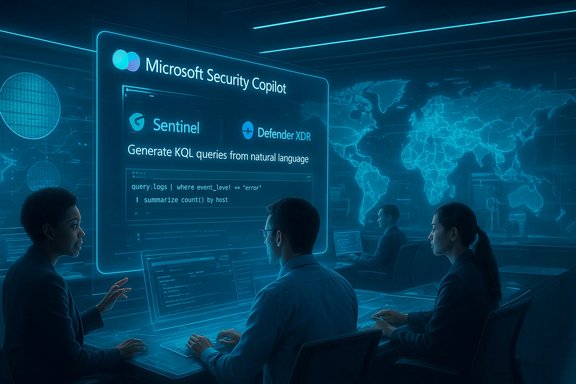
ASM’s approach is straightforward in concept and fully modern in execution: Security Copilot was embedded as a decision‑support layer on top of Microsoft Sentinel and Microsoft Defender XDR, giving analysts a natural‑language interface, automated triage agents, and the ability to synthesize signals from multiple telemetry streams into actionable next steps. The platform’s capabilities include:- Natural‑language queries that translate user prompts into Kusto Query Language (KQL) for Sentinel.
- Integrated incident summarization and guided response playbooks inside Defender XDR.
- Agentic components capable of automating repetitive, high‑volume tasks such as phishing triage.
- Guided scripts and remediation recommendations that reduce time spent context‑switching across consoles.
Why semiconductors are a different problem set
Semiconductor firms like ASM manage highly sensitive process know‑how that is both economically valuable and geopolitically targeted. Threat actors seek design blueprints, process parameters, and supplier contracts that can shortcut months or years of R&D. For that reason:- Speed matters: faster triage and remediation limits the window an attacker has to pivot.
- Consistency matters: reproducible, policy‑aligned responses reduce the chance a missed signal becomes a catastrophic leak.
- Visibility matters: global operations and distributed manufacturing require unified telemetry and fast correlation.
The measurable gains: efficiency, redeployment, and morale
Time savings and operational leverage
ASM’s reported 337 weekly hours saved translates to a sustained reduction in repetitive investigation time across the SOC. In practical terms, this created room for proactive security initiatives—work that historically got deferred because teams were firefighting.Short, specific workflow improvements include:
- Single‑pane-of‑glass incident summaries that replace manual log‑pulling across consoles.
- Natural‑language to KQL conversion that accelerates hunting queries and reduces the need for specialized KQL expertise among junior staff.
- Guided remediation steps that reduce triage cycles and speed containment.
Redeploying people to strategic work
Freeing 20% of security operations staff from day‑to‑day triage allowed ASM to shift workforce capacity into governance, risk, and compliance (GRC), plus threat hunting. This is a critical transition: security operations become more forward‑looking and less reactive, enabling the development and enforcement of stronger controls and playbooks that reduce repeat incidents.This redeployment also improves continuity of knowledge. By codifying institutional expertise into Copilot workflows and promptbooks, ASM reduced single‑person dependencies and made junior staff more effective faster.
Morale and human‑AI collaboration
A frequently understated benefit reported by ASM is improved analyst morale and confidence. When AI recommendations mirror human judgment, analysts feel validated rather than replaced. Security Copilot’s role as a mentor for junior staff—providing real‑time guidance, suggested next steps, and contextual explanations—has psychological and professional benefits that help retain and develop talent.How these outcomes align with wider industry findings
Independent analyst and industry reporting has repeatedly observed similar patterns when organizations integrate AI assistants into security workflows:- AI can dramatically cut time‑to‑triage by automating repetitive tasks and surfacing high‑confidence results faster.
- Natural‑language interfaces lower the skills barrier for common investigative tasks, accelerating learning curves for novice analysts.
- Automation and agentic workflows shift effort from reactive response to proactive activities like threat hunting and control hardening.
Strengths: where AI-driven defense shines for semiconductor security
1. Faster, more consistent incident handling
AI accelerates evidence collection, correlation, and suggested remediation. This helps ensure incidents are handled uniformly across global sites, reducing the likelihood of human error or regional variation in response.2. Democratization of expertise
By codifying institutional knowledge into promptbooks and playbooks, organizations can accelerate the ramp‑up of junior analysts and preserve organizational knowledge when people change roles or leave.3. Scale and focus
Agentic automation handles volume (phishing triage, basic alerts), while humans focus on nuance (complex lateral movement, insider risk investigations). This "scale + focus" model reduces alert fatigue and prioritizes scarce human attention.4. Measurable business outcomes
ASM’s reported time and staffing gains directly translate to a measurable shift in operating model—fewer hours on low‑value work, more hours on strategic risk reduction. This is quantifiable ROI for security investments in AI.5. Stronger integration across the security stack
When Security Copilot is integrated with Sentinel, Defender XDR, Intune, and identity and data governance platforms, investigations can leverage high‑fidelity context (user identity, device posture, data sensitivity), improving detection fidelity and response appropriateness.Risks and caveats: where AI amplifies complexity
AI‑driven defense is not a panacea. The same features that enable productivity introduce new risk vectors that require explicit mitigation.Data exposure and scope creep
Copilot operates with the permissions of the calling user. If an analyst has broad access, Copilot can use associated data to produce responses. This raises the risk that sensitive IP or privileged documents could be surfaced inadvertently in Copilot outputs, or that prompts could touch a far larger set of sensitive records than intended.Key operational needs:
- Tight access controls and least‑privilege policies.
- DLP controls and prompt filtering to prevent sensitive content from being used in freeform prompts.
- Clear tenant configuration to disable web grounding or plugin access where unacceptable.
Hallucinations and over‑trust
Large language models can generate plausible but incorrect conclusions (hallucinations). In a SOC context, an erroneous summary or misattributed indicator could delay or misdirect response.Mitigations:
- Human‑in‑the‑loop validation for all AI‑generated remediation steps.
- Require analyst sign‑off before executing automated responses or playbooks.
- Use AI outputs as assistive rather than authoritative.
Plugin and integration IoCs
Third‑party plugins and agents expand functionality but also increase attack surface. Malicious or compromised integrations could exfiltrate data or grant excessive persistent access.Best practices:
- Treat plugins like third‑party apps: explicit approval workflows, security reviews, and contractually enforced data handling terms.
- Monitor granted OAuth scopes and regularly audit connector permissions.
Forensics and auditability gaps
Traditional telemetry captures who accessed a file and when, but not always the semantic context of how an AI used that data to produce an output. The inability to reconstruct an AI reasoning path complicates post‑incident analysis and compliance investigations.Suggested controls:
- Enhanced logging of prompts, plugin usage, and the data sources consulted.
- Immutable audit trails and exportable logs that meet regulatory needs.
Vendor dependence and supply‑chain risk
Entrusting a significant part of SOC workflow to a single vendor’s AI introduces concentration risk. A vendor outage, policy change, or vulnerability could degrade defense posture.Mitigations:
- Multi‑vendor threat intelligence and layered defenses.
- Playbooks for vendor service degradation and graceful fallback procedures.
Governance, policy, and human factors: operationalizing AI safely
An effective AI‑augmented SOC requires a tight governance fabric that bridges legal, privacy, and technical functions.Establish clear acceptable‑use rules
Define what data and use cases Copilot can be applied to. This includes prohibitions on pasting secrets or IP into open prompts and strict rules for high‑risk workflows.Build mandatory human approval gates
For any automated remediation that could affect production systems or expose sensitive data, require explicit analyst approval. Use automation to prepare actions, not to execute them without oversight.Enforce prompt hygiene and training
Training should cover how to write safe prompts, how to interpret AI outputs, and when to escalate to senior analysts. Promote prompt hygiene as a first line of defense against inadvertent exposure.Create audit and compliance workflows
Define retention policies for prompts and Copilot sessions that satisfy records management and regulatory obligations. Ensure Copilot interactions are captured in forensic logs for future review.Continuous validation and red teaming
AI capabilities must be tested routinely for accuracy, safety, and resilience to adversarial inputs. Independent red teams should probe prompt‑based attack surfaces and evaluate agent behaviors.Practical steps for semiconductor and IP‑sensitive organizations
- Inventory high‑value data and classify it. Protect critical IP with stricter Copilot access controls.
- Start with limited pilots and measurable KPIs (e.g., MTTR, analyst time saved, number of false positives).
- Harden identities and device posture before opening Copilot to broad use; ensure Entra and Intune baselines are enforced.
- Implement DLP and browser‑based controls to prevent sensitive content from being ingested by Copilot instances.
- Adopt a phased rollout that pairs Copilot with policy updates, audit logging, and training curricula.
- Maintain human control over critical decisions and remediation steps; use AI for enrichment and recommendations.
- Regularly test all third‑party connectors and maintain an approval registry.
The long view: AI as an enabler of self‑healing security
ASM’s stated vision is a future where AI is “deeply embedded in every layer of our security stack, from detection to response to recovery” and where the architecture becomes “self‑healing.” That is a plausible trajectory: agentic automation can close repeatable gaps, surface trends faster, and enact low‑risk remediations autonomously under tight policy constraints.However, realizing a secure, self‑healing environment requires continuous investment in governance, telemetry, and human capital. The endpoint is not less human involvement—it is a different kind of human involvement: strategic oversight, policy engineering, and adversary‑centric threat hunting.
Critical assessment: strengths, blind spots, and vendor dynamics
ASM’s results are compelling and reflect real capabilities when AI is tightly integrated with mature telemetry platforms. The combination of Sentinel’s data model, Defender XDR’s unified incidents, and Copilot’s natural‑language and agentic features creates a productivity multiplier for SOCs.But several blind spots persist:
- Reported metrics are customer‑specific and strongly influenced by preexisting maturity. Organizations without consolidated telemetry or mature identity/device posture will not achieve the same returns out of the box.
- Efficiency gains may mask latent risks if governance and logging are not improved in parallel. Faster investigations are valuable only if those investigations are accurate and auditable.
- The more an organization relies on prebuilt agents and external integrations, the more attention must be paid to supply‑chain and consent risks.
Conclusion
ASM’s deployment of Microsoft Security Copilot offers a practical case study in how generative AI, when integrated strategically into a modern security stack, can shift an organization from reactive firefighting to proactive resilience. Measured improvements—in investigation time, analyst redeployment, and morale—illustrate the tangible benefits of assistive AI in a SOC.At the same time, the semiconductor sector’s unique sensitivity to IP loss, regulatory scrutiny, and geopolitical targeting means that efficiency gains must be balanced with rigorous governance, logging, and human oversight. The path to a genuinely self‑healing security architecture is achievable, but it is not automatic. It demands an investment in policy, audits, and continuous adversary testing alongside the technical deployment.
For organizations protecting high‑value IP, the lesson is clear: AI‑driven defense can be transformative, but success depends on careful orchestration—tight access controls, robust telemetry, deliberate human‑in‑the‑loop design, and a culture that treats AI as an augmentation to human judgement rather than a substitute for it. When those pieces are in place, companies like ASM demonstrate that faster, smarter, and more secure protection is not a slogan—it is an operational reality.
Source: Microsoft ASM and Microsoft: Strengthening semiconductor security with AI-driven defense | Microsoft Customer Stories
