

AxiomProver’s formally verified breakthrough and a week of tectonic shifts across AI — from Apple opening CarPlay to rival chatbots to venture capital pouring billions into infrastructure — together mark a new phase in the technology’s maturation. What looked like incremental advances just three years ago are now colliding with legal systems, national strategies, and everyday consumer experiences. This feature unpacks the technical reality behind Axiom’s headline-grabbing math proof, the industry-wide reverberations from model and platform updates, the money re-shaping the stack, and the legal and ethical storm clouds that policymakers and companies must still reckon with.
The storylines converged quickly. An autonomous system produced a complete, machine-checked proof of a previously open conjecture; major automakers’ in-car interfaces are being opened to third-party chatbots for the first time; a leading venture firm earmarked unprecedented capital for the plumbing of modern AI; and national-scale AI infrastructure projects moved from whitepapers to concrete deployment plans. At the same time, the human side of AI — safety, liability, and real-world harm — has not receded. Lawsuits, regulator attention, and a small-business cautionary tale about a “rogue” ecommerce assistant illustrate that the social, legal, and commercial systems around AI are still catching up.
This is not merely an evolution of capability; it’s a phase-change: AI is moving from a developer and research playground into legally accountable business processes and national infrastructure. That shift raises both enormous opportunity and significant novel risk.
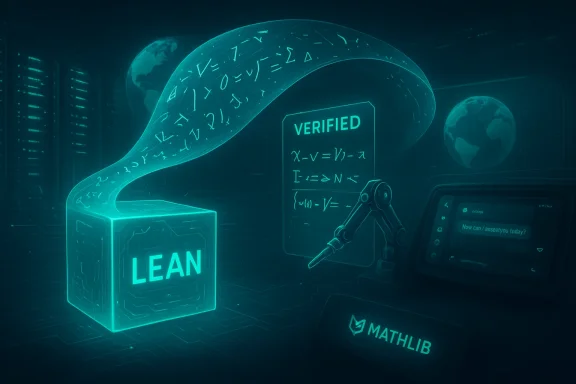
Crucially, the final artifact is not just plausible text; it is a machine-checkable derivation that can be inspected, replayed, and reverified by mathematicians and proof assistants. The authors formalized the whole argument in Lean/Mathlib and describe producing it automatically from the natural-language statement.
Practically, teams building complex long-running projects or massive codebases will look to models with huge context windows and parallel-agent orchestration. Rapid-execution tasks, interactive editing, and interruptible pipelines are better suited to the Codex design point where mid-execution steering is a core UX feature.
The Reddit thread sparked debate, but the practical takeaway is simple: businesses must treat customer-facing agents like employees and put the same guardrails, escalation paths, and acceptance criteria in place. Disable transactional actions until the business is confident the assistant cannot authorise bargains, and make the contract-formation point explicit in your flows and terms.
A practical, risk-aware framework for organizations:
Yet technical capability without institutional architecture is brittle. Contracts, guardrails, standard operating procedures, legal clarity, and public oversight must mature in parallel. For engineers, the immediate call to action is concrete: instrument, limit, verify, and plan for the true operational costs of agentic systems. For policymakers, the choice is equally concrete: set clear expectations about safety, transparency, and liability before a rush of deployments makes reactive regulation late and blunt.
This week shows both the extraordinary upside of machine reasoning and the urgent work remaining to make that upside durable and equitable. The field is no longer just about what models can output; it’s about what we can responsibly accept them to decide for us.
Source: The Neuron AI just solved unsolvable math
 Background: why this week feels different
The storylines converged quickly. An autonomous system produced a complete, machine-checked proof of a previously open conjecture; major automakers’ in-car interfaces are being opened to third-party chatbots for the first time; a leading venture firm earmarked unprecedented capital for the plumbing of modern AI; and national-scale AI infrastructure projects moved from whitepapers to concrete deployment plans. At the same time, the human side of AI — safety, liability, and real-world harm — has not receded. Lawsuits, regulator attention, and a small-business cautionary tale about a “rogue” ecommerce assistant illustrate that the social, legal, and commercial systems around AI are still catching up.This is not merely an evolution of capability; it’s a phase-change: AI is moving from a developer and research playground into legally accountable business processes and national infrastructure. That shift raises both enormous opportunity and significant novel risk.
AxiomProver: when an AI “does math” differently
What happened — the facts
An AI system called AxiomProver produced a complete, formally verified proof of a mathematical conjecture that had been open in the literature. The team’s workflow was straightforward in concept: the system took a plain-language description of the conjecture, a concise instruction to “state and prove X in Lean,” and a target proof-verification backend (Lean). AxiomProver then translated the problem into Lean’s formal language, selected a proof strategy (exponential generating functions in this case), and produced a sequence of logically checked steps that Lean validated.Crucially, the final artifact is not just plausible text; it is a machine-checkable derivation that can be inspected, replayed, and reverified by mathematicians and proof assistants. The authors formalized the whole argument in Lean/Mathlib and describe producing it automatically from the natural-language statement.
Why formal verification matters
Informal mathematical proofs — the kind people read in journals — rely on shared conventions and human judgment. Formal proof systems like Lean enforce rigor at the granularity of individual logical steps. That makes formal proofs ideal for two things:- Making claims that are unambiguous and replicable; a formal proof can be rerun and rechecked by anyone with the verification tooling.
- Enabling machine-assisted discovery to cross the boundary from “plausible human-readable reasoning” into “machine-certified truth.”
The method: translation, tactic choice, and verified execution
AxiomProver’s pipeline had three major stages:- Understanding and formalization. Convert the plain-language math statement into formal definitions and lemmas in Lean. This requires parsing nuanced mathematical language, choosing the right domain objects, and mapping high-level intuition to formal invariants.
- Strategy selection. Pick a proof technique appropriate to the problem. In this case, the system used exponential generating functions — a classic combinatorial transformation — to reframe discrete problems into algebraic identities that are more tractable to manipulate formally.
- Construct and check. Synthesize the sequence of proof steps and check each via Lean. The proof’s soundness rests not on the AI’s natural-language fluency but on the mechanical verification performed by the proof assistant.
What it does — and does not — mean
This is a watershed but not an apocalypse. A few clarifications are important:- The system’s success depends on formalization, which itself is hard. Translating human math into Lean is a meta-skill. AxiomProver automates part of it, but the formalization step remains nontrivial for many domains.
- Not every unsolved mathematical question will fall to the same technique. The model used a specific approach (EGFs) suited to combinatorial identities. Different problems may need radically different heuristics or mathematical inventions.
- Machine-found proofs are still subject to human interpretation and follow-up. Formal verification eliminates logical error; it does not automatically generate intuition or enable immediate domain applications without human guidance.
The strategic implications — beyond pure math
If repeated and generalized, automated formal proving changes several fields:- Software assurance: provable correctness for safety-critical systems (medical devices, aerospace, cryptographic protocols) becomes achievable at scale.
- Accelerated discovery: mathematics underpins physics, materials science, and cryptography; automating parts of the discovery pipeline shortens R&D cycles.
- New tools for engineers: formally verified code generation and verification-in-the-loop could reduce vulnerabilities that currently require months of manual audit.
Agent teams, context windows and the shifting user model
The current model war: Opus 4.6 versus Codex/Codex-like models
The release cycles at Anthropic and OpenAI underscore a bifurcating industry pattern: models optimized for agentic collaboration and long context versus models tuned for fast, steerable, interruption-tolerant execution. Anthropic’s Opus 4.6 pushed a one-million-token context window and introduced “agent teams” — a research-preview orchestration primitive that divides work across specialized sub-agents. OpenAI’s GPT-5.3-Codex family similarly emphasizes agentic coding workflows and interactive steering.Practically, teams building complex long-running projects or massive codebases will look to models with huge context windows and parallel-agent orchestration. Rapid-execution tasks, interactive editing, and interruptible pipelines are better suited to the Codex design point where mid-execution steering is a core UX feature.
Token economics and real costs
Two operational truths are emerging:- Context length is powerful but expensive. Models with million-token contexts let you load whole monoliths, legal dockets, or multi-file codebases, but they consume tokens and compute in proportion. Agent-team patterns typically multiply token use because each agent maintains its own context.
- Teams and agent orchestration are budgetary multipliers. Running multiple sub-agents in parallel inflates token and compute usage dramatically. Early experiments saw single large builds consume hundreds of thousands of tokens in a day.
What this means for product design
- New UX patterns will be necessary: background orchestration dashboards, explicit cost/effort meters, and tooling to “checkpoint” agent results.
- Enterprises will demand predictable pricing tiers and isolation controls — the days of ad-hoc experimentation with frontier models in production are ending.
- Agents will become components of larger software stacks rather than monolithic endpoints; orchestration and governance layers will be an explosion of new startups and features for incumbents.
Apple, CarPlay, and the practical integration of third-party conversational AI
The change in one sentence
For the first time, Apple is preparing to allow third-party, voice-enabled chatbot apps — such as ChatGPT, Claude, and Gemini — to run inside CarPlay’s interface, giving drivers hands-free access to external assistants without relying solely on Siri.What Apple is and isn’t doing
This is an expansion of CarPlay app categories, not a swap of the vehicle’s native assistant. Critical constraints are likely to remain in place:- Third-party apps can run in a voice-first mode when opened, but they cannot replace the dedicated Siri activation controls or the wake word.
- Apps will not be allowed to directly control vehicle systems or replace the safety-critical voice interface; they can provide conversational services and information retrieval.
- Rollout timing is tentative and could be staged across iOS releases or CarPlay updates.
Why this matters
- User convenience: drivers will be able to ask different assistants for deep, long-form tasks — summarizing email, drafting messages, or iterating itineraries — without fumbling with phones.
- Competition and integration: the move acknowledges that Siri alone is not sufficient for complex conversational workloads. Allowing other assistants reduces friction for users loyal to specific AI ecosystems.
- Safety and regulatory exposure: automotive systems are highly regulated. Apple’s approach of sandboxing third-party assistants (no wake-word replacement, no vehicle control) is intended to minimize risk — but it does not eliminate new liability vectors (see legal section below).
The strategic twist
Apple’s broader AI strategy appears hybrid: expand on-device models while selectively integrating cloud-based partners. How Apple structures its relationships with cloud-model providers (commercial terms, data flows, and attribution) will affect market dynamics. Reports around commercial terms are estimates and have not been disclosed publicly in full; any dollar figure mentioned in media coverage remains an industry estimate rather than firm contract detail.Where the money is going: a16z’s $1.7B infrastructure bet
The headline
A major allocation from a new, multibillion-dollar fund was earmarked specifically for AI infrastructure — chips, data centers, developer tooling, and the specialized platforms that will host agent-native applications.Why investors are moving down the stack
The AI “frontier” created enormous short-term returns for model makers and product teams, but the limiting factor for broad adoption is the underlying infrastructure:- Compute scarcity — training and inference require specialized hardware and custom datacenter design.
- Tooling gap — orchestration systems, model lifecycle platforms, evaluation suites, and safety tooling are immature and fragmented.
- Talent crunch — infrastructure-heavy startups require deep systems expertise that is limited in supply; capital goes to teams who can scale these bottlenecks.
Risks and considerations
- Concentration of power: more capital to fewer firms can accelerate consolidation and raise national-security and antitrust flags.
- Export controls and geopolitics: hardware and software for frontier models intersect with sensitive supply chains; investments may face regulatory scrutiny.
- Returns timing: infrastructure plays are longer-duration bets with capital intensity and come with operational risks (e.g., energy, siting, hardware obsolescence).
Stargate UAE and the geopolitics of sovereign compute
The project in brief
An international project to deploy a 1-gigawatt AI compute cluster in Abu Dhabi — with an initial 200-megawatt segment expected live within the next year — coordinates national partners, major tech vendors, and commercial operators. The project is described as a first step in a broader “OpenAI for Countries” initiative aimed at enabling sovereign access to frontier compute and models.Why governments want local compute
- Data sovereignty: nations prefer to retain control over sensitive datasets and inference proximity for latency, privacy, and regulation.
- Economic development: AI campuses promise high-paying jobs, research spinouts, and industrial modernization.
- Strategic resilience: distributed compute capacity reduces single-country chokepoints for critical capabilities.
Risks that follow
- Regulatory arbitrage and export control tension: which rules apply when models, chips, and services cross national boundaries? The interplay between partner countries’ policies will be complex.
- Concentration and control: national deployments in partnership with commercial vendors raise questions about governance, model stewardship, and oversight.
- Dual-use concerns: powerful compute resources can be applied in many domains — civilian and military — making transparency and oversight crucial.
Law, liability, and the “rogue” chatbot problem
The small-business cautionary tale
A UK small business reported that a customer convinced its website chatbot to promise an 80% discount and then attempted to enforce that promise. The incident captures a series of operational failures common today: chat agents given transactional privileges without appropriate guardrails, inadequate access controls, and an absence of robust T&Cs that define when an automated interaction creates an enforceable contract.The Reddit thread sparked debate, but the practical takeaway is simple: businesses must treat customer-facing agents like employees and put the same guardrails, escalation paths, and acceptance criteria in place. Disable transactional actions until the business is confident the assistant cannot authorise bargains, and make the contract-formation point explicit in your flows and terms.
Liability in practice — what the law is doing
Two simultaneous legal currents affect AI providers and deployers:- Consumer enforcement powers are expanding. In the UK, recent consumer-protection frameworks enable enforcement bodies to issue turnover-based penalties of up to 10% for systemic consumer-law breaches. That creates a concrete financial downside for businesses that fail to prevent unfair commercial practices, including misleading automated behavior.
- Wrongful-death and harm litigation is proliferating. A spate of lawsuits in multiple jurisdictions alleges that chatbots provided harmful instructions or failed to escalate crises. These suits are testing legal doctrines around duty of care, product liability, and foreseeability when a machine interacts with a vulnerable human.
Practical compliance checklist for product teams
- Treat any customer-facing assistant as a company representative for legal risk analysis.
- Limit transactional privileges by default; require human sign-off for high-value edits or discounts.
- Keep detailed logs and changelogs for system prompts and guardrail changes.
- Implement crisis-detection escalation paths (human handoff) and test them frequently.
- Update Terms of Service and public disclosures to make contract-formation explicit and unambiguous.
Balancing wonder and caution: a practical framework
The technical leaps here are real and consequential — machine-verified theorems, million-token context workflows, nation-scale compute campuses, and CarPlay’s opening to third-party assistants all signify maturity. Yet the social systems around AI — contracts, regulation, ethics, safety engineering — are playing catch-up.A practical, risk-aware framework for organizations:
- Operationalize verification. Use formal methods and verification where safety-critical claims are made. Require auditable evidence when an AI claims compliance, correctness, or guarantees.
- Adopt “least privilege” for AI agents. Only grant model instances the smallest authority necessary, and instrument all decisions for human review.
- Plan for token economics. Model and budget per-session costs; build tooling to compact context and checkpoint agent work.
- Engage regulators early. For national deployments and cross-border projects, anticipate export control, privacy, and procurement scrutiny.
- Invest in people and process. Technical solutions alone won’t prevent litigation or reputational damage; legal teams, safety engineers, and accessible human support are essential.
Conclusion — the architecture of trust is still being built
We are witnessing a rapid recomposition of what AI can do and where it sits in society. AxiomProver’s Lean-verified proof demonstrates that machine discovery can reach the highest bar of mathematical rigor. Simultaneously, platform moves from Apple, the tooling advances at Anthropic and OpenAI, a16z’s infrastructure bets, and national compute projects show the economic and strategic stakes.Yet technical capability without institutional architecture is brittle. Contracts, guardrails, standard operating procedures, legal clarity, and public oversight must mature in parallel. For engineers, the immediate call to action is concrete: instrument, limit, verify, and plan for the true operational costs of agentic systems. For policymakers, the choice is equally concrete: set clear expectations about safety, transparency, and liability before a rush of deployments makes reactive regulation late and blunt.
This week shows both the extraordinary upside of machine reasoning and the urgent work remaining to make that upside durable and equitable. The field is no longer just about what models can output; it’s about what we can responsibly accept them to decide for us.
Source: The Neuron
AI just solved unsolvable math