AZ-900 to AZ-104: Build Azure Cloud Career Momentum with Real Admin Skills

  • Thread Author
Microsoft Azure certifications remain one of the clearest ways to translate cloud curiosity into career momentum, and the timing could hardly be better. As organizations continue moving core infrastructure, identity, and application workloads into Azure, the market is rewarding professionals who can prove both foundational understanding and hands-on administration skills. That is why AZ-900 and AZ-104 have become such important milestones: one builds the language of cloud computing, while the other demonstrates the practical ability to run Azure environments at scale. The latest discussion around these certifications also reflects a broader truth in IT hiring: credentials still matter, but only when they sit on top of real operational skill .

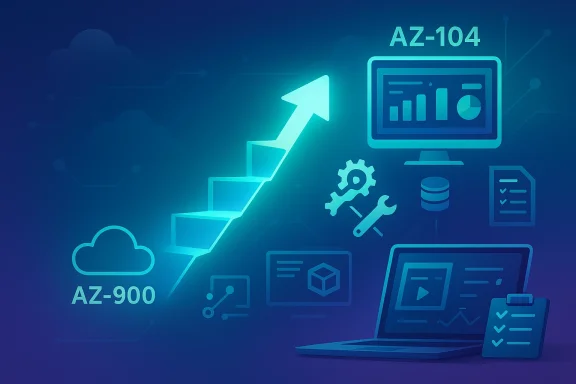
A digital visualization related to the article topic.Background​

Microsoft’s certification strategy has changed significantly over the past several years. The company moved from broad, product-centered credentials to a more role-based model designed to mirror how IT work actually happens in production environments. That shift matters because employers increasingly want proof that a candidate can do a job, not just define terminology. In 2026, Microsoft certifications are widely viewed as living credentials that must stay current with platform changes, not static badges earned once and forgotten .
AZ-900 sits at the entry point of that ecosystem. It is Microsoft’s Azure Fundamentals exam, and it is built for people who are new to cloud concepts or who need a structured overview before specializing. The exam covers the core ideas that underpin the entire Azure platform: cloud models, services, pricing, governance, and compliance. In practical terms, it gives candidates the vocabulary needed to understand how modern cloud systems are discussed in meetings, documented in architecture plans, and measured in contracts .
AZ-104 is the next major step for many learners because it moves from theory into administration. This is the Microsoft Azure Administrator Associate certification, and it asks candidates to prove they can manage real Azure resources. The focus is on the everyday responsibilities that keep cloud environments stable: identity, networking, storage, virtual machines, monitoring, and operational governance. For many employers, AZ-104 is the point where a learner becomes credible for a production-facing support or administration role .
The reason these certifications are paired so often is simple: they map neatly to a career ladder. AZ-900 helps beginners understand the cloud operating model; AZ-104 helps them operate within it. That progression is especially useful in Microsoft-centric workplaces, where identity, endpoint management, cloud infrastructure, and security are tightly connected. It is also why certification stacks have become increasingly common: professionals want credentials that show both breadth and depth, not one or the other .
There is also a market reality behind the popularity of Azure training. The cloud market has matured, and employers now expect candidates to show more than casual familiarity. A cloud résumé that lacks practical evidence often looks thin, even if the candidate has read the right books. That is why study labs, practice exams, and hands-on portals matter so much: they turn abstract knowledge into something hiring managers can trust.

Why Azure Certifications Matter for Career Growth​

Azure certifications are valuable because they translate directly into employability. Hiring managers use them as a shorthand for baseline competency, especially when filtering applicants for cloud support, junior administration, infrastructure, and hybrid IT roles. The badge does not replace experience, but it reduces uncertainty and signals that the candidate has been tested against a defined standard .
That matters even more in a market where job descriptions are often overloaded with expectations. Employers want candidates who understand cloud governance, identity management, security basics, and resource provisioning. AZ-900 and AZ-104 together cover a surprisingly large part of that foundation. The combination suggests not just exam readiness, but a willingness to learn the language of production Azure environments.

Hiring value in practice​

For early-career professionals, Azure certifications can be the difference between being seen as “interested in cloud” and being viewed as ready for cloud work. Recruiters may not deeply inspect the syllabus, but they do recognize the signal. When a candidate lists AZ-900 or AZ-104, it immediately narrows the conversation toward cloud platforms, enterprise operations, and infrastructure support.
For mid-career professionals, the signal is different but equally useful. A certification can help someone pivot from desktop support, on-prem administration, or general IT work into cloud operations. In that sense, the credential is a bridge. It helps transform experience in older infrastructure into relevance in a cloud-first environment.
  • AZ-900 proves cloud literacy.
  • AZ-104 proves operational Azure skills.
  • Together they create a more credible cloud career narrative.
  • Employers often read them as evidence of structured learning.
  • They can help support salary growth and internal mobility.
  • They are especially useful in Microsoft-heavy organizations.
The real career value, though, comes from what the certifications represent over time. A candidate who starts with AZ-900 and moves to AZ-104 shows initiative, sequencing, and discipline. That tells an employer something the exam alone cannot: the person is building toward a role, not just collecting badges.

AZ-900: The Best Starting Point​

AZ-900 is popular because it lowers the barrier to entry without lowering the value of the learning. It is designed for beginners, but it is not trivial. Candidates still need to understand cloud concepts clearly enough to explain them in business terms, which is exactly the kind of language that gets used in real IT planning meetings. That makes AZ-900 useful even for non-technical stakeholders who work alongside cloud teams.
The exam covers core Azure services, pricing and support models, governance, and the fundamental idea of cloud computing itself. That breadth is important because cloud adoption is not just a technical change; it is an operational and financial one. AZ-900 helps learners see how those pieces fit together before they are asked to manage them. Microsoft’s certification ecosystem also emphasizes keeping knowledge current, which means fundamentals are not just introductory—they are a baseline for further learning .

What AZ-900 teaches​

AZ-900 introduces learners to the architectural mindset behind Azure. Candidates learn how IaaS, PaaS, and SaaS differ, how Azure services are organized, and why concepts such as high availability, elasticity, and scalability matter. Those are not abstract terms in the cloud world; they are the basis for cost, resilience, and design decisions.
It also introduces security and governance in a way that beginner learners can absorb. That is significant because cloud adoption often fails when teams treat security as an afterthought. By making governance part of the fundamentals curriculum, Microsoft is signaling that cloud success is not just about launching resources. It is about managing them responsibly.
  • Cloud concepts and deployment models
  • Core Azure services
  • Security, governance, and compliance basics
  • Pricing and lifecycle management
  • Shared responsibility in the cloud
  • Azure portal familiarity
AZ-900 is often underestimated because it is an entry-level exam. That is a mistake. A well-prepared candidate can use AZ-900 to build the mental framework needed for later certifications. Without that framework, AZ-104 becomes much harder because the learner is trying to master operations without first understanding the structure underneath them.

Study approach for beginners​

The best AZ-900 preparation starts with the official exam objectives and then moves into short, repeatable study sessions. Beginners benefit from small chunks because cloud terminology can feel overwhelming at first. The goal is not to memorize everything in one pass, but to become comfortable enough with the platform that the ideas start to connect.
Hands-on exploration helps a great deal. Even if the exam is concept-heavy, spending time in the Azure portal makes the terminology real. Seeing where resources live, how services are organized, and how pricing concepts appear in the interface reduces the distance between theory and practice.
A practical preparation sequence looks like this:
  • Read the exam objectives carefully.
  • Learn the major Azure service categories.
  • Explore the Azure portal and resource groups.
  • Review pricing, governance, and compliance basics.
  • Take a practice exam to identify weak areas.
  • Revisit the topics that caused confusion.
  • Repeat with timed review sessions.
That sequence works because it combines reading, visual learning, and self-testing. Beginners often struggle when they rely on only one method. A balanced approach is more sustainable and far more likely to produce real retention.

AZ-104: The Administrator Certification That Signals Real Responsibility​

AZ-104 is where cloud learning becomes operational. The exam is aimed at candidates who manage Azure environments and make sure they actually function in production. That makes it a stronger fit for people who already have some IT experience or who are ready to move beyond fundamentals and into active administration. It is also one of the clearest examples of Microsoft’s role-based philosophy in action .
This certification goes deeper into the mechanics of Azure administration. Candidates are expected to understand identity, storage, compute, networking, and monitoring in practical terms. The emphasis is not just on what services exist, but on how to configure and maintain them. That is why hands-on experience matters so much: AZ-104 is built around tasks that resemble what administrators do on the job.

Core administration domains​

AZ-104 focuses heavily on resource management, which is where many cloud careers begin. Administrators need to know how to create and manage virtual machines, storage accounts, virtual networks, and access controls. They also need to know how to monitor resource health, troubleshoot common issues, and respond to changing workload demands.
Security is another major theme. Azure administrators do not work in isolation from security concerns; they are part of the enforcement layer. Identity and access control decisions affect almost every resource a company deploys, which makes the administrative role central to enterprise risk management.
  • Identity and access management
  • Storage and data protection
  • Virtual machine administration
  • Virtual networking and connectivity
  • Monitoring and troubleshooting
  • Backup and recovery basics
  • Governance and policy enforcement
The exam is valuable because it maps directly to work that employers need done every day. If AZ-900 is the introduction, AZ-104 is the proof that a candidate can handle responsibility. That distinction is why the credential is so widely recommended for cloud support analysts, junior administrators, and infrastructure professionals moving into Azure.

Why hands-on work matters more here​

AZ-104 is not a certification that can be mastered through passive reading alone. The tasks it covers require a feel for how Azure behaves when configurations change, dependencies break, or policies conflict. That kind of understanding usually comes from labs, sandboxes, and repeated experimentation.
This is where many candidates stumble. They may know the definitions, but they cannot yet perform the operations. Microsoft’s approach to certification aligns with real-world expectations precisely because it discourages superficial study. A person who knows how to create a resource group but cannot connect it to broader governance rules is not ready for operational work.
The smartest candidates use a home lab or trial Azure subscription to test scenarios. They create resources, break them, fix them, and observe the consequences. That process is slower than cramming, but it produces the kind of confidence that lasts long after the exam is over.

Study Strategy That Actually Works​

Certification success usually comes from consistency rather than intensity. Candidates who study a little every day tend to do better than those who binge the material right before the exam. That is especially true for Azure, where the amount of terminology and the number of service categories can become confusing without repetition. A steady rhythm helps the material settle into long-term memory.
The best strategy combines official learning paths, practice tests, and hands-on labs. Practice tests are not just for scoring—they are diagnostic tools. They show which concepts are weak and which areas still need review. Used properly, they make study time far more efficient.

A realistic preparation model​

A good study plan should reflect the exam’s structure and your own experience level. Beginners need more time on concepts, while experienced administrators may need more time on exam-style scenarios and Azure-specific terminology. Either way, the plan should be scheduled and measurable.
Here is a simple model:
  • Identify the exam objectives.
  • Break the syllabus into weekly study blocks.
  • Spend time in Azure every week.
  • Take a practice exam early.
  • Review mistakes thoroughly.
  • Revisit weak domains with focused study.
  • Take a second timed practice test before the real exam.
That kind of routine does more than prepare you for a test. It builds habits that are useful in the workplace. Cloud work rewards people who can learn in structured ways, troubleshoot methodically, and keep their skills aligned with current tools.

Why practice beats passive learning​

Passive learning feels comfortable because it gives the illusion of progress. But cloud certifications are built around applied understanding. If you only read about Azure services, you may recognize the words without being able to explain the workflow behind them. That gap becomes obvious on exam day.
Hands-on work closes that gap. It also makes the material more memorable. When a candidate has actually configured a virtual network or monitored a storage resource, the exam topic stops being abstract. It becomes a familiar scenario with concrete steps.
  • Use official Microsoft Learn content as the base.
  • Supplement with labs and sandbox work.
  • Time your practice tests to simulate exam pressure.
  • Revisit missed questions until the logic is clear.
  • Focus on understanding, not memorizing.
  • Keep study sessions short but regular.
This is also where many candidates benefit from community discussion. Talking through concepts with others often reveals gaps that individual study misses. Explaining a topic out loud is one of the fastest ways to find out whether you really understand it.

The Role of Hands-On Experience in Cloud Careers​

Certification and experience are not interchangeable, but they are complementary. Azure credentials establish a baseline, while hands-on work proves that knowledge can survive contact with actual systems. Employers know the difference, and so should candidates. In practical terms, the strongest resumes combine both.
For AZ-104 in particular, hands-on practice is crucial because the exam aligns so closely with administrative tasks. Anyone can read about identity management. It is much more meaningful to configure access controls, manage permissions, and understand how those decisions affect workloads. That is why cloud labs have become such a valuable part of modern IT preparation.

Why labs matter​

A lab gives candidates freedom to experiment without risking production systems. That is important because cloud environments are easiest to understand when you can test, fail, and recover safely. A controlled space encourages curiosity, and curiosity is one of the fastest ways to build real technical intuition.
Labs also mimic the problem-solving cadence of actual work. In a real job, administrators rarely get a clean checklist. They get symptoms, constraints, and time pressure. A lab teaches people how to think under those conditions in a low-risk setting. That is exactly why hiring managers respond well to candidates who can describe project work, not just exam scores.
A few useful lab activities include:
  • Creating and deleting resource groups
  • Deploying virtual machines
  • Configuring networking and firewall rules
  • Managing storage accounts and backups
  • Testing identity and role-based access
  • Reviewing logs and alerts
  • Practicing recovery scenarios
The more a candidate practices these workflows, the more fluent they become. That fluency is visible during interviews because the candidate can speak about Azure in terms of tradeoffs and outcomes rather than definitions alone.

Enterprise versus consumer impact​

The enterprise impact of Azure certification is obvious. Companies depend on trained administrators to keep infrastructure secure, efficient, and available. Certifications help managers assign work, reduce onboarding time, and build trust in role readiness. In larger environments, they can even influence staffing decisions because they provide a recognizable standard for skill.
For consumers, the benefit is indirect but real. Better-trained Azure professionals mean fewer outages, more reliable applications, and stronger security practices. When cloud environments are managed well, users experience faster services and fewer interruptions. That makes certification part of the invisible infrastructure of digital life.

How AZ-900 and AZ-104 Work Together​

The strongest way to think about these certifications is as a sequence, not a choice between equals. AZ-900 provides context, terminology, and confidence. AZ-104 then expands that foundation into administration and operational responsibility. Together they create a clearer and more marketable cloud career path.
This sequencing is useful even if AZ-900 is not strictly required for AZ-104. Microsoft does not make fundamentals a prerequisite, but many learners find the path easier when they start there. That is because the conceptual framework built by AZ-900 reduces friction later. When AZ-104 introduces a service or governance model, the learner is less likely to feel lost.

Career sequencing​

For beginners, the path is usually straightforward. Start with AZ-900 if you are new to cloud computing, especially if you need an introduction to Azure terminology. Move to AZ-104 once you can explain core concepts and are ready to handle administrative tasks. That progression mirrors how many IT careers actually unfold.
For experienced professionals, the sequence can be more flexible. Someone with strong infrastructure or systems experience may move directly to AZ-104. But even then, AZ-900 can be useful as a refresher and as a way to fill conceptual gaps. The exam is not just for beginners; it is a clean way to align your understanding with Microsoft’s current cloud framing.
  • AZ-900 creates cloud fluency.
  • AZ-104 creates operational credibility.
  • The two together support better job targeting.
  • They provide a stronger interview narrative.
  • They improve readiness for hybrid cloud work.
  • They help candidates move from support into administration.
This pairing is especially helpful in Microsoft-heavy workplaces where Azure touches identity, endpoint management, backup, and compliance. The candidate who understands both the overview and the operations layer is better positioned to contribute quickly.

Why employers like the combination​

Employers like the AZ-900 plus AZ-104 combination because it tells a story. It says the candidate started with fundamentals, committed to the platform, and then built practical administrative competence. That is more persuasive than a random set of credentials because it suggests intentional growth.
It also reduces training friction. A manager who hires someone with both certifications has a reasonable expectation that the person can speak the language of cloud operations and participate in deployment or support work with less hand-holding. That matters in lean teams where every new hire needs to be productive quickly.

Common Mistakes Candidates Make​

One of the biggest mistakes is treating AZ-900 as if it is “too easy to matter.” That attitude leads some candidates to rush through it without really absorbing the concepts. The result is often a shaky understanding of cloud basics that causes problems later. Fundamentals are foundational for a reason.
Another common mistake is overrelying on theoretical material for AZ-104. Administrators need procedural understanding, not just recognition. If a candidate has never touched a live Azure environment or a sandbox closely resembling one, the practical sections of the exam can feel much harder than expected. That is especially true when networking and identity come into play.

Mistakes that slow progress​

Candidates also waste time by studying randomly instead of following the exam objectives. That creates the impression of productivity while leaving important topics underdeveloped. A structured plan is simply more efficient.
Practice tests can be another trap if they are used the wrong way. Some learners chase scores without learning from errors. The real value of a practice exam is in the review, not the score itself.
  • Skipping hands-on practice
  • Relying only on videos or books
  • Studying without an objective-driven plan
  • Ignoring weak areas after practice tests
  • Rushing AZ-900 without understanding the basics
  • Attempting AZ-104 with no lab exposure
  • Cramming instead of spacing study sessions
A better approach is to treat each exam as a skill-building exercise, not a race. That mindset reduces anxiety and improves retention.

Time management and burnout​

Time management matters because cloud certification prep is easy to delay. Many candidates start strong and then lose momentum after a few weeks. The fix is simple but not always easy: keep sessions short, regular, and repeatable.
Burnout is also real, especially for working adults studying after hours. Trying to master too much too quickly can lead to frustration and poor recall. Consistency beats intensity almost every time. A manageable study schedule is more effective than an ambitious one you cannot sustain.

Strengths and Opportunities​

The biggest strength of the AZ-900 and AZ-104 path is that it is practical, widely recognized, and career-relevant. It gives beginners a place to start and experienced professionals a way to validate cloud administration skills. It also fits neatly into Microsoft’s broader role-based certification model, which means the learning path is well aligned with real-world IT jobs .
The opportunity goes beyond landing a first cloud role. These certifications can support lateral moves, internal promotions, and transitions into security, infrastructure, and hybrid systems work. They are also a strong foundation for future specialization.
  • Clear progression from fundamentals to administration
  • Strong employer recognition
  • Useful for career changers and beginners
  • Aligns with real Azure job roles
  • Supports hybrid IT and cloud operations careers
  • Creates a strong base for future specialization
  • Encourages hands-on learning and practical skill growth
The combination is especially useful in Microsoft-centric organizations, where Azure often sits alongside Microsoft 365, identity services, and endpoint management. That ecosystem makes certification knowledge immediately relevant.

Risks and Concerns​

The biggest risk is assuming that a certification alone will carry a career. It will not. Employers still want operational judgment, troubleshooting ability, and real-world problem solving. A badge gets attention, but it does not replace experience. That is why Microsoft’s renewal-driven model matters so much: it reinforces the idea that knowledge must stay current .
Another concern is skill drift. Cloud platforms change constantly, and candidates who stop learning after the exam can quickly fall behind. There is also the danger of chasing certifications that do not match local job demand. A smart plan should be shaped by the roles and technologies actually used in your market.
  • Overreliance on exam prep without practice
  • Treating certification as a substitute for experience
  • Letting skills go stale after passing
  • Choosing credentials without a career target
  • Burning out from unrealistic study schedules
  • Underestimating the difficulty of AZ-104
  • Ignoring renewal and ongoing learning
The healthiest approach is to treat certification as a milestone, not an endpoint. That mindset keeps the credential useful long after the exam is over.

Looking Ahead​

Azure certification remains strong because the cloud itself remains central to enterprise IT. As more organizations modernize their infrastructure, the need for administrators who can manage identity, security, networking, and resource governance will continue to grow. That is especially true in Microsoft-heavy environments, where Azure sits at the center of broader digital operations.
What is changing is the expectation around proof. Employers now want evidence that a candidate can use knowledge in live settings, not just recite concepts. That means labs, projects, and operational storytelling are becoming as important as the badge itself. The professionals who pair certification with experience will stand out most clearly.

What to watch next​

  • Updates to Microsoft Learn and exam objectives
  • Changes in Azure service emphasis and administration tooling
  • Employer demand for cloud and hybrid infrastructure skills
  • Growth in hands-on lab-based certification prep
  • Renewals and ongoing credential maintenance
  • The expanding overlap between cloud, security, and automation roles
A candidate who treats AZ-900 as the start of a learning path and AZ-104 as a proof point will have a much stronger career story than someone who stops at the exam room door. That is the real value of this certification sequence: it builds both confidence and capability. In a cloud market that rewards adaptability, that combination is exactly what future employers will keep looking for.
Microsoft Azure certifications are not just technical badges; they are career signals that show direction, discipline, and readiness. AZ-900 gives learners a durable foundation, while AZ-104 transforms that foundation into practical administrative credibility. For professionals who want durable growth in cloud computing, the smartest move is not merely to pass the exams, but to use them as stepping stones toward real operational skill and long-term relevance.

Source: Space Coast Daily Complete Azure Fundamentals and Administrator Certification Guide for Career Growth - Space Coast Daily
 

Cloud computing has become one of the most dependable career engines in IT, and Microsoft Azure remains a central platform for employers modernizing infrastructure, identity, and security. For candidates trying to enter the field or move into architecture, the pair of AZ-900 and AZ-305 creates a sensible progression: the first builds vocabulary and confidence, while the second validates the ability to design real-world Azure solutions. In practice, that combination works best when it is paired with hands-on labs, a role-focused study plan, and a clear understanding that certifications are a starting point, not a substitute for experience. The uploaded article points to the same career logic, emphasizing fundamentals first, then advanced solution design, with practical experience as the bridge between the two

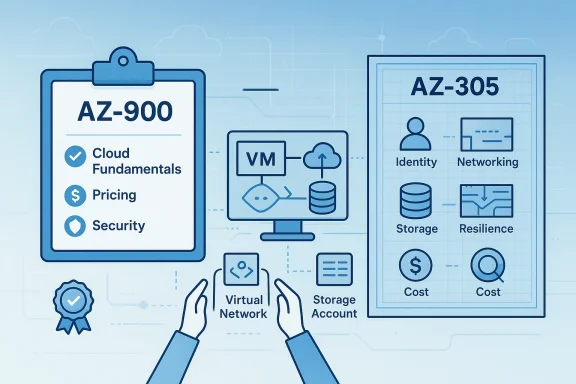
Illustration of cloud computing topics: fundamentals, pricing, security, virtual network, storage, and resilience (AZ-900/AZ-305).Overview​

The strongest certification paths in 2026 are no longer about collecting badges for their own sake. They are about proving that you can contribute in a live environment, where cloud identity, security, networking, and governance all have to work together. Microsoft’s broader certification ecosystem reflects that reality, with fundamentals, associate, and expert levels designed to move learners from orientation to operational competence. That structure matters because enterprise teams want people who can solve actual business problems, not just repeat definitions from a study guide
AZ-900 fits neatly into that first stage. It is the on-ramp for people who need a clear introduction to cloud concepts, Azure services, pricing, and security. The uploaded material describes it as the ideal place for beginners, especially students, career changers, and non-technical professionals who need a foundation before specializing
AZ-305 sits at the opposite end of the pathway. It is an expert-level exam aimed at people who can design Azure infrastructure solutions, not merely explain what the services are. That distinction is important. Employers do not hire architects because they know the names of services; they hire them because they can shape identity, compute, storage, networking, resilience, and cost into a coherent enterprise design
There is also a broader market story here. Microsoft certification remains valuable because organizations still run on Azure-heavy stacks, Microsoft 365 environments, and hybrid cloud architectures. The uploaded discussion repeatedly notes that Microsoft credentials are strongest when aligned to the work employers actually need done, especially in cloud, identity, and security roles

Why this path still matters​

A lot of career advice oversells certification as a shortcut. The better way to think about AZ-900 and AZ-305 is as a ladder: one step teaches the language of cloud, and the other teaches architectural judgment. That ladder is valuable because hiring managers still use certifications to reduce uncertainty, especially when they need to fill cloud roles quickly
  • AZ-900 builds cloud literacy.
  • AZ-305 validates advanced architectural thinking.
  • Hands-on labs turn theory into job-ready skill.
  • Renewal discipline keeps the credential current.
  • Role alignment matters more than exam volume.

AZ-900 as the Entry Point​

AZ-900 is designed for accessibility, and that is precisely why it remains important. It gives newcomers a way to learn the cloud without being overwhelmed by implementation detail. The exam is also a useful filter for employers because it signals that a candidate understands the basic shape of Azure, even if they are still early in their career
The real value of AZ-900 is not memorization. It is the ability to understand what cloud computing is, why organizations use it, and how Azure fits into modern IT environments. That makes it especially useful for help desk staff, junior administrators, sales engineers, and business professionals who interact with cloud teams but do not yet own the stack themselves
AZ-900 also gives candidates a chance to test whether cloud careers are actually for them. That matters more than it sounds. Many people are attracted to cloud roles because the market is strong, but they discover too late that the day-to-day work is more about process, governance, and troubleshooting than glamour. A fundamentals exam can help reveal whether that reality fits the candidate’s interests and strengths.

What AZ-900 teaches​

The uploaded article describes the AZ-900 curriculum as covering cloud models, Azure services, pricing, security, and compliance. That mix is useful because it shows that cloud is not just about spinning up virtual machines. It is about understanding trade-offs, shared responsibility, and the business logic behind cloud adoption
  • Public, private, and hybrid cloud models
  • Core Azure services such as compute, storage, and networking
  • Security and compliance concepts
  • Pricing, cost management, and governance basics
  • Foundational cloud terminology for enterprise environments

Who should start here​

AZ-900 is the right first certification for people who need orientation more than depth. It is also a strong choice for professionals who work adjacent to cloud teams and want a better vocabulary before moving into technical ownership. In that sense, it behaves like an entry ticket into the Azure ecosystem rather than a destination
  • Newcomers to IT
  • Students entering the workforce
  • Career changers
  • Non-technical stakeholders
  • Junior support staff
  • Sales or pre-sales professionals

Study approach for beginners​

The uploaded source recommends official Microsoft learning resources, practice tests, and hands-on exposure through Azure labs. That combination is sensible because the exam tests understanding, not just recall. The smartest candidates use practice exams to identify weak areas, then reinforce those gaps with targeted study and simple lab exercises
  • Read the exam objectives first.
  • Study in short, consistent sessions.
  • Use practice tests diagnostically, not as a crutch.
  • Spend time inside Azure, even if only in a sandbox.
  • Revisit weak topics until they feel routine.

The Case for AZ-305​

AZ-305 is where Azure certification becomes strategically valuable for senior careers. It is aimed at professionals who can design infrastructure solutions, which means the exam is less about “what is Azure?” and more about “how do you build for performance, resilience, security, and cost?” That is a different mental model, and it is one employers care deeply about when architecture decisions carry real financial and operational risk
The article’s emphasis on infrastructure design, data storage, security, and application architecture is a good summary of the role. A solutions architect is expected to understand how these layers interact under business constraints. In real organizations, that means balancing uptime, compliance, budget, latency, and maintainability at once
AZ-305 also matters because architecture work is becoming more visible as companies move deeper into cloud transformation. Modern deployments are no longer simple lift-and-shift exercises. They involve identity integration, hybrid connectivity, governance controls, and service selection decisions that can affect entire business units.

Skills AZ-305 expects​

A candidate preparing for AZ-305 needs broader judgment than an entry-level administrator. They must understand identity design, network architecture, storage strategy, and the security implications of each choice. The uploaded material highlights exactly those areas and also notes that performance optimization and cost management are part of the equation
  • Identity and access management
  • Secure networking design
  • Storage and data strategy
  • Application architecture choices
  • Performance and cost optimization
  • Real-world solution trade-offs

Why hands-on work matters more here​

The article repeatedly stresses practical experience, and that emphasis is well placed. AZ-305 is not an exam you should approach as a purely theoretical exercise. The better your lab work, the easier it is to reason through architecture questions that present multiple plausible answers
  • Build sample architectures in Azure.
  • Explore how services fail and recover.
  • Practice deploying identity, networking, and storage components.
  • Test cost differences between alternative designs.
  • Document your decisions like a real architect would.

What makes AZ-305 valuable in hiring​

From a hiring perspective, AZ-305 is powerful because it signals maturity. It tells employers that a candidate can think beyond task execution and toward systems design. In a market where organizations want cloud teams to move fast without breaking governance, that is a major advantage
  • Stronger alignment with architecture roles
  • Better fit for enterprise modernization projects
  • Credibility in cloud design discussions
  • Potential path toward senior technical leadership
  • Better differentiation from entry-level candidates

Certification Pathway and Career Progression​

One of the clearest messages in the uploaded material is that certification works best as a sequence, not a random collection. AZ-900 builds the foundation. AZ-305 builds advanced design capability. Between them, the candidate gains not just a résumé line but a learning structure that maps to actual career growth
That sequencing matters because many aspiring cloud professionals jump too quickly into advanced study. They may pass an exam, but they do not always have the operational depth to use that knowledge under pressure. A better approach is to build stepwise confidence and then layer complexity on top. That is especially true in cloud work, where bad design choices can be expensive and difficult to unwind.
Microsoft’s certification ecosystem supports that progression well. The fundamentals layer is meant for orientation, the associate layer for practical role readiness, and the expert layer for strategic ownership. That makes AZ-900 and AZ-305 a logical pairing for people who want to move from cloud curiosity to solution design

A practical ladder for cloud learners​

A useful certification path usually starts with comprehension, then moves toward operational skill, and only later toward design authority. That approach is especially effective for people already working in IT support or systems administration, since they can apply each stage immediately.
  • Learn cloud basics through AZ-900.
  • Build Azure labs and simple projects.
  • Gain exposure to identity, networking, and storage.
  • Practice architecture decisions with real scenarios.
  • Move into AZ-305 when the design context feels natural.

Why sequence beats speed​

Speed is tempting, but sequence is what creates durability. Candidates who rush often memorize terminology without understanding how Azure services actually fit together. Candidates who move methodically tend to produce better results in interviews and on the job because they can explain not just what they know, but why they made a particular design choice.
  • Better knowledge retention
  • Stronger lab-to-job transfer
  • More confidence in interviews
  • Less risk of shallow learning
  • Clearer long-term specialization

Where the path leads​

The article lists cloud support specialist, IT assistant, cloud architect, solutions architect, and infrastructure consultant as possible outcomes, and that is broadly accurate. In the real market, the path depends on prior experience, regional demand, and the employer’s Azure maturity. But the general direction is consistent: AZ-900 opens the door, and AZ-305 helps you walk into more senior responsibilities
  • Entry-level support
  • Junior cloud operations
  • Cloud administration
  • Solutions architecture
  • Infrastructure consulting

Hands-On Experience Is the Real Differentiator​

If there is one theme that cuts across the uploaded article, it is that practical work matters more than cramming. That message is not just motivational language. It reflects how cloud jobs actually function. Microsoft certifications are strongest when candidates can show they have configured, tested, and troubleshot Azure environments rather than merely studied the syllabus
Hands-on experience is especially important because cloud systems are interconnected. Identity affects access. Networking affects availability. Storage affects performance. Security affects everything. A lab environment helps learners see those interactions instead of treating each topic as an isolated exam objective.
The article’s suggestion to create virtual machines, configure networks, and manage storage is exactly right. Those exercises build intuition, which is what employers are really hiring for when they ask cloud candidates how they would handle a production issue. You cannot fake judgment for long.

Why labs build better professionals​

A lab is not just a place to click around. It is a space to make mistakes cheaply and learn from them quickly. That is invaluable because real Azure work often involves trade-offs that only become clear after you test multiple configurations.
  • Create and destroy resources deliberately.
  • Compare architecture options before committing.
  • Observe security and cost impacts.
  • Practice recovering from misconfiguration.
  • Document what you changed and why.

What to build in a home lab​

For AZ-900, even simple environments can be helpful. For AZ-305, the lab should become more deliberate and scenario-based. You want to understand how services behave together, not just individually.
  • Virtual machines
  • Virtual networks and subnets
  • Storage accounts and redundancy settings
  • Identity and access control
  • Monitoring and logging basics
  • Backup and recovery scenarios

Why employers notice practical skill​

Employers care because they want lower onboarding risk. A candidate who has already worked through Azure scenarios is more likely to adapt quickly to production workflows. That makes hands-on experience a hiring signal in its own right, especially when paired with a relevant certification
  • Faster adaptation to job tasks
  • Better troubleshooting instincts
  • Stronger communication with senior engineers
  • More convincing interview answers
  • Higher confidence during transition periods

Study Strategy and Preparation Tactics​

The uploaded article repeatedly recommends a structured study plan, and that advice is worth emphasizing. Certification success is usually the product of repetition, pacing, and targeted review. It is rarely the result of a last-minute sprint. Candidates who build a realistic schedule tend to retain more and panic less
For AZ-900, the focus should be on clear conceptual understanding. For AZ-305, the focus should shift toward applied design and scenario thinking. Those are different study modes, and using the same method for both is a mistake. The first benefits from broad literacy; the second demands architectural judgment.
Practice tests can help, but only if they are used the right way. They should reveal weak spots, not replace actual learning. Reviewing incorrect answers is where the real progress happens. That discipline is more useful than endless exposure to question banks.

A study method that scales​

A good study routine should combine reading, doing, and reviewing. That prevents the common problem of passive learning, where material feels familiar but does not translate into performance.
  • Start with the exam objectives.
  • Split the material into weekly chunks.
  • Mix reading with lab work.
  • Use practice questions after each topic block.
  • Revisit missed areas before moving on.

Time management and consistency​

The article suggests that time management is a common obstacle, and that is true for most adult learners. Work, family, and other obligations compete for attention, so the solution is not intensity but consistency. Thirty to sixty minutes per day is usually more effective than occasional marathon sessions.
  • Study on a fixed schedule.
  • Keep sessions short and focused.
  • Use weekends for lab work.
  • Track progress visibly.
  • Leave room for review before the exam.

Reliable resources versus generic content​

The source also warns, indirectly, about the importance of choosing accurate study materials. That caution matters because Azure changes frequently, and outdated resources can mislead candidates. Current, official, and scenario-based materials are usually better than generic summaries or recycled exam dumps.
  • Prioritize official Microsoft learning paths
  • Use labs tied to exam objectives
  • Choose practice material that explains answers
  • Avoid stale study notes
  • Treat shortcuts with skepticism

Enterprise Value and Business Impact​

Azure certifications are not just personal career assets; they are also enterprise signals. Employers use them to gauge whether a candidate can contribute in a Microsoft-heavy environment with less onboarding time. That matters in sectors like finance, healthcare, education, government, and consulting, where the cost of mistakes is high
The uploaded content also makes a broader point: the average end user may never see a certification badge, but they feel the effects. Better-trained professionals mean fewer outages, stronger security, and better-managed cloud environments. That is the invisible value of certification programs. They help translate technical readiness into operational stability
For enterprise leaders, AZ-900 and AZ-305 create a structured way to staff cloud teams at different levels. For candidates, they create a ladder that aligns learning with business outcomes. That dual value is why Microsoft credentials remain relevant even as hiring models evolve.

Why businesses still care about badges​

Certification still matters because it reduces ambiguity. A resume alone often does not show whether someone can function in a cloud environment, but a recognized Microsoft credential gives recruiters and managers a starting point for confidence.
  • Faster candidate screening
  • Better role matching
  • Lower training overhead
  • Clearer skill benchmarking
  • Stronger internal promotion criteria

Consumer impact is indirect but real​

End users do not care whether an engineer passed AZ-900 or AZ-305. They care whether applications stay up, email works, files sync, and devices remain secure. Those outcomes are downstream from the competence of the people managing the platform.
  • Faster incident resolution
  • More reliable connectivity
  • Better access control
  • Stronger data protection
  • Fewer misconfigurations

Why Azure knowledge spreads beyond IT​

One of the underrated benefits of AZ-900 is that it helps non-engineers understand how cloud projects work. That can improve communication between technical and business teams. When more people understand cloud economics and service boundaries, projects tend to move more smoothly.
  • Better cross-team communication
  • More realistic project expectations
  • Stronger understanding of cost trade-offs
  • Fewer misunderstandings around security
  • Better stakeholder alignment

Strengths and Opportunities​

The biggest strength of the AZ-900 to AZ-305 pathway is its clarity. It gives candidates a way to move from beginner-level cloud understanding to advanced architecture without guessing at the next step. It also aligns closely with the way Microsoft structures its own ecosystem, which makes the progression easier to explain to employers and easier to use in a long-term career plan.
  • Clear beginner-to-expert progression
  • Strong relevance in Microsoft-centric workplaces
  • Good fit for cloud, security, and infrastructure roles
  • Useful for career changers and recent graduates
  • Helps turn theory into a structured roadmap
  • Encourages hands-on learning and lab practice
  • Supports both hiring and promotion conversations

Risks and Concerns​

The biggest risk is treating certification as the end goal. A badge can improve visibility, but it cannot replace actual production experience. There is also a risk that candidates study from stale material or focus too heavily on memorization, which weakens performance in both exams and interviews.
  • Overreliance on exam prep without lab work
  • Outdated study resources
  • Credential inflation in crowded job markets
  • Expecting AZ-900 to be enough for advanced roles
  • Jumping into AZ-305 without enough practical background
  • Underestimating renewal and recertification expectations
  • Confusing passing an exam with becoming job-ready

Looking Ahead​

Microsoft’s certification model is evolving toward more task-oriented, role-aligned validation, and that trend is likely to continue. As cloud environments become more integrated with identity, security, and AI-driven operations, employers will care even more about candidates who can combine foundational knowledge with practical design judgment. That means AZ-900 and AZ-305 will remain relevant, but only for candidates who treat them as part of a broader skill-building plan
The smartest strategy for job seekers is to use AZ-900 to build confidence and then use AZ-305 to prove depth. In between, they should accumulate labs, projects, and real-world stories that show how they think under pressure. Certifications matter most when they are attached to evidence. Without that evidence, they are just paperwork.
  • Track Microsoft exam updates regularly
  • Keep a renewal calendar for advanced credentials
  • Build a lab portfolio alongside study
  • Target roles that match your current experience
  • Use certification to support, not replace, hands-on work
In the end, the real power of AZ-900 and AZ-305 is not that they promise a cloud career overnight. It is that they offer a credible, structured route into one of the most durable areas of modern IT. Candidates who combine discipline, practical exposure, and a clear specialization will get far more value from these certifications than those who chase them as isolated milestones.

Source: programminginsider.com Building a High-Demand Cloud Career: The Complete Guide to AZ-900 and AZ-305 Certifications
 

Cloud computing has reshaped how organizations build, deploy, and secure technology, and Microsoft Azure certifications have become one of the clearest signals of practical cloud readiness. For job seekers, they can help translate knowledge into credibility; for employers, they offer a common benchmark in a crowded market. The real story is not just that Azure credentials exist, but that they have become a structured pathway into one of the most durable skill areas in IT. Microsoft’s own certification program positions Azure Fundamentals as a starting point and Azure Administrator as a progression into hands-on operational responsibility.

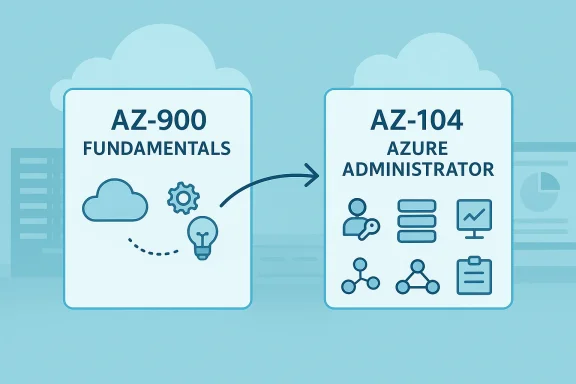
Illustration showing Azure AZ-900 fundamentals transitioning to AZ-104 Azure Administrator.Background​

The rise of cloud certifications mirrors the broader shift from on-premises infrastructure to elastic, service-based computing. As businesses moved workloads into the cloud, the old model of proving expertise through years of narrowly defined system administration gave way to role-based credentials that map more directly to modern job tasks. Microsoft’s current credentials framework reflects that change, offering Fundamentals, Associate, Expert, and Specialty tracks rather than a one-size-fits-all test of memory.
Azure sits near the center of that transformation because it is not just an infrastructure platform. It spans compute, storage, identity, networking, monitoring, app hosting, analytics, and AI services, which means certification paths can be tailored to very different career tracks. Microsoft describes Azure Fundamentals as a way to learn cloud basics and understand Azure’s service landscape, while the broader certification catalog supports both technical and business roles.
That matters because employers increasingly want proof that candidates can operate in real cloud environments, not merely define cloud terms. Microsoft’s certification ecosystem now includes practice assessments and study guides that align with exam objectives, underscoring the platform’s shift toward role readiness rather than abstract theory. The practical implication is simple: certifications work best when they are part of a wider learning loop that includes documentation, labs, and real-world exposure.
For entry-level candidates, AZ-900: Microsoft Azure Fundamentals remains the most approachable door into the ecosystem. Microsoft frames it as foundational knowledge for cloud concepts and Azure specifically, making it suitable for both technical and nontechnical professionals. That positioning is important because it widens the funnel, bringing in people from support, sales, operations, project management, and adjacent IT roles.
For more experienced learners, AZ-104: Microsoft Azure Administrator represents a much more operational credential. Microsoft’s study guide shows that the exam emphasizes managing storage, identity, monitoring, network resources, and other day-to-day platform responsibilities. In other words, this is not a “cloud awareness” exam; it is a signal that the holder can actually run Azure environments with competence.

Why Azure Certifications Matter​

Azure certifications matter because they compress trust. In a hiring process, a credential does not replace experience, but it helps employers infer that a candidate has at least studied the right material and understands the vocabulary of the role. Microsoft’s credentials are also renewable, which is a subtle but important advantage in a market where cloud services change quickly.

Signaling skills in a noisy market​

The cloud hiring market is crowded with resumes that all claim “Azure experience.” A certification does not guarantee excellence, but it can separate genuine learners from keyword stuffing. That is especially useful for early-career candidates who need a concrete way to prove momentum before they have a long work history.
A second benefit is consistency. Employers can compare candidates against a common framework instead of trying to interpret wildly different project descriptions. Microsoft’s role-based model helps here because the exam titles map to recognizable job functions such as administration, architecture, security, and development.

A bridge from theory to practice​

The strongest certification programs are not just testing memory; they are shaping behavior. Microsoft explicitly recommends training, documentation, and hands-on experience before taking exams such as AZ-104, and it offers free practice assessments to help candidates test readiness. That combination encourages a more practical learning style than older certification systems did.
  • Certifications can improve visibility in hiring.
  • They help structure self-study and skill progression.
  • They give managers a quick way to assess baseline knowledge.
  • They encourage broader cloud literacy across teams.
  • They can support internal mobility for employees moving into cloud roles.

Why employers care​

For employers, certification also reduces onboarding risk. Someone who has studied Azure identity, storage, monitoring, and resource management is more likely to adapt quickly than someone who only knows cloud concepts at a high level. That does not eliminate the need for practical evaluation, but it shortens the path to productivity.
It is also worth noting that Microsoft’s credential program now spans both certifications and Applied Skills, reflecting an industry-wide push toward verifiable capability. That broader ecosystem suggests certifications are no longer standalone badges; they are part of a larger skills-validation strategy.

AZ-900 as the Entry Point​

AZ-900 remains the cleanest way into the Azure story because it is intentionally broad rather than deeply technical. Microsoft describes the certification as foundational knowledge of cloud concepts and Azure services, which means it is aimed at learners who need context before specialization. That design makes it one of the most accessible cloud certifications available today.

What the exam is really testing​

The exam is less about command-line fluency and more about conceptual literacy. Candidates should understand public, private, and hybrid cloud models, basic Azure services, core security concepts, and pricing considerations. The value here is not in memorizing every service detail, but in learning how the platform is organized.
This matters because the cloud conversation often starts with architecture but quickly moves into business tradeoffs. AZ-900 gives candidates enough grounding to participate meaningfully in those discussions, even if they are not yet the ones designing or administering workloads. That makes it valuable for project managers, analysts, support staff, and aspiring IT professionals alike.

Best use cases for beginners​

For newcomers, AZ-900 works best as a confidence-building milestone. It offers a structured introduction to the cloud without the intimidating depth of role-based exams. Microsoft’s certification pages also make it clear that this credential sits within a larger progression path, so passing it can serve as a launchpad rather than an endpoint.
  • Ideal for cloud beginners.
  • Useful for nontechnical professionals.
  • Strong preparation for later Azure certifications.
  • Good foundation for sales, procurement, and project teams.
  • Helpful for building cloud vocabulary before lab work.

What candidates should not expect​

AZ-900 should not be confused with a hands-on admin exam. It is not designed to prove that a candidate can troubleshoot complex virtual network problems or manage production subscriptions under pressure. Treating it as such would misread its purpose and underplay the exam’s true role in a certification ladder.
That said, entry-level does not mean trivial. Many candidates underestimate the breadth of the topic list and fail because they rely on memorization alone. The most reliable preparation path is a mix of documentation, guided learning, and repeated exposure to Azure’s service families.

AZ-104 and the Shift to Operations​

AZ-104 is where Azure certification becomes much more career-defining. Microsoft’s study guide shows a focus on practical administration tasks, and its practice assessment list places the exam among the core role-based certifications that validate operational readiness. This is the point at which cloud learning stops being mostly conceptual and starts being unmistakably job-oriented.

What makes AZ-104 harder​

The difficulty comes from scope and application. Candidates need to understand identity, governance, storage, compute, networking, monitoring, and backup concepts well enough to make operational decisions. Unlike AZ-900, which asks whether you know what Azure is, AZ-104 asks whether you can manage it responsibly.
That distinction is why hands-on experience matters so much. Microsoft explicitly recommends training and real product exposure before taking the exam, and the study guide notes that the exam may include current GA features and, in some cases, preview-related material. In practice, that means candidates must keep pace with platform evolution rather than rely on static study notes.

Career value of the administrator track​

The career payoff of AZ-104 is strong because it maps directly to common enterprise needs. Most organizations need people who can manage subscriptions, monitor workloads, control access, and resolve platform issues. Those are the kinds of responsibilities that justify a role title, not just a certificate on a résumé.
For experienced IT professionals, AZ-104 can also act as a pivot point. A systems administrator moving from on-premises infrastructure to cloud operations can use this certification to demonstrate that the transition is not just aspirational but already underway. That signal can matter as much as years of unrelated experience.
  • Strong fit for cloud administrators.
  • Relevant to infrastructure engineers.
  • Useful for teams migrating from legacy systems.
  • Helps validate operational discipline.
  • Builds a path toward higher-level Azure roles.

How it compares with fundamentals​

The jump from AZ-900 to AZ-104 is not simply about more content. It is about a different type of thinking, where the candidate must connect services, policies, and outcomes in a live environment. That is why many learners find the administrator exam far more demanding even after they have passed the fundamentals level.

Study Materials and Exam Preparation​

Study quality often determines certification success more than raw intelligence does. Microsoft offers practice assessments and study guides, and those resources are valuable because they align preparation with actual exam structure. Candidates who ignore those official materials often end up studying broadly but not effectively.

Why practice tests matter​

Practice tests are useful not because they magically predict the exam, but because they reveal gaps. They help candidates see whether they understand a topic conceptually or only recognize it when prompted. That difference becomes critical in timed exams, where confusion can cost points quickly.
Microsoft’s own practice assessment page makes an important point: taking practice questions is not a substitute for training or experience. That warning should be taken seriously, especially for AZ-104. The best candidates use practice tests as diagnostics, not as their primary study method.

The right learning stack​

A strong preparation routine usually combines reading, labs, and review. Microsoft’s study guide points candidates toward training options, documentation, community support, and videos, which suggests that no single resource is sufficient on its own. The more diverse the study sources, the better the odds of building durable understanding.
  • Start with the official skills outline.
  • Read the matching documentation for each domain.
  • Use hands-on labs or a sandbox environment.
  • Take a practice assessment to find weak areas.
  • Review missed concepts and retest after deeper study.

Building exam resilience​

The psychological side of certification prep is often ignored. Candidates who only study in bursts tend to feel overwhelmed as the exam date approaches, while those who maintain a steady pace usually perform better. A disciplined schedule creates familiarity, and familiarity reduces the anxiety that can sabotage even well-prepared test takers. Consistency is the real advantage.

Career Paths and Market Demand​

Azure certifications are attractive because they point toward real jobs, not just abstract expertise. Microsoft’s certification ecosystem spans multiple role families, including administration, architecture, security, development, and data. That breadth means candidates can choose a path that fits both their background and their long-term ambitions.

Common roles tied to Azure skills​

Azure-certified professionals often land in roles where cloud operations are part of a bigger technology stack. The most common positions include cloud administrator, cloud engineer, systems engineer, infrastructure analyst, and solutions architect. In larger organizations, these roles may be split across platform, security, and reliability teams.
The interesting shift is that cloud literacy now stretches beyond the traditional IT department. Business stakeholders, procurement teams, and even compliance groups increasingly benefit from understanding Azure services and pricing models. That creates a wider talent market and makes entry-level certification more useful than it might have been in earlier infrastructure eras.

Enterprise demand versus individual ambition​

For enterprises, certifications are often part of a larger workforce strategy. They support cloud migrations, standardize baseline knowledge, and help managers identify who can be trusted with sensitive environments. For individuals, they are a signal of intent, showing a willingness to learn and adapt to a fast-changing platform.
That dual value is why Azure credentials remain resilient. They serve the organization’s need for predictable skills while also helping the candidate move up the ladder. The best certification outcomes happen when those two goals align rather than compete.
  • Cloud jobs often reward validated skills.
  • Certification helps with career transitions.
  • Employers value operational readiness.
  • Azure roles exist across multiple industries.
  • Certifications can support salary growth and mobility.

The competitive landscape​

Azure does not operate in a vacuum. It competes for talent with AWS, Google Cloud, and a broader set of platform-specific credentials. Microsoft’s advantage is the integration of certification with enterprise software ecosystems that many organizations already use, which can make Azure skills especially relevant in Windows-heavy environments.

How Microsoft’s Certification Model Has Evolved​

Microsoft’s current credentials model is more modern than the old exam-first mindset many professionals remember. The company now emphasizes role-based certifications, renewability, and applied scenarios, which better reflect how cloud work is actually done. That evolution matters because it makes credentials more relevant in a world where services change constantly.

From static knowledge to living skills​

Traditional certification models often rewarded test preparation over workplace competence. Microsoft’s newer framework tries to avoid that trap by linking certification to current product usage and by requiring renewal for eligible credentials. This keeps the badge more closely tied to market reality.
The presence of practice assessments also signals that Microsoft wants candidates to self-calibrate before sitting for an exam. That reduces blind guessing and nudges learners toward more authentic preparation. It is a small change on paper, but it has a large effect on behavior.

Why this matters for Azure learners​

For learners, the biggest benefit is clarity. Instead of wondering whether they should “learn Azure,” they can choose a certification aligned to a role and work backward from there. That structure is far more actionable than generic cloud advice.
For employers, the value is comparability. A role-based credential makes it easier to judge whether a candidate’s knowledge matches a specific job description. That is especially helpful in large organizations where hiring managers may not be deep Azure specialists themselves.
  • Certifications are now more role-specific.
  • Renewal helps keep skills current.
  • Practice assessments improve exam readiness.
  • Applied Skills expand the validation model.
  • Microsoft is emphasizing practical relevance over memorization.

A better fit for the cloud era​

Cloud platforms evolve too quickly for static credentials to remain credible. Microsoft’s certification structure acknowledges that reality by making learning continuous rather than one-and-done. In that sense, the model is not just a training program; it is an answer to the pace of modern infrastructure itself. That is the real innovation.

Strengths and Opportunities​

The main strength of the Azure certification path is that it gives learners a clear progression from foundational knowledge to operational competence. It also benefits employers by making cloud skill validation more consistent and more legible. For candidates who are willing to study methodically and practice hands-on, the opportunity is substantial because Azure remains deeply embedded in enterprise IT.
  • Strong starting point for cloud newcomers.
  • Clear path from AZ-900 to AZ-104 and beyond.
  • Broad relevance across technical and business roles.
  • Good alignment with real-world Azure job functions.
  • Renewal keeps credentials current.
  • Practice assessments and study guides improve preparation.
  • Helps professionals pivot into cloud careers.

Risks and Concerns​

The biggest risk is assuming a certification alone equals job readiness. That mindset can lead candidates to overestimate their abilities and employers to place too much weight on a badge without validating real experience. There is also a danger of shallow test preparation, where learners memorize answers instead of building durable understanding.
  • Certification does not replace hands-on skill.
  • Overreliance on dumps or rote memorization weakens value.
  • Azure’s rapid pace can make outdated notes misleading.
  • Beginners may underestimate exam breadth.
  • Employers may misread AZ-900 as deeper experience than it is.
  • Preparation can become fragmented without a study plan.
  • Costs and time commitments can still be barriers.

Looking Ahead​

Azure certifications are likely to remain highly relevant because they fit the way cloud careers are actually built: one role, one responsibility, one verified skill set at a time. Microsoft’s move toward renewability and applied validation suggests the company understands that cloud expertise must stay current to stay meaningful. That is especially important as AI, security, and platform engineering continue to converge.
For candidates, the smart strategy is to treat AZ-900 as a launchpad and AZ-104 as the first serious proof of operational skill. For employers, the best approach is to use certifications as one signal among several, not as a replacement for interviews, labs, or portfolio evidence. The organizations that combine those methods will probably identify stronger cloud talent faster.
  • Expect continued demand for foundational cloud credentials.
  • Watch for more role-based specialization across Azure.
  • Follow Microsoft’s renewal and practice-assessment updates.
  • Pair certifications with hands-on labs and real projects.
  • Use credentials as part of a broader career strategy.
Microsoft Azure certifications are not a shortcut, but they are a credible framework for turning cloud curiosity into career momentum. In a market where employers need proof and professionals need direction, that combination is powerful. The people who benefit most will be those who treat certification as the beginning of sustained skill-building, not the end of the journey.

Source: Tekedia Unlocking Cloud Career Success with Microsoft Azure Certifications - Tekedia
 

Back
Top