

Microsoft's cloud control plane faltered in a high‑visibility incident that knocked Xbox Live, Microsoft 365, Minecraft, and a raft of third‑party services offline for hours, leaving gamers and businesses scrambling while engineers rolled back an Azure Front Door configuration and rerouted traffic to restore service.
On October 29, widespread reports and Microsoft's own status messages documented a significant outage that began in the early afternoon UTC and quickly spread across many of the company's consumer and enterprise surfaces. Microsoft attributed the disruption to an inadvertent configuration change affecting Azure Front Door (AFD) — the global edge and application delivery fabric that performs TLS termination, global HTTP(S) routing, caching, and DNS‑level routing for many Microsoft endpoints. Because AFD sits on the critical path for identity (Microsoft Entra ID / Azure AD), management portals (Azure Portal, Microsoft 365 admin center), and consumer services (Xbox Live, Minecraft, the Microsoft Store and Game Pass), the outage produced symptoms that looked like application failures: failed sign‑ins, blank admin blades, 502/504 gateway errors, and storefront or authentication failures for games and cloud services. Microsoft froze AFD configuration rollouts, began deploying a rollback to a last‑known‑good configuration, and rerouted traffic away from affected infrastructure while recovering edge nodes.
For users, the practical advice is straightforward: follow official Microsoft channels, avoid risky third‑party “fixes” or unsolicited offers, and restart devices after official recovery. For enterprises, the outage is a strong signal to treat cloud control planes as critical dependencies worthy of explicit failover strategies. The resilience of digital services in an era dominated by a few hyperscalers will increasingly depend on both vendor discipline and customer preparedness.
Source: Emegypt Xbox Live Service Disruption Affects Users
 Background / Overview
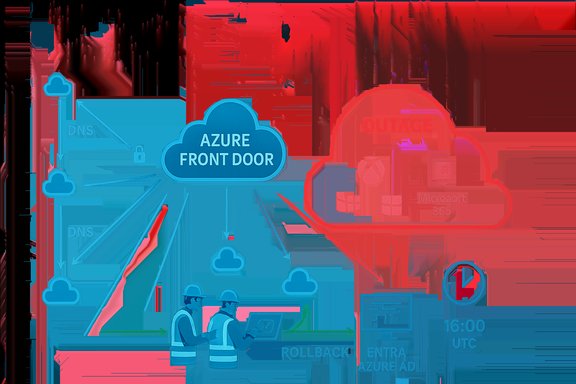
On October 29, widespread reports and Microsoft's own status messages documented a significant outage that began in the early afternoon UTC and quickly spread across many of the company's consumer and enterprise surfaces. Microsoft attributed the disruption to an inadvertent configuration change affecting Azure Front Door (AFD) — the global edge and application delivery fabric that performs TLS termination, global HTTP(S) routing, caching, and DNS‑level routing for many Microsoft endpoints. Because AFD sits on the critical path for identity (Microsoft Entra ID / Azure AD), management portals (Azure Portal, Microsoft 365 admin center), and consumer services (Xbox Live, Minecraft, the Microsoft Store and Game Pass), the outage produced symptoms that looked like application failures: failed sign‑ins, blank admin blades, 502/504 gateway errors, and storefront or authentication failures for games and cloud services. Microsoft froze AFD configuration rollouts, began deploying a rollback to a last‑known‑good configuration, and rerouted traffic away from affected infrastructure while recovering edge nodes. What happened — a concise timeline
Detection and public acknowledgement
- Detection: Internal telemetry and external monitors first registered elevated latencies, packet loss and DNS anomalies at roughly 16:00 UTC on October 29 (12:00 PM ET). That start time is consistently reported across status messages and independent tracking.
- Public acknowledgement: Microsoft posted incident banners identifying Azure Front Door connectivity and DNS/routing issues and said it was investigating an inadvertent configuration change.
Mitigation steps
- Freeze: Engineers immediately halted further AFD configuration changes to stop propagation of the faulty state.
- Rollback: Microsoft deployed a rollback to the last validated configuration and restarted orchestration units where needed.
- Rerouting: Traffic was routed away from unhealthy Points‑of‑Presence (PoPs) and the Azure Portal was failed away from AFD to restore admin access.
Recovery
Progressive recovery was reported over the ensuing hours. Microsoft indicated AFD availability rose into the high‑90s while mitigation proceeded and many services began showing strong improvements; some users still experienced residual, tenant‑ or region‑specific effects while DNS caches and global routing converged. Independent outlets and telemetry recorded a sharp drop in user reports as mitigations took hold.Technical anatomy — why this outage hit so many services
Azure Front Door as a single, high‑impact fabric
Azure Front Door is not a simple CDN — it’s a globally distributed, Layer‑7 ingress fabric that handles:- TLS termination and certificate/SNI mapping at the edge.
- Global HTTP(S) load balancing and origin selection.
- DNS‑level routing and anycast behavior to steer clients to PoPs.
- Web Application Firewall (WAF) enforcement and rule evaluation.
- Integration with identity token flows for Microsoft Entra.
DNS, retries and the amplification effect
Several reports described DNS‑style symptoms and explained how retry behavior can amplify a problem. When DNS or edge caches become overloaded, clients tend to retry quickly; those legitimate retries can increase load and further degrade caches and frontends, lengthening the outage until the control plane is corrected and caches rehydrate. This retry‑amplification dynamic has been observed in previous hyperscaler incidents and is a factor in both AWS and Azure outages in recent weeks.Control plane vs. data plane
The critical distinction is between the control plane (configuration propagation, routing policies) and the data plane (the PoPs that forward traffic). A control‑plane error — such as a misapplied rule — can publish invalid state to many PoPs at once, producing a much larger blast radius than a single PoP failing. The mitigation playbook therefore focuses on stopping propagation (freeze), reverting to safe state (rollback), and rerouting traffic while recovering affected nodes.Impact on Xbox Live, Game Pass, and Minecraft
What gamers experienced
Players reported the following visible behaviors during the outage:- Repeated sign‑in prompts and failed Xbox Live authentication.
- Storefront and Game Pass pages failing to load or timing out.
- Cloud game session failures and interrupted downloads or purchases.
- Minecraft launcher and Realms sign‑in failures and matchmaking timeouts.
Why Xbox services were affected
Xbox services rely on the same global identity and entitlement plane that Microsoft’s productivity apps use. When AFD routing or DNS for Entra endpoints degraded, token issuance and entitlement checks could not complete, blocking multiplayer, store and cloud features even though backend game servers might have been operational. In short, identity and edge coupling made gaming flows vulnerable to an edge routing incident.Broader enterprise and real‑world consequences
This outage did not only inconvenience gamers. Because many airlines, banks, retailers and government services front public endpoints through Azure or rely on Microsoft‑hosted identity and APIs, the incident produced tangible knock‑on effects:- Airline check‑in and boarding‑pass systems slowed in places, with some airports reverting to manual processes.
- Retail and foodservice ordering or checkout flows experienced intermittent failures where they used Azure‑hosted backends.
- Enterprise admins were hamstrung when the very admin portals they use were intermittently inaccessible, pushing some to use programmatic CLI/PowerShell routes.
How Microsoft handled communications and mitigation — strengths and gaps
Where Microsoft performed well
- Rapid containment via a configuration freeze and rollback is standard and effective for control‑plane incidents; engineers followed that playbook.
- Progressively failing the Azure Portal away from AFD restored management access for many customers, easing some remediation.
- Microsoft provided rolling updates on status pages and social channels while continuing mitigation.
Where vulnerabilities remain exposed
- The fact that a single inadvertent configuration change could produce a cross‑product outage points to weaknesses in deployment validation, canarying or rollback gating for high‑blast‑radius controls.
- Reliance on a centralized identity fronting layer (Entra) and a centralized edge fabric (AFD) creates single points of failure from an operational-resilience perspective. The architecture favors scale and operational efficiency, but it concentrates risk.
Practical recommendations for users, admins and IT teams
For consumers and gamers
- Check official Microsoft and Xbox status channels for confirmed updates rather than relying solely on social posts.
- Avoid repeated purchase attempts while the store is showing errors — repeated attempts can generate duplicate charges and complicate refunds.
- Restart consoles after Microsoft announces service recovery to clear stale sessions and reestablish authentication tokens.
- Be extra cautious about unsolicited offers of help or links during and after an outage — phishing and tech‑support scams spike when legitimate channels are degraded.
For administrators and security teams
- Use programmatic access (Azure CLI, PowerShell, management APIs) and out‑of‑band consoles when web portals are unreliable.
- Revoke or refresh tokens and session cookies for suspicious accounts after the incident window, and audit recent administrative changes.
- Validate failover runbooks that assume control‑plane failure — test origin direct access, alternate DNS resolutions and multi‑region routing.
- Review vendor SLAs and contract terms for control‑plane incidents and prepare to request incident reports or service credits if necessary.
Compensation expectations and precedents
Large gaming‑platform outages have in the past prompted goodwill gestures. For example, when PlayStation Network experienced an outage spanning nearly a day earlier in 2025, Sony automatically granted PlayStation Plus subscribers a five‑day extension as compensation. That incident shows the industry precedent for vendor compensation when paid services are materially disrupted. Microsoft may evaluate similar gestures depending on outage duration and business impact, but compensation is never guaranteed and will depend on contractual terms and company policy.System‑level lessons and broader implications
Cloud concentration and systemic risk
The incident is the latest example showing how a small number of hyperscalers and a handful of global control‑plane primitives (edge fabrics, global DNS, identity services) form systemic chokepoints. Recent AWS incidents and this Azure Front Door configuration failure share a pattern: an operational or software issue in a widely‑used control plane can ripple across the internet ecosystem and affect disparate sectors nearly simultaneously. Reducing systemic risk will require architectural, contractual and operational changes across providers and customers.Architectural recommendations for platform operators
- Harden deployment pipelines for global control‑plane changes with stricter canarying, progressive rollout limits and automated rollback gating.
- Increase diversity in identity and routing paths where feasible — for critical admin consoles, provide independent ingress alternatives that are not fronted by the primary edge fabric.
- Improve telemetry and customer‑facing diagnostics so tenants can quickly determine whether a problem is local, network‑level or provider‑wide.
For enterprises: design for control‑plane failures
- Treat cloud edge fabrics and identity services as critical dependencies in risk registers and disaster recovery plans.
- Validate multi‑path access for management planes (e.g., console fallback, API keys, VPN‑backed admin networks) and exercise those paths regularly.
- Consider splitting critical customer‑facing services across independent fronting mechanisms or introducing origin‑level failback modes that allow degraded but usable service if the edge fabric is impaired.
What remains uncertain and what to watch for next
Microsoft has indicated a Preliminary Post‑Incident Review will follow; the community should watch for:- The final root cause — exact configuration change, which teams applied it, and whether process or tooling gaps enabled the error.
- Concrete mitigations Microsoft will adopt around AFD deployment validation, canarying, and rollback automation.
- Any contractual remediation offers, service credits or goodwill gestures for affected paid customers and gamers.
Conclusion
The October 29 Azure Front Door incident is a clear reminder that the conveniences of centralized cloud edge fabrics and unified identity systems carry operational tradeoffs. When those control planes stutter, the visible fallout is immediate and wide‑ranging: gamers hit Xbox Live and Minecraft, administrators lose access to management consoles, and customers of businesses that rely on Azure experience real‑world friction. Microsoft’s response — freezing configuration rollouts, deploying a rollback and rerouting traffic — followed established containment playbooks and restored service for most users within hours, but the root cause and subsequent hardening steps will determine whether similar incidents become less likely.For users, the practical advice is straightforward: follow official Microsoft channels, avoid risky third‑party “fixes” or unsolicited offers, and restart devices after official recovery. For enterprises, the outage is a strong signal to treat cloud control planes as critical dependencies worthy of explicit failover strategies. The resilience of digital services in an era dominated by a few hyperscalers will increasingly depend on both vendor discipline and customer preparedness.
Source: Emegypt Xbox Live Service Disruption Affects Users
