

Microsoft’s brief MSRC attestation that “Azure Linux includes this open‑source library and is therefore potentially affected” is accurate as a product‑scoped inventory statement — but it is not proof that no other Microsoft product could include the same vulnerable Linux kernel component.
The CVE in question (drm/tegra: possible null pointer dereference) is a kernel‑level robustness defect in a Linux DRM driver. Vulnerabilities of this class typically manifest as a NULL‑pointer dereference that causes a kernel oops, driver crash, or host instability — an availability / denial‑of‑service outcome rather than an immediate remote code‑execution or privilege‑escalation primitive. The presence or absence of a practical exposure depends on two artifact‑level facts: the kernel version (or vendor backport status) and the kernel build configuration (whether the driver is built in or supplied as a module).
Microsoft’s Security Response Center (MSRC) published a short, machine‑readable attestation (CSAF/VEX) that maps this CVE to the product family Azure Linux (the Microsoft‑curated Linux distro formerly known as CBL‑Mariner). The phrasing used on the MSRC advisory — that Azure Linux “includes this open‑source library and is therefore potentially affected” — is a deliberate, product‑scoped statement indicating Microsoft completed an inventory for that product and found the implicated component there. Microsoft also stated it began publishing CSAF/VEX attestations in October 2025 and that it will update CVE records if additional Microsoft products are later found to ship the same upstream component.
The underlying vulnerable code is part of the upstream Linux kernel tree. Any Microsoft product that ships a Linux kernel binary built from a commit range that contains the vulnerable drm/tegra code — and that has the relevant driver enabled at build time — could, in principle, be affected. Plausible Microsoft artifacts that may carry the same code include:
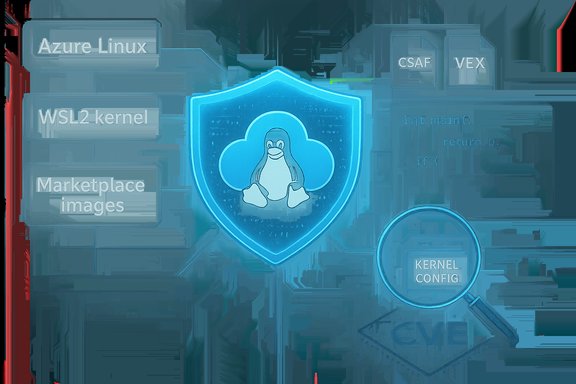
However, that single sentence does not mean Azure Linux is the only Microsoft product that could include the vulnerable drm/tegra code. The vulnerability lives in upstream Linux kernel sources, and whether any Microsoft product is affected is an artifact‑level question that depends on kernel commit history and build configuration. Security teams must inventory their Microsoft‑supplied artifacts (Azure Linux, linux‑azure, WSL2 kernels, Marketplace images) and verify kernel binaries or apply mitigations until patched. Microsoft has promised to expand its VEX/CSAF attestations as its inventory grows; until then, assume possible exposure outside Azure Linux and act accordingly.
Priority action items: patch Azure Linux immediately, inventory other Microsoft artifacts, ingest Microsoft’s CSAF/VEX feeds for automation, and apply temporary mitigations (device permissions and module blacklists) where immediate patching is not possible.
Source: MSRC Security Update Guide - Microsoft Security Response Center
 Background / Overview
The CVE in question (drm/tegra: possible null pointer dereference) is a kernel‑level robustness defect in a Linux DRM driver. Vulnerabilities of this class typically manifest as a NULL‑pointer dereference that causes a kernel oops, driver crash, or host instability — an availability / denial‑of‑service outcome rather than an immediate remote code‑execution or privilege‑escalation primitive. The presence or absence of a practical exposure depends on two artifact‑level facts: the kernel version (or vendor backport status) and the kernel build configuration (whether the driver is built in or supplied as a module).Microsoft’s Security Response Center (MSRC) published a short, machine‑readable attestation (CSAF/VEX) that maps this CVE to the product family Azure Linux (the Microsoft‑curated Linux distro formerly known as CBL‑Mariner). The phrasing used on the MSRC advisory — that Azure Linux “includes this open‑source library and is therefore potentially affected” — is a deliberate, product‑scoped statement indicating Microsoft completed an inventory for that product and found the implicated component there. Microsoft also stated it began publishing CSAF/VEX attestations in October 2025 and that it will update CVE records if additional Microsoft products are later found to ship the same upstream component.
What Microsoft’s sentence actually means
Product‑scoped attestation, not universal exclusion
- Authoritative for Azure Linux: The MSRC VEX/CSAF output is an authoritative, machine‑readable signal for Azure Linux customers: treat the attestation as a “Known Affected / Potentially Affected” indicator for that product family and follow the vendor’s remediation guidance.
- Not proof that other Microsoft artifacts are safe: The attestation documents inventory work Microsoft has completed so far. Absence of the same attestation for another Microsoft product is absence of attestation, not evidence of absence. Microsoft explicitly said it will update the CVE if it discovers additional impacted products.
Why Microsoft framed it this way
Microsoft’s phased rollout of CSAF/VEX is designed to be machine‑consumable and productized. That approach is pragmatic: Microsoft inventories one product family at a time (starting with Azure Linux) and publishes an attestation for each artifact it verifies. The result is precise automation signals for customers running those exact artifacts, but it also means customers cannot infer global safety across the entire vendor portfolio from a single product mapping.Could other Microsoft products include the affected library?
Short answer: Yes, technically possible; Azure Linux is the only Microsoft product Microsoft has publicly attested as including it so far.The underlying vulnerable code is part of the upstream Linux kernel tree. Any Microsoft product that ships a Linux kernel binary built from a commit range that contains the vulnerable drm/tegra code — and that has the relevant driver enabled at build time — could, in principle, be affected. Plausible Microsoft artifacts that may carry the same code include:
- WSL2 kernel builds that Microsoft publishes and maintains for Windows Subsystem for Linux. Whether a WSL2 kernel is vulnerable depends on the kernel version and configuration used in the WSL binary shipped with a particular Windows release or user configuration. Public sampling of typical WSL kernel configs shows many official WSL kernels do not enable certain debugging sanitizers (like Linux KASAN) by default, but the presence of the DRM driver and other options remains an artifact‑level question to be verified.
- linux‑azure kernels used for certain Azure VM SKUs or Marketplace images where Microsoft supplies kernel binaries separate from Azure Linux images.
- Marketplace and partner images, appliances, or specialized Microsoft‑distributed images that embed a Linux kernel.
- Internal Microsoft artifacts or test images that might include different kernel configurations.
Technical anatomy: why exposure is artifact‑level
Two factors determine whether a given image or binary is actually vulnerable:- Kernel code / commit range: The shipped kernel must be compiled from a source tree that contains the pre‑fix commit range. Vendors often cherry‑pick upstream stable commits or backport fixes into older kernel branches; if a vendor has backported the fix, the binary is not vulnerable even if its version number appears to be in the affected range. Verification against stable commit IDs or vendor changelogs is essential.
- Kernel configuration and module presence: Many kernel subsystems are optional. A distro or image is only exposed if the kernel build enabled the specific DRM driver (built‑in or module) and the module is present/loaded at runtime. Two kernels built from the same upstream source can therefore have very different exposure profiles.
Practical verification: how to check your Microsoft artifacts
Below are pragmatic steps you can run across Azure VMs, on Windows hosts with WSL2, and on any managed images to determine exposure.1. Identify candidate artifacts (inventory)
- Pull a list of all Linux VMs and images running in your environment that were provisioned from Microsoft or Marketplace images (Azure Linux, linux‑azure, Marketplace images).
- Include Windows endpoints that run WSL2 if WSL is used in your environment.
2. Check whether the DRM/Tegra driver is present or loaded
Run on the Linux guest:- lsmod | grep -i tegra
- lsmod | grep -i drm
- dmesg | grep -i tegra
- journalctl -k | grep -i drm
3. Inspect the kernel version and vendor backports
- uname -r
- If available, examine /boot/config-$(uname -r) or /proc/config.gz to check CONFIG options (e.g., CONFIG_DRM_TEGRA, CONFIG_DRM).
- For distros with package managers:
- Debian/Ubuntu: apt changelogs for linux-image-$(uname -r)
- RHEL/SUSE/Amazon: check vendor advisory mapping and rpm -qi kernel
4. For Windows + WSL2
- Check the WSL2 kernel config shipped with your Windows build (Microsoft publishes the WSL2 kernel tree publicly). Look for the CONFIG*DRM** entries in the kernel config used by WSL2 or check the binary shipped with the OS if you can extract it.
- In many public samples, WSL2 kernels do not enable certain sanitizers (e.g., KASAN), but you must verify the presence of the DRM driver itself rather than assume absence.
5. For Marketplace and partner images
- Treat each image as a separate artifact: inspect the kernel binary, module list, and vendor advisories for that specific image. Don’t assume the Azure Linux attestation covers Marketplace images just because Microsoft hosts them.
Detection and monitoring guidance
Because this class of bug is local and often exercised by userland callers to /dev/dri or GPU IOCTLs, detection focuses on kernel oopses and driver warnings:- Monitor kernel logs (journalctl -k, dmesg) for DRM/tegra oops, WARN_ON messages, or slab/free‑object warnings.
- Configure your SIEM to alert on kernel oopses and repeated device driver resets (messages mentioning drm, tegra, amdgpu, i915, etc..
- Add runtime checks for device exposure:
- ls -l /dev/dri/* to detect device nodes and their permission model.
- Audit access to /dev/dri for unprivileged processes or containers.
- Use host integrity tools to capture crash dumps (kexec/kdump, crash utility) so you can triage any kernel oops and confirm whether it matches the CVE pattern.
Short‑term mitigations you can apply now
If you cannot immediately install a patched kernel, apply conservative mitigations to reduce exposure:- Restrict access to GPU device nodes:
- Ensure /dev/dri/* is only readable/writable by trusted users or groups.
- For containers, avoid mapping host /dev/dri into untrusted containers.
- Disable or blacklist the tegra DRM module on images where GPU support is not required:
- Add a module blacklist entry (e.g., echo "blacklist tegra_drm" > /etc/modprobe.d/blacklist-tegra.conf) and rebuild initramfs where necessary.
- Use tenant isolation controls in Azure (restrict who can create/attach GPU devices to VMs).
- For WSL2 users, if you run custom WSL kernels, rebuild with a safe kernel config or use the Microsoft‑published WSL kernel that you have verified.
Patch and remediation best practices
- Prioritize Azure Linux images first — Microsoft attested them and they are confirmed carriers. Patch/replace affected Azure Linux images with vendor‑released kernel packages that include the upstream fix.
- Validate linux‑azure and other Microsoft kernel artifacts you use in production; apply vendor patches or image updates where the vendor confirms the backport has been applied.
- For WSL2 and Windows clients, verify the WSL kernel version/config and apply any Microsoft updates that include a patched kernel where applicable.
- Automate CVE mapping and coverage by ingesting Microsoft’s CSAF/VEX feeds into your vulnerability management pipeline; watch for updates to the CVE mapping as Microsoft expands its attestations beyond Azure Linux.
Critical analysis — strengths, gaps, and risks
Strengths in Microsoft’s approach
- Machine‑readable attestation (CSAF/VEX): Publishing VEX entries makes vendor statements automatable, enabling security teams to reduce noisy false positives and quickly triage which vendor‑managed artifacts are definitively affected. That is a big operational improvement for large estates.
- Transparency commitment: Microsoft’s public commitment to update CVEs as additional products are identified signals a process for continuous inventory and disclosure, which benefits customers who rely on accurate product mappings.
Gaps and potential risks
- Attestation scope confusion: The concise MSRC language can be misread as implying exclusivity. Administrators who assume Azure Linux is the only Microsoft product that could include the library risk missing other carriers in their estate. Microsoft’s wording is not a technical proof of exclusivity — it is an attestation of the inventory completed so far.
- Multiple Microsoft kernel artifacts: Microsoft ships different kernel artifacts (Azure Linux, linux‑azure, WSL2 kernel, Marketplace images). Each is a separate build pipeline and must be checked independently. Relying on a single product mapping is insufficient.
- Third‑party and partner images: Marketplace publishers and partners may ship kernels or images that Microsoft does not fully inventory; those remain the responsibility of the image publisher and must be validated separately.
- Long‑tail update patterns: Embedded images, specialized appliances, and vendor kernels often have longer patch cycles. These long‑tail systems are where unpatched vulnerabilities persist and where risk accumulates over time.
Unverifiable or time‑sensitive claims (flagged)
- Any statement that “no other Microsoft product includes the library” is unverifiable until Microsoft publishes either a Not Affected or Fixed VEX attestation for that product. Until Microsoft updates its VEX/CSAF entries for other product families, customers must assume the possibility of additional carriers and perform artifact‑level verification.
Recommended checklist for security teams (prioritized)
- Patch Azure Linux images immediately with vendor kernel updates that include the upstream fix.
- Inventory all Microsoft‑provided kernel artifacts you consume: linux‑azure, Marketplace images, WSL2 kernels, and any appliance images. Treat each as a separate artifact and verify the kernel commit/config.
- If you cannot patch immediately, apply mitigations (device node permissions, module blacklisting, container restrictions).
- Ingest Microsoft CSAF/VEX feeds into your vulnerability management system and subscribe to MSRC updates for this CVE so you receive automated notifications if Microsoft expands the product mapping.
- Deploy detection rules to spot DRM/tegra oops and device resets and configure alerting for kernel oops signatures in your SIEM.
- For WSL2 endpoints, decide whether to enforce Microsoft‑published kernel binaries (after verification) or control WSL kernel updates centrally in your enterprise configuration.
Operational examples: commands and checks
- Check for tegra/drm modules and device nodes:
- lsmod | egrep 'tegra|drm'
- ls -l /dev/dri/*
- Check kernel config for DRM/Tegra:
- zgrep CONFIG_DRM /proc/config.gz || grep CONFIG_DRM /boot/config-$(uname -r)
- zgrep CONFIG_DRM_TEGRA /proc/config.gz || grep CONFIG_DRM_TEGRA /boot/config-$(uname -r)
- Inspect kernel logs for oops/warn:
- journalctl -k --no-pager | egrep -i 'drm|tegra|oops|WARN_ON'
- Block loading of the module (temporary mitigation):
- echo "blacklist tegra_drm" | sudo tee /etc/modprobe.d/blacklist-tegra.conf
- update-initramfs -u (Debian/Ubuntu) or dracut -f (RHEL) if needed
Conclusion
Microsoft’s MSRC statement that Azure Linux includes this open‑source library and is therefore potentially affected is correct and actionable for Azure Linux customers, and Microsoft’s rollout of machine‑readable CSAF/VEX attestations is an operational win for automation and clarity.However, that single sentence does not mean Azure Linux is the only Microsoft product that could include the vulnerable drm/tegra code. The vulnerability lives in upstream Linux kernel sources, and whether any Microsoft product is affected is an artifact‑level question that depends on kernel commit history and build configuration. Security teams must inventory their Microsoft‑supplied artifacts (Azure Linux, linux‑azure, WSL2 kernels, Marketplace images) and verify kernel binaries or apply mitigations until patched. Microsoft has promised to expand its VEX/CSAF attestations as its inventory grows; until then, assume possible exposure outside Azure Linux and act accordingly.
Priority action items: patch Azure Linux immediately, inventory other Microsoft artifacts, ingest Microsoft’s CSAF/VEX feeds for automation, and apply temporary mitigations (device permissions and module blacklists) where immediate patching is not possible.
Source: MSRC Security Update Guide - Microsoft Security Response Center
