

Microsoft’s short answer — that “Azure Linux includes this open‑source library and is therefore potentially affected” — is accurate for the specific product Microsoft has inventory‑checked, but it is not a blanket guarantee that no other Microsoft product can or does include the same upstream component. Microsoft’s statement is a product‑scoped attestation, published as part of a phased rollout of machine‑readable CSAF/VEX attestations that began in October 2025, and it explicitly promises to update the CVE entry if additional Microsoft products are later found to ship the implicated library.
CVE‑2024‑3177 is a Kubernetes vulnerability described as “Bypassing mountable secrets policy imposed by the ServiceAccount admission plugin”. It was published in April 2024 and affects clusters that use the ServiceAccount admission plugin together with the kubernetes.io/enforce-mountable-secrets annotation when pods populate the envFrom field in containers, init containers, or ephemeral containers; an attacker who can create pods under those conditions may be able to bypass the mountable‑secrets restriction. The technical descriptions and CVSS/metadata are recorded in public trackers such as the NVD and vendor vulnerability feeds. Microsoft’s Security Response Center (MSRC) and the Microsoft Update Guide have adopted a machine‑readable attestation model (CSAF/VEX) to state, per product, whether an upstream open‑source component is present and whether that product is potentially affected. Microsoft began publishing VEX attestations in October 2025 and has used this mechanism to map upstream components into product artifacts; for the CVE in question Microsoft has published an Azure Linux attestation, stating that Azure Linux includes the implicated library and is therefore potentially affected. Microsoft also states it will update the CVE and the VEX records if further product impact is identified.
However, that single line is not a claim that every Microsoft product or image has been scanned and proven free of the component. Microsoft’s public wording and the VEX rollout model make that explicit: the company has started with Azure Linux and will expand attestations to additional Microsoft product families over time; if other products are later discovered to carry the component, Microsoft will update the CVE records accordingly. Treat the published attestation as definitive for Azure Linux and as a declarative record of the inventory work completed so far, not as a negative proof covering the whole Microsoft product catalog.
That same Microsoft statement and the VEX model also make the limits of that signal explicit: the attestation is product‑scoped and phased. Absence of attestations for other Microsoft products does not equal proof of absence — it means those artifacts have not (yet) been publicly inventory‑checked and attested. Operators running other Microsoft‑distributed images, kernels, or appliances must therefore verify those artifacts directly (SBOMs, package/kernel scans, or vendor attestations) or treat them as unverified until proven otherwise. In short: act promptly on the Azure Linux attestation, automate ingestion of VEX/CSAF feeds into your patch and inventory workflows, and perform artifact‑level verification across the rest of your Microsoft footprint rather than assuming safety from absence of mention.
Source: MSRC Security Update Guide - Microsoft Security Response Center
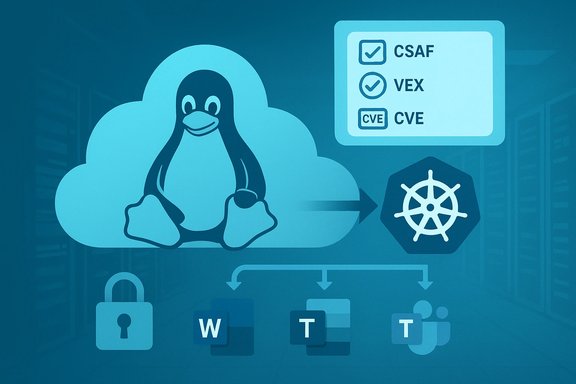 Background / Overview
CVE‑2024‑3177 is a Kubernetes vulnerability described as “Bypassing mountable secrets policy imposed by the ServiceAccount admission plugin”. It was published in April 2024 and affects clusters that use the ServiceAccount admission plugin together with the kubernetes.io/enforce-mountable-secrets annotation when pods populate the envFrom field in containers, init containers, or ephemeral containers; an attacker who can create pods under those conditions may be able to bypass the mountable‑secrets restriction. The technical descriptions and CVSS/metadata are recorded in public trackers such as the NVD and vendor vulnerability feeds. Microsoft’s Security Response Center (MSRC) and the Microsoft Update Guide have adopted a machine‑readable attestation model (CSAF/VEX) to state, per product, whether an upstream open‑source component is present and whether that product is potentially affected. Microsoft began publishing VEX attestations in October 2025 and has used this mechanism to map upstream components into product artifacts; for the CVE in question Microsoft has published an Azure Linux attestation, stating that Azure Linux includes the implicated library and is therefore potentially affected. Microsoft also states it will update the CVE and the VEX records if further product impact is identified. What Microsoft actually attested — reading the language correctly
The attestation is product‑scoped, not universal
Microsoft’s phrasing — “Azure Linux includes this open‑source library and is therefore potentially affected” — means Microsoft inspected the Azure Linux distribution artifacts and found the upstream component present in those builds. That is an authoritative, machine‑readable signal you can act on for Azure Linux images specifically.However, that single line is not a claim that every Microsoft product or image has been scanned and proven free of the component. Microsoft’s public wording and the VEX rollout model make that explicit: the company has started with Azure Linux and will expand attestations to additional Microsoft product families over time; if other products are later discovered to carry the component, Microsoft will update the CVE records accordingly. Treat the published attestation as definitive for Azure Linux and as a declarative record of the inventory work completed so far, not as a negative proof covering the whole Microsoft product catalog.
Why vendors publish attestations in phases
Large vendors rarely have a single, universal build pipeline for every binary or image they ship. Instead, they maintain many independent build artifacts and product families. Publishing CSAF/VEX attestations per product family (starting with a manageable family such as Azure Linux) lets Microsoft provide deterministic, automatable guidance to customers while continuing inventory work across other products. That is what the October 2025 VEX rollout was designed to do.Why Azure Linux being named does not mean other Microsoft products are safe
Technical realities of software composition
Whether a specific Microsoft artifact (for example, the WSL2 kernel distributed with Windows, linux‑azure kernels used by some VM SKUs, Marketplace VM images, container base images, or vendor appliances) contains any particular upstream source file is a property of that artifact’s build and packaging:- Kernel or package version and the exact commit range (backports matter).
- Build configuration (CONFIG_* flags) that enable, disable, or modularize subsystems.
- Packaging choices (statically linked binaries, built‑in drivers, or separate modules).
- Whether a vendor backported the upstream fix or not.
Evidence and independent corroboration
Independent vulnerability trackers and package advisories confirm the CVE details and the general distribution of fixes; they also show how different vendors map CVEs into their own package updates. Cross‑checking Microsoft’s attestation against upstream trackers such as NVD, vendor advisories, and distribution security feeds is the prudent way to validate both the technical nature of the bug and the scope of the remediation. The NVD/Aqua/Rapid7 summaries of CVE‑2024‑3177 describe the Kubernetes bypass behavior and list the affected ranges of k8s versions that operators should check.Practical implications for enterprise defenders and platform operators
Short direct answer to the user’s question
- Authoritative attestation: Yes — Azure Linux is the only Microsoft product Microsoft has publicly attested (so far) to include the open‑source component referenced in the CVE. That attestation is authoritative for Azure Linux images and should be treated as an immediate remediation signal for anyone running those images.
- Broader technical risk: No — the attestation does not prove exclusivity. Other Microsoft artifacts could also embed or ship the same library depending on build and packaging choices; until Microsoft publishes further VEX attestations or you verify the artifacts yourself, treat other Microsoft‑supplied images/kernels as unverified, not innocent.
Where most organizations need to focus
- Azure Linux customers: prioritize the patch/update guidance Microsoft publishes for Azure Linux images and consume the VEX/CSAF machine data to automate triage.
- Operators of other Microsoft artifacts (WSL kernels, linux‑azure kernels, Azure Marketplace images, AKS node images, prebuilt container images provided by Microsoft): do not assume absence — scan and inventory each artifact you run.
- Mixed estates: when you run a mix of Windows and Linux artifacts from Microsoft, combine vendor attestations (VEX/CSAF) with internal artifact-level verification (SBOMs, file/package scans, kernel module checks).
How to verify whether your Microsoft artifacts are affected — concrete steps
- Inventory first (automated where possible)
- Produce a list of all Microsoft‑provided Linux artifacts in your estate: Azure Marketplace VM images, AKS/VM node images, WSL2 kernel builds, linux‑azure kernel packages, and any Microsoft‑curated container base images.
- Collect package versions, kernel versions, and SBOMs where available.
- Consult Microsoft’s machine‑readable VEX/CSAF outputs
- Pull Microsoft’s VEX feed for the CVE in question (MSRC began publishing VEX attestations in October 2025). Use the VEX entry to quickly determine which Microsoft product families have been reported as Known Affected, Not Affected, Under Investigation, or Fixed. Microsoft’s VEX rollout started with Azure Linux; that product is the first attested family for many upstream kernel or library CVEs.
- Cross‑check with independent trackers
- Validate the technical fix (commit IDs, package releases) against NVD/OSV and distribution advisories (Debian/Ubuntu/Red Hat/Amazon Linux) to map the upstream fix into concrete package versions you can look for in your images.
- Inspect artifacts directly when VEX is silent
- If a product you run is not listed in Microsoft’s VEX output, perform an artifact scan:
- Query package managers inside images (rpm/dpkg) for versions of the implicated library.
- Inspect kernel configs or modules for relevant driver/component presence.
- Search statically linked binaries for embedded library versions (use strings/binary scanning or SBOM evidence).
- If you cannot inspect an image (e.g., Marketplace appliance), obtain the vendor SBOM or require a VEX/CSAF attestation as a procurement condition.
- Prioritize and remediate
- Prioritize updates where the vendor attestation says Known Affected (Azure Linux in this instance).
- For artifacts where you discovered the vulnerable component by inspection, follow vendor remediation guidance or apply upstream/security patches and rebuild images.
- If patching is not immediately possible, apply compensating controls (restrict who can create pods, tighten RBAC, avoid use of the enforce‑mountable‑secrets annotation where not required, and monitor for suspicious pod creation that uses envFrom).
Recommended operational playbook (concise)
- Short term (0–72 hours)
- Query Microsoft’s Update Guide / VEX outputs for the CVE and capture the Azure Linux attestation.
- Use inventory tools (asset management, Azure Resource Graph, container image scanners) to list where Azure Linux images are running; patch those images per Microsoft guidance.
- Block or audit use of the kubernetes.io/enforce-mountable-secrets annotation and tighten RBAC so untrusted principals cannot create pods that use envFrom.
- Mid term (72 hours — 2 weeks)
- Scan other Microsoft artifacts in your estate for the implicated library (SBOMs, package versions, module lists).
- Request VEX/CSAF attestations from vendors or Marketplace publishers for any third‑party images you consume.
- Automate triage: ingest Microsoft’s VEX feed into your vulnerability management workflow so future attestations are automatically reconciled against your inventory.
- Long term (ongoing)
- Require SBOMs or VEX attestations in procurement for cloud images and Marketplace appliances.
- Maintain continuous image scanning and artifact provenance tracking; make VEX/CSAF data a first‑class input to risk scoring and patch prioritization.
Strengths and benefits of Microsoft’s VEX/CSAF approach — and remaining gaps
Notable strengths
- Deterministic, machine‑readable signals: VEX/CSAF gives customers a deterministic mapping from CVE → product family status, reducing noisy inference and helping automation. Microsoft’s October 22, 2025 blog explains this commitment and why VEX matters for customers.
- Transparent rollout and updates: Microsoft explicitly states it will update CVE and VEX records when additional products are identified as carriers, which provides an auditable process rather than ad hoc statements.
Potential risks and gaps
- Phased coverage creates windows of uncertainty. If a vendor starts with a subset of products (Azure Linux) and expands later, customers running other vendor artifacts may be left uncertain until inventory completes. Absence of an attestation is absence of attestation, not evidence of absence.
- Artifact heterogeneity complicates automated conclusions. Different images, kernels, and appliances are built differently; automated tooling must reconcile package-level findings with per‑artifact config to avoid under‑ or over‑triage.
- SBOM and attestation availability varies across third parties. Some Marketplace or partner images do not publish SBOMs or VEX attestations; obtaining them can require contractual or procurement pressure.
Quick checklist for Windows + Linux mixed estates
- Ingest Microsoft’s VEX/CSAF feed into vulnerability management and asset inventory.
- For Azure Linux instances, follow Microsoft’s remediation guidance immediately — the attestation names Azure Linux as a confirmed product that includes the implicated open‑source library.
- For other Microsoft artifacts, perform artifact‑level inspection (SBOM/package/kernel checks) rather than relying on the absence of a VEX entry.
- Lock down Kubernetes control‑plane privileges and deprecate or tightly control the use of the enforce‑mountable‑secrets annotation where possible.
- For Marketplace appliances or partner images, require SBOMs or VEX attestations as part of procurement and patch management.
Flagging unverifiable or time‑sensitive claims
- The statement that Microsoft “will update the CVE to reflect” impact to additional products is Microsoft’s procedural pledge on their CVE update pages and in the VEX rollout announcement; it is a vendor promise and should be tracked as a commitment rather than a technical fact about any other product at a given time. Because VEX/CSAF attestations are updated over time, customers must re‑check MSRC / Update Guide pages periodically for changes.
- Any assertion about whether a specific Microsoft product other than Azure Linux currently includes the implicated library should be validated by either (a) Microsoft’s published VEX attestation for that product, or (b) direct artifact inspection (SBOM/package/kernel checks). If neither is available, label the state unverified rather than not affected. This is an operational precaution and should be treated as such when communicating risk to leadership.
Conclusion
Microsoft’s entry for the CVE and its VEX/CSAF rollout give defenders a clear and authoritative starting point: Azure Linux is a confirmed product that includes the implicated open‑source library and therefore should be triaged and remediated according to Microsoft’s guidance.That same Microsoft statement and the VEX model also make the limits of that signal explicit: the attestation is product‑scoped and phased. Absence of attestations for other Microsoft products does not equal proof of absence — it means those artifacts have not (yet) been publicly inventory‑checked and attested. Operators running other Microsoft‑distributed images, kernels, or appliances must therefore verify those artifacts directly (SBOMs, package/kernel scans, or vendor attestations) or treat them as unverified until proven otherwise. In short: act promptly on the Azure Linux attestation, automate ingestion of VEX/CSAF feeds into your patch and inventory workflows, and perform artifact‑level verification across the rest of your Microsoft footprint rather than assuming safety from absence of mention.
Source: MSRC Security Update Guide - Microsoft Security Response Center
