

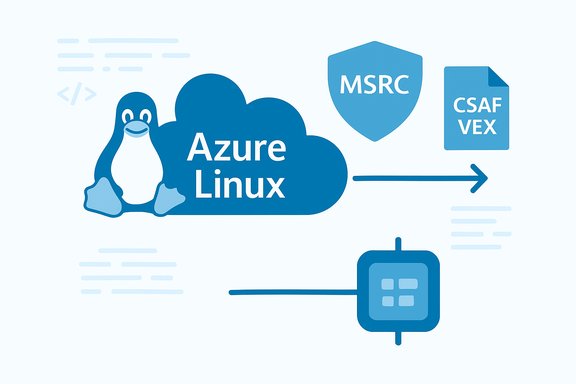
Microsoft’s brief product attestation for CVE-2025-38064 names Azure Linux as a known carrier of the vulnerable virtio code path, but that attestation is a scoped inventory statement — not a categorical guarantee that no other Microsoft product can or does include the same open‑source component.
Background / Overview
On June 18, 2025 the Linux kernel community recorded CVE-2025-38064: a virtio lifecycle bug that can leave virtio devices writing to MMIO after their underlying virtio-pci device has been reset, producing hangs and invalid memory accesses in virtual machines. The root cause centers on virtio-console continuing to poke the guest address space after device-reset events, and the practical fix is to “break” virtio devices at bus shutdown and then reset them so they cannot continue writing into guest MMIO windows. Microsoft’s Security Response Center (MSRC) entry for this CVE contains a succinct product-level attestation: Azure Linux includes this open‑source library and is therefore potentially affected. Microsoft also notes that it began publishing machine‑readable CSAF/VEX attestations in a phased rollout (starting with Azure Linux in October 2025) and that it will update CVE mappings if additional Microsoft products are later found to ship the implicated upstream component. That pair of statements — a product attestation plus a promise to expand coverage — is the definitive context for how Microsoft is communicating impact for this class of third‑party CVE. This article explains what that wording means in practice, verifies the technical details of the vulnerability against multiple independent sources, analyzes Microsoft’s attestation model and its operational limits, and provides a practical checklist for operators to determine whether an environment is actually at risk.The technical story: what CVE-2025-38064 actually is
A concise technical summary
The vulnerability is in the Linux kernel’s virtio teardown path. During a VM shutdown or kexec sequence, some virtio devices (notably virtio-console) may continue to perform MMIO writes after the underlying virtio‑pci device has already been reset. On platforms where IOMMUs are reset before devices, the continuing MMIO access produces IOMMU rejections or invalid memory accesses that can wedge devices or trigger hangs. The upstream remedy is to break all virtio devices during virtio bus shutdown and then perform device resets so device callbacks cannot continue to reference guest MMIO after device teardown.Impact, exploitability and severity
- Primary impact: availability — VM or guest hangs and potential device wedging that can cause kexec failures and kernel invalid-access traces.
- Attack vector: local/guest or management‑plane driven — the issue manifests when devices remain active during teardown sequences; exploitation requires the victim environment to perform the device‑shutdown flow or to allow a guest/device interaction that triggers the broken teardown.
- Public scoring and vendor tracking: multiple vulnerability trackers and distributions have cataloged the issue, assigning it a medium‑to‑high operational severity and publishing fixes or backports across kernel stable branches. Distributions including Debian, Ubuntu, SUSE and vendor trackers have entries for CVE‑2025‑38064 and mapped upstream fixes into their package updates.
Upstream fixes and where they landed
Upstream kernel commits addressing the problem were published in the stable kernel trees (the stable commit trail references are public), and downstream distributions have backported or packaged those fixes. The practical remediation for most administrators is to install the vendor-provided fixed kernel packages or apply the upstream patch to any custom kernel builds and rebuild images that bundle kernels or static drivers.What Microsoft actually said — and what it does not mean
The wording and its meaning
Microsoft’s MSRC entry states that Azure Linux includes the open‑source library and is therefore potentially affected, and it adds that Microsoft has begun publishing CSAF/VEX attestations (a phased rollout beginning with Azure Linux in October 2025) and will update CVE mappings if additional Microsoft products are found to include the same upstream component. This is a product‑scoped attestation — an inventory result for a named product family (Azure Linux), not a global claim that every Microsoft SKU is safe. Two precise implications follow:- For customers who run Azure Linux images, Microsoft’s attestation is authoritative and should be treated as the starting point for immediate triage and patching.
- For any other Microsoft‑branded or Microsoft‑distributed artifact (WSL kernels, linux‑azure kernel packages used in other images, Microsoft Marketplace images, AKS node images, or vendor appliances), absence of a Microsoft VEX/CSAF attestation is not proof of absence of the vulnerable code. Those artifacts remain unverified until Microsoft publishes attestations for them or until an operator inspects them directly.
Why Microsoft started with Azure Linux
Microsoft’s CSAF/VEX rollout was deliberately phased: starting with Azure Linux lets Microsoft produce machine‑readable attestations for a centrally built, managed product family more quickly and reliably. That accelerates automation for cloud customers while Microsoft works through inventories for other products. The tradeoff is temporal: the rollout reduces uncertainty for Azure Linux customers faster, but it leaves a verification gap across other Microsoft artifacts until those product inventories are completed.Is Azure Linux the only Microsoft product that includes the vulnerable library?
Short answer: No — but with an important qualification.- Microsoft has publicly attested (via MSRC / VEX/CSAF) that Azure Linux includes the affected virtio code path and is therefore potentially affected. That is an explicit, machine‑readable inventory statement for that product family.
- Microsoft has not declared that no other Microsoft product contains the library. Because kernel features, modules and drivers are a build‑time property, other Microsoft artifacts could include the same upstream code depending on kernel configuration and packaging choices. Examples of artifacts that can be carriers include:
- WSL2 kernel variants distributed with Windows (when they include virtio drivers or bundled device servers).
- linux‑azure kernel builds used in some Azure VM images.
- Marketplace images, partner images or AKS node images that bundle kernel binaries or static QEMU/virtio components.
- Any Microsoft or third‑party appliance image published into Azure that statically includes kernel modules or QEMU binaries.
How operators should treat this attestation — practical verification steps
When a vendor issues a product‑scoped attestation like Microsoft’s for Azure Linux, follow a concrete checklist to determine actual exposure across your estate.- Inventory: identify all VM images, container images, appliances and on‑prem artifacts that you run which are:
- Official Microsoft images (Azure Marketplace, AKS node images, Microsoft VM images),
- Microsoft‑distributed kernels (WSL2 default kernel, linux‑azure binaries),
- Third‑party images running in Azure or on Windows hosts.
- For each image/artifact: obtain the SBOM, package manifest, or image manifest. If the publisher does not provide an SBOM, extract the image and inspect binary versions and kernel config (CONFIG_* flags). Static binaries or statically linked QEMU derivations require replacement or rebuild, not just package updates.
- Check kernel versions and vendor advisories:
- Map your kernel series to the upstream fix commit or the distro-fixed package version published by Debian/Ubuntu/SUSE/Red Hat. Use distribution security advisories to find which package versions are fixed and when.
- Prioritize high‑risk hosts:
- Multi‑tenant hypervisors, shared hosting, or management‑plane hosts that handle device attach/detach are highest priority.
- Hosts that permit untrusted or third‑party images should be treated conservatively until verified.
- Remediate:
- Apply vendor kernel packages or rebuild images with patched kernels.
- For appliances or static binaries, rebuild and redeploy images replacing the vulnerable binary.
- Short‑term mitigations (if patching is delayed):
- Restrict management-plane device‑hotplug privileges.
- Avoid live‑device attach/detach operations on unpatched hosts.
- Isolate untrusted guests and avoid scheduling vulnerable guests on high‑value hosts.
- Monitor kernel and QEMU logs for device errors and IOMMU rejections.
Why the attestation model matters — strengths and the caveats
Strengths of Microsoft’s VEX/CSAF rollout
- Machine‑readable attestations let automation quickly determine if a named, Microsoft‑published artifact is in scope — this speeds triage and reduces false positives for Azure Linux customers. Microsoft’s October 22, 2025 blog describes this intent and the phased rollout strategy.
- Authoritative product mapping: when Microsoft says “Azure Linux includes the library,” that is a deterministic inventory signal for that specific product family and should be treated as the canonical statement for that product.
- Commitment to expand: Microsoft’s public promise to update CVE entries and VEX attestations improves the long‑term supply chain transparency model and gives customers a single authoritative channel to monitor for updates.
Real‑world caveats and potential risks
- Phased rollouts leave windows of uncertainty. Large vendors ship many independently built artifacts. A phased attestation that begins with Azure Linux necessarily creates a period during which other Microsoft products remain unverified. Operators should treat non‑attested artifacts as unknown, not safe.
- Presence is a per‑artifact, build‑time property. Kernel modules and drivers are controlled by build config flags (CONFIG_*) and packaging choices. Two SKUs can be built from the same upstream tree and yet differ materially in what drivers or device servers they include. That makes exhaustive cross‑product inference unsafe.
- Static binaries and embedded packages complicate remediation. If an image statically bundles a QEMU binary or embeds kernel modules, simply updating repository packages is insufficient — images must be rebuilt and redeployed. This is a common source of residual exposure in marketplace appliances.
- External images and partners are outside Microsoft’s attestation scope. Marketplace or partner images are not necessarily covered by Microsoft’s VEX/CSAF outputs unless those publishers participate in the same attestation program; platform operators must obtain SBOMs from those publishers.
Cross-checking the vulnerability: independent verification and timeline
To validate the technical claims and timeline:- NVD and multiple distribution security trackers list CVE-2025-38064 as a Linux kernel virtio teardown bug and document the upstream fixes; NVD’s CVE page summarizes the issue and the cause (virtio-console continuing to write MMIO after device reset).
- Distribution advisories (Ubuntu, Debian, SUSE) and open vulnerability databases (OSV) independently describe the same defect and point to upstream commit IDs and kernel-tree fixes. These cross-references confirm the technical description and the expected remediation path via kernel updates/backports.
- Microsoft’s MSRC entry and its October 2025 blog describing VEX/CSAF rollout provide the vendor’s attestation posture and the explanation that it will expand attestations over time starting with Azure Linux. That public timeline (October 22, 2025) is a key datum for operators mapping vendor signals to their own inventories.
- a Microsoft VEX/CSAF attestation for that product, or
- direct artifact inspection (SBOM, kernel config, packaged kernel version).
Absent those, statements about presence are unverifiable and must be treated with caution.
Actionable recommendations for WindowsForum readers and administrators
- Treat Microsoft’s Azure Linux attestation for CVE‑2025‑38064 as authoritative for Azure Linux images and patch those images promptly.
- Inventory all Microsoft-supplied images and on‑prem artifacts in your environment; do not assume “Microsoft-branded” equals “safe” simply because Azure Linux has a published VEX entry.
- Request SBOMs or rebuild attestations from any Marketplace or third‑party image publishers before deploying their images in production.
- Prioritize remediation for hosts that expose device management planes (libvirt, cloud control-plane, hypervisor management tools) and multi‑tenant hypervisors where guests can exercise device attach/detach flows.
- Monitor vendor advisories (Ubuntu, Debian, SUSE, Red Hat) for backports or distro‑specific fixed kernel package versions, and verify those package versions are installed where relevant.
- Pull a complete inventory of all VM and container images in use and tag Microsoft‑published artifacts.
- For each tagged artifact, obtain the SBOM or extract package/kernel version information.
- Compare package/kernel versions to the distribution or upstream fix list for CVE‑2025‑38064.
- Update or rebuild images as required and redeploy in a controlled maintenance window.
- Harden management-plane privileges and isolate untrusted images until verification completes.
Critical analysis — strengths and potential blind spots in Microsoft’s approach
Microsoft’s move to publish machine‑readable CSAF/VEX attestations is a noteworthy improvement in vendor transparency. Machine‑readable attestations reduce triage time and increase fidelity for automation pipelines that map CVEs to product inventories. Starting with Azure Linux makes pragmatic sense: it is a single, centrally built product family that affects a large number of cloud customers and can be inventoried and attested quickly. This focused approach gives immediate, high‑value signals that organizations can act on. However, the approach has limitations that security teams must account for:- The phased roll‑out model trades speed for coverage. While Azure Linux customers gain rapid clarity, teams that operate many Microsoft‑supplied artifacts must still perform per‑artifact verification until Microsoft’s attestations cover those SKUs. That gap is a real operational burden in complex estates.
- The attestation language can be misread as exclusivity by non‑technical readers. Vendors and platform teams must avoid false assumptions that a single attested product implies others are unaffected; the presence of upstream code is a function of build choices, not brand-level policy.
- Rebuild and redeploy steps for static binaries represent a frequently under‑estimated remediation cost. Vendors can publish fixed package updates quickly, but images and appliances that embed static binaries require rebuilds — a process that can be slow or operationally disruptive. Organizations must account for that cost in their remediation planning.
Conclusion
Microsoft’s MSRC entry for CVE‑2025‑38064 definitively declares Azure Linux as a Microsoft product that includes the implicated virtio code path and is therefore potentially affected; that attestation is authoritative for Azure Linux customers and should be treated as the immediate remediation signal. That said, Azure Linux is not the only Microsoft product that could possibly include the vulnerable library — the attestation is product‑scoped, not universal. Whether any other Microsoft artifact actually contains the vulnerable virtio code is a per‑artifact question that requires either a Microsoft VEX/CSAF attestation for that artifact or direct artifact inspection (SBOM, kernel config, or package version). Until such attestations or inspections are available, treat non‑attested Microsoft images and artifacts as unknown and prioritize inventory, SBOM requests, and remediation for the highest‑risk hosts.Operators should patch Azure Linux images immediately where applicable, inventory remaining Microsoft and third‑party artifacts, and follow the verification checklist in this article to close the remaining gaps introduced by a phased VEX/CSAF rollout. Cross‑reference the upstream kernel fixes (listed in public commits), distribution advisories (Ubuntu/Debian/SUSE), and Microsoft’s VEX/CSAF feed for updates — and treat any claim about presence in other Microsoft products as unverifiable until supported by an attestation or direct artifact evidence.
Source: MSRC Security Update Guide - Microsoft Security Response Center
