

The BBC is facing an institutional crisis after a leaked internal memo alleged that a Panorama documentary deceptively edited former US President Donald Trump’s January 6, 2021 remarks — a controversy that precipitated the resignations of Director‑General Tim Davie and BBC News CEO Deborah Turness and has reopened urgent questions about editorial process, regulatory oversight and the future of the public broadcaster’s mandate.
Panorama’s October 2024 episode, titled Trump: A Second Chance?, examined the former president’s role in the events of January 6. In early November 2025 a 19‑page memo by Michael Prescott — a former external adviser to the BBC’s editorial standards committee — was published in the press and circulated internally. Prescott’s dossier alleges that the programme spliced together separate parts of Trump’s speech to create the impression that he had directly incited violence, omitting contextual language that called for peaceful protest and using footage that misaligned with the timeline of the speech. Those allegations quickly escalated into demands for accountability at the corporation’s highest levels. The immediate result was political and public uproar: senior executives accepted responsibility and resigned; parliamentary scrutiny intensified; and the BBC signalled it would respond publicly and review editorial procedures. The episode is now being treated both as a discrete editorial failure and as a symptom of broader institutional strain within the broadcaster.
Source: Storyboard18 Explained: The Trump–BBC Panorama controversy that triggered top-level resignations
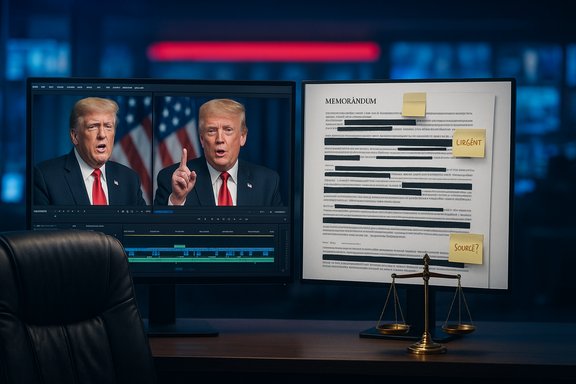 Background / Overview
Panorama’s October 2024 episode, titled Trump: A Second Chance?, examined the former president’s role in the events of January 6. In early November 2025 a 19‑page memo by Michael Prescott — a former external adviser to the BBC’s editorial standards committee — was published in the press and circulated internally. Prescott’s dossier alleges that the programme spliced together separate parts of Trump’s speech to create the impression that he had directly incited violence, omitting contextual language that called for peaceful protest and using footage that misaligned with the timeline of the speech. Those allegations quickly escalated into demands for accountability at the corporation’s highest levels. The immediate result was political and public uproar: senior executives accepted responsibility and resigned; parliamentary scrutiny intensified; and the BBC signalled it would respond publicly and review editorial procedures. The episode is now being treated both as a discrete editorial failure and as a symptom of broader institutional strain within the broadcaster. What happened, step by step
The contested edit
- The clip in question combines two lines from Trump’s January 6 speech that were delivered at different points in the address.
- In the original broadcast record, Trump said at one point: “We’re going to walk down to the Capitol, and we’re going to cheer on our brave senators and congressmen and women.” Later in the speech, near the end, he said: “I’ll be there with you. And we fight. We fight like hell.” Prescott’s memo alleges that Panorama edited these passages together, creating the audio impression that they were contiguous and that Trump was directly urging his supporters to march on the Capitol and fight. Critics say that a nearby line — urging supporters to act “peacefully and patriotically” — was omitted.
The timing and context
- The programme was broadcast in October 2024, days before the US presidential election that year, a scheduling fact that raised immediate concerns about potential political impact.
- Prescott’s memo claims some of the supporting footage used to depict crowds moving toward the Capitol pre‑dated Trump’s remarks, producing a misleading visual tie between his words and the on‑the‑ground activity. That alignment — if established — would materially affect how viewers interpret causation and culpability.
The internal pathway
- According to accounts in the press and internal summaries, Prescott raised his concerns within the BBC during the summer; the memo was later leaked to the press, prompting a public backlash and questions about whether internal complaint channels had been effective. Prescott’s critique extended beyond the one Panorama episode to wider editorial issues, including coverage of the Middle East and internal newsroom culture. Those broader claims have intensified the political reaction.
BBC’s official response and senior resignations
The resignations
Tim Davie, who had been Director‑General since 2020, and Deborah Turness, BBC News CEO since 2022, both issued resignation notices in early November 2025, publicly framing their departures as acts of accountability for editorial lapses that had caused institutional damage. Both executives acknowledged mistakes — while disputing broader claims of institutional bias — and signalled orderly handovers. The BBC chair and board publicly accepted the gravity of the situation and prepared to respond to parliamentary committees.What the BBC has said
The corporation has acknowledged receiving internal feedback and said it takes such concerns seriously. At the time of reporting, the BBC’s leadership had signalled it would make a formal response — including an expected apology from the BBC chair to Parliament — while resisting characterisations that painted the entire newsroom as institutionally biased. Internal statements emphasised openness to scrutiny and a commitment to restore trust.What remains contested
Crucially, whether the edit was an intentional attempt to deceive viewers or a serious editorial error remains officially unresolved. Prescott’s memo alleges “material” misleading, but proving intent requires documentary evidence: time‑stamped editing logs, producer notes, and the editorial approval chain. Regulatory adjudication (Ofcom) or a fully transparent, independent internal review would be needed to determine whether BBC editorial guidelines were breached intentionally or through negligence. Until such findings are published, allegations of deliberate doctoring should be described as allegations, not settled fact.Political and public reactions
Domestic politics
The controversy rapidly entered parliamentary debate. Committee chairs and culture ministers demanded explanations, and a formal response to the House of Commons Culture, Media and Sport Committee was anticipated. The timing is politically sensitive because the BBC’s funding and governance framework — the Royal Charter — is due for review at the end of 2027, prompting fears that editorial failures could be weaponised in charter negotiations.International and presidential response
President Trump publicly celebrated the resignations on his platform and accused the BBC of “doctoring” his speech, framing the scandal as proof of media manipulation and foreign interference in US politics. The White House press apparatus amplified the claim, describing the edit as “fake news.” Those reactions have amplified the story in the US and intensified scrutiny of the BBC’s World Service and international journalism.Media and civil‑society voices
Commentators and press observers split along predictable lines: some argue the episode demonstrates a worrying decline in editorial rigor and transparency at the BBC; others warn against rapid politicised responses that could undermine press freedom or be exploited by partisans to curb independent journalism. Media analysts emphasise the need for fact‑based adjudication rather than partisan score‑settling.Legal, regulatory and governance implications
Ofcom, complaints and possible sanctions
If formal complaints are lodged, Ofcom — the UK broadcasting regulator — could open an investigation into whether the BBC breached broadcasting codes on accuracy and impartiality. Ofcom’s process can result in required corrections, fines or recommendations for changes in governance and procedure, though enforcement is typically procedural and not criminal. The regulator’s eventual findings will carry significant weight in public and parliamentary debates.Royal Charter and funding risk
The BBC’s unique public‑service model — funded by a licence fee and governed by a Royal Charter — depends on public trust. The charter review process (the current charter runs through 31 December 2027) is an obvious policy lever; opponents of the BBC’s current model could use high‑profile editorial failures to argue for funding reform, stricter oversight or changes to the remit of the corporation. Supporters warn that politically motivated curbs on the BBC would imperil journalistic independence.Corporate governance and internal accountability
Beyond regulator action, the BBC board must satisfy stakeholders — Parliament, licence‑fee payers, and staff — that it has robust editorial standards, traceable decision‑making and a credible complaints escalation pathway. The rapid resignations of top executives reflect the board’s calculation that visible leadership change was necessary to stabilise governance optics; the deeper test will be whether the BBC publishes verifiable, time‑coded evidence and an independent audit of editorial controls.Editorial process: where might the failure have occurred?
A credible forensic review will need to inspect a sequence of discrete editorial controls and artifacts. Key items an independent review should examine include:- Time‑coded source footage and original broadcast logs to establish the chronology of cuts.
- Editing project files (non‑destructive timeline histories), which preserve the editorial chain and allow reconstruction of the assembly sequence.
- Producer and editor notes, including the rationale for any montage choices that juxtaposed audio and video.
- The approvals log showing who signed off at each gate (editorial, legal, standards).
- Complaints and internal emails that document internal concerns and how they were treated.
Why this matters beyond a single clip
Trust and the public‑service bargain
The BBC’s licence‑fee model is a social contract: in return for public funding, the broadcaster promises impartiality, rigorous standards and transparent redress mechanisms. High‑profile perceived breaches corrode that contract. The resignations signal that the cost of failing to meet that contract now includes top‑level leadership change.Political leverage and regulatory risk
Editorial errors or the perception of bias provide ammunition to political actors seeking reform. Given the forthcoming charter review, this controversy could materially influence the shape of the BBC’s governance and funding for the next decade. That makes the process of adjudication and remediation both an editorial and a constitutional question.Diplomatic and reputational fallout
For global audiences, the BBC’s standing matters for soft power. Accusations of bias or editorial manipulation can reduce the broadcaster’s credibility abroad, impacting the World Service and its role as a source for international audiences and governments.What good remediation would look like
- Full, independent review: commission a forensic audit by an external panel with expertise in broadcast journalism, media law and digital forensics, and publish an executive summary with time‑coded evidence where permissible.
- Transparent corrections: if errors are confirmed, issue clear, prominent corrections with precise explanation of what went wrong and how viewers were misled.
- Process fixes: strengthen editorial sign‑off and escalation rules, create mandatory independent checkpoints for programmes dealing with legally or politically sensitive archive material, and require traceable approval for montage‑style edits.
- Structural oversight: consider a permanent, independent editorial standards office with the authority to compel remedial action and report publicly on outcomes.
- Staff protections: set up protected channels for advisers and staff to escalate standards concerns without fear of retaliation.
Strengths, weaknesses and risks — a critical appraisal
Strengths in the BBC’s position
- Scale and resources: the BBC has unmatched archival holdings and production capacity to investigate and correct mistakes if it chooses to do so transparently.
- Existing frameworks: the corporation already has editorial guidelines and complaints processes that can be strengthened rather than reinvented.
Notable weaknesses exposed
- Procedural opacity: leaked memos and internal dissent suggest editorial concerns were not always resolved through formal channels.
- Cultural strain: several controversies over the last year (across different programmes and services) point to systemic stress in newsroom culture and oversight.
Key risks moving forward
- Politicised reform: the proximity of the charter review creates a strong incentive for political actors to convert editorial missteps into structural attacks on the BBC’s independence.
- Trust erosion: repeated high‑profile errors may reduce licence‑fee compliance and public confidence, which are harder to rebuild than to lose.
- International consequence: if World Service audiences question impartiality, the UK’s soft‑power reach in key regions could shrink.
What we still don’t know — and why that matters
- Definitive proof of intent: Prescott’s memo is compelling in its detail, but it does not by itself prove that the edit was made to deceive; intent requires documentary artifacts showing editorial choices and approvals.
- Full editorial logs: until the BBC publishes time‑coded materials or an independent review releases its findings, reconstructions in the press remain incomplete.
- The scope of systemic problems: Prescott’s dossier touches on other areas (World Service, internal desk decisions). Those broader claims require separate verification to determine whether this incident reflects isolated failure or institutional culture. These uncertainties mean that definitive judgments should await a transparent adjudication process.
Practical takeaways for readers and media consumers
- Treat explosive allegations with a two‑stage approach: accept the seriousness of the claim, but distinguish verified facts (executives resigned; a memo alleges misleading edits) from unresolved inferences (deliberate doctoring).
- Demand transparency: public broadcasters that are publicly funded must provide time‑coded evidence and independent audits when editorial integrity is challenged.
- Recognise the structural stakes: this is not merely about one documentary; it is about governance, regulation and the long‑term compact between the BBC and the public.
Conclusion
The Panorama editing controversy — and the subsequent resignations of Tim Davie and Deborah Turness — has forced a reckoning over editorial standards at one of the world’s most influential public broadcasters. The facts established so far are clear: a leaked memo alleged that a Panorama episode spliced separate parts of Donald Trump’s January 6 speech in a way that misrepresented context, and senior BBC leaders resigned amid the fallout. What remains to be established through transparent, independent review is whether the edit was a negligent mistake or a deliberate misrepresentation, how internal escalation processes performed, and what structural reforms are required to prevent recurrence. The stakes are institutional and political: the BBC’s credibility underpins its funding model and international influence. Restoring trust will require more than personnel changes — it demands rigorous, verifiable evidence, meaningful procedural reform and an editorial culture that privileges transparency and accountability over defensive rhetoric. Until that work is visible, the corporation’s critics will press for deeper reforms, and supporters will press for due process; what must not happen is that serious editorial failures are resolved through rhetoric alone rather than through demonstrable, evidence‑based correction.Source: Storyboard18 Explained: The Trump–BBC Panorama controversy that triggered top-level resignations
