

Linux hosting is having a moment in 2026 because the old trade-off has finally become impossible to ignore: you can buy cheap hosting, or you can buy real control, but too many providers still make you sacrifice one for the other. The best services now blur that line with NVMe storage, LiteSpeed or NGINX stacks, SSH, Git, staging, and practical upgrade paths to VPS plans that do not punish you for growing. Website Planet’s latest Linux-hosting roundup reflects that shift clearly, with Hostinger, IONOS, and Kamatera leading a field that increasingly rewards developers who care about performance as much as price.
Linux hosting has always been the default choice for PHP-driven websites, WordPress builds, and most open-source web stacks. What changed over the last few years is that Linux hosting stopped being a generic commodity and started splitting into two very different markets: simplified shared hosting for beginners, and developer-friendly infrastructure for people who actually want Linux to behave like Linux. That distinction matters because a platform can claim “SSH access” while still hiding the useful parts behind tier gates, paid add-ons, or VPS-only upgrades.
Website Planet’s 2026 ranking frames the issue well: the real question is no longer whether a host runs Linux, but whether it gives you the tools to use it properly. Their review emphasizes speed, uptime, pricing transparency, developer features, and security, while also warning that many hosts look affordable until you notice the missing pieces, like staging, Git, or root access. That is a crucial lens, because Linux buyers are usually not just shopping for disk space; they are shopping for a workflow.
The top of the list also reveals a broader market truth. Hostinger wins on value and ease of use, IONOS stands out for resilience and a tidy upgrade path, and Kamatera is the purest expression of “pay only for what you use.” Those three models represent three different customer personas: the first-time site owner, the budget-conscious business with continuity needs, and the developer or startup that wants total control from day one.
That mix is not accidental. In 2026, Linux hosting buyers are more informed than they used to be, and they are comparing not just monthly rates but the operational cost of using the platform. A bargain plan that blocks Git, hides backups, or forces an expensive jump to get root access is no longer a bargain in practice. The market’s best hosts now compete on how little friction they create after signup.
What makes Linux hosting especially attractive is the balance between flexibility and cost. Shared Linux hosting can be extremely affordable, while VPS-based Linux environments offer root access, distro choice, and the freedom to install whatever your stack requires. That progression matters because many buyers start with a low-cost shared plan and later discover they need Redis, Node.js, custom cron logic, or package-level control that shared plans cannot provide.
The rise of faster server stacks has also shifted expectations. LiteSpeed, NGINX, HTTP/3, Brotli, OPcache, and dynamic caching are no longer elite extras reserved for premium customers. When a host advertises performance in 2026, buyers increasingly expect the stack to do real work before the first plugin or optimization tool is even installed.
The site’s methodology also reflects a more mature understanding of hosting value. It is not enough for a provider to say it has SSD storage or a 99.9% uptime promise. Users need to know whether backups are automatic, whether restore points are accessible without a support ticket, and whether the advertised SSH access is truly useful or merely decorative.
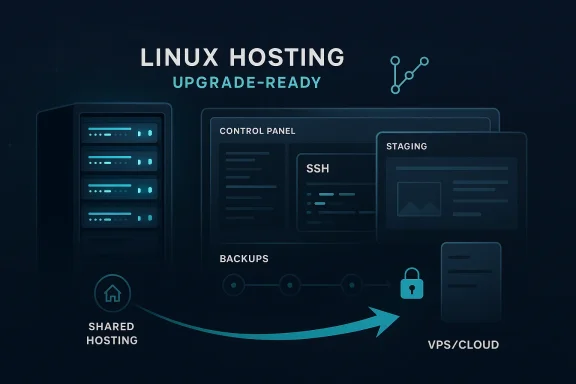
Security and scalability also deserve equal billing. Linux is naturally robust, but shared environments still need malware scanning, firewalls, account isolation, backup discipline, and DDoS mitigation. Meanwhile, the upgrade path to VPS or cloud should be simple enough that growth does not force a platform migration.
The key advantage is not simply low pricing. It is the way Hostinger stacks useful capabilities into a clean interface, so a user can move from launch to maintenance without needing to become a server admin overnight. Its shared Linux plans include SSH and WP-CLI, which means you can manage code, run Composer tasks, or update WordPress from the terminal rather than depending entirely on the GUI.
There are trade-offs, of course. Website Planet notes that shared plans do not support Redis or Node.js, and the managed cloud tier also excludes Node.js. That limits Hostinger’s usefulness for some modern JavaScript-heavy or caching-intensive applications, but it does not diminish its value for the far larger universe of PHP sites and content-driven projects.
Its shared Linux hosting is modest in the entry tier, but the jump to the next plan is dramatic enough to matter. More storage, more sites, and a cheaper path to scale reduce the usual “gotcha” feeling that many hosts create when they force serious buyers into a VPS too early. The VPS line goes further with NVMe storage, full root access, and distro choice across AlmaLinux, Debian, Rocky, and Ubuntu.
IONOS also deserves credit for supporting secure file transfer broadly. Its official materials state that secure FTP access is included across hosting plans, and the VPS ecosystem is designed to support Linux users who need console access and administrative flexibility. That is important because secure transfer and command-line access are often the difference between “I can use this” and “I can really use this.”
The attraction is flexibility, but flexibility comes with responsibility. Kamatera is self-managed by default, which means you are signing up for a platform that expects you to understand updates, security, and basic server operations. For teams that already have that expertise, this is a feature; for everyone else, it is a warning label.
Kamatera’s hardware and geographic spread also matter. Official materials describe scalable cloud servers on modern processors with global data centers, and the company positions its platform around unmanaged and managed cloud offerings, plus firewalls and other infrastructure services. That breadth turns Kamatera into more than a VPS vendor; it becomes a toolkit for building a custom Linux environment.
The developer story is equally strong. SiteGround provides SSH and SFTP on all plans, while higher tiers add staging and Git. That is the kind of tiering that makes sense: basic users get secure access and a tuned stack, while more advanced users can opt into the deployment workflow they need without moving to a completely different product.
There is a trade-off in storage size, which Website Planet notes as relatively small on the lower plans. Still, the combination of daily backups, restore points, caching, and Google Cloud infrastructure makes the storage limitation easier to tolerate than it would be on a less capable host. In other words, SiteGround charges more, but it also does more of the hard work behind the scenes.
The platform also offers NVMe storage, SSH on shared plans, Git through cPanel, and staging via Softaculous. That makes it appealing to users who want decent developer tooling without stepping into a VPS too quickly. The per-directory PHP controls are especially useful because they let you test newer versions with less risk to production.
Its backup story is also better than average. Website Planet notes offsite daily backups with more restore points at higher tiers, which is valuable because backup quality is often the difference between a minor mistake and a real outage. For many site owners, that operational safety net is worth more than a small discount.
The VPS side is where InterServer becomes more interesting for serious users. Its official material shows Linux VPS options with root access and a range of operating systems, including popular Linux distributions. For people who eventually outgrow shared hosting, that makes the brand feel less like a dead end and more like a long-term home.
The inclusion of SSH access, support for popular languages, and in-house security tools like InterShield helps round out the offering. For certain workloads, that may be all the host needs to do. The appeal is not novelty; it is predictability.
InMotion Hosting is the long-odds safety play, especially for anyone who wants an unusually generous trial period. Its 90-day money-back guarantee on shared and WordPress plans gives buyers more room to test real workloads before committing. Add NVMe SSDs, SSH, Git, and WP-CLI, and you get a competent Linux host with a very consumer-friendly risk profile.
The larger lesson is that Linux hosting has matured into a feature-market, not a spec-market. Every strong provider now claims speed, but the differentiator is whether those claims map to tools a user can actually exploit. That is why backup policy, control-panel quality, and staging support matter so much in a review like this.
We should also expect more differentiation around migration paths. Shared hosting is still the entry point for many users, but the real loyalty question is whether the same provider can support the site as it grows into more demanding workloads. Hosts that can bridge that transition cleanly will have a major advantage in the years ahead.
Source: Website Planet 8 Best Linux Hosting Services: Fast & Secure in 2026
 Overview
Linux hosting has always been the default choice for PHP-driven websites, WordPress builds, and most open-source web stacks. What changed over the last few years is that Linux hosting stopped being a generic commodity and started splitting into two very different markets: simplified shared hosting for beginners, and developer-friendly infrastructure for people who actually want Linux to behave like Linux. That distinction matters because a platform can claim “SSH access” while still hiding the useful parts behind tier gates, paid add-ons, or VPS-only upgrades.Website Planet’s 2026 ranking frames the issue well: the real question is no longer whether a host runs Linux, but whether it gives you the tools to use it properly. Their review emphasizes speed, uptime, pricing transparency, developer features, and security, while also warning that many hosts look affordable until you notice the missing pieces, like staging, Git, or root access. That is a crucial lens, because Linux buyers are usually not just shopping for disk space; they are shopping for a workflow.
The top of the list also reveals a broader market truth. Hostinger wins on value and ease of use, IONOS stands out for resilience and a tidy upgrade path, and Kamatera is the purest expression of “pay only for what you use.” Those three models represent three different customer personas: the first-time site owner, the budget-conscious business with continuity needs, and the developer or startup that wants total control from day one.
That mix is not accidental. In 2026, Linux hosting buyers are more informed than they used to be, and they are comparing not just monthly rates but the operational cost of using the platform. A bargain plan that blocks Git, hides backups, or forces an expensive jump to get root access is no longer a bargain in practice. The market’s best hosts now compete on how little friction they create after signup.
Why Linux Hosting Still Matters
Linux remains the backbone of the modern web because it pairs naturally with the stack most sites still depend on: PHP, MySQL or MariaDB, Apache, NGINX, and increasingly LiteSpeed. That makes it the default environment for WordPress, Drupal, Joomla, and a huge number of custom PHP applications. For many users, Linux is not a niche choice; it is simply the most sensible one.What makes Linux hosting especially attractive is the balance between flexibility and cost. Shared Linux hosting can be extremely affordable, while VPS-based Linux environments offer root access, distro choice, and the freedom to install whatever your stack requires. That progression matters because many buyers start with a low-cost shared plan and later discover they need Redis, Node.js, custom cron logic, or package-level control that shared plans cannot provide.
The practical appeal
The strongest Linux hosts now acknowledge that users want more than a web panel and a file manager. They want SSH, WP-CLI, Git, staging environments, and sensible PHP version control. Those are not luxury features anymore; they are the difference between a hosting plan that helps your workflow and one that slows it down.The rise of faster server stacks has also shifted expectations. LiteSpeed, NGINX, HTTP/3, Brotli, OPcache, and dynamic caching are no longer elite extras reserved for premium customers. When a host advertises performance in 2026, buyers increasingly expect the stack to do real work before the first plugin or optimization tool is even installed.
- Linux is still the natural fit for PHP and open-source CMS platforms.
- Shared hosting remains useful, but only if it includes modern developer tools.
- VPS plans matter because they restore actual control.
- Better caching and faster storage now separate contenders from also-rans.
- The best hosts reduce friction instead of monetizing every useful feature.
How Website Planet Judged the Field
Website Planet says it tested dozens of Linux hosts by launching live sites and measuring real-world speed, uptime consistency, support quality, backup options, and the practical availability of dev tools at each tier. That is the right model, because hosting marketing pages often overstate what a plan really includes. A hosting company can promise “developer-friendly” service while quietly reserving the good stuff for the most expensive tier.The site’s methodology also reflects a more mature understanding of hosting value. It is not enough for a provider to say it has SSD storage or a 99.9% uptime promise. Users need to know whether backups are automatic, whether restore points are accessible without a support ticket, and whether the advertised SSH access is truly useful or merely decorative.
What actually matters
The strongest evaluation criteria are the ones that affect daily operation. If a host is fast, but only after you buy add-ons, that speed is not really value. If a host offers SSH, but no Git, no staging, and no way to safely test PHP upgrades, it is not truly developer-friendly. The best providers make these tools feel native rather than bolted on.Security and scalability also deserve equal billing. Linux is naturally robust, but shared environments still need malware scanning, firewalls, account isolation, backup discipline, and DDoS mitigation. Meanwhile, the upgrade path to VPS or cloud should be simple enough that growth does not force a platform migration.
- Real-world speed beats brochure claims.
- Uptime matters most when a host proves consistency over time.
- Backups are only useful if restores are simple.
- Dev tools should be available early, not only after you spend more.
- Upgrade paths should extend the same Linux logic, not break it.
Hostinger: Best Blend of Speed and Value
Hostinger earns the top spot because it turns Linux hosting into a very accessible package without stripping away the tools that matter. Website Planet highlights LiteSpeed servers, NVMe storage, global data centers, free unlimited migrations, Git integration in hPanel, and WordPress staging on the Business plan. That combination is unusually strong for a host aimed at beginners and budget-conscious users.The key advantage is not simply low pricing. It is the way Hostinger stacks useful capabilities into a clean interface, so a user can move from launch to maintenance without needing to become a server admin overnight. Its shared Linux plans include SSH and WP-CLI, which means you can manage code, run Composer tasks, or update WordPress from the terminal rather than depending entirely on the GUI.
Why it works for most buyers
Hostinger’s appeal comes from its pragmatic completeness. It gives you enough performance to avoid feeling compromised, enough tooling to feel like you own the stack, and enough pricing leverage to make multi-year commitments attractive. For many small businesses, that is exactly the sweet spot.There are trade-offs, of course. Website Planet notes that shared plans do not support Redis or Node.js, and the managed cloud tier also excludes Node.js. That limits Hostinger’s usefulness for some modern JavaScript-heavy or caching-intensive applications, but it does not diminish its value for the far larger universe of PHP sites and content-driven projects.
- LiteSpeed + NVMe is the right headline pairing for speed.
- Git in hPanel makes deployment workflows easier for non-experts.
- SSH and WP-CLI keep advanced users productive.
- Free migrations lower switching friction.
- Node.js and Redis limits matter, but mostly for specialized workloads.
IONOS: Resilience and a Clean Upgrade Path
IONOS stands out because it treats stability as a product feature rather than a footnote. Website Planet points to geo-redundant servers that mirror the site across two data centers, plus SSH, SFTP, and WP-CLI on all shared tiers. That is a compelling proposition for businesses that care about uptime and operational continuity, not just raw page speed.Its shared Linux hosting is modest in the entry tier, but the jump to the next plan is dramatic enough to matter. More storage, more sites, and a cheaper path to scale reduce the usual “gotcha” feeling that many hosts create when they force serious buyers into a VPS too early. The VPS line goes further with NVMe storage, full root access, and distro choice across AlmaLinux, Debian, Rocky, and Ubuntu.
Why resilience matters
For small companies, a host that mirrors infrastructure across data centers can be more valuable than one that simply advertises a lower introductory price. A shop, agency, or service business is not just buying compute; it is buying operational confidence. IONOS leans into that fact with backup, snapshot, and firewall options that make the platform feel mature rather than promotional.IONOS also deserves credit for supporting secure file transfer broadly. Its official materials state that secure FTP access is included across hosting plans, and the VPS ecosystem is designed to support Linux users who need console access and administrative flexibility. That is important because secure transfer and command-line access are often the difference between “I can use this” and “I can really use this.”
- Geo-redundancy reduces the pain of infrastructure failure.
- SSH, SFTP, and WP-CLI are available without premium gatekeeping.
- Root access arrives when you upgrade, not after a maze of add-ons.
- Distro choice is a real advantage for admins with preferences.
- The entry plan is small, but the scaling story is strong.
Kamatera: Full Control from Day One
Kamatera is the most serious option in the lineup for users who want Linux to behave like a real cloud platform. Website Planet emphasizes per-second billing, a broad Linux distro library, NVMe SAN storage, and the ability to launch and shut down servers for exactly the time you need them. That model is especially attractive for testing, CI, burst workloads, and temporary production environments.The attraction is flexibility, but flexibility comes with responsibility. Kamatera is self-managed by default, which means you are signing up for a platform that expects you to understand updates, security, and basic server operations. For teams that already have that expertise, this is a feature; for everyone else, it is a warning label.
Billing and architecture
The billing model is the headline here because it changes how you think about Linux infrastructure. Hourly or per-second pricing makes experimentation cheaper and encourages a more cloud-native approach to deployment. That can be excellent for startups, agencies, and developers who do not want idle compute sitting around between tasks.Kamatera’s hardware and geographic spread also matter. Official materials describe scalable cloud servers on modern processors with global data centers, and the company positions its platform around unmanaged and managed cloud offerings, plus firewalls and other infrastructure services. That breadth turns Kamatera into more than a VPS vendor; it becomes a toolkit for building a custom Linux environment.
- Per-second billing is ideal for temporary workloads.
- Full root control makes advanced deployment possible.
- Wide distro choice is a genuine differentiator.
- Managed add-ons soften the learning curve.
- Operational discipline is required if you choose Kamatera.
SiteGround: Premium Speed with Developer Polish
SiteGround remains one of the most polished Linux hosting platforms because it combines speed, stability, and user experience better than most competitors. Its official technology pages say the company runs on Google Cloud, uses NGINX Direct Delivery, supports dynamic caching, and offers Ultrafast PHP to reduce response times. Website Planet’s review places it just behind the value leaders, but the underlying platform is arguably one of the most sophisticated in the field.The developer story is equally strong. SiteGround provides SSH and SFTP on all plans, while higher tiers add staging and Git. That is the kind of tiering that makes sense: basic users get secure access and a tuned stack, while more advanced users can opt into the deployment workflow they need without moving to a completely different product.
Why premium can still be practical
SiteGround’s strength is that it hides complexity without eliminating capability. The company has long invested in cache layers, security rules, and managed WordPress tooling, and those investments show up in the user experience. That matters because many Linux buyers do not want raw control for its own sake; they want a system that performs well and stays manageable.There is a trade-off in storage size, which Website Planet notes as relatively small on the lower plans. Still, the combination of daily backups, restore points, caching, and Google Cloud infrastructure makes the storage limitation easier to tolerate than it would be on a less capable host. In other words, SiteGround charges more, but it also does more of the hard work behind the scenes.
- Google Cloud underpins the premium feel.
- Ultrafast PHP and caching help real workloads.
- SSH and SFTP are available across the board.
- Git and staging appear where they are most useful.
- Limited storage is the main practical compromise.
HostArmada: Consistency Through Lower Density
HostArmada’s pitch is straightforward: keep fewer clients on each server and give everyone a steadier slice of CPU and RAM. Website Planet says that strategy results in more consistent Linux performance, especially when neighboring sites are busy. That is not a flashy slogan, but it is exactly the sort of engineering choice that can make a host feel better day to day.The platform also offers NVMe storage, SSH on shared plans, Git through cPanel, and staging via Softaculous. That makes it appealing to users who want decent developer tooling without stepping into a VPS too quickly. The per-directory PHP controls are especially useful because they let you test newer versions with less risk to production.
Performance versus feature depth
HostArmada’s plan design shows an interesting compromise. Lower tiers use NGINX with server-level caching for static files, while the top Speed Reaper plan adds LiteSpeed and LSCache for both static and dynamic content. That gives buyers a concrete upgrade incentive instead of a vague promise that “more expensive means better.”Its backup story is also better than average. Website Planet notes offsite daily backups with more restore points at higher tiers, which is valuable because backup quality is often the difference between a minor mistake and a real outage. For many site owners, that operational safety net is worth more than a small discount.
- Lower server density can improve stability.
- NVMe + SSH + Git covers the essentials.
- Staging is available without forcing a VPS move.
- Higher tiers add real performance upside.
- LiteSpeed is not universal across the lineup.
InterServer: Unlimited Storage with a Practical Caveat
InterServer’s biggest draw is easy to understand: unlimited storage and unlimited bandwidth on its shared Linux plans, plus support for unlimited sites under fair-use conditions. That makes it attractive for storage-heavy projects, growing content sites, and users who hate resource anxiety. Website Planet also notes that the environment uses CloudLinux, LiteSpeed, and cPanel, which keeps the stack familiar.The VPS side is where InterServer becomes more interesting for serious users. Its official material shows Linux VPS options with root access and a range of operating systems, including popular Linux distributions. For people who eventually outgrow shared hosting, that makes the brand feel less like a dead end and more like a long-term home.
The limits of “unlimited”
The caveat, of course, is that unlimited hosting is never truly unlimited. Fair-use policies still apply, and the US-only data center footprint can become a problem for audiences far from North America. That does not make InterServer weak; it simply means the host is best for buyers who value storage generosity more than global geographic spread.The inclusion of SSH access, support for popular languages, and in-house security tools like InterShield helps round out the offering. For certain workloads, that may be all the host needs to do. The appeal is not novelty; it is predictability.
- Unlimited storage is excellent for heavy content libraries.
- VPS root access preserves upgrade flexibility.
- LiteSpeed and CloudLinux keep the stack modern.
- US-only locations may raise latency concerns.
- Unlimited still means fair use, not magical infinity.
Other Notable Linux Hosts
GreenGeeks remains worth attention because of its container-based isolation and security model. Website Planet highlights its Secure vFS layer, dedicated resources, malware monitoring, firewall protection, and a Linux stack that includes LiteSpeed, LSCache, HTTP/3, Git, WP-CLI, and Drush. That is a strong mix for developers who want a cleaner multi-tenant experience.InMotion Hosting is the long-odds safety play, especially for anyone who wants an unusually generous trial period. Its 90-day money-back guarantee on shared and WordPress plans gives buyers more room to test real workloads before committing. Add NVMe SSDs, SSH, Git, and WP-CLI, and you get a competent Linux host with a very consumer-friendly risk profile.
Why these hosts still matter
GreenGeeks and InMotion are not the headline-grabbers in the same way Hostinger or Kamatera are, but they fill useful niches. GreenGeeks is appealing if security and developer utility matter in equal measure, while InMotion makes sense if you want more time to validate a decision. In hosting, that extra testing window can be more valuable than a marginal discount.The larger lesson is that Linux hosting has matured into a feature-market, not a spec-market. Every strong provider now claims speed, but the differentiator is whether those claims map to tools a user can actually exploit. That is why backup policy, control-panel quality, and staging support matter so much in a review like this.
- GreenGeeks is strong on isolation and security.
- InMotion stands out for its generous refund window.
- Both appeal to users who want a balanced, less flashy host.
- Niche strengths often matter more than marketing slogans.
Strengths and Opportunities
The strongest Linux hosting providers in 2026 share a common strategic advantage: they remove friction at the exact points where users usually feel trapped. They offer performance without making it impossible to grow, and they give developers real tools without forcing everyone into a server admin role. That combination creates both consumer value and long-term retention.- Hostinger offers outstanding value for beginners who still want real tools.
- IONOS gives users a resilient path from shared hosting to VPS.
- Kamatera delivers genuine cloud flexibility with granular billing.
- SiteGround balances premium speed with strong workflow polish.
- HostArmada gains stability by reducing server crowding.
- InterServer is attractive for storage-heavy projects and long-term hosting density.
- GreenGeeks and InMotion expand the field with security and trial-length advantages.
Risks and Concerns
The biggest risk in Linux hosting is not that a host will be slow on day one; it is that the platform will become expensive or restrictive exactly when the site starts to matter. Many providers still use tiering to hide features like staging, Git, backups, or root access, and that can turn a cheap plan into a surprisingly costly operational decision.- Renewal pricing can erase the value of an attractive intro offer.
- Feature gating makes some “developer-friendly” plans less useful than they look.
- Managed versus unmanaged hosting is often misunderstood by buyers.
- Backup limitations can create recovery risk during updates or migrations.
- US-only footprints can hurt global performance for some audiences.
- Unlimited resources may still be constrained by fair-use rules.
- Node.js, Redis, or custom stack support may be absent from shared plans.
Looking Ahead
The next phase of Linux hosting will likely be defined by how well providers package control. Buyers still want simplicity, but they no longer accept a simplified experience that removes the very tools Linux is supposed to provide. That means the winners will be the hosts that combine automation with genuine developer access, rather than replacing one with the other.We should also expect more differentiation around migration paths. Shared hosting is still the entry point for many users, but the real loyalty question is whether the same provider can support the site as it grows into more demanding workloads. Hosts that can bridge that transition cleanly will have a major advantage in the years ahead.
- NVMe storage will remain a baseline expectation.
- Staging and Git will keep moving downward into cheaper tiers.
- Per-second or hourly billing will become more common in cloud Linux.
- Security automation will matter more as sites become more connected.
- Root access and distro choice will remain key differentiators for VPS buyers.
Source: Website Planet 8 Best Linux Hosting Services: Fast & Secure in 2026
