

Bloom Consulting Services’ newly announced Azure DevOps Services package is less a product launch than a signal about where the managed-services market is heading. The company is positioning itself around faster delivery, better collaboration, and scalable digital innovation, which fits squarely into the broader shift Microsoft has been promoting across Azure DevOps, Azure Pipelines, and DevSecOps. The announcement lands at a time when enterprises are increasingly looking for partners that can do more than “move code faster” — they want governed automation, integrated security, and cloud operating models that can survive scale. Microsoft’s own materials make clear that Azure DevOps is about more than release speed; it is about stable, cooperative software delivery and a full platform for modern engineering teams. (learn.microsoft.com)
Bloom’s pitch reflects a familiar but still powerful truth: most organizations do not struggle with a lack of tools, they struggle with too many disconnected workflows. DevOps succeeds when planning, coding, building, testing, securing, and releasing all behave like parts of one system rather than separate kingdoms. Microsoft’s documentation describes Azure DevOps as a cloud-based platform with integrated tools for software teams, and Azure Pipelines as a way to build, test, and deploy with strong security and compliance hooks. That is the ecosystem Bloom is trying to sell into. (learn.microsoft.com)
The company’s announcement is also timed to a market reality that has only sharpened since the pandemic-era cloud rush. Organizations have discovered that cloud migration alone does not produce agility. Real gains come when teams standardize delivery, reduce manual intervention, and embed compliance into the pipeline rather than bolting it on after the fact. Microsoft’s own DevSecOps guidance emphasizes identity control, secret scanning, policy enforcement, monitoring, and release-integrated security, which is exactly the kind of operating model Bloom is implicitly promising. (azure.microsoft.com)
There is also a partner-economy angle here. Microsoft increasingly steers customers toward certified partners, Expert MSPs, and validated service providers for complex Azure work. That matters because a services firm does not need to invent a new platform to be relevant; it needs to demonstrate that it can turn Microsoft’s platform into repeatable business outcomes. Microsoft explicitly says Azure Expert MSPs are audited on people, processes, technology, and delivery, and that partners with advanced specializations signal proven capability. Bloom’s launch appears designed to place it inside that trust framework. (azure.microsoft.com)
At the same time, the announcement reads like a broad market-positioning statement rather than a narrowly defined technical release. The phrase advanced Azure DevOps Services could mean anything from CI/CD design and release engineering to security hardening, governance, and managed operations. That ambiguity is not necessarily a weakness; it is often how consulting firms create room for enterprise conversations. But it does mean buyers will want specifics, not slogans. “Scalable digital innovation” is appealing, yet the real question is whether Bloom can prove repeatable outcomes at production scale. (learn.microsoft.com)
The market often treats GitHub as the center of Microsoft’s developer universe, but Azure DevOps still occupies a distinct and practical place. It is particularly attractive where enterprises want integrated boards, repos, pipelines, and permissions within one managed platform. Microsoft’s Azure DevOps product pages continue to highlight measurable business outcomes, including release acceleration, lower infrastructure needs, and productivity gains, which suggests the platform is still strategically important in Redmond’s broader cloud story. (azure.microsoft.com)
The challenge is that many buyers assume DevOps is just a matter of installing automation. In practice, the hard part is governance. Who can approve releases? How are secrets stored? Which checks must pass before deployment? Azure Pipelines and Azure DevSecOps guidance show that these are not side issues; they are the core design decisions that determine whether DevOps becomes a speed boost or a compliance headache. (azure.microsoft.com)
Bloom’s opportunity is to translate those control-plane questions into a service model that is understandable to executives. If it can do that, it can stand out from firms that only sell technical execution. If it cannot, it risks being perceived as another generic Azure implementer in a crowded market. Clarity, not just capability, will decide how much traction this launch gets. (azure.microsoft.com)
This matters because many enterprises want a partner that can own operational maturity, not just initial setup. A managed-services model is useful when internal teams are overextended, when release reliability is inconsistent, or when compliance requirements keep changing. Microsoft’s partner guidance reinforces the idea that trusted Azure partners should be able to design, build, manage, and continually optimize complex environments at scale. (azure.microsoft.com)
It is also a way to smooth out the staffing problem. Many organizations can hire developers faster than they can hire seasoned DevOps engineers or security-focused platform specialists. A services partner can compress that gap, provided it is not simply repackaging commodity labor. The credibility test is whether Bloom can bring repeatable methods and measurable outcomes, not just headcount. (azure.microsoft.com)
This is where the announcement’s language about “strategic planning” and “continuous optimization” becomes important. If Bloom means those phrases seriously, it is signaling a lifecycle mindset: assessment, architecture, implementation, tuning, and long-term operations. That is a stronger story than “we install pipelines,” and it aligns well with how Microsoft wants the ecosystem to operate. (azure.microsoft.com)
That has major implications for consulting firms. Buyers increasingly expect partners to understand Microsoft Entra ID, RBAC, Azure Key Vault, and secret-scanning workflows alongside build automation. They also expect those controls to be woven into release pipelines rather than treated as separate security tasks. A partner that can explain these connections in business terms has a real advantage. (azure.microsoft.com)
Enterprises are no longer impressed by speed alone. If anything, faster delivery without tighter controls is now a red flag. The best Azure DevOps programs are the ones that make compliance less painful by embedding it into normal engineering work. That is why the security angle is not a footnote — it is the product. (azure.microsoft.com)
For Bloom, this creates both opportunity and exposure. Opportunity, because many organizations need help operationalizing these controls. Exposure, because once security is part of the promise, buyers will expect evidence, not aspiration. Security claims are easy to write and hard to prove. (azure.microsoft.com)
Enterprise buyers will likely care about three things: integration, governance, and continuity. Integration means the platform has to work with existing identity systems, repositories, cloud environments, and monitoring tools. Governance means approvals, audit trails, and access boundaries have to be explicit. Continuity means the system must keep running after the initial implementation team is gone. (azure.microsoft.com)
Large enterprises also tend to have hybrid realities. They may be modernizing some workloads while still supporting older apps, regulated systems, or complex approval chains. That is where managed DevOps services can be especially useful, because the objective is not a perfect greenfield state — it is a workable, secure, scalable operating model. Pragmatism is the hidden requirement in enterprise transformation. (azure.microsoft.com)
If Bloom can speak fluently to enterprise constraints, it can compete in a serious way. If it focuses only on buzzwords like automation and acceleration, it may struggle to differentiate itself. Enterprises buy confidence, not slogans. (azure.microsoft.com)
For these buyers, the biggest attraction is simplification. They need faster shipping, fewer deployment errors, and less time lost to manual coordination. Azure DevOps is attractive because it offers a structured path to that outcome, while a consulting partner can reduce the intimidation factor around setup and process design. (learn.microsoft.com)
They will also be less tolerant of complexity in the service model itself. If the engagement requires too much governance overhead, too many workshops, or too much specialist jargon, smaller companies may tune out. The best SMB services feel simple even when the underlying system is not. (learn.microsoft.com)
The upside is that SMBs can move quickly when they see value. A service that reduces deployment anxiety and creates a more predictable release rhythm can become sticky very fast. That creates a nice fit for a managed-services provider that wants recurring revenue without the long procurement cycles of the enterprise market. (azure.microsoft.com)
That ecosystem matters because it gives consulting firms a ready-made credibility ladder. The more closely a provider aligns with Microsoft’s terminology, services, and operational expectations, the easier it becomes to sell into organizations already invested in Azure. Bloom is therefore not just selling a service; it is trying to claim a place in a partner ecosystem that rewards proven execution. (azure.microsoft.com)
There is also a subtle market dynamic here: Microsoft’s own product pages increasingly tell the story of Azure as a complete delivery platform with built-in security, compliance, and measurable gains. That can compress the space available to generalist consultants. To win, firms like Bloom need to demonstrate sector expertise, implementation discipline, or unique operating models that Microsoft itself does not provide. (azure.microsoft.com)
Still, the ecosystem remains fertile. Enterprises do not want to stitch together every piece themselves, and many prefer a partner that can speak both Microsoft and business. If Bloom can do that credibly, the launch could be more than a local announcement — it could be a meaningful entry point into a broader services market. (azure.microsoft.com)
The competitive bar is getting higher because Microsoft itself is making the platform story richer. Azure Pipelines, DevSecOps services, and partner validations all reduce the perceived risk of adoption. That is great for the ecosystem, but it means the consulting layer has to justify its fees with domain expertise, speed, and measurable outcomes. (azure.microsoft.com)
Another possible differentiator is packaged service design. If Bloom turns abstract consulting into clear service tiers — assessment, implementation, managed operations, optimization — it can make procurement easier and outcomes easier to explain. That is especially important in environments where IT leaders must justify every dollar of transformation spend. Packaging is strategy in consulting. (azure.microsoft.com)
The downside is that if the firm stays too broad, it risks being lost in the noise. Generic Azure services are plentiful. Specific, outcome-led services are not. That distinction will likely decide how this launch performs in the market. (azure.microsoft.com)
The next phase will likely hinge on proof points: named customers, use cases, delivery benchmarks, and perhaps specialized offerings around managed pipelines, compliance automation, or legacy modernization. If Bloom can show that it does more than configure Azure DevOps — that it actually changes how teams ship software — then the launch becomes strategically meaningful. If not, it remains a standard consulting announcement in a very busy market. (learn.microsoft.com)
Source: openPR.com Bloom Consulting Services Launches Advanced Azure DevOps Services for Scalable Digital Innovation
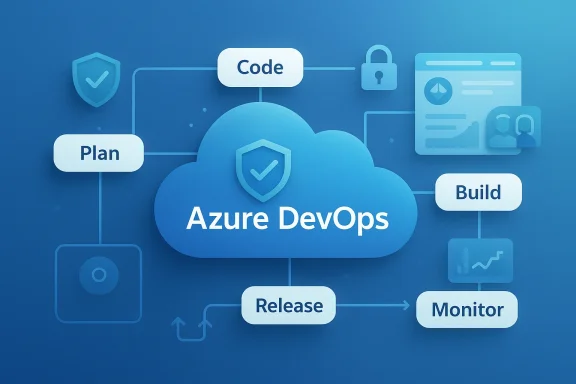 Overview
Bloom’s pitch reflects a familiar but still powerful truth: most organizations do not struggle with a lack of tools, they struggle with too many disconnected workflows. DevOps succeeds when planning, coding, building, testing, securing, and releasing all behave like parts of one system rather than separate kingdoms. Microsoft’s documentation describes Azure DevOps as a cloud-based platform with integrated tools for software teams, and Azure Pipelines as a way to build, test, and deploy with strong security and compliance hooks. That is the ecosystem Bloom is trying to sell into. (learn.microsoft.com)The company’s announcement is also timed to a market reality that has only sharpened since the pandemic-era cloud rush. Organizations have discovered that cloud migration alone does not produce agility. Real gains come when teams standardize delivery, reduce manual intervention, and embed compliance into the pipeline rather than bolting it on after the fact. Microsoft’s own DevSecOps guidance emphasizes identity control, secret scanning, policy enforcement, monitoring, and release-integrated security, which is exactly the kind of operating model Bloom is implicitly promising. (azure.microsoft.com)
There is also a partner-economy angle here. Microsoft increasingly steers customers toward certified partners, Expert MSPs, and validated service providers for complex Azure work. That matters because a services firm does not need to invent a new platform to be relevant; it needs to demonstrate that it can turn Microsoft’s platform into repeatable business outcomes. Microsoft explicitly says Azure Expert MSPs are audited on people, processes, technology, and delivery, and that partners with advanced specializations signal proven capability. Bloom’s launch appears designed to place it inside that trust framework. (azure.microsoft.com)
At the same time, the announcement reads like a broad market-positioning statement rather than a narrowly defined technical release. The phrase advanced Azure DevOps Services could mean anything from CI/CD design and release engineering to security hardening, governance, and managed operations. That ambiguity is not necessarily a weakness; it is often how consulting firms create room for enterprise conversations. But it does mean buyers will want specifics, not slogans. “Scalable digital innovation” is appealing, yet the real question is whether Bloom can prove repeatable outcomes at production scale. (learn.microsoft.com)
Why Azure DevOps Still Matters
Azure DevOps remains relevant because many enterprises still need a platform that can unify work across planning, source control, build, test, release, and reporting. Microsoft’s training content frames Azure DevOps as helping teams release code more efficiently, cooperatively, and stably, which is a useful reminder that the platform is aimed at operational discipline as much as developer productivity. That positioning matters for organizations that have outgrown ad hoc scripts and fragmented toolchains. (learn.microsoft.com)The market often treats GitHub as the center of Microsoft’s developer universe, but Azure DevOps still occupies a distinct and practical place. It is particularly attractive where enterprises want integrated boards, repos, pipelines, and permissions within one managed platform. Microsoft’s Azure DevOps product pages continue to highlight measurable business outcomes, including release acceleration, lower infrastructure needs, and productivity gains, which suggests the platform is still strategically important in Redmond’s broader cloud story. (azure.microsoft.com)
The platform problem Bloom is trying to solve
Most organizations do not need a motivational speech about innovation; they need engineering systems that make innovation less expensive. Azure DevOps is useful precisely because it reduces friction between teams that otherwise work at different speeds and with different incentives. That is why consulting firms can build a business around it: the platform is broad enough to require expertise, but structured enough to support repeatable implementation patterns. (learn.microsoft.com)The challenge is that many buyers assume DevOps is just a matter of installing automation. In practice, the hard part is governance. Who can approve releases? How are secrets stored? Which checks must pass before deployment? Azure Pipelines and Azure DevSecOps guidance show that these are not side issues; they are the core design decisions that determine whether DevOps becomes a speed boost or a compliance headache. (azure.microsoft.com)
Bloom’s opportunity is to translate those control-plane questions into a service model that is understandable to executives. If it can do that, it can stand out from firms that only sell technical execution. If it cannot, it risks being perceived as another generic Azure implementer in a crowded market. Clarity, not just capability, will decide how much traction this launch gets. (azure.microsoft.com)
- Azure DevOps still matters because it ties together delivery, collaboration, and governance.
- Microsoft continues to frame the platform around stable, cooperative release processes.
- The best partners are the ones that can operationalize the platform, not merely configure it.
- DevOps value now depends heavily on compliance, identity, and release controls.
What Bloom Is Actually Selling
Bloom Consulting Services is not merely advertising tooling; it is selling delivery transformation. That means the company is likely offering services around pipeline design, environment integration, DevSecOps controls, release orchestration, and ongoing optimization. The mention of DevOps as a service and Azure DevOps managed services suggests a recurring support model rather than a one-time implementation project.This matters because many enterprises want a partner that can own operational maturity, not just initial setup. A managed-services model is useful when internal teams are overextended, when release reliability is inconsistent, or when compliance requirements keep changing. Microsoft’s partner guidance reinforces the idea that trusted Azure partners should be able to design, build, manage, and continually optimize complex environments at scale. (azure.microsoft.com)
Managed services versus project work
A project approach can deliver a pipeline. A managed approach is supposed to keep that pipeline healthy after the novelty wears off. In theory, that means better monitoring, tighter feedback loops, continuous hardening, and less drift between the intended design and what actually runs in production. Those are often the places where in-house teams struggle most. (azure.microsoft.com)It is also a way to smooth out the staffing problem. Many organizations can hire developers faster than they can hire seasoned DevOps engineers or security-focused platform specialists. A services partner can compress that gap, provided it is not simply repackaging commodity labor. The credibility test is whether Bloom can bring repeatable methods and measurable outcomes, not just headcount. (azure.microsoft.com)
This is where the announcement’s language about “strategic planning” and “continuous optimization” becomes important. If Bloom means those phrases seriously, it is signaling a lifecycle mindset: assessment, architecture, implementation, tuning, and long-term operations. That is a stronger story than “we install pipelines,” and it aligns well with how Microsoft wants the ecosystem to operate. (azure.microsoft.com)
- Managed services imply continuity, not just installation.
- Continuous optimization is the difference between a pilot and a platform.
- Operational support is often what buyers value most after go-live.
- Lifecycle ownership can be more compelling than a one-off implementation.
Why Security and Compliance Are Central
Any serious Azure DevOps offering in 2026 has to be a security story as much as a delivery story. Microsoft’s DevSecOps guidance makes that clear by emphasizing identity, role-based access control, secret storage, policy, monitoring, and secret scanning in the pipeline. In other words, secure DevOps is now part of the default Azure narrative, not an advanced add-on. (azure.microsoft.com)That has major implications for consulting firms. Buyers increasingly expect partners to understand Microsoft Entra ID, RBAC, Azure Key Vault, and secret-scanning workflows alongside build automation. They also expect those controls to be woven into release pipelines rather than treated as separate security tasks. A partner that can explain these connections in business terms has a real advantage. (azure.microsoft.com)
Security is now part of delivery design
In practical terms, this means Bloom’s value proposition should be judged on whether it can reduce blast radius, shrink credential exposure, and improve traceability. Microsoft’s guidance specifically calls out workload identity federation, MFA, anomalous activity reporting, and monitoring-driven release gates. Those are not small details; they are the difference between a modern pipeline and a risky one. (azure.microsoft.com)Enterprises are no longer impressed by speed alone. If anything, faster delivery without tighter controls is now a red flag. The best Azure DevOps programs are the ones that make compliance less painful by embedding it into normal engineering work. That is why the security angle is not a footnote — it is the product. (azure.microsoft.com)
For Bloom, this creates both opportunity and exposure. Opportunity, because many organizations need help operationalizing these controls. Exposure, because once security is part of the promise, buyers will expect evidence, not aspiration. Security claims are easy to write and hard to prove. (azure.microsoft.com)
Key security themes buyers will care about
- Identity governance and privileged access control
- Secret management through Key Vault and federated identity
- Release gating based on monitoring and quality signals
- Policy enforcement for compliant workloads and environments
- Traceability across build, deploy, and rollback actions
The Enterprise Case
The enterprise market is where Bloom’s launch becomes most interesting. Large organizations rarely adopt DevOps because it sounds modern; they adopt it because the cost of slow, brittle release processes becomes impossible to ignore. Azure DevOps gives those organizations a platform for standardization, and a consulting partner gives them a way to implement it without derailing existing operations. (learn.microsoft.com)Enterprise buyers will likely care about three things: integration, governance, and continuity. Integration means the platform has to work with existing identity systems, repositories, cloud environments, and monitoring tools. Governance means approvals, audit trails, and access boundaries have to be explicit. Continuity means the system must keep running after the initial implementation team is gone. (azure.microsoft.com)
Where the consulting value is highest
The highest-value consulting work is usually not the flashy part. It is the design work that prevents later pain: branching strategy, environment promotion, service connection management, policy alignment, and release rollback design. Azure Pipelines is built to support flexible deployments to Kubernetes, serverless, or virtual machines, but the architectural choices around those targets still determine whether the system stays maintainable. (azure.microsoft.com)Large enterprises also tend to have hybrid realities. They may be modernizing some workloads while still supporting older apps, regulated systems, or complex approval chains. That is where managed DevOps services can be especially useful, because the objective is not a perfect greenfield state — it is a workable, secure, scalable operating model. Pragmatism is the hidden requirement in enterprise transformation. (azure.microsoft.com)
If Bloom can speak fluently to enterprise constraints, it can compete in a serious way. If it focuses only on buzzwords like automation and acceleration, it may struggle to differentiate itself. Enterprises buy confidence, not slogans. (azure.microsoft.com)
- Integration with existing identity and cloud systems is essential.
- Governance and auditability are as important as speed.
- Hybrid environments require adaptable delivery patterns.
- Long-term continuity is often more valuable than initial setup.
The SMB and Growth-Market Angle
Small and mid-sized businesses may be a quieter but important audience for this launch. SMBs often want the benefits of DevOps without the overhead of building a mature platform engineering function. A managed Azure DevOps service can provide that bridge, especially for firms that are scaling quickly but do not yet have dedicated release, security, and cloud operations teams. (learn.microsoft.com)For these buyers, the biggest attraction is simplification. They need faster shipping, fewer deployment errors, and less time lost to manual coordination. Azure DevOps is attractive because it offers a structured path to that outcome, while a consulting partner can reduce the intimidation factor around setup and process design. (learn.microsoft.com)
Why smaller companies may adopt differently
SMBs are usually more sensitive to implementation cost and time-to-value than enterprises are. They will care less about the elegance of the architecture and more about whether the service lowers day-to-day friction. That means Bloom’s offering will need quick wins: better release cadence, more visible workflows, and less operational chaos. (azure.microsoft.com)They will also be less tolerant of complexity in the service model itself. If the engagement requires too much governance overhead, too many workshops, or too much specialist jargon, smaller companies may tune out. The best SMB services feel simple even when the underlying system is not. (learn.microsoft.com)
The upside is that SMBs can move quickly when they see value. A service that reduces deployment anxiety and creates a more predictable release rhythm can become sticky very fast. That creates a nice fit for a managed-services provider that wants recurring revenue without the long procurement cycles of the enterprise market. (azure.microsoft.com)
- SMBs want quick wins and low operational friction.
- Managed services can substitute for missing in-house expertise.
- Simple rollout stories matter more than abstract architecture diagrams.
- Speed to value can be the decisive sales factor.
Microsoft’s Ecosystem Advantage
Bloom’s launch makes the most sense when viewed against Microsoft’s broader partner ecosystem. Microsoft continues to push customers toward validated partners, advanced specializations, and end-to-end service delivery around Azure. Azure Expert MSPs, in Microsoft’s own framing, are proven to manage Azure environments at scale through audited people, processes, and technology. (azure.microsoft.com)That ecosystem matters because it gives consulting firms a ready-made credibility ladder. The more closely a provider aligns with Microsoft’s terminology, services, and operational expectations, the easier it becomes to sell into organizations already invested in Azure. Bloom is therefore not just selling a service; it is trying to claim a place in a partner ecosystem that rewards proven execution. (azure.microsoft.com)
Why the Microsoft brand helps and constrains partners
The Microsoft brand gives partners access to trust and buyer familiarity. It also imposes constraints, because customers will expect the partner to follow Microsoft’s best practices rather than improvising their own. That is good for quality, but it raises the bar for differentiation. A partner must show why it is better than the next partner using the same underlying platform. (azure.microsoft.com)There is also a subtle market dynamic here: Microsoft’s own product pages increasingly tell the story of Azure as a complete delivery platform with built-in security, compliance, and measurable gains. That can compress the space available to generalist consultants. To win, firms like Bloom need to demonstrate sector expertise, implementation discipline, or unique operating models that Microsoft itself does not provide. (azure.microsoft.com)
Still, the ecosystem remains fertile. Enterprises do not want to stitch together every piece themselves, and many prefer a partner that can speak both Microsoft and business. If Bloom can do that credibly, the launch could be more than a local announcement — it could be a meaningful entry point into a broader services market. (azure.microsoft.com)
- Microsoft’s ecosystem rewards validation and repeatability.
- Partners gain trust by aligning with Microsoft’s operating model.
- Differentiation must come from execution, not just platform access.
- Specialized knowledge is increasingly more valuable than generic cloud sales.
Competitive Implications
Bloom’s announcement arrives in a crowded field, where many firms already offer Azure consulting, DevOps implementation, and managed cloud services. That means the company is entering a market where buyers are not asking whether Azure DevOps matters, but which partner can actually operationalize it best. In that sense, the launch is about market positioning as much as it is about service expansion. (azure.microsoft.com)The competitive bar is getting higher because Microsoft itself is making the platform story richer. Azure Pipelines, DevSecOps services, and partner validations all reduce the perceived risk of adoption. That is great for the ecosystem, but it means the consulting layer has to justify its fees with domain expertise, speed, and measurable outcomes. (azure.microsoft.com)
How Bloom can stand out
Bloom’s best chance is to specialize in the messiest parts of transformation: legacy modernization, process redesign, pipeline governance, and ongoing operations. Those are areas where buyers often need more than technical setup; they need a partner who can help reconcile engineering goals with business reality. A firm that can do that well can become indispensable. (azure.microsoft.com)Another possible differentiator is packaged service design. If Bloom turns abstract consulting into clear service tiers — assessment, implementation, managed operations, optimization — it can make procurement easier and outcomes easier to explain. That is especially important in environments where IT leaders must justify every dollar of transformation spend. Packaging is strategy in consulting. (azure.microsoft.com)
The downside is that if the firm stays too broad, it risks being lost in the noise. Generic Azure services are plentiful. Specific, outcome-led services are not. That distinction will likely decide how this launch performs in the market. (azure.microsoft.com)
- Specialization beats generic cloud messaging.
- Outcome-led services are easier to sell and renew.
- Packaging matters almost as much as technical depth.
- The strongest firms solve adoption friction, not just tooling gaps.
Strengths and Opportunities
Bloom’s launch has real upside because it aligns with a genuine enterprise need: moving faster without losing control. Azure DevOps is already a mature, integrated platform, and Microsoft continues to frame it around secure, cooperative delivery with strong pipeline and compliance capabilities. If Bloom can convert that platform strength into repeatable services, it can tap into a market that still has plenty of unmet demand. (learn.microsoft.com)- Demand is durable for better release automation and pipeline governance.
- Managed services fit organizations that lack deep DevOps capacity.
- Security-first DevOps is now a board-level concern, not a niche issue.
- Azure’s ecosystem gives Bloom a trusted platform to build around.
- Recurring services revenue can be more stable than one-off projects.
- Enterprise and SMB segments both have use cases, but for different reasons.
- Microsoft alignment can improve buyer confidence if Bloom demonstrates real expertise.
Risks and Concerns
The biggest risk is overpromising. Azure DevOps services sound attractive, but buyers will quickly ask what is actually included, how success is measured, and whether the provider can support the environment after launch. If Bloom’s launch reads as marketing without operational proof, the announcement will fade quickly. (azure.microsoft.com)- Vague service definitions can erode buyer trust.
- Crowded competition makes differentiation difficult.
- Security claims will be scrutinized closely by enterprise buyers.
- Managed services can become expensive if not clearly scoped.
- Tool-centric messaging may miss the larger process-change story.
- Customer expectations may exceed what a consulting firm can deliver.
- Dependence on Microsoft can limit strategic flexibility if the market shifts.
Looking Ahead
The key question now is whether Bloom turns this announcement into a credible service portfolio with visible customer wins. The market for Azure DevOps consulting is not short on claims; it is short on clear, measurable outcomes. Buyers will want evidence that the company can improve release reliability, embed security, and reduce operational drag without creating new complexity. (azure.microsoft.com)The next phase will likely hinge on proof points: named customers, use cases, delivery benchmarks, and perhaps specialized offerings around managed pipelines, compliance automation, or legacy modernization. If Bloom can show that it does more than configure Azure DevOps — that it actually changes how teams ship software — then the launch becomes strategically meaningful. If not, it remains a standard consulting announcement in a very busy market. (learn.microsoft.com)
- Watch for case studies that show tangible release or reliability gains.
- Watch for security and compliance messaging to become more explicit.
- Watch for packaged service tiers that clarify what customers get.
- Watch for Microsoft partner alignment or certification signals.
- Watch for industry-specific offerings that sharpen differentiation.
Source: openPR.com Bloom Consulting Services Launches Advanced Azure DevOps Services for Scalable Digital Innovation
