

Microsoft used Build 2026 in San Francisco on June 2 to unveil a broad AI platform push spanning the Surface RTX Spark Dev Box, GitHub Copilot App, Project Solara, Majorana 2, Microsoft IQ, new MAI and Aion models, and Windows tools for autonomous agents. The message was not subtle: Microsoft no longer wants AI to be a feature sprinkled across Windows, GitHub, Azure, and Surface. It wants AI agents to become the organizing principle of the whole stack.
That ambition is both coherent and risky. Build 2026 showed a company trying to collapse the distance between local hardware, cloud models, developer workflows, enterprise data, and experimental devices. For Windows users and administrators, the question is no longer whether AI is coming to the PC. The question is who controls the agents once they arrive.
For years, Build has been Microsoft’s stage for developer tooling: Visual Studio updates, Azure services, Windows APIs, GitHub announcements, and the occasional hardware flourish. Build 2026 felt different because the announcements were less like separate product launches and more like a manifesto. Microsoft is arguing that the next computing platform is not an app store, a browser, or even a conventional operating system. It is a mesh of agents, models, permissions, local accelerators, cloud context, and corporate knowledge.
That is why the Surface RTX Spark Dev Box matters beyond its spec sheet. It is not merely a compact workstation with a powerful NVIDIA platform inside. It is Microsoft’s physical answer to a software problem: developers cannot build credible local AI applications if every meaningful test has to be shipped to a cloud endpoint, rate-limited, metered, logged, and abstracted away.
The same logic runs through Project Solara. Microsoft is not describing it as Windows with a new shell. It is presenting Solara as a platform for agent-first devices, a phrase that sounds like marketing until you consider what it implies. In Microsoft’s preferred future, the user may not begin by opening Word, Outlook, Terminal, or Teams. The user may begin by assigning intent to an always-available assistant that can move across those tools on their behalf.
That is a profound shift for WindowsForum readers because Windows has always been a compromise between compatibility and control. It runs old applications, supports messy hardware ecosystems, and gives administrators a long menu of ways to say “no.” Agentic computing challenges that bargain. It asks Windows to become more permissive, more contextual, and more proactive at exactly the moment enterprise IT is trying to make endpoints more locked down.
That does not make the device a replacement for Azure. It makes it a pressure valve. Over the last two years, AI development has become entangled with cloud bills, quota negotiations, data-handling reviews, and model availability. A workstation that can run serious inference locally gives teams a way to prototype, debug, fine-tune, and evaluate without turning every experiment into a procurement event.
Microsoft is also positioning the box as a turnkey Windows AI workstation. It ships with Windows 11 Pro and the expected developer stack: Visual Studio Code, GitHub Copilot, WSL2 with GPU passthrough, CUDA support, Python, Git, Node.js, and PowerShell 7. That sounds mundane, but it is part of the pitch. Microsoft wants developers to believe that Windows can be the native workstation environment for AI, not just the corporate laptop OS from which they SSH into Linux boxes.
The aluminum chassis that doubles as a heatsink and the sustained 100-watt thermal envelope are not incidental details. Local AI workloads punish hardware differently than bursty office productivity. If Microsoft is serious about placing high-end inference on desks rather than in racks, thermals, acoustics, driver maturity, and serviceability will matter as much as benchmark numbers.
The product also tightens Microsoft’s dependence on NVIDIA. That is not a criticism; NVIDIA remains the gravity well of modern AI compute. But it complicates the story Microsoft has been telling about NPUs in Copilot+ PCs. The Surface RTX Spark Dev Box is not about modest on-device AI features sipping power on a laptop. It is about bringing workstation-class GPU memory and CUDA gravity into the Windows developer story.
That effort depends on WSL2 as much as Windows itself. GPU passthrough, CUDA support, and Linux-compatible development workflows are the bridge between the Windows desktop and the AI ecosystem developers actually use. In practice, the Dev Box is a Windows machine that admits a hard truth: the AI toolchain is deeply Unix-shaped, and Windows wins by hosting that reality well rather than pretending it does not exist.
The most interesting audience may be neither hobbyists nor hyperscale AI labs. It may be enterprise developers who need to test agents against sensitive code, documents, logs, or operational data that cannot casually leave the organization. Local inference does not solve governance by itself, but it gives security teams another deployment pattern besides “trust the cloud endpoint.”
There is also a cost argument hiding under the glamour. Cloud GPUs are flexible, but they are not emotionally neutral once finance starts reading the bill. If a team has predictable local workloads, a capable workstation can become easier to justify than a permanently expanding cloud allocation. Microsoft knows this because Azure has trained customers to think in meters; the Dev Box gives Microsoft a way to sell into the backlash against those meters without abandoning the cloud.
That is a more consequential change than it may sound. The first era of Copilot helped developers write code faster in the moment. The next era asks developers to delegate units of work: inspect this repository, propose a plan, modify these files, run tests, explain the diff, open the pull request. That changes not only coding speed but also accountability.
The danger is that “AI teammate” becomes a phrase that hides the boring machinery of software quality. Developers do not merely need code output; they need traceability, reproducibility, test coverage, dependency awareness, security review, and a comprehensible audit trail. If Copilot can provide those things, it becomes infrastructure. If it cannot, it becomes a very confident intern with commit access.
Microsoft knows the enterprise version of this pitch must be about control. GitHub’s agentic direction has repeatedly emphasized logs, policy enforcement, branch protections, and human review. That emphasis is not window dressing. The difference between an AI assistant and an AI liability is often whether the organization can reconstruct what happened after something breaks.
For Windows developers, the GitHub Copilot App also signals a broader convergence. The editor, terminal, issue tracker, pull request, cloud environment, and operating system are becoming surfaces for the same agentic workflow. Microsoft wants Copilot to be the connective tissue, and GitHub is the most credible place to start because developers already accept it as the system of record for code.
Microsoft says it does not plan to sell those devices itself. That is an important distinction, but not a dismissal. Reference designs are how platform companies tell hardware partners what the future should look like before the market knows whether it wants that future.
Solara’s premise is that an AI device should not feel like a phone, PC, or smart speaker with an added chatbot. It should be designed around persistent context, identity, sensors, voice, vision, and delegated tasks. That is a clean conceptual break from Windows, which remains organized around apps, files, windows, drivers, user sessions, and decades of compatibility obligations.
The problem is that the same features that make Solara interesting also make it dangerous. Facial recognition, wearable cameras, continuous transcription, and always-on assistants are not minor UX details. They are privacy and governance events. If Microsoft wants partners to build Solara-class devices, it will need to persuade users, employers, regulators, and bystanders that agentic hardware can be useful without becoming ambient surveillance.
The timing is telling. Microsoft’s Copilot+ PC rollout was shadowed by the controversy around Recall, which forced the company to rework privacy and security controls before broader availability. Project Solara appears to be born with that lesson in mind, but the public will not grade it on intent. It will be judged on defaults, permissions, local processing, data retention, enterprise controls, and whether users can meaningfully turn things off.
Those are striking claims, and they should be treated as claims. Microsoft’s quantum program has always been ambitious, in part because topological qubits promise an elegant route to more stable quantum computing if the physics and engineering can be made to work at scale. That “if” is the whole story. The history of quantum computing is full of milestones that are real, impressive, and still far from commercial utility.
What makes Majorana 2 relevant to Build 2026 is Microsoft’s claim that agentic AI helped accelerate the research and engineering process. That is the meta-message of the conference: AI is not only a product feature but also a tool for making the next generation of products, chips, software, and scientific platforms. Microsoft is selling AI as both the machine and the machinist.
For IT pros, the quantum timeline does not change next quarter’s patching schedule. But it does matter strategically. If Microsoft can tie Azure, AI agents, scientific discovery tooling, and quantum development into a unified enterprise platform, it gives large organizations another reason to remain inside Microsoft’s orbit. Even speculative breakthroughs can become sticky if they shape research workflows and long-term vendor commitments.
Still, skepticism is healthy. A one-million-qubit future by 2029 is not the same thing as a commercially useful quantum computer available for ordinary enterprise workloads. Microsoft’s quantum announcements deserve attention, but they should not be read as a reason to panic about encryption next week or rewrite infrastructure plans this summer.
That is the missing layer in many enterprise AI deployments. A generic model can summarize, draft, classify, and reason in broad strokes. But a useful enterprise agent needs to know which documents are authoritative, which systems contain current records, which employees own which processes, which policies override informal practice, and which data it is allowed to touch.
Microsoft already has enormous leverage here through Microsoft 365, Entra, SharePoint, Teams, Purview, GitHub, Dynamics, and Azure. Microsoft IQ appears to extend that logic: the more business context that lives inside Microsoft’s graph, the more useful Microsoft’s agents become. That is good for integration and dangerous for lock-in.
Administrators will immediately see the governance challenge. If agents can act across enterprise systems, permission models become operational safety mechanisms rather than compliance paperwork. Stale groups, overbroad SharePoint access, abandoned service accounts, and sloppy data classification all become agent fuel. The quality of an organization’s identity and information architecture will determine whether Microsoft IQ is empowering or terrifying.
That may be the real enterprise story of Build 2026. Microsoft is not just selling smarter models. It is selling the idea that your tenant, repository, directory, device fleet, and knowledge base can become a substrate for autonomous work. Organizations that have treated governance as a quarterly checkbox may discover that agents make old messes newly active.
MAI-Thinking-1 is positioned around reasoning, planning, and multi-step problem solving. That places it in the part of the market where vendors are competing not only on fluency but on task execution, tool use, and reliable decomposition of complex work. For agentic development and enterprise workflows, reasoning models are the difference between “write a paragraph” and “carry out a sequence without losing the plot.”
Aion, by contrast, matters because it runs on Windows devices. On-device models are not just about speed or offline use. They are about privacy, latency, cost, and resilience. If a device can handle some AI tasks locally, Microsoft can reduce dependency on cloud round-trips and make AI features feel more native to Windows.
But on-device AI also creates fragmentation. Different PCs have different NPUs, GPUs, drivers, memory ceilings, and thermal limits. Developers will need clear abstractions if Aion-powered features are to work reliably across the Windows ecosystem. Microsoft has lived this problem before with graphics, touch, pen, biometrics, and hardware security. AI acceleration will not be any tidier.
The larger point is that Microsoft wants models at every layer: large cloud models for heavyweight reasoning, local models for private and low-latency tasks, coding models for GitHub workflows, and domain-specific models for enterprise intelligence. That is a platform strategy, not a feature strategy. It is also a support burden waiting to happen.
An autonomous agent needs to read files, call APIs, manipulate applications, execute code, browse internal systems, and sometimes make changes. Every one of those actions is a security boundary problem. Traditional desktop security assumes that a user launches a program and the program operates within a permission model. Agentic computing complicates that by introducing delegated intent: the user asked an agent to do something, the agent chose steps, and tools executed those steps.
That is why isolation matters. If Microsoft Execution Containers and related primitives can constrain what agents can see, do, persist, and modify, Windows has a chance to host agents without turning every endpoint into a chaos machine. If the controls are too weak or too confusing, administrators will disable the features or be forced into endless exception management.
This is where Microsoft’s enterprise DNA is both an advantage and a liability. The company understands identity, policy, device management, and compliance at a depth most AI startups do not. But Microsoft also has a habit of layering powerful features into licensing tiers, admin portals, preview programs, and overlapping product names until even experts need a map.
For WindowsForum’s sysadmin audience, the practical question is not whether agents can be impressive in a keynote. It is whether they can be inventoried, logged, patched, restricted, revoked, and explained to auditors. The future of Windows AI will be decided in Intune policies, Entra groups, event logs, endpoint detection consoles, and procurement meetings as much as in developer demos.
The PC is no longer just a place where AI features appear. It is becoming a node in a distributed AI system. Some tasks will run on the NPU, some on the GPU, some in WSL, some in Azure, some in GitHub, and some through enterprise agents drawing on Microsoft IQ. The Windows device becomes less like a standalone machine and more like an execution surface for a negotiated workload.
That could be powerful if Microsoft makes the layers understandable. Developers should not have to guess whether a feature belongs on an NPU, GPU, cloud model, local small model, or enterprise agent. Administrators should not have to reverse-engineer where data went after a Copilot button was clicked. Users should not need a product taxonomy lesson to understand what is private, what is synced, and what is billed.
Microsoft’s risk is that “AI PC” becomes too elastic to mean anything. A low-power Copilot+ laptop, a Surface RTX Spark Dev Box, a Solara reference badge, and an Azure-hosted agent are all part of the same AI story, but they are not the same kind of product. The company will need sharper language as these things move from keynote slides into purchasing decisions.
The reward, if Microsoft gets it right, is significant. Windows could become the most flexible AI client platform precisely because it spans consumer devices, enterprise endpoints, developer workstations, gaming GPUs, Linux workflows, and cloud identity. That breadth is messy, but it is also Microsoft’s historical advantage.
That ambition is both coherent and risky. Build 2026 showed a company trying to collapse the distance between local hardware, cloud models, developer workflows, enterprise data, and experimental devices. For Windows users and administrators, the question is no longer whether AI is coming to the PC. The question is who controls the agents once they arrive.
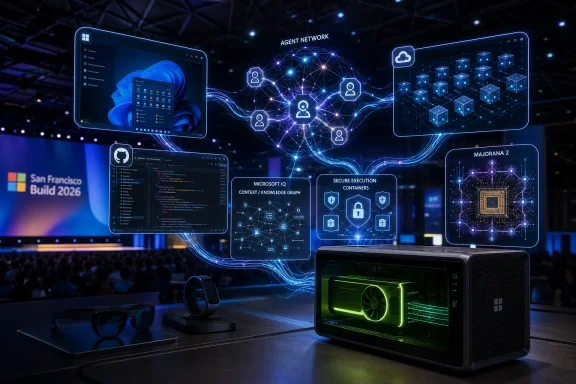 Microsoft Turns Build Into an Operating System Argument
For years, Build has been Microsoft’s stage for developer tooling: Visual Studio updates, Azure services, Windows APIs, GitHub announcements, and the occasional hardware flourish. Build 2026 felt different because the announcements were less like separate product launches and more like a manifesto. Microsoft is arguing that the next computing platform is not an app store, a browser, or even a conventional operating system. It is a mesh of agents, models, permissions, local accelerators, cloud context, and corporate knowledge.That is why the Surface RTX Spark Dev Box matters beyond its spec sheet. It is not merely a compact workstation with a powerful NVIDIA platform inside. It is Microsoft’s physical answer to a software problem: developers cannot build credible local AI applications if every meaningful test has to be shipped to a cloud endpoint, rate-limited, metered, logged, and abstracted away.
The same logic runs through Project Solara. Microsoft is not describing it as Windows with a new shell. It is presenting Solara as a platform for agent-first devices, a phrase that sounds like marketing until you consider what it implies. In Microsoft’s preferred future, the user may not begin by opening Word, Outlook, Terminal, or Teams. The user may begin by assigning intent to an always-available assistant that can move across those tools on their behalf.
That is a profound shift for WindowsForum readers because Windows has always been a compromise between compatibility and control. It runs old applications, supports messy hardware ecosystems, and gives administrators a long menu of ways to say “no.” Agentic computing challenges that bargain. It asks Windows to become more permissive, more contextual, and more proactive at exactly the moment enterprise IT is trying to make endpoints more locked down.
The Surface RTX Spark Dev Box Is a Local AI Bet With Cloud Economics in Mind
The Surface RTX Spark Dev Box is the easiest announcement to understand because its pitch is concrete. Microsoft says the machine is a compact developer PC based on NVIDIA’s RTX Spark platform, pairing a Grace CPU with a Blackwell-generation RTX GPU and 128GB of unified memory. The headline number is up to one petaflop of AI performance, but the more important figure for developers is memory: enough local capacity, Microsoft says, to work with models above 120 billion parameters and context windows up to one million tokens.That does not make the device a replacement for Azure. It makes it a pressure valve. Over the last two years, AI development has become entangled with cloud bills, quota negotiations, data-handling reviews, and model availability. A workstation that can run serious inference locally gives teams a way to prototype, debug, fine-tune, and evaluate without turning every experiment into a procurement event.
Microsoft is also positioning the box as a turnkey Windows AI workstation. It ships with Windows 11 Pro and the expected developer stack: Visual Studio Code, GitHub Copilot, WSL2 with GPU passthrough, CUDA support, Python, Git, Node.js, and PowerShell 7. That sounds mundane, but it is part of the pitch. Microsoft wants developers to believe that Windows can be the native workstation environment for AI, not just the corporate laptop OS from which they SSH into Linux boxes.
The aluminum chassis that doubles as a heatsink and the sustained 100-watt thermal envelope are not incidental details. Local AI workloads punish hardware differently than bursty office productivity. If Microsoft is serious about placing high-end inference on desks rather than in racks, thermals, acoustics, driver maturity, and serviceability will matter as much as benchmark numbers.
The product also tightens Microsoft’s dependence on NVIDIA. That is not a criticism; NVIDIA remains the gravity well of modern AI compute. But it complicates the story Microsoft has been telling about NPUs in Copilot+ PCs. The Surface RTX Spark Dev Box is not about modest on-device AI features sipping power on a laptop. It is about bringing workstation-class GPU memory and CUDA gravity into the Windows developer story.
Windows Gets a Workstation It Can Point At
For Windows developers, the Dev Box is a symbolic correction. The AI boom has often treated Windows as either a client endpoint or a gaming platform, while serious model work happened on Linux servers, cloud notebooks, or macOS laptops connected to remote GPUs. Microsoft is now trying to make Windows credible at the high end of local AI development.That effort depends on WSL2 as much as Windows itself. GPU passthrough, CUDA support, and Linux-compatible development workflows are the bridge between the Windows desktop and the AI ecosystem developers actually use. In practice, the Dev Box is a Windows machine that admits a hard truth: the AI toolchain is deeply Unix-shaped, and Windows wins by hosting that reality well rather than pretending it does not exist.
The most interesting audience may be neither hobbyists nor hyperscale AI labs. It may be enterprise developers who need to test agents against sensitive code, documents, logs, or operational data that cannot casually leave the organization. Local inference does not solve governance by itself, but it gives security teams another deployment pattern besides “trust the cloud endpoint.”
There is also a cost argument hiding under the glamour. Cloud GPUs are flexible, but they are not emotionally neutral once finance starts reading the bill. If a team has predictable local workloads, a capable workstation can become easier to justify than a permanently expanding cloud allocation. Microsoft knows this because Azure has trained customers to think in meters; the Dev Box gives Microsoft a way to sell into the backlash against those meters without abandoning the cloud.
GitHub Copilot App Moves From Assistant to Coworker
The GitHub Copilot App announcement continues the same platform logic. Copilot is no longer being framed as autocomplete with better branding. Microsoft and GitHub are pushing it toward planning, implementation, debugging, testing, documentation, and project awareness. In other words, Copilot is being recast from a tool inside the editor to an agent that can participate in the software lifecycle.That is a more consequential change than it may sound. The first era of Copilot helped developers write code faster in the moment. The next era asks developers to delegate units of work: inspect this repository, propose a plan, modify these files, run tests, explain the diff, open the pull request. That changes not only coding speed but also accountability.
The danger is that “AI teammate” becomes a phrase that hides the boring machinery of software quality. Developers do not merely need code output; they need traceability, reproducibility, test coverage, dependency awareness, security review, and a comprehensible audit trail. If Copilot can provide those things, it becomes infrastructure. If it cannot, it becomes a very confident intern with commit access.
Microsoft knows the enterprise version of this pitch must be about control. GitHub’s agentic direction has repeatedly emphasized logs, policy enforcement, branch protections, and human review. That emphasis is not window dressing. The difference between an AI assistant and an AI liability is often whether the organization can reconstruct what happened after something breaks.
For Windows developers, the GitHub Copilot App also signals a broader convergence. The editor, terminal, issue tracker, pull request, cloud environment, and operating system are becoming surfaces for the same agentic workflow. Microsoft wants Copilot to be the connective tissue, and GitHub is the most credible place to start because developers already accept it as the system of record for code.
Project Solara Is the Weirdest Announcement Because It Is the Most Honest
Project Solara is the announcement that sounds most speculative and may reveal the most about Microsoft’s intentions. Microsoft describes it as a platform for devices built around AI agents rather than traditional applications. The company showed concept reference designs, including a desk-based assistant with facial recognition and a wearable badge with a camera, fingerprint scanner, and real-time conversation transcription.Microsoft says it does not plan to sell those devices itself. That is an important distinction, but not a dismissal. Reference designs are how platform companies tell hardware partners what the future should look like before the market knows whether it wants that future.
Solara’s premise is that an AI device should not feel like a phone, PC, or smart speaker with an added chatbot. It should be designed around persistent context, identity, sensors, voice, vision, and delegated tasks. That is a clean conceptual break from Windows, which remains organized around apps, files, windows, drivers, user sessions, and decades of compatibility obligations.
The problem is that the same features that make Solara interesting also make it dangerous. Facial recognition, wearable cameras, continuous transcription, and always-on assistants are not minor UX details. They are privacy and governance events. If Microsoft wants partners to build Solara-class devices, it will need to persuade users, employers, regulators, and bystanders that agentic hardware can be useful without becoming ambient surveillance.
The timing is telling. Microsoft’s Copilot+ PC rollout was shadowed by the controversy around Recall, which forced the company to rework privacy and security controls before broader availability. Project Solara appears to be born with that lesson in mind, but the public will not grade it on intent. It will be judged on defaults, permissions, local processing, data retention, enterprise controls, and whether users can meaningfully turn things off.
Majorana 2 Gives the AI Story a Quantum Tail
The Majorana 2 announcement sits somewhat apart from the Windows and developer tooling news, but Microsoft clearly wants it inside the same narrative. The company says its next-generation topological quantum chip uses a new materials stack, improves qubit reliability by 1,000 times over the previous generation, and achieves a mean qubit lifetime of 20 seconds, with some instances lasting longer. Microsoft now says it is targeting a scalable quantum computer by 2029.Those are striking claims, and they should be treated as claims. Microsoft’s quantum program has always been ambitious, in part because topological qubits promise an elegant route to more stable quantum computing if the physics and engineering can be made to work at scale. That “if” is the whole story. The history of quantum computing is full of milestones that are real, impressive, and still far from commercial utility.
What makes Majorana 2 relevant to Build 2026 is Microsoft’s claim that agentic AI helped accelerate the research and engineering process. That is the meta-message of the conference: AI is not only a product feature but also a tool for making the next generation of products, chips, software, and scientific platforms. Microsoft is selling AI as both the machine and the machinist.
For IT pros, the quantum timeline does not change next quarter’s patching schedule. But it does matter strategically. If Microsoft can tie Azure, AI agents, scientific discovery tooling, and quantum development into a unified enterprise platform, it gives large organizations another reason to remain inside Microsoft’s orbit. Even speculative breakthroughs can become sticky if they shape research workflows and long-term vendor commitments.
Still, skepticism is healthy. A one-million-qubit future by 2029 is not the same thing as a commercially useful quantum computer available for ordinary enterprise workloads. Microsoft’s quantum announcements deserve attention, but they should not be read as a reason to panic about encryption next week or rewrite infrastructure plans this summer.
Microsoft IQ Is the Enterprise Version of “Context Is Everything”
Microsoft IQ may prove to be one of the more important announcements precisely because it is less flashy than Solara or the Dev Box. The company is pitching it as an enterprise intelligence platform that gives AI systems access to organizational knowledge and context. In plain English, Microsoft wants agents to understand the business, not just the prompt.That is the missing layer in many enterprise AI deployments. A generic model can summarize, draft, classify, and reason in broad strokes. But a useful enterprise agent needs to know which documents are authoritative, which systems contain current records, which employees own which processes, which policies override informal practice, and which data it is allowed to touch.
Microsoft already has enormous leverage here through Microsoft 365, Entra, SharePoint, Teams, Purview, GitHub, Dynamics, and Azure. Microsoft IQ appears to extend that logic: the more business context that lives inside Microsoft’s graph, the more useful Microsoft’s agents become. That is good for integration and dangerous for lock-in.
Administrators will immediately see the governance challenge. If agents can act across enterprise systems, permission models become operational safety mechanisms rather than compliance paperwork. Stale groups, overbroad SharePoint access, abandoned service accounts, and sloppy data classification all become agent fuel. The quality of an organization’s identity and information architecture will determine whether Microsoft IQ is empowering or terrifying.
That may be the real enterprise story of Build 2026. Microsoft is not just selling smarter models. It is selling the idea that your tenant, repository, directory, device fleet, and knowledge base can become a substrate for autonomous work. Organizations that have treated governance as a quarterly checkbox may discover that agents make old messes newly active.
Aion and MAI Show Microsoft Wants More Than OpenAI Plumbing
The MAI-Thinking-1 reasoning model and Aion on-device model family point to another strategic shift. Microsoft still has a deep relationship with OpenAI, but it is increasingly building and branding its own model portfolio. That is not surprising. No platform company wants its most important layer to be entirely dependent on another company’s roadmap, pricing, outages, or policy choices.MAI-Thinking-1 is positioned around reasoning, planning, and multi-step problem solving. That places it in the part of the market where vendors are competing not only on fluency but on task execution, tool use, and reliable decomposition of complex work. For agentic development and enterprise workflows, reasoning models are the difference between “write a paragraph” and “carry out a sequence without losing the plot.”
Aion, by contrast, matters because it runs on Windows devices. On-device models are not just about speed or offline use. They are about privacy, latency, cost, and resilience. If a device can handle some AI tasks locally, Microsoft can reduce dependency on cloud round-trips and make AI features feel more native to Windows.
But on-device AI also creates fragmentation. Different PCs have different NPUs, GPUs, drivers, memory ceilings, and thermal limits. Developers will need clear abstractions if Aion-powered features are to work reliably across the Windows ecosystem. Microsoft has lived this problem before with graphics, touch, pen, biometrics, and hardware security. AI acceleration will not be any tidier.
The larger point is that Microsoft wants models at every layer: large cloud models for heavyweight reasoning, local models for private and low-latency tasks, coding models for GitHub workflows, and domain-specific models for enterprise intelligence. That is a platform strategy, not a feature strategy. It is also a support burden waiting to happen.
Autonomous Agents Make Windows Security a First-Class Platform Problem
The most consequential Windows-related announcements may be the least consumer-friendly to explain: execution containers, agent security primitives, and tooling for running autonomous agents on Windows. These are the plumbing pieces that determine whether agentic computing becomes usable or unmanageable.An autonomous agent needs to read files, call APIs, manipulate applications, execute code, browse internal systems, and sometimes make changes. Every one of those actions is a security boundary problem. Traditional desktop security assumes that a user launches a program and the program operates within a permission model. Agentic computing complicates that by introducing delegated intent: the user asked an agent to do something, the agent chose steps, and tools executed those steps.
That is why isolation matters. If Microsoft Execution Containers and related primitives can constrain what agents can see, do, persist, and modify, Windows has a chance to host agents without turning every endpoint into a chaos machine. If the controls are too weak or too confusing, administrators will disable the features or be forced into endless exception management.
This is where Microsoft’s enterprise DNA is both an advantage and a liability. The company understands identity, policy, device management, and compliance at a depth most AI startups do not. But Microsoft also has a habit of layering powerful features into licensing tiers, admin portals, preview programs, and overlapping product names until even experts need a map.
For WindowsForum’s sysadmin audience, the practical question is not whether agents can be impressive in a keynote. It is whether they can be inventoried, logged, patched, restricted, revoked, and explained to auditors. The future of Windows AI will be decided in Intune policies, Entra groups, event logs, endpoint detection consoles, and procurement meetings as much as in developer demos.
The Copilot+ PC Story Now Has a Bigger Sibling
Build 2026 also reframes the Copilot+ PC category. When Microsoft introduced Copilot+ PCs, the emphasis was on NPUs, battery-friendly local AI features, and consumer-facing experiences such as captions, image generation, and Recall. The Surface RTX Spark Dev Box and Aion models expand that story upward and sideways.The PC is no longer just a place where AI features appear. It is becoming a node in a distributed AI system. Some tasks will run on the NPU, some on the GPU, some in WSL, some in Azure, some in GitHub, and some through enterprise agents drawing on Microsoft IQ. The Windows device becomes less like a standalone machine and more like an execution surface for a negotiated workload.
That could be powerful if Microsoft makes the layers understandable. Developers should not have to guess whether a feature belongs on an NPU, GPU, cloud model, local small model, or enterprise agent. Administrators should not have to reverse-engineer where data went after a Copilot button was clicked. Users should not need a product taxonomy lesson to understand what is private, what is synced, and what is billed.
Microsoft’s risk is that “AI PC” becomes too elastic to mean anything. A low-power Copilot+ laptop, a Surface RTX Spark Dev Box, a Solara reference badge, and an Azure-hosted agent are all part of the same AI story, but they are not the same kind of product. The company will need sharper language as these things move from keynote slides into purchasing decisions.
The reward, if Microsoft gets it right, is significant. Windows could become the most flexible AI client platform precisely because it spans consumer devices, enterprise endpoints, developer workstations, gaming GPUs, Linux workflows, and cloud identity. That breadth is messy, but it is also Microsoft’s historical advantage.
The Build 2026 Bet Comes Down to Trust, Not Tokens
The concrete lesson from Build 2026 is that Microsoft is trying to make AI agents ordinary before the industry has fully decided how to govern them. The company has enough platform surface area to make that happen. It also has enough baggage that users and administrators will demand proof before surrendering more control.- The Surface RTX Spark Dev Box makes local high-end AI development a first-class Windows scenario rather than a cloud-only workflow.
- The GitHub Copilot App moves Copilot deeper into planning, testing, debugging, documentation, and pull-request-level software work.
- Project Solara shows Microsoft preparing for devices where agents, sensors, identity, and context matter more than traditional apps.
- Majorana 2 extends Microsoft’s AI narrative into scientific discovery and quantum computing, but its commercial impact remains a longer-term bet.
- Microsoft IQ and agent execution tooling will force enterprises to confront whether their identity, data, and permission hygiene are ready for autonomous systems.
- The Windows AI future will be judged less by keynote demos than by defaults, logs, admin controls, security boundaries, and real-world failure modes.
References
- Primary source: The Tech Portal
Published: Tue, 02 Jun 2026 19:19:07 GMT
Loading…
thetechportal.com - Related coverage: techradar.com
Loading…
www.techradar.com - Official source: blogs.windows.com
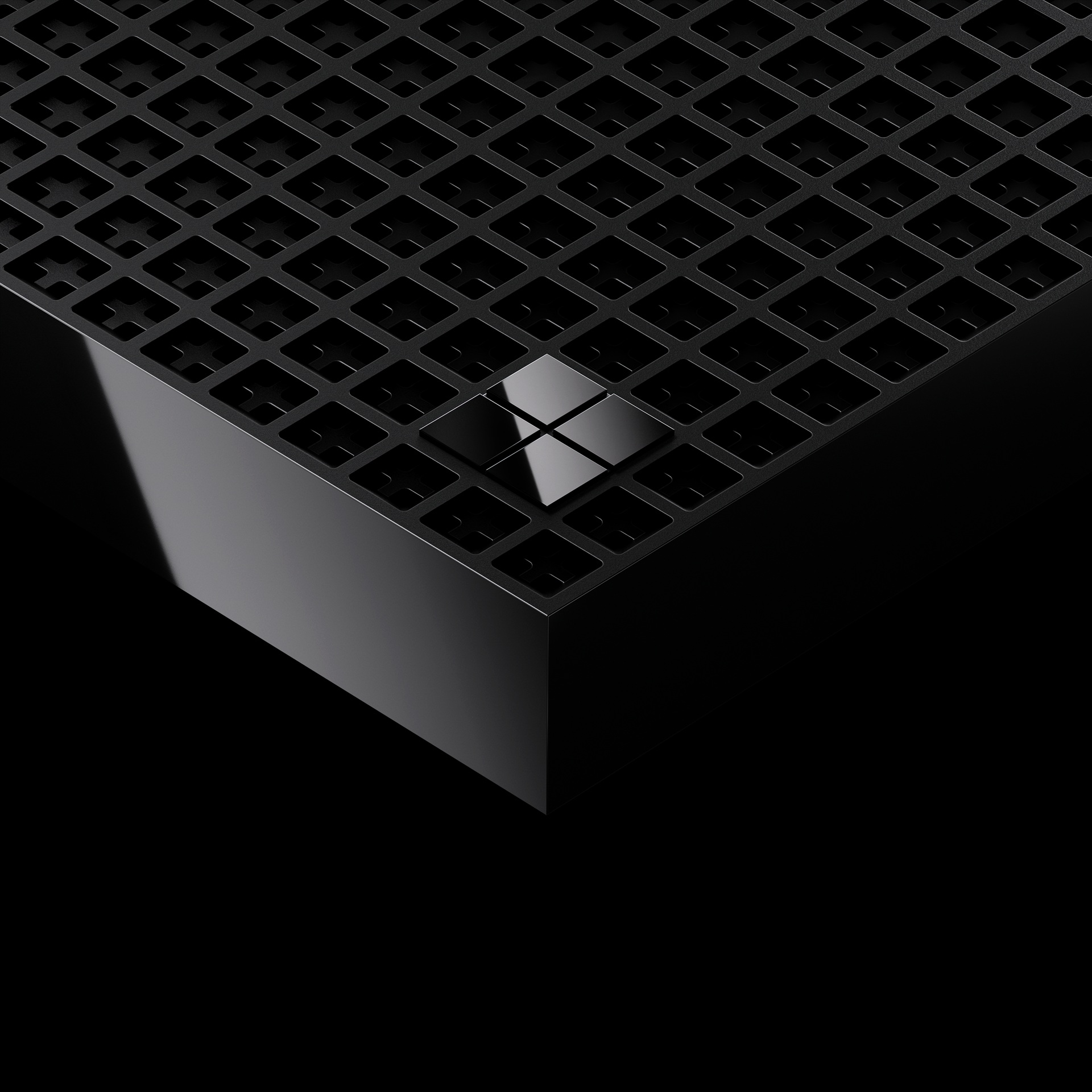
Building the next generation of devices for developers: Surface RTX Spark Dev Box
Software developers are some of the most ambitious makers we serve. They push devices harder, ask more of their tools and expect their environment to help define the pace of modern software creation. Development today means longer runnin blogs.windows.com
- Official source: commandline.microsoft.com

Composing a new platform for agent-first devices - Command Line
New interaction technology enables new types of computers. Learn more about Microsoft’s Project Solara. commandline.microsoft.com
- Official source: learn.microsoft.com
Set up GitHub Copilot for Windows development - Windows apps
Install and configure GitHub Copilot, the WinUI 3 plugin, and the Microsoft Learn MCP server for AI-assisted Windows app development.learn.microsoft.com - Official source: github.com
Microsoft Build 2026
GitHub is where people build software. More than 150 million people use GitHub to discover, fork, and contribute to over 420 million projects. github.com
- Related coverage: nvidianews.nvidia.com

NVIDIA and Microsoft Reinvent Windows PCs for the Age of Personal AI
NVIDIA today unveiled NVIDIA RTX Spark™, a new superchip that reinvents Windows PCs for the era of personal AI agents — offering a new class of computer that moves from tool to teammate.nvidianews.nvidia.com
- Related coverage: techcrunch.com

Microsoft launches Scout, an OpenClaw-inspired personal assistant | TechCrunch
Launched at Build, Microsoft Scout is a new AI assistant meant to bring the power and flexibility of OpenClaw into the Microsoft 365 system. techcrunch.com
- Related coverage: thenextweb.com

Microsoft unveils Project Solara: an OS for agent-first devices
Microsoft's Project Solara is a new platform for devices that run AI agents instead of apps. Two concept designs, a badge and desk device, are piloting with Best Buy, CVS, Levi's, and Target. thenextweb.com
- Official source: news.microsoft.com

Microsoft Build Live
The home for real-time coverage of the news as it is announced from Microsoft Build, June 2-3, 2026. news.microsoft.com
- Related coverage: tomsguide.com
Loading…
www.tomsguide.com - Official source: developer.microsoft.com
Loading…
developer.microsoft.com - Official source: quantum.microsoft.com
Microsoft Quantum | Microsoft Quantum Hardware
Microsoft is engineering a quantum supercomputer with topological qubits and advanced error correction to solve global challenges.quantum.microsoft.com - Official source: azure.microsoft.com

Microsoft unveils Majorana 1, the world’s first quantum processor powered by topological qubits - Microsoft Azure Quantum Blog
Majorana 1 from Microsoft is the world’s first Quantum Processing Unit (QPU) built with a topoconductor. Discover more. azure.microsoft.com
- Official source: techcommunity.microsoft.com
Qurious About Quantum? | Microsoft Community Hub
Why IT Should Care About Quantum Right Now – It’s Not Just A Research Problem Today on April 14th, 2026 we celebrate World Quantum Day! There has been a... techcommunity.microsoft.com
- Official source: microsoft.com
Loading…
www.microsoft.com - Official source: smt.microsoft.com
Loading…
smt.microsoft.com