

Chamco Digital’s newly announced Microsoft AI and Cloud Technology Training Program lands at a moment when the market for practical AI skills is moving from hype to hard-edged employability. The company says the program is globally accessible, certification-aligned, and built around instructor-led learning, labs, and exam prep for AI-900 and AI-102. If the rollout matches the promise, it could become a useful model for how boutique partners package Microsoft’s AI stack into workforce development. But it also raises a bigger question: in a crowded training market, can Chamco Digital turn certification alignment into real differentiation rather than just another badge-based curriculum?
The announcement is notable not simply because another training provider is offering Microsoft-aligned education, but because Chamco Digital is positioning the effort as a strategic expansion rather than a side program. That matters. In the AI training market, a company can sell courses, or it can build a repeatable pipeline that feeds enterprises, institutions, and workforce agencies with credentialed talent. Chamco is clearly aiming for the second path.
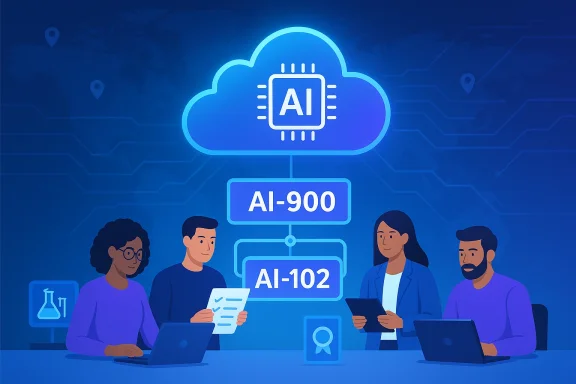
Microsoft’s certification ecosystem gives the program immediate market structure. AI-900: Azure AI Fundamentals is designed for people with both technical and non-technical backgrounds, while AI-102: Azure AI Engineer Associate moves into role-based implementation and solution design. Microsoft’s own exam pages show that AI-900 covers basic AI workloads, machine learning on Azure, computer vision, NLP, and generative AI, while AI-102 centers on planning and managing Azure AI solutions, generative AI, agentic solutions, computer vision, NLP, and knowledge extraction.
That structure makes the launch interesting for workforce development, especially at a time when employers are asking for proof of capability, not just awareness. A certification-aligned path gives learners a tangible outcome, and it gives institutions a measurable standard. In other words, Chamco is selling outcomes, not just instruction.
The company also emphasizes accessibility, saying enrollment is open to high school students, college students, career transitioners, professionals seeking upskilling, and learners without degrees who want a structured entry into AI and cloud careers. That is a smart market signal. It suggests Chamco understands that AI training demand is no longer confined to computer science graduates or enterprise architects; it now stretches across the broader talent economy.
There is also a timing advantage. Microsoft continues to invest heavily in AI infrastructure and partner ecosystem development, and the broader Microsoft AI Cloud Partner Program remains an active go-to-market umbrella for firms building AI and cloud services around Microsoft technology. Microsoft’s official materials show the partner framework is designed to help organizations build, sell, and deliver AI and cloud solutions, which provides a credible backdrop for training providers that align tightly with Microsoft technologies.
The company says the curriculum includes Azure AI services configuration, AI solution development workflows, data integration, governance and compliance, and applied AI engineering methods. Those are the right categories for a program trying to bridge classroom learning and enterprise work. They also suggest the curriculum is designed to speak to both cloud architecture and practical AI application.
A certification-aligned pathway can be powerful because it creates a shared vocabulary. Employers, learners, and training administrators can all evaluate progress against a known benchmark. That is especially useful when the target audience includes nontraditional learners who may not have previous IT credentials.
Chamco’s model also appears to recognize that many learners want a direct line from training to a credential. That’s why the mention of AI-102 exam vouchers stands out. Vouchers can materially reduce friction, especially for learners who may be interested but price-sensitive.
The company’s program, then, is not just about teaching Microsoft AI. It is about lowering the barriers to proof of skill. That distinction is important in a labor market where the phrase AI-ready is often used loosely and sometimes irresponsibly.
Because AI-900 is a fundamentals exam, it works as a common starting point. It helps learners understand AI workloads, responsible AI considerations, and the service landscape before they jump into hands-on implementation. In a workforce-development setting, that is valuable because it reduces intimidation and creates a shared baseline.
AI-900 is also strategically useful for institutions. Schools and agencies often need a low-friction entry credential that can be attached to cohorts with mixed skill levels. A fundamentals certification makes program design simpler and helps stakeholders justify early wins.
This makes AI-102 a more serious statement of employability. It implies the learner can help build real solutions, not just describe them. For employers, that distinction can matter as much as the certificate itself.
The fact that Chamco says completing enrollees receive AI-102 vouchers suggests it wants to push learners beyond fundamentals and into a more marketable credential. That is a logical design choice, but also a demanding one. AI-102 is not a casual pass.
It also indicates the company believes certification-aligned training can scale. Scalability is the word that matters. A small service firm can only bill so many implementation hours, but a well-structured training engine can be replicated across regions and cohorts.
The board composition listed in the release reinforces that interpretation. With executive leadership and named board members aligned around the initiative, Chamco is presenting the program as organizationally integrated rather than opportunistic. That gives the launch a more serious tone than a simple marketing push.
That is a compelling structure because the program becomes a platform, not a one-off course. Once the curriculum exists, it can be repackaged for different audiences, regions, and delivery models. That is how training businesses become durable.
That means execution will matter more than branding. If the company cannot show learner success, exam pass rates, or partner adoption, the strategic narrative will weaken. Programs are easy to announce; outcomes are hard to build.
The inclusion of non-degree learners is especially important. It acknowledges that career mobility in the AI era may depend more on structured training than on traditional academic pathways. That is not a rejection of higher education, but it is a recognition that higher education is no longer the only gatekeeper.
The program also appears to lean into remote-ready careers and entrepreneurial pathways. That is smart positioning. AI and cloud work can often be done from anywhere, which makes the model attractive to learners outside major tech hubs.
That creates a two-sided market opportunity. On one side are people trying to move into tech. On the other are organizations trying to solve talent shortages. Chamco is trying to serve both.
This matters because many training providers over-index on one audience. Consumer-first programs struggle to scale into enterprise, while enterprise-first programs can be too rigid for individual learners. Chamco seems to be trying to bridge that gap.
It also means honest expectation-setting. AI-102 is not a beginner badge dressed up in enterprise language. Students may enter the program with enthusiasm, but they still need discipline, repetition, and strong support to succeed.
For Chamco, the designation helps connect training to implementation. A provider that can teach Microsoft AI concepts and potentially support cloud modernization or digital transformation has a broader story to tell. Training becomes the top of the funnel rather than the whole business.
That said, partner branding can be overused. In the market, many organizations cite Microsoft alignment, but not all deliver the same depth of execution. The real question is whether the training itself can demonstrate the rigor implied by the label.
But ecosystem dependence cuts both ways. If Microsoft changes exam objectives, updates service names, or shifts emphasis toward new AI products, training providers must adapt quickly. A Microsoft-aligned business is only as nimble as its update process.
The most successful providers will likely be those that teach principles and practices, not just current exam artifacts. In AI, that distinction is critical. Tool names change; deployment thinking endures.
That blend is increasingly important. AI teams cannot just build models or call APIs; they also have to think about data handling, access controls, compliance, and change management. Any training program that ignores those concerns is incomplete.
The program’s use of scenario-based labs is especially encouraging. Scenario work forces learners to reconcile messy inputs, system limitations, and deployment decisions. That is where technical competence starts to become job readiness.
It also improves retention. Learners remember what they do more than what they read. In a field as broad and fast-moving as AI, that matters more than ever.
A strong curriculum should do more than help people pass an exam. It should make them dangerous in the best sense: able to build, troubleshoot, and explain solutions in production-like environments.
If the company can show consistent exam preparation and learner progression, it may carve out a niche among workforce agencies and education partners. Those buyers often care less about brand fame and more about completion, certification, and employability. That is where a focused provider can win.
The downside is that many competitors can easily replicate the curriculum outline. AI-900 and AI-102 are not proprietary. The differentiator will therefore be service quality, learner support, and measurable success.
That creates room for training providers that can translate platform knowledge into practical readiness. The winners will be those who understand both the certification landscape and the hiring landscape. Chamco is clearly trying to speak to both.
If Chamco wants this to become more than a launch announcement, it will need visible evidence. That means learner testimonials, completion metrics, institutional partnerships, and perhaps case studies showing how the training translates into employability or internal upskilling. In this segment, narrative without numbers rarely lasts.
The other thing to watch is whether the company expands beyond the initial certification track. If the program works, it could branch into more Azure, security, or data curricula. If it does not, the launch will remain a narrowly framed experiment.
In the end, this is less about one training program than about a larger shift in how AI education is being sold and valued. The market no longer wants vague promises of future readiness; it wants structured, measurable, certification-backed progress. If Chamco Digital can deliver that at scale, it may build something durable. If not, it will become another reminder that in the AI era, the easiest thing to launch is a program, while the hardest thing to create is a professional pathway.
Source: weeklyvoice.com Chamco Digital Launches Microsoft AI and Cloud Technology Training Program with Board-Endorsed Strategic Expansion | Weekly Voice
 Overview
The announcement is notable not simply because another training provider is offering Microsoft-aligned education, but because Chamco Digital is positioning the effort as a strategic expansion rather than a side program. That matters. In the AI training market, a company can sell courses, or it can build a repeatable pipeline that feeds enterprises, institutions, and workforce agencies with credentialed talent. Chamco is clearly aiming for the second path.Microsoft’s certification ecosystem gives the program immediate market structure. AI-900: Azure AI Fundamentals is designed for people with both technical and non-technical backgrounds, while AI-102: Azure AI Engineer Associate moves into role-based implementation and solution design. Microsoft’s own exam pages show that AI-900 covers basic AI workloads, machine learning on Azure, computer vision, NLP, and generative AI, while AI-102 centers on planning and managing Azure AI solutions, generative AI, agentic solutions, computer vision, NLP, and knowledge extraction.
That structure makes the launch interesting for workforce development, especially at a time when employers are asking for proof of capability, not just awareness. A certification-aligned path gives learners a tangible outcome, and it gives institutions a measurable standard. In other words, Chamco is selling outcomes, not just instruction.
The company also emphasizes accessibility, saying enrollment is open to high school students, college students, career transitioners, professionals seeking upskilling, and learners without degrees who want a structured entry into AI and cloud careers. That is a smart market signal. It suggests Chamco understands that AI training demand is no longer confined to computer science graduates or enterprise architects; it now stretches across the broader talent economy.
There is also a timing advantage. Microsoft continues to invest heavily in AI infrastructure and partner ecosystem development, and the broader Microsoft AI Cloud Partner Program remains an active go-to-market umbrella for firms building AI and cloud services around Microsoft technology. Microsoft’s official materials show the partner framework is designed to help organizations build, sell, and deliver AI and cloud solutions, which provides a credible backdrop for training providers that align tightly with Microsoft technologies.
What Chamco Is Actually Launching
The press release describes a training program that is more structured than a typical short course and more accessible than a degree pathway. It combines instructor-led sessions, lab exercises, applied projects, and exam preparation. That blend matters because certification success often depends less on abstract reading and more on repeated exposure to realistic tasks.The pathway model
The program’s value proposition appears to rest on sequencing. Learners start with foundational AI concepts and then move toward implementation-level Azure AI skills. That progression mirrors Microsoft’s own certification ladder, which makes the training easier to understand for institutions that already know how to map outcomes to credentials.The company says the curriculum includes Azure AI services configuration, AI solution development workflows, data integration, governance and compliance, and applied AI engineering methods. Those are the right categories for a program trying to bridge classroom learning and enterprise work. They also suggest the curriculum is designed to speak to both cloud architecture and practical AI application.
A certification-aligned pathway can be powerful because it creates a shared vocabulary. Employers, learners, and training administrators can all evaluate progress against a known benchmark. That is especially useful when the target audience includes nontraditional learners who may not have previous IT credentials.
- Instructor-led training for guided learning
- Hands-on labs for scenario practice
- Applied projects for portfolio development
- Exam preparation tied to Microsoft objectives
- Certification vouchers for selected candidates
- Multi-audience enrollment spanning students and professionals
Why this structure matters
The shift from lecture-only content to lab-backed instruction is not cosmetic. AI and cloud skills degrade quickly when they are learned passively, and employers notice that gap immediately. Practical exercises help learners move beyond terminology and into service configuration, prompt design, model integration, and deployment thinking.Chamco’s model also appears to recognize that many learners want a direct line from training to a credential. That’s why the mention of AI-102 exam vouchers stands out. Vouchers can materially reduce friction, especially for learners who may be interested but price-sensitive.
The company’s program, then, is not just about teaching Microsoft AI. It is about lowering the barriers to proof of skill. That distinction is important in a labor market where the phrase AI-ready is often used loosely and sometimes irresponsibly.
Microsoft Certifications as the Anchor
Microsoft’s AI certification track provides the backbone for this initiative, and that is both its biggest strength and its biggest constraint. By anchoring the curriculum to AI-900 and AI-102, Chamco gains instant credibility. But it also inherits Microsoft’s exam boundaries, update cycles, and platform specificity.AI-900: the entry point
Microsoft describes Azure AI Fundamentals as a beginner-level certification for people who want to demonstrate knowledge of AI and machine learning concepts, along with Azure services. The exam is intended for both technical and non-technical candidates, and Microsoft explicitly says data science or software engineering experience is not required. That broad positioning is a strong fit for Chamco’s inclusive enrollment model.Because AI-900 is a fundamentals exam, it works as a common starting point. It helps learners understand AI workloads, responsible AI considerations, and the service landscape before they jump into hands-on implementation. In a workforce-development setting, that is valuable because it reduces intimidation and creates a shared baseline.
AI-900 is also strategically useful for institutions. Schools and agencies often need a low-friction entry credential that can be attached to cohorts with mixed skill levels. A fundamentals certification makes program design simpler and helps stakeholders justify early wins.
AI-102: the professional leap
The Azure AI Engineer Associate certification is a different animal. Microsoft’s exam description shows it focuses on planning and managing AI solutions, implementing generative AI, agentic solutions, computer vision, NLP, and knowledge extraction. That is the right profile for learners moving from awareness to implementation.This makes AI-102 a more serious statement of employability. It implies the learner can help build real solutions, not just describe them. For employers, that distinction can matter as much as the certificate itself.
The fact that Chamco says completing enrollees receive AI-102 vouchers suggests it wants to push learners beyond fundamentals and into a more marketable credential. That is a logical design choice, but also a demanding one. AI-102 is not a casual pass.
Sequential value
A sensible learner path looks like this:- Build AI and cloud vocabulary with AI-900.
- Practice in labs and scenarios.
- Strengthen Azure AI service understanding.
- Learn solution design and deployment patterns.
- Attempt AI-102 with exam preparation support.
Board-Endorsed Expansion and Strategic Intent
Chamco’s framing of this initiative as a board-endorsed strategic expansion is one of the most revealing parts of the announcement. It implies the company is not treating training as a temporary campaign, but as a core growth pillar. That is a meaningful shift in how small and mid-sized tech firms position themselves in the AI economy.Why the board language matters
Board endorsement signals capital allocation, governance approval, and strategic confidence. In practical terms, it suggests the company expects the training business to produce either direct revenue or indirect market leverage. That could include institutional contracts, enterprise relationships, partner visibility, or downstream consulting work.It also indicates the company believes certification-aligned training can scale. Scalability is the word that matters. A small service firm can only bill so many implementation hours, but a well-structured training engine can be replicated across regions and cohorts.
The board composition listed in the release reinforces that interpretation. With executive leadership and named board members aligned around the initiative, Chamco is presenting the program as organizationally integrated rather than opportunistic. That gives the launch a more serious tone than a simple marketing push.
The business model behind the training
There are at least three ways this program could generate value. It can sell seats directly to individual learners, it can be delivered to institutions or agencies as a cohort program, and it can support enterprise workforce transformation contracts. Each of those channels has different economics, but all benefit from the same core content.That is a compelling structure because the program becomes a platform, not a one-off course. Once the curriculum exists, it can be repackaged for different audiences, regions, and delivery models. That is how training businesses become durable.
- Direct-to-learner enrollment
- Institutional cohort delivery
- Workforce agency partnerships
- Enterprise upskilling contracts
- Remote/global delivery potential
Strategic upside and limits
The upside is clear: if Chamco succeeds, it could create a repeatable pipeline between education and employability. The limit is equally clear: certification-based training can be commoditized quickly. Many providers can say they teach AI-900, but fewer can prove meaningful placement outcomes.That means execution will matter more than branding. If the company cannot show learner success, exam pass rates, or partner adoption, the strategic narrative will weaken. Programs are easy to announce; outcomes are hard to build.
Workforce Development and Accessibility
One of the most attractive parts of the announcement is the insistence that the program is intentionally inclusive. By opening enrollment to students, career changers, professionals, and learners without degrees, Chamco is tapping into a major labor-market trend: AI skills are becoming more distributed across age groups and educational backgrounds.Broader access, broader pipeline
This approach reflects a practical understanding of modern hiring. Many employers are not looking solely for a four-year degree; they want demonstrable ability, tool familiarity, and a willingness to learn. Certification-oriented programs are well suited to that environment because they convert vague interest into measurable preparation.The inclusion of non-degree learners is especially important. It acknowledges that career mobility in the AI era may depend more on structured training than on traditional academic pathways. That is not a rejection of higher education, but it is a recognition that higher education is no longer the only gatekeeper.
The program also appears to lean into remote-ready careers and entrepreneurial pathways. That is smart positioning. AI and cloud work can often be done from anywhere, which makes the model attractive to learners outside major tech hubs.
Consumer versus institutional impact
For individual learners, the value proposition is simple: gain a known credential, practice with real tools, and build a path into AI-adjacent work. For institutions, the appeal is broader. Schools, nonprofits, and agencies can package the program as a workforce outcome without having to design the curriculum themselves.That creates a two-sided market opportunity. On one side are people trying to move into tech. On the other are organizations trying to solve talent shortages. Chamco is trying to serve both.
This matters because many training providers over-index on one audience. Consumer-first programs struggle to scale into enterprise, while enterprise-first programs can be too rigid for individual learners. Chamco seems to be trying to bridge that gap.
Why access alone is not enough
Access is only the first hurdle. For learners from nontraditional backgrounds, completion support matters just as much as enrollment. That means tutoring, lab guidance, exam scheduling support, and realistic pacing.It also means honest expectation-setting. AI-102 is not a beginner badge dressed up in enterprise language. Students may enter the program with enthusiasm, but they still need discipline, repetition, and strong support to succeed.
- Lower barriers to entry
- Better alignment with employer demand
- Expanded geographic reach
- Stronger appeal to workforce agencies
- More inclusive career pathways
The Microsoft Partner Context
Chamco’s release repeatedly leans on its status as a Microsoft AI and Cloud Technology Partner, and that affiliation is important in a crowded market. It helps position the company inside Microsoft’s broader ecosystem, where partner alignment can influence credibility, delivery models, and go-to-market opportunities. Microsoft’s official partner materials show the AI Cloud Partner Program as a central channel for partner-led solutions and enablement.Why partner alignment matters
For buyers, partner status is a trust shortcut. It does not guarantee quality, but it signals that the provider is operating within a recognized Microsoft framework. That can be especially persuasive for institutions that want training aligned with enterprise software they already use.For Chamco, the designation helps connect training to implementation. A provider that can teach Microsoft AI concepts and potentially support cloud modernization or digital transformation has a broader story to tell. Training becomes the top of the funnel rather than the whole business.
That said, partner branding can be overused. In the market, many organizations cite Microsoft alignment, but not all deliver the same depth of execution. The real question is whether the training itself can demonstrate the rigor implied by the label.
The ecosystem opportunity
Microsoft’s certification framework is attractive because it provides external legitimacy, an exam structure, and a known skills taxonomy. That ecosystem can help smaller providers avoid inventing their own standards from scratch. It also makes it easier to build partnerships with schools and agencies that prefer standardized outcomes.But ecosystem dependence cuts both ways. If Microsoft changes exam objectives, updates service names, or shifts emphasis toward new AI products, training providers must adapt quickly. A Microsoft-aligned business is only as nimble as its update process.
The most successful providers will likely be those that teach principles and practices, not just current exam artifacts. In AI, that distinction is critical. Tool names change; deployment thinking endures.
Curriculum Design and Practical Relevance
Chamco’s curriculum description sounds like it was built to appeal to employers as much as learners. That is a good sign. The more a course mirrors real deployment conditions, the more useful it becomes in the job market.What the syllabus suggests
The release mentions Azure AI services configuration, AI development workflows, data integration, governance and compliance, and applied engineering methodologies. Those are the right domains for people who will eventually work around enterprise AI systems. They also suggest the program is trying to cover both technical execution and responsible deployment.That blend is increasingly important. AI teams cannot just build models or call APIs; they also have to think about data handling, access controls, compliance, and change management. Any training program that ignores those concerns is incomplete.
The program’s use of scenario-based labs is especially encouraging. Scenario work forces learners to reconcile messy inputs, system limitations, and deployment decisions. That is where technical competence starts to become job readiness.
Why scenario work beats memorization
Certification exams reward knowledge, but employers reward judgment. Scenario labs help bridge that gap by placing learners into realistic situations with tradeoffs. That can include service selection, workload planning, prompt behavior, and responsible AI considerations.It also improves retention. Learners remember what they do more than what they read. In a field as broad and fast-moving as AI, that matters more than ever.
A strong curriculum should do more than help people pass an exam. It should make them dangerous in the best sense: able to build, troubleshoot, and explain solutions in production-like environments.
Practical takeaways
- Realistic labs should increase confidence
- Governance content helps enterprise relevance
- Data integration adds cross-functional value
- Applied projects support portfolio building
- Exam prep gives learners a concrete endpoint
Competitive Implications
Chamco is entering a training market that is both large and unforgiving. Microsoft-aligned AI instruction is valuable, but it is also a category where competition is intense and differentiation can be thin. That means the company must compete on depth, delivery, support, and outcomes—not just on the Microsoft name.How rivals may respond
Larger training firms may already offer similar certification paths, but their scale can make them less agile. Smaller providers, by contrast, can personalize instruction but may struggle with reach. Chamco’s challenge is to occupy the middle ground: credible enough for institutions, flexible enough for individuals.If the company can show consistent exam preparation and learner progression, it may carve out a niche among workforce agencies and education partners. Those buyers often care less about brand fame and more about completion, certification, and employability. That is where a focused provider can win.
The downside is that many competitors can easily replicate the curriculum outline. AI-900 and AI-102 are not proprietary. The differentiator will therefore be service quality, learner support, and measurable success.
The broader market signal
This launch also reflects a larger shift in the AI economy. The value is moving from abstract AI enthusiasm to operational skill acquisition. Organizations are asking who can configure services, connect data, govern systems, and prepare human talent.That creates room for training providers that can translate platform knowledge into practical readiness. The winners will be those who understand both the certification landscape and the hiring landscape. Chamco is clearly trying to speak to both.
- More demand for job-ready AI skills
- Increased pressure for measurable outcomes
- Growing importance of certification pathways
- Better fit for workforce and institutional buyers
- Higher expectations for applied learning
Strengths and Opportunities
Chamco’s announcement has several strengths that could help the program gain traction if execution is disciplined. The combination of certification alignment, accessible enrollment, and board-level commitment gives the initiative a credible foundation. More importantly, it positions the company inside a fast-growing segment where practical AI education is in demand.- Microsoft alignment gives the program recognizable external structure.
- AI-900 and AI-102 create a clear beginner-to-associate progression.
- Inclusive enrollment expands the potential learner pool.
- Exam vouchers reduce cost barriers for some participants.
- Scenario-based labs improve job relevance.
- Board endorsement suggests real strategic backing.
- Global accessibility could support multi-region growth.
Risks and Concerns
The biggest risk is overpromising. Certification-aligned programs are easy to market but difficult to deliver well, especially when they target learners with mixed technical backgrounds. If the support model is thin, learners may enroll enthusiastically and then stall before certification.- Outcome risk if pass rates or completions are weak.
- Commoditization risk because many providers offer similar Microsoft-aligned content.
- Platform dependence on Microsoft’s exam structure and product updates.
- Expectation mismatch for learners who underestimate AI-102 difficulty.
- Scalability risk if support quality drops as cohorts grow.
- Credential inflation if the market becomes flooded with similar badges.
- Delivery risk if global access is stronger in messaging than in practice.
What to Watch Next
The next few weeks will tell us whether this is a genuine workforce initiative or primarily a positioning move. The April 14, 2026 cohort start date gives the company a short runway to show that the program has real operational depth. Watch for concrete indicators such as partner adoption, cohort size, and how clearly the curriculum maps to exam preparation.If Chamco wants this to become more than a launch announcement, it will need visible evidence. That means learner testimonials, completion metrics, institutional partnerships, and perhaps case studies showing how the training translates into employability or internal upskilling. In this segment, narrative without numbers rarely lasts.
The other thing to watch is whether the company expands beyond the initial certification track. If the program works, it could branch into more Azure, security, or data curricula. If it does not, the launch will remain a narrowly framed experiment.
- First cohort participation levels
- Voucher distribution and usage
- Learner completion rates
- Partnership announcements with institutions or agencies
- Expansion into additional Microsoft-aligned paths
In the end, this is less about one training program than about a larger shift in how AI education is being sold and valued. The market no longer wants vague promises of future readiness; it wants structured, measurable, certification-backed progress. If Chamco Digital can deliver that at scale, it may build something durable. If not, it will become another reminder that in the AI era, the easiest thing to launch is a program, while the hardest thing to create is a professional pathway.
Source: weeklyvoice.com Chamco Digital Launches Microsoft AI and Cloud Technology Training Program with Board-Endorsed Strategic Expansion | Weekly Voice
