
OpenAI’s new analysis, summarized in a short Computerworld item this week, confirms what many clinicians and technologists have suspected for months: a very large and growing cohort of people now treats ChatGPT as a first-stop health resource. According to the OpenAI-backed report “AI as a Healthcare Ally,” health-related prompts now account for more than 5% of all ChatGPT messages, roughly one in four of the platform’s weekly users (about 200 million) asks at least one health question each week, and more than 40 million people do so every day. These are headline numbers with immediate implications for patients, clinicians, IT teams and enterprise security managers.
OpenAI’s report—widely summarized by outlets including MedicalEconomics, PYMNTS and Computerworld—frames ChatGPT as an emergent “informal front door” to healthcare: people use the assistant for symptom checks, medication questions, treatment options and—crucially—administrative navigation such as billing and insurance queries. Several media writeups repeat the same central statistics: >5% of messages about health, ~200 million weekly users asking health questions, and ~40 million daily users. The coverage also highlights behavioral details the report emphasizes: most health conversations happen outside clinic hours and many concern insurance or billing navigation rather than narrow clinical diagnosis. These numbers appear against a backdrop in which ChatGPT’s reach is enormous: public statements from OpenAI leadership and multiple reporting threads put ChatGPT in the neighborhood of hundreds of millions of weekly active users—figures that make the raw daily- and weekly-health query counts plausible at scale. Independent press coverage corroborates the growth narrative, citing the platform’s very large active user base when discussing the healthcare figures.
For Windows users and IT professionals, the imperative is straightforward: leverage assistive AI for low‑risk, high‑value tasks (scheduling help, administrative explanations, drafting patient education), but design conservative controls, logging, and clinician verification for any interaction that could influence clinical decision‑making. Policy makers and vendors must close the auditability gap in public reporting and publish independent safety results so researchers, clinicians and regulators can move from anecdote to evidence.
OpenAI’s data are a call to action: at population scale, even small error rates translate into many affected people. The right path forward combines the accessibility AI offers with governance frameworks that treat safety, provenance and human oversight as non‑negotiable.
Source: Computerworld Common health questions to ask Chat GPT
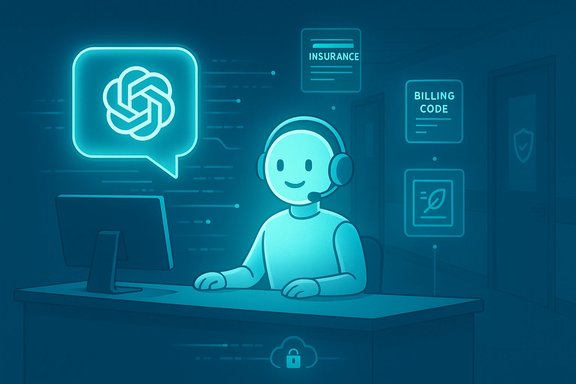 Background: what OpenAI reports, and how the press framed it
OpenAI’s report—widely summarized by outlets including MedicalEconomics, PYMNTS and Computerworld—frames ChatGPT as an emergent “informal front door” to healthcare: people use the assistant for symptom checks, medication questions, treatment options and—crucially—administrative navigation such as billing and insurance queries. Several media writeups repeat the same central statistics: >5% of messages about health, ~200 million weekly users asking health questions, and ~40 million daily users. The coverage also highlights behavioral details the report emphasizes: most health conversations happen outside clinic hours and many concern insurance or billing navigation rather than narrow clinical diagnosis. These numbers appear against a backdrop in which ChatGPT’s reach is enormous: public statements from OpenAI leadership and multiple reporting threads put ChatGPT in the neighborhood of hundreds of millions of weekly active users—figures that make the raw daily- and weekly-health query counts plausible at scale. Independent press coverage corroborates the growth narrative, citing the platform’s very large active user base when discussing the healthcare figures. Why this matters: scale, timing and user behavior
The combination of scale and timing is the most consequential fact in the report. Three practical features matter:- Scale: Tens of millions of daily users seeking health information means an AI assistant is now a major node in how the public learns about and acts on medical information. At this scale, even rare model errors can affect large absolute numbers of people.
- Off‑hours use: OpenAI reports (and journalists repeatedly note) that roughly 70% of health conversations on ChatGPT take place outside typical clinic hours. That makes AI a de-facto evening and weekend triage or navigation resource for people who can’t immediately reach clinicians.
- Administrative load: The report identifies a large volume of insurance- and billing-related prompts—nearly two million insurance-focused messages per week in the U.S.—which underscores a non-clinical but high-impact use case where AI helps people navigate opaque systems.
What the numbers actually mean — and what they don’t
Several reputable outlets repeated OpenAI’s headline figures, but those figures deserve careful contextualization.- The report’s statistics reflect ChatGPT usage at scale and are drawn from internal telemetry and OpenAI‑led survey work; however, the public writeups do not publish a full technical appendix with classifier accuracy, sampling frames, geographic distribution or labeling examples. That means the broad headline claims about “one in four users” or “40 million daily users” are credible at face value—but also not fully auditable from outside the company. Independent coverage therefore treats the numbers as meaningful behavioral signals while noting methodological gaps.
- Some numbers in secondary reporting (for example, precise weekly or daily message totals in specific regions) are derived from OpenAI’s internal aggregates and press materials. Journalists and healthcare outlets have corroborated the broad trends, but any deeper inferences—such as exact rates of clinical accuracy in field use or patient outcomes from acting on AI advice—require independent study. Where possible, those follow‑up claims should be flagged as provisional.
- Finally, the scale claim depends on the underlying user base. OpenAI and public reporting have described ChatGPT as having hundreds of millions of weekly active users (recent public figures have placed the service at roughly 400–800 million weekly users over 2024–2025 timelines). The size of that base is key to placing the “40 million” and “200 million” numbers in context. If the platform’s weekly audience is ~800 million, a 200-million-weekly‑health‑prompt count is plausible; if the base were smaller, percentages would change. Multiple outlets and statements by company leadership support the large-user‑base claim, but readers should note that estimates of global usage are dynamic.
Strengths: why people turn to ChatGPT for health questions
There are clear, repeatable reasons users reach for ChatGPT instead of—or before—calling a clinic.- Immediate access: ChatGPT provides instant, plain‑language explanations without clinic wait times. For many users, that immediacy reduces uncertainty and helps frame next steps. The OpenAI report and downstream coverage emphasize the convenience factor, especially during off hours.
- Administrative navigation: Handling insurance forms, decoding medical bills, or comparing plan options are time‑consuming tasks where conversational AI can supply step‑by‑step guidance, template messages, or simplified explanations—tasks that do not always require clinical judgment but do demand accurate policy and pricing knowledge. OpenAI’s report highlights the prominence of these queries in the U.S. dataset.
- Lowered barrier to asking: People who might feel embarrassed or skeptical about a face‑to‑face question (for example, sexual health or mental-health concerns) sometimes prefer anonymous chat. That lowers the friction to seek guidance and can, in some cases, steer users toward timely care. The behavioral framing in the report points to this “first question” effect.
- Drafting and triage for clinicians: Providers and staff also use assistants to draft patient education, summarize notes, or generate checklists—workflows that can save clinician time when a human verifies the output. The broader literature and product analyses recommend clinician‑in‑the‑loop models for such tasks.
Risks and failure modes: what the evidence shows
The OpenAI report and independent research converge on a central tension: conversational fluency is not the same as clinical reliability. Several categories of risk are especially important.Hallucinations and unsafe answers
Large language models (LLMs) are prone to hallucinating plausible‑sounding but false statements. Physician‑led red team studies and independent audits show nontrivial rates of unsafe or misleading medical advice across major models—sometimes with potential for serious harm. When AI is actively used by millions for health decisions, the absolute number of risky interactions becomes meaningful even if the relative error rate is small.Overtrust and user interpretation
Users frequently conflate the assistant’s conversational authority with clinical authority. Surveys show many users doubt AI’s accuracy for medical content, yet still act on advice or use it to inform decisions—creating a dangerous gap between belief and behavior. A KFF poll found significant skepticism about chatbots’ reliability for health, but real‑world usage continues to climb. That cognitive mismatch (trust vs. accuracy) is a recurring theme in safety literature.Sourcing and provenance weaknesses
ChatGPT and competing assistants sometimes give claims without clear evidence or with invented citations; other vendor systems that perform web retrieval can “launder” low‑quality web content into authoritative outputs. Independent audits—such as Which?’s consumer tests and news investigations into AI summarizers—show examples of misleading or incomplete health guidance. For high‑risk domains, lack of traceable provenance is a major shortcoming.Liability, privacy and data governance
When a user pastes personal health details into a conversational interface, that creates potential privacy, compliance, and secondary‑use risks. The OpenAI report emphasizes de‑identified aggregate analysis, but product and deployment choices determine whether sensitive inputs are retained, routed to human reviewers, or used for model improvement. Health data governance—HIPAA compliance, DLP controls, and consent mechanisms—must be considered when deploying AI in clinical settings or within enterprise contexts.Equity and accessibility
AI models trained on uneven datasets may perform worse for certain populations, languages or conditions. That risk can widen health disparities if AI is deployed without targeted evaluation, localization, and iterative remediation. The literature repeatedly flags the need for equity testing during rollout.Cross‑checked facts and methodological caveats
Because the OpenAI findings were reported via a company‑distributed report and media coverage, it’s important to highlight verification steps and limits:- Multiple independent outlets (MedicalEconomics, Becker’s Hospital Review, PYMNTS, Axios) repeated the core numeric claims (5% of messages, ~200M weekly, >40M daily), so the numbers are not a lone press release—several newsrooms reviewed and reported them. That triangulation supports the high‑level story.
- However, none of the mainstream summaries published an independent dataset or full methodological appendix with labeled examples, classifier accuracy scores or geographic breakout tables. That omission leaves room for legitimate skepticism about fine‑grained breakdowns (for instance, precise message counts by state or exact classification rules for what constitutes a “health” prompt). Readers and policy makers should treat granular claims carefully until a technical appendix or replicable dataset is published.
- Independent safety and accuracy research—peer‑reviewed papers and red‑team audits—consistently show variability in clinical correctness across models and prompts; those studies supply the best available evidence that fluency does not equal safety. Use those studies when assessing the likely risks of an assistant in your environment.
Practical guidance for Windows users, IT teams and clinicians
For readers of a Windows‑oriented community, the right balance is pragmatic: take advantage of AI’s accessibility while engineering conservative defaults and governance.For individual Windows users
- Treat ChatGPT as a research and triage tool, not a definitive diagnosis engine. Use it to clarify terminology, draft questions for your clinician, or check administrative steps like billing codes—but verify clinical actions with a licensed provider.
- Avoid pasting personally identifiable health records or full clinical notes into public or unsanctioned chat sessions.
- When an assistant recommends urgent care, follow your instincts: if symptoms are severe, seek emergency services.
For clinicians and practice managers
- Accept AI as a productivity aid: use assistants to draft patient information leaflets, summarize visits, or prepare follow‑up checklists—but always perform a clinician review before delivering patient-facing content.
- Embed provenance and citations in AI‑generated patient materials; date‑stamp materials and log versioned snapshots so you can audit what the patient saw.
For IT administrators and security teams
- Inventory all AI integrations across endpoints and classify by risk: informational vs. operational vs. clinical decision support.
- Enforce data‑loss prevention (DLP) policies that block or flag health data being pasted into public AI services.
- Require human‑in‑the‑loop verification for any assistant that affects care decisions, medications, or orders.
- Favor retrieval‑constrained or citation‑anchored systems when exposing patients to automated answers; avoid unconstrained web retrieval for dosing or emergent triage.
Policy and regulatory implications
The migration of millions to AI for health prompts raises immediate public‑policy questions:- Should consumer chatbots that frequently answer medical questions be subject to medical device regulation or a new consumer‑health AI standard?
- What legal liability attaches when a patient acts on flawed AI advice—does the vendor bear responsibility, or the clinician who did or did not intervene?
- How should governments regulate data use and consent, particularly for vulnerable populations in hospital deserts or underinsured communities where AI may be the only accessible resource?
A pragmatic roadmap: what vendors and health systems should do now
To retain AI’s benefits while reducing harms, organizations should adopt a layered, measurable approach:- Classify risk for each AI touchpoint (informational, administrative, clinical).
- Implement conservative defaults: refuse or escalate high‑risk queries (dosing, personalized diagnosis) and require clinician handoff.
- Require provenance: AI answers that influence care should include citations, timestamps and a “last reviewed” date.
- Publish safety audits: vendors should disclose basic red‑team results and third‑party evaluation metrics for high‑risk categories.
- Train clinicians and staff on AI failure modes and how patients may present AI‑sourced advice during visits.
Bottom line: an opportunity that demands serious guardrails
OpenAI’s report and the subsequent press coverage make a clear, testable assertion: conversational AI is now a major route by which people seek health information. That shift is neither inherently good nor bad—it’s both: AI increases access and convenience while also amplifying risks of misinformation, privacy exposure and equity gaps.For Windows users and IT professionals, the imperative is straightforward: leverage assistive AI for low‑risk, high‑value tasks (scheduling help, administrative explanations, drafting patient education), but design conservative controls, logging, and clinician verification for any interaction that could influence clinical decision‑making. Policy makers and vendors must close the auditability gap in public reporting and publish independent safety results so researchers, clinicians and regulators can move from anecdote to evidence.
OpenAI’s data are a call to action: at population scale, even small error rates translate into many affected people. The right path forward combines the accessibility AI offers with governance frameworks that treat safety, provenance and human oversight as non‑negotiable.
Quick checklist for readers (practical takeaways)
- Use ChatGPT for clarifying medical language, drafting questions for clinicians, or administrative help—not for definitive diagnosis.
- Don’t paste full personal medical records into public chat tools; prefer sanctioned, enterprise-grade deployments for sensitive data.
- Clinicians: require human review of AI‑generated patient materials and log snapshots of what patients see.
- IT leaders: enforce DLP, classify AI touchpoints by risk, and mandate clinician sign‑off for high‑risk outputs.
Source: Computerworld Common health questions to ask Chat GPT
