

Many people know eggs and liver are “superfoods,” but the nutrient behind that reputation — choline — is less talked about than it should be: it’s essential for brain development, cell membranes, liver function, and methylation chemistry, yet large segments of the population fall short of recommended intakes.
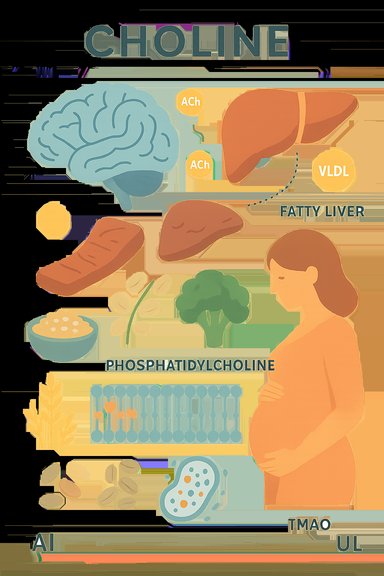
Choline is a vitamin‑like, water‑soluble nutrient required for the synthesis of acetylcholine (a key neurotransmitter), phosphatidylcholine (a major membrane phospholipid), and for one‑carbon metabolism that helps regulate homocysteine levels. The body can synthesize a small amount of choline, but dietary intake is necessary to meet physiological requirements. Public health bodies set Adequate Intake (AI) targets because evidence has not supported a formal Recommended Dietary Allowance (RDA) for all age groups; these targets differ by sex and life stage.
Despite being widely available in foods, choline intake shows wide variation across diets. Foods high in choline are dominated by animal products, but not exclusively — beans, cruciferous vegetables, nuts, seeds, and whole grains can also contribute meaningful amounts. Recent nutrition surveys indicate that a substantial portion of adults do not reach the AI, and special populations — notably pregnant and lactating people — have higher requirements that are often unmet in practice.
Practical note: many standard multivitamins (including some prenatal formulations) contain little to no choline. Individuals with higher needs or restrictive diets should check product labels or discuss targeted supplementation with a clinician.
Several practical realities are important:
Important caveats and context:
This real‑world shortfall is a public health concern because it contrasts with clear physiologic roles for choline in fetal brain development, liver health, and cognition.
Key actionable signals:
Source: EurekAlert! Foods High in Choline
 Background
Choline is a vitamin‑like, water‑soluble nutrient required for the synthesis of acetylcholine (a key neurotransmitter), phosphatidylcholine (a major membrane phospholipid), and for one‑carbon metabolism that helps regulate homocysteine levels. The body can synthesize a small amount of choline, but dietary intake is necessary to meet physiological requirements. Public health bodies set Adequate Intake (AI) targets because evidence has not supported a formal Recommended Dietary Allowance (RDA) for all age groups; these targets differ by sex and life stage.Despite being widely available in foods, choline intake shows wide variation across diets. Foods high in choline are dominated by animal products, but not exclusively — beans, cruciferous vegetables, nuts, seeds, and whole grains can also contribute meaningful amounts. Recent nutrition surveys indicate that a substantial portion of adults do not reach the AI, and special populations — notably pregnant and lactating people — have higher requirements that are often unmet in practice.
What choline does: a concise primer
Choline performs several distinct biochemical and physiological roles:- Neurotransmitter synthesis: choline is the precursor to acetylcholine, which is crucial for memory, attention, and muscle control.
- Cell membrane integrity: choline is a component of phosphatidylcholine and sphingomyelin, vital for membrane structure and lipid transport.
- Methyl-group metabolism: metabolites such as betaine derived from choline act as methyl donors, influencing homocysteine and DNA methylation pathways.
- Liver health and lipid export: choline supports very-low-density lipoprotein (VLDL) formation, helping prevent fat accumulation in the liver.
Recommended intakes and safety thresholds
Public health authorities have established Adequate Intakes and Tolerable Upper Intake Levels (ULs) for choline that are used in clinical and dietary guidance.- Adequate Intake (AI) benchmarks (typical adult values):
- Adult men: 550 mg/day
- Adult women: 425 mg/day
- Pregnancy: 450 mg/day
- Lactation: 550 mg/day
- Tolerable Upper Intake Level (UL) for adults: 3500 mg/day
Exceeding the UL can produce adverse effects such as a fishy body odor, excessive sweating, gastrointestinal distress, hypotension, and in extreme cases, liver toxicity.
Practical note: many standard multivitamins (including some prenatal formulations) contain little to no choline. Individuals with higher needs or restrictive diets should check product labels or discuss targeted supplementation with a clinician.
Foods high in choline: the choline food list
Foods vary dramatically in choline density. Below is a curated, practical list of common choline‑rich foods with approximate choline per typical serving. Values reflect averaged nutrient database entries; actual amounts will vary by product and preparation.- Animal-based high-choline foods
- Egg (1 large, whole): ~140–150 mg — yolk contains the majority.
- Beef liver (3 oz / ~85 g, cooked): ~300–400+ mg — one of the richest sources per serving.
- Chicken liver (3 oz, cooked): ~200–300 mg.
- Salmon (3 oz, cooked): ~50–75 mg.
- Lean beef or pork (3 oz): ~70–120 mg depending on cut.
- Milk (1 cup): ~30–50 mg.
- Caviar and fish roe (per 100 g): very high—often several hundred mg.
- Plant and mixed sources (valuable for vegetarians/vegans)
- Soybeans / edamame (1 cup cooked): ~80–110 mg.
- Tofu (½ cup or ~100 g): ~35–100 mg depending on processing.
- Wheat germ (1 oz): ~40–50 mg.
- Quinoa (1 cup cooked): ~40–45 mg.
- Peanuts and tree nuts (small handful): ~20–60 mg depending on type and serving size.
- Seeds (sunflower, pumpkin): ~15–60 mg per serving.
- Cruciferous vegetables (broccoli, Brussels sprouts, cauliflower; 1 cup cooked): ~25–60 mg.
- Beans and lentils (½ to 1 cup cooked): ~25–70 mg depending on type.
- Spirulina and yeast extracts (concentrated plant sources): can be notable contributors.
- Concentrated/processed sources
- Dried eggs, egg powder, soy lecithin, and some lecithin‑enriched foods can provide very large amounts per 100 g; these are typically used in food manufacturing or supplements.
- Eggs and organ meats deliver the most choline per small serving.
- A balanced mix of animal and plant sources can achieve recommended intakes without a single “magic” food.
Choline in pregnancy and fetal development
Choline has outsized importance in pregnancy. It supports neural tube closure, hippocampal development, and lifelong cognitive outcomes according to a growing body of developmental biology and human observational studies. Pregnant and lactating people have higher AIs (450 mg/day for pregnancy and 550 mg/day during lactation) because the fetus and breastfed infant draw on maternal choline.Several practical realities are important:
- Many pregnant people do not meet the pregnancy AI through diet alone.
- Standard prenatal vitamins often lack adequate choline; some include only small amounts (e.g., 25–50 mg).
- Where dietary intake is insufficient, targeted choline supplementation in pregnancy may be considered, but medical guidance is essential because dosing and timing should match individual needs, and high supplemental intakes can have side effects.
Forms of choline and supplements: what the options mean
Choline appears in foods and supplements in several molecular forms; these differ in absorption, metabolism, and potential downstream effects:- Phosphatidylcholine (lecithin): a phospholipid form common in foods; when consumed, it’s incorporated into cell membranes and lipoproteins. Widely present in eggs, soy lecithin, and organ meats.
- Free choline / choline salts (choline bitartrate, choline chloride): inexpensive and common in supplements; readily absorbed but may be metabolized by gut microbes differently than food forms.
- Citicoline (CDP‑choline): a bioavailable form used in some cognitive health products; crosses the blood–brain barrier and supplies choline and cytidine.
- Alpha‑GPC (alpha‑glycerylphosphorylcholine): another choline donor commonly used in sports and cognitive supplements; effective for raising brain choline metabolites.
- Form matters for biology. Some clinical trials show that supplemental free choline salts can raise levels of gut microbe–derived metabolites like TMAO more than equivalent choline from whole foods (e.g., eggs).
- Safety and dosing differ. Overuse of high‑dose supplements risks exceeding the UL and causing adverse events. Products vary widely in dose and purity; third‑party testing is advisable.
Benefits: what the evidence supports
- Fetal brain development: maternal choline intake is linked with improved neurodevelopmental markers in offspring and lower risks of certain neural tube anomalies when combined with folate.
- Cognitive support: choline intake supports acetylcholine synthesis; observational and mechanistic studies suggest roles in memory and attention, especially in age‑related cognitive decline contexts.
- Liver health: choline deficiency can cause hepatic fat accumulation (nonalcoholic fatty liver) in experimental models; dietary choline supports lipid export from the liver.
- Muscle function and cellular health: via acetylcholine production and membrane integrity.
Risks and controversies: TMAO and cardiovascular concerns
A nuanced, evolving body of research links certain gut microbial metabolites, notably trimethylamine N‑oxide (TMAO), to cardiovascular risk. Choline, carnitine, and betaine can be converted by gut microbes into trimethylamine (TMA), which the liver oxidizes to TMAO. Elevated circulating TMAO concentrations have been associated with increased risk of major adverse cardiovascular events in many observational cohorts.Important caveats and context:
- Association ≠ causation. Observational links between TMAO and cardiovascular events do not prove that dietary choline causes heart disease.
- Form and source matter. Interventional studies indicate that choline from whole foods (e.g., eggs) may not raise TMAO the same way that concentrated choline salts or high‑dose supplements do. This suggests that the food matrix, co‑nutrients, and microbial ecology influence outcomes.
- Population heterogeneity: the gut microbiome varies across individuals and diets, which affects TMAO generation. People with certain microbiome profiles may produce more TMAO from the same food.
- Mixed findings: systematic reviews and meta‑analyses show inconsistent effects of dietary choline on hard cardiovascular endpoints; some cohorts find positive associations, others do not, and residual confounding is possible.
Who is most at risk for inadequate choline?
- Pregnant and lactating people — higher needs and common shortfalls make them a priority for intake assessment.
- Strict vegans and some vegetarians — plant-based diets can be lower in choline if not planned around choline-dense plant foods (soy, wheat germ, quinoa, nuts, seeds).
- People on restrictive or low-fat diets — because some choline‑rich foods are animal-derived and some forms are fat-associated.
- Individuals with certain genetic variants — polymorphisms in genes involved in choline or folate metabolism may increase dietary choline requirements.
- People with liver disease or malabsorption — altered metabolism or impaired lipid export can change choline needs.
Practical strategies to boost dietary choline
Short, actionable strategies to help people reach their choline goals without overreliance on supplements:- Build breakfasts around eggs several times per week — one large egg contributes roughly a quarter to a third of an adult woman’s daily AI.
- Add small portions of organ meats (e.g., liver pâté) into recipes periodically; a small serving delivers a large choline boost.
- Incorporate soy-based foods (edamame, tempeh, tofu) and legumes into meals for plant-based choline.
- Snack on seeds and nuts (sunflower, pumpkin, peanuts) and use wheat germ or nutritional yeast in smoothies, baking, or cereals.
- Use fish and shellfish as protein choices several times weekly: salmon, cod, and shellfish contribute choline plus omega‑3s.
- For pregnant people, review prenatal vitamins and discuss choline‑containing formulations or safe supplemental strategies with a healthcare provider.
- When cooking vegetables, prefer steaming, roasting, or sautéing to reduce leaching of water‑soluble nutrients; minimize long, high‑volume boiling that may cause nutrient loss.
Supplementation: when it makes sense and how to navigate choices
Supplementation is an option when dietary measures are insufficient or when special needs exist (e.g., pregnancy with low dietary intake, genetic predisposition, or clinical diagnosis). Practical guidance:- Assess baseline diet first. Calculate choline intake from habitual foods before selecting a supplement.
- Prefer food‑derived forms if available. Phosphatidylcholine and phospholipid‑containing supplements may have different metabolic consequences than free choline salts.
- Start with conservative supplemental doses. Avoid approaching the UL without clinical oversight.
- Consider form and evidence: citicoline and alpha‑GPC have different clinical uses and evidence bases, often targeted at cognitive health, but they also differ in cost and accessibility.
- Watch for interactions and side effects: excessive supplemental choline can cause fishy odor, GI upset, and hypotension; monitor symptoms if beginning supplementation.
- Consult a clinician especially during pregnancy, lactation, or if there is preexisting cardiovascular disease, kidney disease, or liver disease.
Cooking, storage, and maximizing choline retention
Choline is a water‑soluble compound and is relatively heat stable under typical home‑cooking conditions, but it can be lost when foods are boiled and cooking water is discarded. Practical kitchen tips:- Use steaming, roasting, or quick sautéing rather than prolonged boiling, especially for vegetables.
- When preparing eggs, avoid excessive discarding of cooking liquids; scrambled, poached, fried, and boiled eggs retain the nutrient well in the whole egg.
- Where feasible, use cooking liquids (e.g., stocks, soups) that capture leached nutrients rather than discarding them.
- Store choline‑rich foods appropriately; long‑term processing (deep‑frying, extensive refining) can change nutrient composition and bioavailability.
How much choline do people typically eat?
Population surveys show wide variability. In many national surveys, only a minority of adults meet the AI, with many estimates indicating roughly 10–30% compliance depending on age, sex, and region. Men are more likely to meet or exceed the AI because of higher caloric and animal product intake, while women — especially pregnant women — more commonly fall short.This real‑world shortfall is a public health concern because it contrasts with clear physiologic roles for choline in fetal brain development, liver health, and cognition.
Critical analysis: strengths of the evidence and gaps
Strengths:- Biological plausibility is strong: animal models and mechanistic human data clearly show choline’s central role in neurotransmission, membrane biology, and methylation.
- Clinical relevance in pregnancy is supported by both experimental and human epidemiologic studies, making choline a sensible target for prenatal nutrition interventions.
- Nutrient databases and food composition tables provide practical, actionable measures to design choline‑aware diets.
- Randomized controlled trial data on long‑term cognitive benefits in adults are limited, and outcomes vary by population and intervention.
- The relationship between dietary choline, gut microbiome metabolism (TMAO), and cardiovascular outcomes is complex and not uniformly resolved; associations exist but causality and the net effect of whole-food exposures remain uncertain.
- Heterogeneity in supplement forms and doses complicates interpretation: different choline compounds are metabolized differently, and trials using isolated salts may not reflect whole‑food effects.
- Nutrient intake estimates from surveys can underestimate or misclassify choline because labeling and routine food analyses have historically underemphasized choline content.
Practical recommendations (consumer-focused, evidence‑informed)
- Aim to include at least one reliable source of choline in most daily meals if possible (e.g., an egg, a fish portion, tofu + seeds).
- For pregnancy and lactation, prioritize intentional dietary planning to approach the higher AI; review prenatal formulations and consider a choline‑containing supplement if dietary intake is low — under clinician supervision.
- For vegetarians and vegans, emphasize soy products, legumes, seeds, wheat germ, and nuts; consider dietary tracking to estimate intake.
- Avoid high‑dose self‑prescription of concentrated choline supplements without medical advice. When a supplement is recommended, choose reputable brands and forms aligned with the clinical goal.
- Pay attention to overall dietary pattern: choline‑rich foods often bring other nutrients (iron, B vitamins, omega‑3s), and benefits should be considered in the context of whole‑food nutrition.
Final assessment and what to watch for
Choline is an essential, often underappreciated nutrient with clear roles in brain development, liver function, and cellular health. Whole foods like eggs, organ meats, fish, soy, and certain seeds offer practical ways to meet needs. The science linking specific choline sources to adverse outcomes is nuanced: long‑term, high‑dose supplementation (especially with forms that rapidly produce TMAO) may have different effects than consuming choline from whole foods.Key actionable signals:
- For most adults, a diet including choline‑rich foods will meet needs without supplementation.
- Pregnancy and lactation are the clearest scenarios where choline intake deserves proactive attention.
- If considering choline supplements, prioritize clinician guidance and moderate doses, and be mindful of form and potential TMAO generation.
Source: EurekAlert! Foods High in Choline
