

Google’s decision to ship an official Chrome build for ARM64 Linux in Q2 2026 is the kind of quiet but consequential software move that will matter more than the press-release theatre suggests: for a growing population of ARM laptops, single-board computers, and alternative desktop distributions, the arrival of a native Google Chrome binary means access to account sync, proprietary codecs and DRM, and the polished user experience millions already expect on x86 and Apple Silicon devices.
For years, Linux on ARM64 has been an ecosystem of careful engineering workarounds, community ports of Chromium, and frustrated users who wanted “the full Chrome experience” — not just the Chromium open-source engine. The distinction matters: Chromium is the upstream open-source browser engine that powers many projects, but Google’s branded Chrome bundles additional proprietary components and integrations that many users and administrators consider essential. Those extras include account-based sync, certain media codecs, Google’s Widevine DRM, and packaged components that simplify corporate management and multimedia delivery.
The story is simple: Chromium has always compiled and run on ARM64, and engineers have contributed a long tail of ARM support into the upstream codebase. But Google’s official Chrome binary — the one with the Google services integration, packaged installers, and platform-specific proprietary components — has lagged behind on Linux in the ARM64 form factor. That gap left a variety of users in limbo: schools and enterprises running fleets of ARM-based Chromebooks or Linux notebooks; hobbyists using Raspberry Pi-class hardware; and power users who prefer a full-featured, managed browser experience on their ARM64 Linux installs.
Now, after years of community chatter and technical work, Google has indicated (with a stated target window of Q2 2026 — April through June) that an official Chrome build for ARM64 Linux will roll out. For many, this will feel like a long-overdue alignment of product with platform reality.
Chrome’s arrival on Apple Silicon years ago and the native Windows-on-Arm builds that followed were clear signposts: a major vendor’s support legitimizes a platform for users and enterprises. The same logic applies to Linux. ARM64 Linux is no longer a niche developer playground; it is a practical desktop choice for a subset of users. Google shipping Chrome for that platform bridges a major feature gap.
Several technical gaps have historically complicated this:
That said, the devil will be in the details. How Google packages the product, how quickly it delivers Widevine and hardware acceleration parity, and whether it provides enterprise policy feature parity will determine whether this is a transformative moment or simply a cosmetic improvement.
For the Linux community, the arrival of Chrome on ARM64 will sharpen an ongoing debate: convenience versus control, proprietary features versus open-source purity. Both sides will have valid arguments. For most users, the immediate win is clear — less fiddling, more content that just works, and a familiar browser on new ARM devices.
Watch the next quarter closely. If Google hits the target window and delivers a well-packaged, fully featured ARM64 Chrome, the practical consequence will be immediate: more ARM laptops and devices will be ready for everyday users without the long list of caveats that has defined the ARM Linux experience until now. If the rollout is partial, the conversation will shift quickly from “arrival” to “expectations vs. reality,” and the community will respond in kind.
Either way, this is one of those infrastructure milestones that quietly reshapes user expectations: when the browser — the single most-used application on many machines — finally lines up with the silicon underneath, the effects are broader than you’d think.
Source: theregister.com ARM64 Linux users finally get Chrome date
 Background
For years, Linux on ARM64 has been an ecosystem of careful engineering workarounds, community ports of Chromium, and frustrated users who wanted “the full Chrome experience” — not just the Chromium open-source engine. The distinction matters: Chromium is the upstream open-source browser engine that powers many projects, but Google’s branded Chrome bundles additional proprietary components and integrations that many users and administrators consider essential. Those extras include account-based sync, certain media codecs, Google’s Widevine DRM, and packaged components that simplify corporate management and multimedia delivery.The story is simple: Chromium has always compiled and run on ARM64, and engineers have contributed a long tail of ARM support into the upstream codebase. But Google’s official Chrome binary — the one with the Google services integration, packaged installers, and platform-specific proprietary components — has lagged behind on Linux in the ARM64 form factor. That gap left a variety of users in limbo: schools and enterprises running fleets of ARM-based Chromebooks or Linux notebooks; hobbyists using Raspberry Pi-class hardware; and power users who prefer a full-featured, managed browser experience on their ARM64 Linux installs.
Now, after years of community chatter and technical work, Google has indicated (with a stated target window of Q2 2026 — April through June) that an official Chrome build for ARM64 Linux will roll out. For many, this will feel like a long-overdue alignment of product with platform reality.
Why this matters now
ARM momentum is real
ARM silicon is not only confined to phones and tablets anymore. The past half-decade has seen Apple’s M-series show the dramatic usability and power-efficiency wins possible on ARM64 hardware, and vendors like Qualcomm and other silicon partners have shipped increasingly competitive PC-class ARM SoCs. That hardware push has driven OS and application vendors to invest in native ARM64 builds, and browsers are among the most important applications for everyday users.Chrome’s arrival on Apple Silicon years ago and the native Windows-on-Arm builds that followed were clear signposts: a major vendor’s support legitimizes a platform for users and enterprises. The same logic applies to Linux. ARM64 Linux is no longer a niche developer playground; it is a practical desktop choice for a subset of users. Google shipping Chrome for that platform bridges a major feature gap.
Feature parity with other platforms
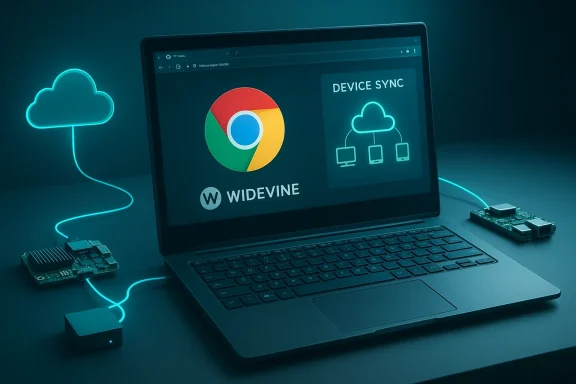
The official Chrome binary bundles features that go beyond the Chromium codebase:- Account-based sync of bookmarks, passwords, history, and settings — convenient for multi-device users.
- Widevine DRM, enabling major streaming services to work out of the box.
- Packaged proprietary codecs required for certain media playback scenarios.
- An integrated update and packaging model that many distributions and enterprises prefer.
Enterprise and education implications
Administrators who manage heterogeneous fleets — particularly with an increasing share of ARM laptops or Chromebooks — will welcome a consistent browser option. Policy controls that apply to Chrome (Group Policy style controls for managed devices, per-installation policy enforcement, and enterprise update channels) simplify deployment and reduce support overhead. For schools that mix Chromebooks, Windows, and Linux devices, a consistent Chrome experience reduces friction for students and IT staff alike.What Chrome-on-ARM64 Linux actually buys you
1. A “drop-in” Google experience
For many users, the chief advantage is account continuity. Sign into Chrome and your bookmarks, passwords, extensions, and settings follow you across devices. That continuity is especially attractive for people switching between Windows, macOS, and Linux machines but still wanting the same browser profile everywhere.2. DRM and paid content compatibility
Today, some streaming services and DRM-protected content either degrade on Linux ARM setups or require extra hacks (pulling Widevine from Chrome OS images, running emulated packages, or using device-specific browser builds). An official Chrome binary simplifies the legal gray area and technical gymnastics many users currently attempt just to watch streaming video.3. Performance and power efficiency
Native ARM64 builds remove the performance and battery penalties of translation layers. That matters on laptops and low-power devices, where native builds can provide better responsiveness, lower CPU usage, and longer battery life.4. Easier packaging and distribution
A Google-supplied binary means straightforward DEB/RPM packaging, maintained update channels, and the potential for official support in distributions and third-party installers. That reduces the maintenance burden for those who have been building from source or deploying community packages.The technical landscape and remaining questions
Where Chromium ends and Chrome begins
Chromium — the upstream project — has had ARM64 support in various forms for years. The hard part for an official Chrome binary has been integrating proprietary components (Widevine, certain codecs, and Google service bindings) into a Linux ARM64 build while ensuring the build and release infrastructure support packaging, signing, and distribution for multiple distributions and architectures.Several technical gaps have historically complicated this:
- Widevine on ARM64 Linux: distribution of the Widevine Content Decryption Module and its compatibility with various ARM kernels and libc versions has been a sticking point. Community workarounds have included extracting Widevine from Chrome OS images or relying on distribution-specific forks.
- Hardware-accelerated video: VA-API and vendor-specific acceleration have patchwork support across ARM GPUs. Ensuring consistent hardware acceleration across the many SoCs in the ARM ecosystem is nontrivial.
- System libraries and glibc versions: unlike macOS, Linux distributions vary widely. Ensuring a single binary works across Debian, Fedora, Ubuntu derivatives, and rolling distributions is a packaging challenge.
Packaging formats and distribution support
How Google chooses to ship Chrome for ARM64 Linux will shape adoption:- Will Google provide DEB and RPM packages for popular distributions?
- Will there be an official Snap, Flatpak, or AppImage packaging option that eases installation on many distros?
- How will updates and security patches be delivered — via Google’s own update channels or leveraged through distro packaging?
Security and update cadence
Chrome’s security model includes regular, predictable updates and an established pipeline for critical patches. ARM64 users have largely depended on distribution maintainers or community builds to ingest those updates. A Google-official binary would allow direct updates from Google, which is both a security improvement (faster, more consistent patches) and a new vector for administrators to consider (policy enforcement around update channels).Community tradeoffs: proprietary convenience vs. open alternatives
A key tension at the center of this story is the tradeoff between two camps:- Users and organizations who value the convenience and compatibility of the Google-branded Chrome binary (sync, Widevine, codecs, managed policies).
- Open-source purists and privacy-minded users who prefer Chromium or independent browsers that avoid Google’s proprietary integrations and account requirements.
- Whether Chromium can or should replicate Google-specific features in an open way (some features are inherently Google service integrations and can’t be open-sourced).
- How distributions and projects will respond: will they encourage users to stick with Chromium or support a Google-provided Chrome repo?
- How patching and policy enforcement will be handled in enterprise contexts where control over telemetry and account access matter.
What we still don’t know — and what to watch for
There are several facts and specifics that remain unclear at the time of the announcement window. These unknowns matter to end users, administrators, and distribution maintainers:- Exact release timing and channel: Q2 2026 is a wide window. Will Chrome land in Canary/Beta first and then push to Stable within the quarter? Will the initial distribution be limited to particular distributions or broader?
- Packaging and distribution channels: Will Google provide native DEBs and RPMs, or will the initial release be limited to select packaging formats (e.g., only official Debian packages)?
- Widevine and codec support: Will Widevine be included in the ARM64 builds from day one, and if so, under what licensing and distribution terms? Widevine availability is the primary reason many users choose Chrome over Chromium on other platforms.
- Hardware acceleration: Will the ARM64 builds include VA-API paths or other hardware-accelerated video decoding support out of the box for common ARM GPUs and drivers?
- Enterprise policy parity: Will the ARM64 Chrome deliver the same group policy controls and management tooling that enterprises rely on today?
For Linux distributions and packagers: practical checklist
If you manage distribution packaging, or you maintain images and preinstalled software for users, prepare for Chrome’s ARM64 arrival with the following steps:- Audit current Chromium-based workflows in your environment — identify sites or services that require Widevine or specific codecs.
- Test existing user profiles and extension compatibility on ARM64 hardware using Chromium builds to see what breaks.
- Plan for updates: decide whether you will consume Google’s update mechanism or repackage Google’s binary for your distro’s repositories.
- Review enterprise policies and MDM/management tools to ensure policy coverage for ARM64 Chrome parity.
- Prepare support documentation for users migrating profiles from x86 or macOS devices to ARM64 Linux.
Broader implications: competition, lock-in, and user choice
Google shipping Chrome on ARM64 Linux is more than a platform update — it affects the competitive landscape:- Browser choice: For users tempted to try Linux on new ARM devices, Chrome’s availability lowers the friction of switching away from Windows or macOS. That could make Linux a more credible alternative for some users who previously avoided it due to web compatibility concerns.
- Lock-in concerns: Chrome’s integration with Google services raises valid privacy and lock-in questions. The browser’s sync and account features are powerful, but they are also mechanisms that tie user data into Google’s ecosystem.
- Web ecosystem uniformity: With Chrome’s market dominance on desktop, a native ARM64 Chrome will make it easier for web developers and streaming services to assume Chrome parity on ARM Linux devices. That may reduce fragmentation for users, but it also sharpens the browser’s role as a de facto standard on the web.
Risk analysis
No product rollout is risk-free. Here are the principal risks and trade-offs to watch:- Partial support and fragmentation: If Google ships a Chrome binary that only works cleanly on a subset of distributions or lacks Widevine and hardware acceleration, early adopters will get a disappointing experience and community mistrust could grow quickly.
- Security patching backlog: If distribution-packagers lag in repackaging or republishing Google updates for their repositories, enterprises might be exposed to delayed patches unless they pivot to Google’s update channels.
- Privacy and telemetry concerns: Administrators and privacy-focused users will scrutinize Chrome’s telemetry and service integrations. Google will need clear documentation and enterprise controls to reassure these audiences.
- Dependency on vendor-specific DRM: Relying on proprietary DRM and codecs locks a portion of the platform’s functionality behind closed-source components. That’s fine for many users, but it does limit the openness of the experience and may complicate compliance in privacy- or DRM-sensitive environments.
How to prepare as a user
If you’re a Linux user with ARM64 hardware and you’re interested in trying Chrome when it becomes available, here’s a short plan:- Back up your current browser profile (bookmarks, passwords, extensions). This ensures an easy rollback if the new build behaves differently.
- Keep a Chromium build or an alternate browser installed for testing — not every extension or custom flag behaves identically across builds and architectures.
- Follow announcements from Google and your distribution maintainers. Expect a Canary/Beta rollout first if Google follows prior patterns.
- If you rely on Widevine-protected services, be cautious: test playback on a spare machine before switching your primary setup.
The verdict
Google shipping Chrome for ARM64 Linux is a practical, user-facing move that finally brings a degree of parity to an increasingly diverse hardware landscape. For users who need out-of-the-box DRM, codecs, and account sync, it removes a major friction point. For enterprises, it promises standardized deployment and fewer support headaches.That said, the devil will be in the details. How Google packages the product, how quickly it delivers Widevine and hardware acceleration parity, and whether it provides enterprise policy feature parity will determine whether this is a transformative moment or simply a cosmetic improvement.
For the Linux community, the arrival of Chrome on ARM64 will sharpen an ongoing debate: convenience versus control, proprietary features versus open-source purity. Both sides will have valid arguments. For most users, the immediate win is clear — less fiddling, more content that just works, and a familiar browser on new ARM devices.
Watch the next quarter closely. If Google hits the target window and delivers a well-packaged, fully featured ARM64 Chrome, the practical consequence will be immediate: more ARM laptops and devices will be ready for everyday users without the long list of caveats that has defined the ARM Linux experience until now. If the rollout is partial, the conversation will shift quickly from “arrival” to “expectations vs. reality,” and the community will respond in kind.
Either way, this is one of those infrastructure milestones that quietly reshapes user expectations: when the browser — the single most-used application on many machines — finally lines up with the silicon underneath, the effects are broader than you’d think.
Source: theregister.com ARM64 Linux users finally get Chrome date
