

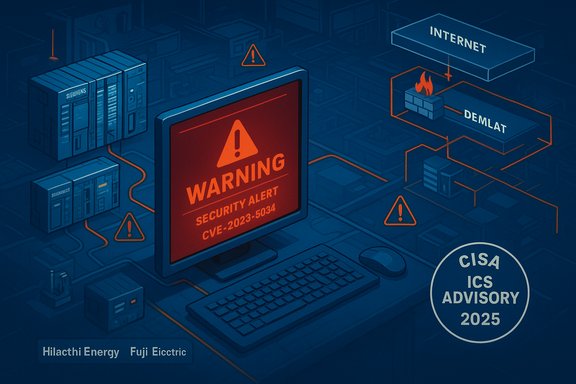
CISA’s January 16, 2025 bulletin that released twelve new Industrial Control Systems (ICS) advisories is a blunt reminder that attackers continue to find and weaponize weaknesses in the hardware and software that run critical infrastructure, and that operators must prioritize patching, segmentation, and compensating controls now—especially where vendors have no planned fix.
Industrial control systems advisories published by the Cybersecurity and Infrastructure Security Agency are a routine but critical mechanism for sharing actionable technical details about vulnerabilities affecting operational technology (OT). These advisories consolidate vendor-disclosed flaws, assign or reference CVE identifiers, report CVSS severity scores, and list recommended mitigations so asset owners can triage risk quickly across environments that are often difficult to patch and which frequently run legacy or single-purpose software.
The latest release bundles 12 advisories affecting a roster of mainstream ICS and building-management vendors: Siemens, Hitachi Energy, Fuji Electric, Schneider Electric, Delta Electronics, Johnson Controls, and updates to multiple Mitsubishi Electric products. The advisory package includes both new discoveries and Update-A releases that change guidance or note vendor patches. For operators of Windows-based engineering workstations, HMIs, or backend management servers—common in factories, data centers, and building management—this is high-priority reading: several items are remotely exploitable, and some permit code execution or privilege escalation.
Source: CISA CISA Releases 12 Industrial Control Systems Advisories | CISA
 Background
Industrial control systems advisories published by the Cybersecurity and Infrastructure Security Agency are a routine but critical mechanism for sharing actionable technical details about vulnerabilities affecting operational technology (OT). These advisories consolidate vendor-disclosed flaws, assign or reference CVE identifiers, report CVSS severity scores, and list recommended mitigations so asset owners can triage risk quickly across environments that are often difficult to patch and which frequently run legacy or single-purpose software.The latest release bundles 12 advisories affecting a roster of mainstream ICS and building-management vendors: Siemens, Hitachi Energy, Fuji Electric, Schneider Electric, Delta Electronics, Johnson Controls, and updates to multiple Mitsubishi Electric products. The advisory package includes both new discoveries and Update-A releases that change guidance or note vendor patches. For operators of Windows-based engineering workstations, HMIs, or backend management servers—common in factories, data centers, and building management—this is high-priority reading: several items are remotely exploitable, and some permit code execution or privilege escalation.
What’s in the 12 advisories — executive summary
- A cluster of Siemens-related advisories, including a Mendix LDAP LDAP-injection flaw (CVE-2024-56841), Industrial Edge Management and Siveillance camera issues, and several SIPROTEC/SIMATIC concerns.
- Multiple Hitachi Energy advisories for FOX61x / FOXCST / FOXMAN-UN products describing certificate-validation and path traversal problems (CVE series in the 2024–2025 range).
- A Fuji Electric Alpha5 SMART stack-based buffer overflow (CVE-2024-34579) assessed as high severity; Fuji’s guidance indicates an upgrade path rather than a patch for the affected generation.
- A Schneider Electric Data Center Expert package of flaws that can expose logs or allow manipulation of upgrade bundles (CVE-2024-8530 / CVE-2024-8531) and that require vendor-supplied fixes or configuration changes.
- Delta Electronics DRASimuCAD update noting memory safety bugs and type-confusion issues that can lead to code execution (CVE-2024-12834/12835/12836), and that a patch was published shortly after disclosure.
- Updates to prior ICS advisories for Mitsubishi Electric and Johnson Controls products clarifying affected versions and mitigation options.
- A number of the advisories include concrete CVSS scores, exploitability notes (remote vs. local), and no known public exploitation at time of release caveats.
Deep dive: notable advisories and technical implications
Siemens Mendix LDAP (LDAP injection — CVE-2024-56841)
- The Mendix LDAP module is affected by an LDAP injection that can allow an unauthenticated attacker to bypass username verification. The advisory lists a CVSS v3 score in the high range and recommends updating the Mendix LDAP module to the fixed release.
- Why it matters: Mendix is used to build web-facing applications and developer tools that sit in many OT environments as engineering front ends or asset-management overlays. LDAP injection can facilitate impersonation or unauthorized access without valid credentials.
- Mitigation and operator action: Apply the vendor-supplied update for the Mendix LDAP module immediately where in use, and ensure that any engineering or management consoles leveraging Mendix are not reachable from untrusted networks. Put strict access controls and network segmentation in place so exploitation paths are not internet-facing.
Fuji Electric Alpha5 SMART (Stack-based buffer overflow — CVE-2024-34579)
- Fuji’s Alpha5 SMART servo-drive product contains a stack-based buffer overflow that could permit arbitrary code execution under certain circumstances.
- The vendor guidance indicates no further fixes for Alpha5 SMART and recommends migration to the Alpha7 platform instead of a backported patch. That creates a long-term remediation burden: if systems cannot be upgraded for operational reasons, operators must rely on network and procedural mitigations only.
- Why it matters: Firmware and drive-level code-execution flaws are particularly hard to mitigate with network-only controls because some devices must communicate on the control network. When a vendor refuses or cannot backport a fix, the operator’s only recourse may be isolation, removal from service, or replacement—costly and time-consuming for production environments.
- Mitigation and operator action: Treat affected Alpha5 devices as high-risk. Immediately block administrative access from general-purpose networks, apply strict allow-lists/ACLs, and schedule replacement or upgrade to the supported Alpha7 family as part of an urgent remediation plan.
Hitachi Energy FOX61x / FOXCST / FOXMAN-UN family (Relative path traversal, certificate validation)
- These advisories cover a mix of issues including relative path traversal and improper validation of certificates, with some items rated as medium severity but exploitable remotely in certain configurations.
- Why it matters: Relays, protection devices, and substation automation elements commonly use these product families. Path traversal can expose configuration or credential files; certificate validation flaws can allow a man-in-the-middle attacker to intercept or manipulate commands.
- Mitigation and operator action: Apply vendor-supplied firmware updates where available. Where immediate patching is impractical, use stricter network controls, ensure mutual TLS is configured correctly, and monitor device logs and communications for anomalies.
Schneider Electric Data Center Expert (Improper verification of signature / log exposure — CVE-2024-8531 / CVE-2024-8530)
- Schneider’s Data Center Expert platform had vulnerabilities that could allow tampering of upgrade bundles (leading to root-level script execution) and exposure of private data via unprotected log artifacts.
- Why it matters: Data Center Expert is used to manage infrastructure at scale; an attacker who can trick an upgrade mechanism or access captured logs can both gain system-level control and harvest credentials or secrets used elsewhere.
- Mitigation and operator action: Upgrade to the patched vendor version where available. In the interim, verify SHA checksums of upgrade bundles, remove or restrict access to captured log archives, tighten least-privilege policies, and ensure management interfaces are not internet-accessible.
Delta Electronics DRASimuCAD (Out-of-bounds write, type confusion — CVE-2024-12834/12835/12836)
- DRASimuCAD, a robotic simulation and engineering product, had multiple memory-safety vulnerabilities that require patched software releases. The vendor published a patch and CISA’s advisory indicates updates were made available.
- Why it matters: Tooling used by robotics engineers often runs on Windows workstations and is used to generate or transfer configurations. A maliciously crafted project file opened in such tools can be an easy exploitation vector, especially when engineers also use the same machines for email or web browsing.
- Mitigation and operator action: Install vendor patches immediately on engineering workstations. Consider running untrusted file/attachments in sandboxed environments, enforce application whitelisting, and keep engineering hosts isolated from the corporate network.
Updates affecting Mitsubishi and Johnson Controls products
- Several advisories included Update A entries for previously disclosed issues affecting Mitsubishi and for Johnson Controls’ C•CURE 9000 family. These updates refined affected versions, added mitigation guidance, or noted vendor fixes.
- Why it matters: OT ecosystems are often heterogeneous. Updates that expand the list of affected versions or change remediation steps can alter an organization’s patch calendar and risk profile overnight.
- Mitigation and operator action: Re-scan inventories against the new affected-version lists, re-prioritize patch windows, and document compensating controls for any systems that cannot be patched immediately.
Critical analysis — strengths and limitations of this advisory package
Strengths
- Actionable, vendor-verified technical detail. Each advisory includes clear vulnerability descriptions, affected versions, assigned CVE identifiers, and CVSS metrics—helpful for prioritization.
- Practical mitigation guidance. Where vendors supply updates, CISA advisories summarize the recommended fixes and interim mitigations (network segmentation, restricted remote access, verifying upgrade artifacts).
- Coverage across OT stack. The advisories span device firmware, engineering tools, middleware, and management consoles, reflecting the full threat surface of modern industrial environments.
- Update mechanism for previously disclosed issues. The inclusion of Update-A advisories shows continuous monitoring and refinement—important when initial disclosures miss affected versions or mitigation nuances.
Risks and limitations
- Some vendors decline to patch legacy products. The Fuji Alpha5 SMART advisory explicitly directs users toward upgrade rather than an in-place patch. That leaves many operators with unsupported devices and operational dilemmas—retire, compensate, or accept residual risk.
- Advisories sometimes lack exploit-context. “No known public exploitation” is a repeated caveat. While correct at publication, the absence of active exploit telemetry does not imply low risk—adversaries often weaponize disclosed vulnerabilities quickly.
- Patching in OT is slow and high-risk. Many industrial environments cannot apply hotfixes without controlled downtime, and some updates require certification or revalidation. The advisories do not (and cannot) solve those operational constraints.
- Dependency on vendors’ advisory cadence. For some vendors (notably Siemens ProductCERT in a few cases), CISA will not provide extended updates beyond the initial advisory, shifting the onus back to the vendor and potentially scattering remediation details across multiple registries.
- Cross-environment exposure via engineering hosts. A recurring pattern is the exposure of Windows‑based engineering workstations as the weakest link. These devices frequently run vendor tools, browse the web, and hold admin credentials; a single exploited workstation can cascade into OT compromise.
Practical, prioritized actions for Windows-focused OT operators
Operators running Windows workstations, HMIs, or server-side management tools should treat this advisory set as a near-term call to action. The following checklist separates immediate triage from medium-term remediation.Immediate (hours-to-days)
- Inventory
- Draw a complete list of affected products and versions on your estate against the advisory lists.
- Isolate and segment
- Ensure all identified affected devices are not reachable from the internet and are behind firewalls; use VLANs and strict ACLs to limit access.
- Block risky interfaces
- Disable or restrict web interfaces, remote administration ports, and any FTP/HTTP endpoints if they are not required.
- Implement host-level controls
- For Windows-based engineering stations: enable application whitelisting, endpoint detection and response (EDR), and strict user privileges; require separate non‑admin accounts for email/web browsing.
- Apply available vendor patches
- For products with vendor patches available (for example, Delta’s DRASimuCAD patch), schedule urgent deployment into production after normal change control validation.
Short-to-medium term (weeks-to-months)
- Replace unsupported devices
- Where vendors have no intent to patch (e.g., Fuji Alpha5), plan for accelerated replacement or migration to supported hardware.
- Hardening and least privilege
- Remove or reduce administrative rights on devices and restrict scripting/remote execution where possible.
- Adopt secure engineering practices
- Avoid using the same host for internet browsing and engineering tasks; maintain dedicated, hardened engineering workstations with limited external connectivity.
- Strengthen supply chain controls
- Keep a secure procedure for applying upgrade bundles: verify digital signatures/checksum integrity prior to installation.
- Logging and detection
- Increase monitoring for anomalous behavior: outbound connections from engineering hosts, unexpected process launches, unusual file access patterns.
Long term (quarterly and beyond)
- Network micro-segmentation and zero-trust principles for OT
- Move toward fine-grained segmentation and mutual authentication for device-to-device communications.
- Vulnerability management cadence aligned with OT schedules
- Establish an OT-aware patch window cadence that balances safety, operational impact, and security urgency.
- Replace legacy protocols and devices where practical
- Where legacy devices cannot meet security requirements, budget for modernization projects that reduce technical debt and exposure.
Incident response considerations
- Treat any detection of exploitation attempts as high priority. Memory-corruption and remote code execution vulnerabilities can produce stealthy, persistent access.
- If an exploitation is suspected, disconnect affected devices from networks in a controlled manner and preserve forensic evidence. Coordinate any changes with plant safety and operations to avoid disrupting critical processes.
- Engage vendors and managed security partners early. Vendor advisories often include vendor-specific forensic or mitigation guidance.
- For environments with strict uptime demands, test containment steps in a representative sandbox before applying them in production.
Why this matters to Windows enthusiasts and admins
Many industrial toolchains depend on Windows-based engineering workstations and servers, and the attack chain commonly starts on those systems. A malicious file opened on a Windows host (e.g., a crafted project file in an engineering suite) remains one of the most common exploitation vectors. For Windows administrators supporting OT:- Harden engineering hosts as you would critical servers: apply updates, limit network exposure, use EDR, and apply application allow-lists.
- Maintain strict separation between corporate desktops and OT engineering consoles.
- Recognize that many ICS advisories affect vendor tools that operate on Windows—so desktop patching policies must integrate ICS advisories and vendor patches.
Final assessment and recommendations
The release of twelve ICS advisories is not unusual in volume but is notable in the quality of risk: several entries enable remote exploitation or escalate to full code execution, and at least one vendor has signaled no future fix for an affected product generation. Taken together, these advisories highlight three enduring realities for OT security:- Vulnerabilities will continue to be found in both vendor-supplied device firmware and in engineering tools running on general-purpose operating systems like Windows.
- Patch availability is uneven—some vendors supply timely updates, others recommend product upgrades or provide no fix—creating a spectrum of remediation options that operators must navigate carefully.
- The human and procedural elements—engineering workstation hygiene, patch management practices, and strict segmentation—remain the most effective mitigations when rapid patching isn’t feasible.
- Immediately map affected versions across your estate.
- Apply vendor patches where available and prioritize remote-exploitable code-execution flaws.
- Isolate and segment affected devices from untrusted networks.
- Harden Windows engineering hosts with EDR, whitelisting, and least-privilege accounts.
- Replace or retire unsupported devices that carry unpatchable critical flaws.
Source: CISA CISA Releases 12 Industrial Control Systems Advisories | CISA
