

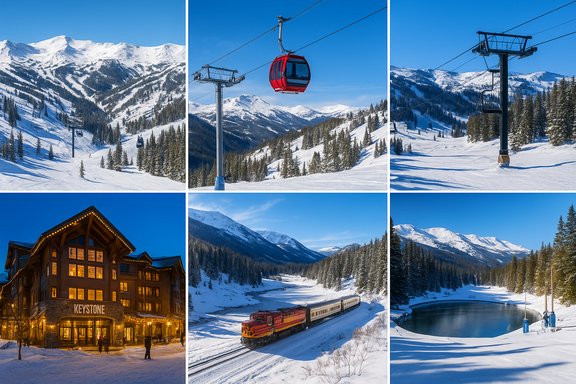
Colorado’s mountains are being reshaped for the holiday season: new terrain, major lift replacements, multimillion‑dollar snowmaking projects, boutique hotels and renewed rail and air links mean Winter 2025–26 will be one of the busiest and most consequential seasons for Colorado ski country in years.
Background / Overview
Colorado turns 150 in 2026, and the state and its tourism partners are treating the winter season as both a celebration and a strategic investment in long‑term mountain economy resilience. Statewide marketing and a calendar of events are pairing milestone anniversaries with concrete infrastructure and amenity upgrades at ski areas across the map. That combination makes the coming season an attention‑grabber for skiers, second‑home buyers, airline route planners and local communities alike. This article parses the biggest on‑mountain changes, explains how to get there, and weighs the upside for visitors and local economies against the environmental, logistical and social trade‑offs that come with high‑profile investment. The reporting below cross‑checks resort press pages, regional economic releases and independent local journalism to give readers an accurate picture of what’s new for a white Christmas in Colorado — and what to watch for if you plan to go.What’s new on the slopes: headline projects and openings
Monarch Mountain — No Name Basin expansion (377 acres)
Monarch Mountain will open the ambitious No Name Basin expansion for the 2025–26 season, adding roughly 377 acres of intermediate‑to‑advanced terrain across both sides of the Continental Divide. The resort’s materials describe a mix of lift‑served and hike‑to terrain including bowls, glades and long fall‑line runs that increase Monarch’s skiable acreage by approximately 50%. This expansion was permitted by the U.S. Forest Service and is slated to open with new named runs and access routes off existing lifts. Why it matters: for experienced skiers seeking uncrowded lines and big‑mountain terrain outside the major corporate resorts, the No Name expansion is a rare growth story that preserves the independent character Monarch promotes while increasing destination appeal.Caveats: big expansions bring permitting complexity, wildfire mitigation obligations, and ongoing maintenance costs—factors that can affect season‑to‑season operations in marginal snow years.
Keystone — Kindred Resort: Keystone’s first full luxury hotel
Keystone’s River Run Village will be transformed by Kindred Resort, a large luxury ski‑in/ski‑out property scheduled to open in late 2025 ahead of the winter season. Kindred promises a 107‑room hotel component, 95 residences, multiple dining concepts, a spa, kids’ programming and sizable outdoor amenities that aim to reposition River Run as a more upscale base village. The development is already featured in industry previews and resort press. Why it matters: Kindred signals a strategic pivot for Keystone from a family‑friendly, value positioning toward a higher‑end lodging mix that will drive new visitor demographics — and local debate about community character and housing pressures.Winter Park — Mary Jane’s 50th, bigger snowmaking and early‑season festivities
Winter Park Resort is marking Mary Jane’s 50th season with events and activations throughout the winter, anchored by a January birthday celebration. Alongside the anniversary programming, Winter Park completed a $37 million, two‑year snowmaking rebuild that doubles the resort’s previous snowmaking capacity — new reservoir, pump houses and pipework — to support faster early‑season openings and more reliable coverage across key terrain. The resort also revived and expanded the Winter Park Express ski train with special holiday runs in December and weekday service (Thursday–Sunday regular service beginning Jan 8, 2026). Winter Park’s early‑season festival, “Send’er November,” packages passholder perks, events and prize activations to encourage early visits. Why it matters: the combination of large‑scale snowmaking investment and improved transit access (train + expanded schedules) reduces reliance on perfect snowfall timing and car travel — a major convenience for day‑trippers from Denver and a resilience play for the resort.Snowmass (Aspen Snowmass) — Elk Camp six‑pack and Cirque T‑bar
Aspen Snowmass is deploying a major lift refresh this season: the Elk Camp quad is being replaced by a high‑speed six‑pack, and the high alpine Cirque platter is being converted to a T‑bar, with the Cirque lift described as one of the highest surface lifts in North America. The upgrades are part of a broader Aspen Snowmass capital package of nearly $80 million across its four mountains. These projects aim to increase capacity, reduce queues and improve uphill bike and skier access. Why it matters: such lift improvements have outsized impact on on‑mountain flow and summer bike‑park throughput as well as winter skier comfort — but they come with heavy engineering, drilling and foundation work at altitude.Purgatory Resort — $6M+ in improvements for 60th anniversary
As Purgatory Resort in southwest Colorado approaches its 60th anniversary, the resort has announced more than $6 million in capital improvements including expanded snowmaking, a new fixed‑grip triple chairlift serving five new trails, a new snowcat, and targeted glading projects. The work is designed to strengthen early‑season reliability and expand accessible terrain on the mountain’s backside. Why it matters: mid‑size regional resorts investing in snowmaking and lifts can significantly improve local access, add acreage for families and intermediates, and support area economies that rely on winter visitation.Cuchara Mountain Park (Panadero Ski Corporation) — community hill revival
Panadero Ski Corporation and local government partners have advanced the long‑running effort to revive Cuchara Mountain Park in southern Colorado. Lift 4 — out of service for roughly 25 years — is the focus of repairs and certification work that, if approved by the Colorado Passenger Tramway Safety Board, will reintroduce lift‑served skiing alongside low‑cost programming and community‑oriented day rates. The nonprofit operator has run snowcat and “ski bus” operations during the work and is pursuing affordable, family‑oriented offerings. Why it matters: Cuchara’s revival is a rare example of a community‑led reopening of a historic ski hill, prioritizing affordability and youth programs rather than luxury development. Certification and funding remain the critical steps to full lift operation.Transportation and access: trains and direct flights that matter
Winter Park Express returns — expanded holiday service and weeknight runs
The Amtrak Winter Park Express returned with increased service for the 2025–26 season: holiday weekend runs in late December, and then regular Thursday–Sunday service from January 8 through March 29, 2026, with one‑way fares starting at historically low promotional levels. The partnership between Amtrak, Winter Park Resort and Colorado transportation agencies is explicitly framed as a sustainable alternative to driving I‑70. Practical benefit: the train departs Denver Union Station at 7:00 a.m. and returns from Winter Park in the late afternoon — ideal for day trips and for travelers who prefer rail plus gondola to mountain driving.Eagle County Regional Airport (EGE) joins United’s 7‑Hub Club
Eagle County Regional Airport announced new seasonal nonstop service to Washington Dulles (IAD) via United Airlines, joining a network of nonstop United routes that now touch seven major United hubs (ORD, DEN, IAH, LAX, EWR, SFO, IAD). This kind of air connectivity shortens travel time for East and West Coast travelers bound for Vail and Beaver Creek communities during peak winter weeks. Why it matters: direct seasonal flights matter more than ever for resort economies because they concentrate arrivals into narrow windows and can help reduce long highway transfers and rental‑car pressure — but they are also highly seasonal and often rely on revenue guarantees and public/private subsidies to operate.The economics and community impacts
Tourism stimulus vs. community disruption
The investments above funnel fresh visitor demand into towns that already face housing shortages, staff recruitment challenges and infrastructure strain. Luxury hotel openings (Kindred, White Elephant Aspen, others) can elevate local tax revenue, lift retail and dining receipts, and support more year‑round employment. But communities are already debating whether higher‑end development displaces workforce housing and changes the local character that made many ski towns attractive to begin with. Recent reporting shows pushback in some communities around public spending and the distribution of benefits.Jobs, small business and multiplier effects
Capital projects create seasonal construction jobs and longer‑term hospitality positions; expanded snowmaking and lift capacity also reduce weather risk for operators, shortening the revenue volatility associated with early/late seasons. Smaller community lifts and reopenings (Cuchara) deliberately target affordability and youth programming, which promises to expand participation rather than just upscale the market.Environmental and technical trade‑offs
Snowmaking and water use
An obvious trade‑off is snowmaking: Winter Park’s $37 million rebuild and upgrades at other resorts materially improve season reliability, but large snowmaking systems consume water and energy and require reservoir, pump and pipe infrastructure that can affect local streams and water rights. Resorts increasingly emphasize efficiency upgrades and automation to reduce environmental footprints, but snowmaking is not a climate‑neutral solution — it is a hedge that still depends on cold temperatures and water resources. Readers should expect continued debate about resource impacts and permitting oversight as systems expand.Permitting, safety and certification
Several projects require state or federal approvals: Monarch’s expansion worked through U.S. Forest Service permitting; Cuchara’s Lift 4 must pass Colorado’s Tramway Safety Board inspections; major lift installations involve foundations, helicopter work and stringent mechanical inspections. These regulatory steps can delay openings and sometimes require mitigation measures or additional public hearings. In short: announced openings are not the same as guaranteed operating dates.Wildfire risk and forest health
Climate‑driven wildfire risk remains the silent variable for mountain resorts. Many operators now incorporate forest‑health treatments and fuel‑reduction projects into capital plans; such efforts are necessary but take time to show benefits. Visitors should understand that extreme weather and wildfire smoke can still influence season quality and accessibility.Practical travel and planning guide for readers
If you want to chase a white Christmas or a festive ski break in Colorado this season, here’s a compact planning playbook:- Book travel early. Flights into EGE or tickets on the Winter Park Express sell fast when direct service and anniversary events line up.
- Check lift and certification updates. For small reopenings like Cuchara’s Lift 4, monitor operator status pages — certification approvals can shift opening day expectations.
- Factor transport time. Amtrak’s ski train is a slower but stress‑free option; flight arrivals to EGE compress transfer times but can be seasonal. Plan buffer days for weather or mechanical disruptions.
- Consider passes and perks. Ikon and Epic Pass changes matter for access; resorts are also packaging early‑season promotions (e.g., Winter Park’s Send’er November) with passholder benefits. Book lodging and lessons early if you want guaranteed spots during anniversary weekends.
- Respect local priorities. Many mountain towns are balancing visitor demand with housing and infrastructure constraints. Support local businesses and mind parking, shuttle rules and environmental guidance.
Risks, unknowns and cautionary flags
- Seasonal flight and train schedules can change: airline routes are frequently seasonal and may depend on minimum revenue guarantees or public subsidies — treat newly announced nonstop flights as seasonal and subject to adjustment.
- Permits and certifications remain in play: several project timelines (lift reopenings, expansions) hinge on board approvals or final construction milestones; monitor official resort updates rather than relying solely on early press coverage. If you’re booking travel around a reopening, verify the lift is open before finalizing non‑refundable travel purchases.
- Environmental trade‑offs are real: snowmaking and reservoir work improve reliability but are not a permanent fix against climate variability and can strain local water systems during low‑water years. Resorts emphasize efficiency, but the environmental calculus is complex and locally specific.
- Community impacts: luxury hotel development and increased visitation can raise housing costs and staff shortages in host communities; some residents and local leaders are already pushing back on public spending being used for milestone celebrations. Readers should factor in the social context of a visit.
Strengths — what’s exciting about the season
- More reliable early‑season access: $37M of snowmaking investment at Winter Park plus targeted snowmaking at mid‑sized resorts improves the odds of early openings and consistent coverage for learners and families.
- New and expanded terrain: Monarch’s No Name and Purgatory’s trail additions increase powder options and route diversity for intermediates and experts alike, spreading traffic across more acres.
- Better access without driving: Amtrak’s Winter Park Express and expanded seasonal air routes to EGE reduce dependence on mountain highway driving, an underappreciated convenience for many visitors.
- Diverse options for different budgets: From affordable community revivals like Cuchara to high‑end lodging like Kindred and White Elephant, winter offerings span price points and experiences.
Conclusion
The 2025–26 winter season in Colorado is shaping up to be a milestone year: a mix of celebratory programming for the state’s 150th alongside foundational investments that will alter how visitors access and experience the mountains. For winter travelers, that means more ways to reach the slopes, new terrain to explore and improved early‑season access; for host communities it means economic opportunities tempered by legitimate concerns about housing, resource use and local character.If the goal is a true white Christmas in Colorado, the odds look stronger than in many recent seasons — but the prudence is the same as ever: plan early, confirm operational details close to travel dates, and recognize that these upgrades are part of a broader, sometimes fraught recalibration of mountain tourism. The season is as much about adrenaline and family memories as it is about stewardship and balance; the coming months will tell whether this new wave of investment can deliver both celebration and sustainability.
Source: psnews.com.au Dreaming of a white Christmas in Colorado | PS News
