

Microsoft’s Copilot just picked up a new kind of teammate: Anthropic’s agent technology. Announced on March 9, 2026, Copilot Cowork is Microsoft’s strategic bid to bring agentic AI—AI that can act across apps and carry long-running tasks with limited human intervention—directly into the Microsoft 365 experience, and it does so by integrating elements of Anthropic’s recently released Claude Cowork and Claude agent architecture into Copilot’s ecosystem.
For most of the past two years Microsoft’s Copilot story has been synonymous with chat-first productivity powered largely by OpenAI models and Microsoft’s own integrations. That changed this week: Microsoft framed its Copilot Wave 3 release as an expansion of model diversity and agent-first capabilities, adding Anthropic’s Claude agent stack alongside existing OpenAI-based options and new orchestration tools aimed at enterprise governance.
Anthropic launched its own Cowork product earlier in 2026 as a desktop- and enterprise‑oriented agent mode for Claude, positioning it as “Claude Code without the code” for knowledge workers. Claude Cowork was widely reported as a milestone for agentic AI because it combined multi‑step automation, file and app access, and plugin marketplaces for enterprise workflows. Microsoft’s announcement states explicitly that some of the same technologies that power Claude Cowork are now available inside Microsoft 365 Copilot under the Copilot Cowork umbrella.
Microsoft also used the Wave 3 launch to announce two commercial moves that matter to IT buyers: a new Microsoft 365 E7 pack that bundles Copilot, advanced security suites and agent orchestration tools for $99 per user per month, and Agent 365—the control plane for managing AI agents—set for general availability on May 1, 2026 at $15 per user per month. Those dates and prices were confirmed in Microsoft’s Wave 3 communication to customers.
Also, while Anthropic’s standalone Cowork had local‑history and local execution modes in some previews, the Copilot-integrated version runs inside Microsoft’s cloud and Microsoft 365 security stack. That change affects data residency and governance assumptions: behavior that was local-only in Anthropic’s consumer/desktop previews may not hold when the same agent model is managed inside a multi-tenant corporate cloud environment.
Bringing Anthropic’s agent approach into Copilot gives Microsoft three immediate advantages:
Key technical notes for IT:
These price points matter. The $99 E7 SKU and $15 Agent 365 add-on represent a premium product tier that bundles both productivity AI and the security/observability layers enterprise buyers will demand. For many IT organizations, the value calculus will hinge on three questions:
Important caveat: these market-impact figures are demonstrative of investor sentiment and are time‑window dependent—small differences in index composition, the precise dates used, and the measurement windows can produce large swings in headline numbers. Treat any specific dollar‑value headline with skepticism unless it is anchored to a clearly defined index and period.
That said, the technology is not plug-and-play. Early adopters should treat Copilot Cowork as a powerful but immature capability that requires rigorous governance, careful pilot selection, and a clear rollback plan for any automated activity that touches regulated data or customer outcomes. The Agent 365 control plane and the E7 bundle are Microsoft’s recognition that governance is not optional—yet the true test will be how effectively these controls prevent missteps at scale.
For CIOs and IT leaders, the practical path forward is clear: pilot early, instrument everything, limit agent privileges, and insist on transparency about where models run and how data is handled. Do that, and agents like Copilot Cowork can become credible productivity multipliers; skip the governance steps, and the next headline will likely be about a costly automation failure rather than about efficiency gains.
In short: Copilot Cowork is less a finished product than the formalization of a new operating model—one where agents sit alongside people in enterprise workflows. The technical capability is arriving faster than governance norms, and Microsoft’s bundling of security and management tools is a direct response to that gap. The first organizations that pair disciplined governance with pragmatic pilot programs will likely reap the benefits; the rest will learn the hard way why agent governance matters.
Source: ETHRWorld.com Microsoft taps Anthropic for Copilot Cowork in push for AI agents
 Background
For most of the past two years Microsoft’s Copilot story has been synonymous with chat-first productivity powered largely by OpenAI models and Microsoft’s own integrations. That changed this week: Microsoft framed its Copilot Wave 3 release as an expansion of model diversity and agent-first capabilities, adding Anthropic’s Claude agent stack alongside existing OpenAI-based options and new orchestration tools aimed at enterprise governance.Anthropic launched its own Cowork product earlier in 2026 as a desktop- and enterprise‑oriented agent mode for Claude, positioning it as “Claude Code without the code” for knowledge workers. Claude Cowork was widely reported as a milestone for agentic AI because it combined multi‑step automation, file and app access, and plugin marketplaces for enterprise workflows. Microsoft’s announcement states explicitly that some of the same technologies that power Claude Cowork are now available inside Microsoft 365 Copilot under the Copilot Cowork umbrella.
Microsoft also used the Wave 3 launch to announce two commercial moves that matter to IT buyers: a new Microsoft 365 E7 pack that bundles Copilot, advanced security suites and agent orchestration tools for $99 per user per month, and Agent 365—the control plane for managing AI agents—set for general availability on May 1, 2026 at $15 per user per month. Those dates and prices were confirmed in Microsoft’s Wave 3 communication to customers.
What Copilot Cowork is (and what it is not)
The promise: agents that go beyond chat
Copilot Cowork is designed to let organizations create, deploy and manage AI agents that:- Carry out multi-step, long-running tasks across Microsoft 365 apps (Word, Excel, Outlook, Teams, PowerPoint).
- Orchestrate file analysis, data extraction, document generation and cross‑app workflows with less human orchestration.
- Leverage model diversity so Copilot can select or be instructed to use the best model for a given task—be that an OpenAI GPT variant or an Anthropic Claude Sonnet model.
The reality: preview, limited rollout, and guardrails
Copilot Cowork is being released as a research preview and will be made more broadly available via Microsoft’s Frontier program in late March, with the full Agent 365 control plane and E7 suite landing May 1. That preview framing is important: enterprise customers should expect early-stage rough edges, limited admin tooling at first, and a phased rollout for integration with governance systems.Also, while Anthropic’s standalone Cowork had local‑history and local execution modes in some previews, the Copilot-integrated version runs inside Microsoft’s cloud and Microsoft 365 security stack. That change affects data residency and governance assumptions: behavior that was local-only in Anthropic’s consumer/desktop previews may not hold when the same agent model is managed inside a multi-tenant corporate cloud environment.
Why Microsoft licensed Anthropic’s technology
Tactical reasons: speed and differentiation
Microsoft has an established, deep working relationship with multiple frontier AI vendors—OpenAI historically being the primary partner. Anthropic’s Cowork moved the public conversation about agentic AI from research demos to usable office workflows in a matter of weeks, and its reception among enterprise adopters made it a clear tactical fit for Microsoft’s Copilot roadmap.Bringing Anthropic’s agent approach into Copilot gives Microsoft three immediate advantages:
- A different style of reasoning and agent orchestration (Anthropic’s Claude Sonnet lineage excels in certain structured reasoning tasks).
- Product parity and speed-to-market for agent features that customers are already testing with Anthropic.
- Model diversity that helps Microsoft avoid being perceived as exclusive to any single vendor and lets Copilot dynamically pick the best model for a task.
Strategic reasons: platform control and product bundling
Microsoft’s long-term platform play is to make Copilot the hub for productivity intelligence across the enterprise. Embedding Anthropic’s agent tech is a way to accelerate the agent story without ceding the management plane. The launch of Agent 365 and Microsoft 365 E7 shows Microsoft wants to own the operational side of agents—security, identity, observability—even if the agent’s reasoning engine comes from a third party.How the integration appears to work (technical overview)
Agent architecture and orchestration
From Microsoft’s documentation and Anthropic’s public materials, Copilot Cowork appears to reuse the same conceptual split seen in modern agent systems:- Model core: Anthropic’s Claude Sonnet family provides the reasoning and task decomposition capabilities.
- Agent harness: A Microsoft orchestration layer coordinates model calls, app connectors, plugins, and state persistence.
- Control plane: Agent 365 acts as the governance and observability layer for inventory, policy enforcement, and lifecycle management.
Connectors, plugins and app access
Anthropic’s Cowork emphasized plugins and connectors to read files, manipulate spreadsheets, and drive browser actions. Microsoft’s Copilot Cowork brings that concept into an ecosystem already rich with connectors: Microsoft lists integrations that make agents capable of interacting with Exchange/Outlook, SharePoint, OneDrive, Teams and Power Platform workflows.Key technical notes for IT:
- Identity and access management are enforced using Microsoft Entra and conditional access.
- Endpoint and agent behavior can be governed through Defender, Purview, and Intune policies when agents are used under E7 and Agent 365.
- Agents will have registries and telemetry surfaced in Agent 365 so admins can enumerate, inspect, and revoke agent credentials and scopes.
Pricing, licensing and enterprise packaging
Microsoft positioned Copilot Cowork inside a new enterprise offering cadence:- Microsoft 365 E7: The Frontier Suite will be available May 1, 2026, at a retail price of $99 per user per month. The E7 bundle includes Microsoft 365 Copilot, Agent 365, Microsoft Entra Suite, and Microsoft 365 E5 with Defender, Intune and Purview capabilities.
- Agent 365: The agent control plane will be generally available May 1, 2026 at $15 per user per month.
These price points matter. The $99 E7 SKU and $15 Agent 365 add-on represent a premium product tier that bundles both productivity AI and the security/observability layers enterprise buyers will demand. For many IT organizations, the value calculus will hinge on three questions:
- Will agents produce measurable labor savings or revenue gains?
- Can the organization enforce acceptable risk thresholds through Agent 365 and related security tooling?
- Is vendor lock-in risk acceptable given multi‑model sourcing?
Market reaction and investor context — interpret with caution
Anthropic’s Cowork debut earlier in 2026 triggered market ripples: several outlets reported a substantial selloff across enterprise software names as investor expectations for incumbents shifted. Estimates of the market impact vary. Some publications reported figures in the low hundreds of billions of dollars in market capitalization change across affected companies; others described large re‑ratings in software valuations tied to the prospect that agentic AI could automate tasks that were previously stable revenue streams for SaaS vendors.Important caveat: these market-impact figures are demonstrative of investor sentiment and are time‑window dependent—small differences in index composition, the precise dates used, and the measurement windows can produce large swings in headline numbers. Treat any specific dollar‑value headline with skepticism unless it is anchored to a clearly defined index and period.
Strengths: where Copilot Cowork is likely to add enterprise value
- Rapid productivity gains for knowledge work: Agents can reduce repetitive, manual tasks like summarization, data extraction, meeting prep, and report generation by orchestrating multiple apps automatically.
- Model choice and flexibility: By supporting Anthropic’s Claude models in addition to OpenAI variants, Copilot can route tasks to the model best suited for a particular pattern of reasoning.
- Operational governance: Agent 365, Entra, Purview and Defender integration addresses a major blocker for earlier agent demos—the lack of enterprise-level visibility and controls.
- Commercial scale and distribution: Microsoft’s reach through Microsoft 365 and its partner ecosystem makes agent deployment and lifecycle management easier for large organizations.
- Bundled security posture: Including advanced Defender and Purview features in E7 acknowledges that enterprises prioritize security and compliance above pure feature novelty.
Risks, weaknesses and open questions
- Model behavior and emergent agent risks: Agents are probabilistic systems that can pursue multi-step goals. There are real risks of unwanted behavior—information disclosure, incorrect automation steps, or actions that violate policy—if control planes are incomplete or misconfigured.
- Data flow and residency concerns: Anthropic’s desktop Cowork emphasized local history for privacy in some previews. When those models run inside Microsoft’s cloud and have cross‑app access, data residency and retention policies change. Organizations must confirm how conversational context, extracted data, and logs are stored and who can access them.
- Third‑party model dependency: Integrating Anthropic’s models into Copilot diversifies Microsoft’s model stack, but it also creates operational complexity: versioning, model updates, and differing safety expectations across providers can complicate compliance and forensic analysis.
- False sense of automation maturity: Agents raise expectations—some organizations may expect agentic AI to produce flawless end-to-end automation. In practice, many workflows will still require human-in-the-loop checkpoints, validation and monitoring.
- Regulatory and legal exposure: Agents that act autonomously across customer data sets could trigger regulatory scrutiny depending on sector (healthcare, finance, government). Contracts, data processing addenda and vendor due diligence will need to be updated accordingly.
- Vendor economics and lock-in: The E7 price point and Agent 365 subscription structure will make switching costs material for large organizations that adopt agentic features at scale.
Security, compliance and governance: what Agent 365 offers—and what to verify
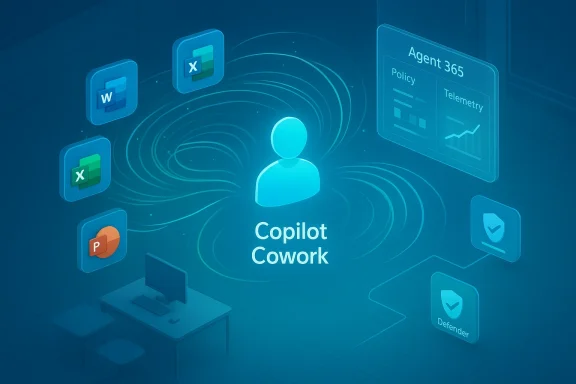
Agent 365 is Microsoft’s answer to the governance problem: a control plane to observe, govern, and manage agents across the enterprise. Key capabilities Microsoft has highlighted include:- Agent registry: inventory of agents, creators, permissions and operational history.
- Policy enforcement: centralized policy application for data access, external system calls and plugin installation.
- Telemetry and observability: audit logs, usage metrics, and anomaly detection tied to Defender and Purview.
- Identity and credential management: agent identities are managed by Entra and can be subject to conditional access and MFA-like restrictions.
- Exactly which data flows are logged and for how long.
- Whether agent actions that touch regulated data can be blocked or quarantined.
- How to revoke agent credentials and roll back actions taken autonomously.
- The granularity of plugin and connector allowlisting in their environment.
- The model update cadence and how security patches or behavioral mitigations are applied to the underlying models.
Practical guidance for IT leaders evaluating Copilot Cowork
If your organization is considering a pilot or early adoption, follow a staged, risk-managed approach:- Start with low‑risk pilot workflows.
- Use agents for internal knowledge tasks (e.g., summarizing internal reports, triaging support tickets) rather than customer-facing or compliance-critical processes.
- Define explicit acceptance criteria.
- Measure correctness thresholds, error rates, and remediation time for agent mistakes.
- Enforce strict plugin and connector allowlists.
- Only allow connectors that are approved by security and legal teams.
- Integrate agent telemetry into existing SIEM and SOAR systems.
- Make agent events first-class objects in your incident management flow.
- Maintain human-in-the-loop approval for high-impact actions.
- Use agents to draft or prepare, not to finalize or publish, until they meet validated thresholds.
- Update contracts, data processing agreements and vendor assessments.
- Ensure third-party models and agents are covered by your organization’s due diligence and compliance frameworks.
- Train staff on agent behavior and phishing risk to agents.
- Agents can be targeted by adversaries (e.g., malicious prompts or data inputs); staff should know how to recognize and report anomalies.
Competitive landscape and what this means for vendors
Microsoft’s move to incorporate Anthropic’s agent technology is part of a broader industry trend: major platform vendors are shifting from chat assistants to agent-enabled productivity abstractions. The immediate competitive implications are:- Established SaaS vendors must defend on unique domain value and embedded workflow capabilities; commodity automation of content and basic analysis is now a table stakes risk.
- Niche vendors that provide vertical, regulated or deeply customized workflows may benefit if they can integrate agents safely and provide domain-specific guardrails.
- Frontier AI firms are now both partners and competitors—Microsoft’s multi-model approach shows that platform firms see value in being aggregator and controller of models rather than single‑vendor lock-in.
Long-term implications: agents as part of the enterprise fabric
Agents will not just be new UI toys. Over time they have the potential to:- Change job designs for routine, knowledge-intensive roles by reallocating repetitive cognitive tasks to agents.
- Make “workflow orchestration” a critical IT competency—equivalent to mobile device management or identity management today.
- Shift compliance regimes as regulators adapt to AI decisions being made over time and across systems.
Final assessment
Microsoft’s Copilot Cowork is a pragmatic and significant next step in enterprise AI. By combining Anthropic’s agentic reasoning with Microsoft’s security, identity and governance tooling, the company is attempting to move agentic AI from demos and research previews into a structure that enterprise IT can accept.That said, the technology is not plug-and-play. Early adopters should treat Copilot Cowork as a powerful but immature capability that requires rigorous governance, careful pilot selection, and a clear rollback plan for any automated activity that touches regulated data or customer outcomes. The Agent 365 control plane and the E7 bundle are Microsoft’s recognition that governance is not optional—yet the true test will be how effectively these controls prevent missteps at scale.
For CIOs and IT leaders, the practical path forward is clear: pilot early, instrument everything, limit agent privileges, and insist on transparency about where models run and how data is handled. Do that, and agents like Copilot Cowork can become credible productivity multipliers; skip the governance steps, and the next headline will likely be about a costly automation failure rather than about efficiency gains.
In short: Copilot Cowork is less a finished product than the formalization of a new operating model—one where agents sit alongside people in enterprise workflows. The technical capability is arriving faster than governance norms, and Microsoft’s bundling of security and management tools is a direct response to that gap. The first organizations that pair disciplined governance with pragmatic pilot programs will likely reap the benefits; the rest will learn the hard way why agent governance matters.
Source: ETHRWorld.com Microsoft taps Anthropic for Copilot Cowork in push for AI agents