Satya Nadella’s short, pointed message to Microsoft’s gaming teams — “For me, we’re long on gaming. We’ll continue to invest, and we’ll always do so.” — landed like both a reassurance and a challenge: reassurance that the company’s commitment to games remains, and a challenge that words must now be matched by results as Xbox enters a period of strategic re‑definition under new leadership.
The Xbox business has been one of Microsoft’s most visible and volatile consumer-facing ventures for a quarter century. Under Phil Spencer’s leadership — the public face of Xbox for more than a decade and the architect of several of its most consequential moves — the brand moved from console survival mode into subscription and platform play. Spencer’s tenure brought big, bold bets: rebuilding consumer trust after the Xbox One launch missteps, investing heavily in first‑party studios, expanding Xbox to the PC ecosystem, and placing Game Pass at the center of Xbox’s business model.
Those strategic choices changed both what Xbox is and how Microsoft thinks about gaming. Xbox stopped being only a box that sits under a TV; it became a cross‑device ecosystem of consoles, Windows PC, and cloud streaming tied together by subscription economics. The Activision Blizzard acquisition, closed in October 2023 after an extended regulatory battle, remains the largest seismic event attached to that strategy — a deal meant to provide Microsoft with scale, marquee IP, and leverage in the subscription era.
The recent turbulence around leadership — Phil Spencer’s retirement in February 2026 and the appointment of Asha Sharma, a senior Microsoft AI executive, as CEO of Microsoft Gaming — has intensified questions about Xbox’s future direction. Nadella’s internal Q&A, hosted by Sharma and reported across multiple outlets, was intended to quell doubts inside Microsoft and in the broader gaming ecosystem. His remarks, and Sharma’s public framing of the next-generation console effort called Project Helix, are now the starting points for a revisit of Xbox’s strategic priorities.
His core lines were plain: Microsoft won’t abandon gaming; it is a long‑term investment for the company. Nadella’s phrasing — “we’re long on gaming” and “we’ll always do so” — was deliberately emphatic. The intent was to signal institutional support for both continued investment in AAA games and for broader experimentation that extends the reach of gaming beyond traditional console boundaries.
Key questions for Microsoft’s content strategy:
Project Helix, Asha Sharma’s leadership, and Microsoft’s broader strategy will be judged not by mission statements but by tangible outcomes: the feel of the hardware in gamers’ hands; the emotional resonance of the games shipped; the fairness of the economics for developers; and whether Game Pass continues to represent value rather than just convenience.
Microsoft has the resources and the reasons to stay in gaming. The company now needs the discipline and humility to steward the craft of game development, to protect the console promise even as it experiments with convergence, and to earn back the trust of players through excellence in execution. Only then will Nadella’s commitment be more than a declaration — it will be a demonstrated reality.
Source: Techlusive Satya Nadella says Microsoft will “always continue to invest in gaming”
 Background
The Xbox business has been one of Microsoft’s most visible and volatile consumer-facing ventures for a quarter century. Under Phil Spencer’s leadership — the public face of Xbox for more than a decade and the architect of several of its most consequential moves — the brand moved from console survival mode into subscription and platform play. Spencer’s tenure brought big, bold bets: rebuilding consumer trust after the Xbox One launch missteps, investing heavily in first‑party studios, expanding Xbox to the PC ecosystem, and placing Game Pass at the center of Xbox’s business model.Those strategic choices changed both what Xbox is and how Microsoft thinks about gaming. Xbox stopped being only a box that sits under a TV; it became a cross‑device ecosystem of consoles, Windows PC, and cloud streaming tied together by subscription economics. The Activision Blizzard acquisition, closed in October 2023 after an extended regulatory battle, remains the largest seismic event attached to that strategy — a deal meant to provide Microsoft with scale, marquee IP, and leverage in the subscription era.
The recent turbulence around leadership — Phil Spencer’s retirement in February 2026 and the appointment of Asha Sharma, a senior Microsoft AI executive, as CEO of Microsoft Gaming — has intensified questions about Xbox’s future direction. Nadella’s internal Q&A, hosted by Sharma and reported across multiple outlets, was intended to quell doubts inside Microsoft and in the broader gaming ecosystem. His remarks, and Sharma’s public framing of the next-generation console effort called Project Helix, are now the starting points for a revisit of Xbox’s strategic priorities.
What happened: leadership, messaging, and timing
The leadership shuffle, in brief
- Phil Spencer announced his retirement from Microsoft Gaming in mid‑February 2026, wrapping up a career at Microsoft that began in the late 1980s. Reports across the trade press indicated the announcement was publicized between February 20 and February 23, 2026, with Spencer remaining available in an advisory capacity during the transition.
- Asha Sharma, previously president of Microsoft’s CoreAI product organization, was promoted to CEO of Microsoft Gaming (sometimes reported with effective dates in late February 2026). The shuffle also included other moves within Microsoft Gaming leadership, such as promotions and departures in studio and platform ranks.
- The changes were rapid and surprising to many observers because Sharma’s profile before the move had been rooted in AI product leadership rather than studio management, console design, or publisher operations.
Nadella’s internal Q&A: the message
In an internal session that Microsoft allowed to be reported on by major gaming press, Satya Nadella framed gaming as one of Microsoft’s defining identities — alongside platform engineering, developer tools, and productivity software. He reminded staff that gaming historically drove advances the company later leveraged across other businesses: graphics APIs, GPU acceleration, and cloud scale were cited as examples.His core lines were plain: Microsoft won’t abandon gaming; it is a long‑term investment for the company. Nadella’s phrasing — “we’re long on gaming” and “we’ll always do so” — was deliberately emphatic. The intent was to signal institutional support for both continued investment in AAA games and for broader experimentation that extends the reach of gaming beyond traditional console boundaries.
Why the reassurance matters
Nadella’s message did not occur in a vacuum. The past 18 months had seen a mixture of moves that created friction among fans, partners, and even some internal stakeholders:- Microsoft’s multiplatform posture — releasing titles across console and PC, and using Game Pass as the primary distribution lever — has sometimes frustrated console‑first fans who equate Xbox identity with exclusive, console‑defining franchises.
- Industry chatter and commentary had raised the specter that Microsoft might deprioritize or rethink console hardware as it channels resources toward cloud services and AI. Those concerns were stoked by the appointment of an AI executive to lead gaming.
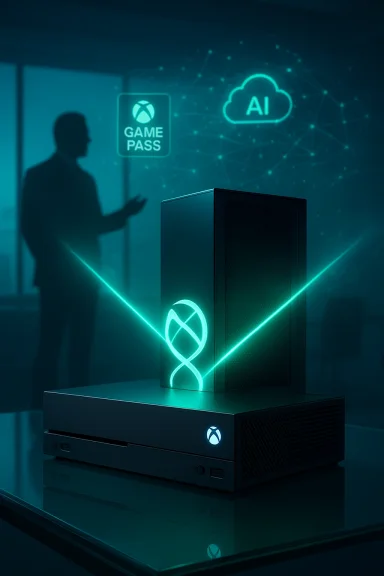
- Project Helix — the internal codename for Microsoft’s next hardware effort — was publicly teased as a device that plays both Xbox and PC titles, prompting conversations about whether Xbox is becoming more of a Windows‑centric device than a distinct console platform.
Project Helix: what we know and what we don’t
The confirmed kernels
- Project Helix is the internal codename Microsoft has attached to the next‑generation Xbox hardware effort.
- Microsoft’s new gaming leadership has publicly stated the system will run both Xbox and PC games and that Microsoft is working to make the Xbox Full Screen Experience for PC feel more like a polished console experience. The messaging implies tighter Xbox‑Windows convergence, not a purely cloud‑native pivot.
Uncertainty and unverifiable claims
- Precise technical specifications (CPU/GPU targets, custom silicon, memory bandwidth, or thermal and power profiles) remain undisclosed publicly. Any published “leaks” or predictive specifications should be treated as rumor until Microsoft releases official hardware specs.
- Release timing has been discussed in analyst commentary and speculation; claims that Helix is the “last chance” for Xbox hardware are opinion, not fact. Analysts’ warnings that hardware failure could end Xbox as a console brand are scenarios, not inevitabilities.
- Pricing, exclusive launch titles, and retailer partner programs are not confirmed. These are the levers that will determine commercial success and consumer perception.
Strategic analysis: strengths Microsoft can leverage
- Scale and cash reserves. Microsoft is one of the world’s most profitable technology companies. The firm’s balance sheet and access to capital reduce the financial risk of hardware development and long‑tail content investment compared with smaller incumbents. This matters when committing to multi‑year console development cycles and expensive AAA production budgets.
- Cross‑company technology synergies. Microsoft’s work in cloud infrastructure (Azure), AI, and platform engineering can be marshaled to build a hardware/software/service stack that leverages investments already made across the company. Game streaming, smart matchmaking, developer tooling, and AI‑assisted content pipelines are all plausible integrations that could raise Xbox’s value proposition.
- Owned IP and content breadth. The Activision Blizzard catalog and another decade of Xbox Game Studios investments give the company a deep bench of recognizable franchises and developer teams. When used strategically, that IP can drive subscriptions, hardware attach rates, and cultural momentum.
- Game Pass as a distribution lever. Game Pass creates a direct billing and discovery channel for Microsoft that rivals other platform models. Even where Game Pass pricing is controversial, the model provides Microsoft leverage to fund content and experiment with release strategies.
- A refreshed narrative. Nadella’s public commitment — combined with Sharma’s arrival — allows Microsoft to repackage Xbox’s mission for the streaming, AI, and cross‑platform era. That narrative flexibility is a strength if Microsoft executes with clarity.
Strategic risks and red flags
- Leadership mismatch perception. Appointing an AI executive to run gaming invites skepticism. Gaming culture, first‑party studio management, and hardware product cycles require domain expertise and a credibility that must be earned. The optics of the move raised immediate questions about priorities and knowledge gaps.
- Brand identity erosion. Xbox’s identity is anchored in console experiences for many fans. A pivot toward PC parity and multiplatform access risks alienating core console fans who buy hardware to access exclusive experiences.
- Execution risk on “convergence.” Making a device that genuinely delivers outstanding console and PC experiences simultaneously is technically and commercially difficult. Performance expectations, storefront complexity, anti‑cheat systems, mod support, and platform certification are non‑trivial integration challenges.
- Economics of hardware. Console hardware is notoriously unprofitable in early lifecycle periods; console makers historically subsidize hardware to build an installed base. If Xbox hardware sales decline while software and services fail to scale as anticipated, Microsoft could be left with an expensive bet and insufficient return.
- Community trust and communication. Game developers and lifelong Xbox fans have already reacted to changes — sometimes with skepticism and even hostility. Microsoft must rebuild trust through transparent roadmaps, commitments to platform support, and a renewed emphasis on flagship exclusives.
- Regulatory and antitrust implications. Microsoft’s scale in gaming, following major acquisitions, invites regulatory scrutiny. Continued consolidation or aggressive platform leverage could draw renewed attention from competition authorities.
The content conundrum: exclusives, Game Pass, and developer relations
Microsoft’s multiplatform approach — adding titles to PC and sometimes non‑Xbox storefronts — was partly a defensive and partly an opportunistic strategy to maximize revenue and reach. But it created friction among fans who equate platform ownership with exclusive content.Key questions for Microsoft’s content strategy:
- Will first‑party titles still deliver timed or permanent exclusivity for console owners, or is the company comfortable with wide multiplatform release by default?
- How will Game Pass economics evolve when balancing day‑one releases, developer revenues, and subscription price sensitivity?
- Can Microsoft maintain studio morale and creative autonomy while centralizing corporate priorities around subscriptions and platform convergence?
The role of AI: opportunity and caution
Asha Sharma’s AI background is, in practice, an advantage if applied judiciously. There are realistic, positive use cases for AI across gaming:- Faster iteration in content creation (art, animation, voice work) where AI can assist but not replace human craft.
- Smarter personalization and matchmaking, improving player experiences.
- Enhanced developer tools to reduce QA cycles and accelerate performance optimization — particularly valuable when targeting dual console/PC experiences.
- Cloud‑assisted features such as instant in‑game help, dynamic content scaling, and advanced anti‑cheat detection.
Financial and market realities to watch
- Game Pass metrics: Microsoft’s public disclosures around Game Pass subscribers and revenue have been inconsistent in recent years. Analysts use a mix of public filings, regulatory documents, and third‑party telemetry to estimate scale. Microsoft will need to be clearer about subscriber growth, retention, and ARPU (average revenue per user) if investors and partners are to trust long‑term projections.
- Hardware attach and unit sales: Xbox hardware sales have lagged competitors in several recent console cycles. Project Helix’s success will depend on competitive performance-per-dollar, an attractive launch lineup, and a price point that doesn’t erode the economics of Microsoft’s broader gaming strategy.
- Content ROI: The AAA game development cycle can cost upwards of tens to hundreds of millions of dollars per title. Microsoft’s willingness to fund that level of creative investment — and to accept multi‑year timelines for ROI — is central to its ability to sustain a first‑party content pipeline.
What success looks like — a practical playbook for the next 12–36 months
- Clarity and consistency in communication. Microsoft must publish a clear roadmap for Project Helix, the cadence of first‑party content, and the future of exclusivity. Ambiguity fuels rumor and distrust.
- Double down on flagship quality. Microsoft needs at least one or two high‑profile, culturally resonant exclusives that define the generation. Game Pass breadth is valuable, but marquee experiences drive hardware and cultural momentum.
- Protect the console promise. For many users, a console is more than specifications — it’s a curated experience with stability and plug‑and‑play simplicity. Project Helix must honor that expectation even as it opens the system to PC titles.
- Use AI to extend, not replace, craft. Prioritize AI tools that speed iteration, improve QA, and enhance player services while publicly committing to human‑led narrative and design work.
- Transparent metrics and measured price decisions. Be explicit about the relationship between Game Pass pricing, content investments, and studio compensation. Consumers react poorly to unexpected price hikes without clear value propositions.
- Developer partnership programs. Rebuild trust with indie and mid‑sized studios through favorable revenue splits, marketing support, and technical tooling that makes multiplatform development easier, not harder.
Scenario planning: three plausible futures
- Revitalized Xbox hardware + ecosystem success
- Indicators: Project Helix delivers a compelling console/PC hybrid experience at a competitive price; first‑party exclusives land strongly; Game Pass growth accelerates.
- Outcome: Xbox retains a distinct console identity while expanding its PC footprint; Microsoft captures higher lifetime revenue per user.
- Platform‑agnostic, subscription‑first Xbox
- Indicators: Microsoft emphasizes Game Pass and cloud-first distribution, with newer titles released broadly across platforms; hardware becomes optional or niche.
- Outcome: Xbox’s brand shifts from console maker to services company; success hinges on subscription economics and cross‑platform partnerships.
- Gradual retrenchment or repurposing
- Indicators: Project Helix underperforms; content fails to justify high investment; Microsoft recalibrates to prioritize Azure and AI projects, scaling back consumer hardware.
- Outcome: Xbox’s consumer identity diminishes over time, even as Microsoft monetizes gaming IP through licensing, mobile, or cloud partnerships.
What Asha Sharma must prove — a short checklist
- That she understands core gamer expectations and can defend the console experience.
- That AI will be applied to amplify studio productivity, not to shortcut creativity.
- That Project Helix will be positioned and priced in a way that honors both the console audience and PC gamers.
- That Game Pass remains a vehicle for value, not simply a discount aggregator that undermines first‑party sales and developer economics.
- That transparency becomes a core operational habit — clear roadmaps, predictable studio support, and measurable KPIs.
Conclusion
Satya Nadella’s vow to “always” invest in gaming is an important corporate anchor for a business undergoing a high‑stakes transition. Words are valuable — particularly when they come from the CEO — but they are the beginning, not the end, of the story. The next months will test whether Microsoft can align its unique technological advantages with the cultural, economic, and creative realities of making games that matter.Project Helix, Asha Sharma’s leadership, and Microsoft’s broader strategy will be judged not by mission statements but by tangible outcomes: the feel of the hardware in gamers’ hands; the emotional resonance of the games shipped; the fairness of the economics for developers; and whether Game Pass continues to represent value rather than just convenience.
Microsoft has the resources and the reasons to stay in gaming. The company now needs the discipline and humility to steward the craft of game development, to protect the console promise even as it experiments with convergence, and to earn back the trust of players through excellence in execution. Only then will Nadella’s commitment be more than a declaration — it will be a demonstrated reality.
Source: Techlusive Satya Nadella says Microsoft will “always continue to invest in gaming”