

LG owners woke up to find Microsoft’s Copilot sitting on their home screen — and in many cases there’s no easy way to make it go away. What started as a software update and a few angry Reddit threads has become a wider consumer story about who controls the software on devices you already own, how smart‑TV platforms monetize attention, and whether AI features can be rolled out with acceptable privacy and opt‑out controls.
At CES and in subsequent product messaging, LG and Samsung announced plans to integrate Microsoft Copilot into their 2025 smart‑TV lineups as part of a broader push to add conversational AI to large screens. Microsoft framed Copilot on TV as a way to surface contextual information, simplify search across apps, and provide richer on‑screen cards suited to the living‑room experience. Samsung has rolled Copilot to select models and published rollout details; LG likewise signaled Copilot integration for its 2025 OLED evo family. The headlines and users’ responses, however, have centered not on the theoretical usefulness of an assistant but on a concrete, practical complaint: owners report that a recent webOS update installed a Copilot app that cannot be uninstalled through the normal app manager — users can only hide it. Those claims first proliferated on Reddit and consumer forums and were quickly picked up by mainstream outlets and community repositories.
That combination — a high‑profile vendor partnership plus a distributed, involuntary software push — has made the Copilot on TVs episode a flashpoint for debates about preinstalled software, data collection, and the acceptable limits of platform control.
For consumers: if you value predictable, private behavior from a screen, the most reliable choices right now are to keep your TV offline or to use an external streaming device you control. For vendors: the path to wide adoption of AI on living‑room screens runs through consent, transparency, and easily discoverable removal or disablement options — policies that both protect customers and reduce regulatory and reputational risk.
Public reporting and forum activity make the practical problem clear; the remaining steps are procedural and policy ones that rest with LG, Microsoft, and other platform partners. The clock is ticking: if vendors want Copilot to be seen as a convenience rather than an imposition, they will need to give buyers back the controls they expect to have on devices they own.
Conclusion
For now, Copilot on TVs is both an example of where AI can add real value and a cautionary tale about implementation. A valuable assistant that feels intrusive because it was forced onto devices without clear, user‑centered controls will struggle to win hearts — and may draw regulators’ attention sooner than planned. The technology promise is real; the rollout needs to respect the buyer’s expectations of control and privacy if it is to succeed.
Source: TechPowerUp Microsoft Copilot AI Comes to LG TVs, and Can't Be Deleted
 Background / Overview
At CES and in subsequent product messaging, LG and Samsung announced plans to integrate Microsoft Copilot into their 2025 smart‑TV lineups as part of a broader push to add conversational AI to large screens. Microsoft framed Copilot on TV as a way to surface contextual information, simplify search across apps, and provide richer on‑screen cards suited to the living‑room experience. Samsung has rolled Copilot to select models and published rollout details; LG likewise signaled Copilot integration for its 2025 OLED evo family. The headlines and users’ responses, however, have centered not on the theoretical usefulness of an assistant but on a concrete, practical complaint: owners report that a recent webOS update installed a Copilot app that cannot be uninstalled through the normal app manager — users can only hide it. Those claims first proliferated on Reddit and consumer forums and were quickly picked up by mainstream outlets and community repositories.That combination — a high‑profile vendor partnership plus a distributed, involuntary software push — has made the Copilot on TVs episode a flashpoint for debates about preinstalled software, data collection, and the acceptable limits of platform control.
What owners are reporting (the observable facts)
- Multiple LG owners report a firmware over‑the‑air (FOTA) update added a “Copilot” tile or app to their webOS home screen. The tile appears in the apps row and the new AI/assistant sections.
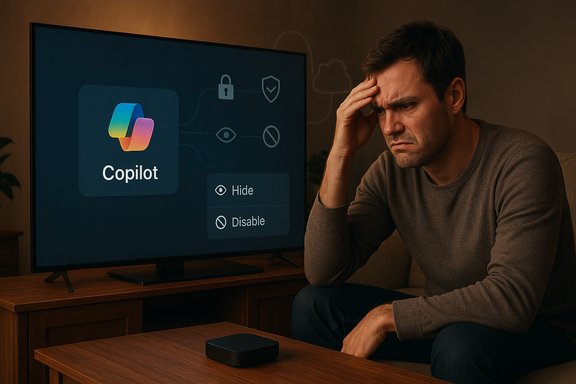
- When users try to edit or manage apps, Copilot lacks the uninstall option normally shown for removable apps; the UI, at most, offers a hide or disable action. Several firsthand posts and screenshots circulating in forums document this behavior.
- The reports are consistent across a variety of models and appear after routine automatic updates, leading users to conclude the app was pushed by LG rather than manually installed by the consumer.
- At the time of these reports there was no public confirmation from LG or Microsoft that a specific firmware build intentionally made Copilot a non‑removable system app — that verification remains outstanding. That omission is material because it affects whether the install is a UI choice or a system‑level package tied into a firmware image.
How manufacturers can make an app "undeletable" (technical mechanics)
Manufacturers can push software in ways that make it effectively impossible to remove from the consumer UI without vendor tools or firmware modifications. There are two common technical patterns:- Install the component as a privileged system package outside the user app sandbox, exposing only limited management actions (hide, disable) in the UI.
- Bake the package into the firmware image itself so that a factory reset returns the TV to the same updated image with Copilot present.
Why providers want Copilot on TVs (the business case)
Embedding a conversational AI into a TV is attractive for vendors for several interconnected reasons:- Content discovery and convenience: Copilot can aggregate search across streaming services, answer contextual questions about what's on screen, and surface richer metadata than a simple remote‑search UI.
- Feature differentiation: When display hardware converges, software and UX become the battleground. AI features are marketed as premium differentiators.
- Monetization and ad inventory: Smart TVs are increasingly monetized via home‑screen promotions, screensaver ads, and first‑party data sold through ad platforms. AI that improves personalization can directly feed ad targeting and new promotional formats.
- Ecosystem reach: For Microsoft, Copilot on TV broadens an already broad Copilot footprint, normalizing the brand across screens and increasing user touchpoints with Microsoft services.
Live Plus: what it does and how it ties into the concern
LG ships webOS with a feature called Live Plus (sometimes labeled Live Promotion or similar in menus) that can recognize what’s displayed and use viewing information for personalized recommendations and ads. The company describes it as an “enhanced viewing experience” that enables interactive promotions and additional content related to what’s on screen. According to LG’s user documentation, Live Plus can be toggled under Settings → All Settings → General → Additional Settings (menu wording differs across models), and there’s a submenu to disable live promotion or advertising. That setting matters because an assistant that depends on contextual screen analysis — or the ecosystem that powers it — would likely rely on the same signal flows used by Live Plus. In other words, Copilot’s on‑screen assistance and Live Plus personalization live in the same technical and commercial neighborhood: more contextual signals for better personalization, and simultaneously more data available to platform partners and ad networks. That fact amplifies user concerns about involuntary installations and opt‑outs.Privacy, telemetry, and the limits of what we can verify
Concerns raised by consumers and privacy researchers fall into a few categories:- Ambient listening / wake‑word handling: Does Copilot listen for wake words locally, or are audio snippets routinely sent to cloud services? Vendors have not published consistent, model‑level technical descriptions to publicly confirm the audio handling for every supported TV.
- Automatic Content Recognition (ACR) and screen analysis: If the assistant analyzes what's on the screen to provide context, that increases the class of data being processed. Existing ACR telemetry flows on many smart TVs show how this data can be used for ad targeting.
- Cross‑partner data flows: When a TV vendor pairs platform telemetry with external partners (ad networks, analytics providers, or cloud AI services), the joint governance and contractual boundaries matter for user privacy. Public documentation is often sparse.
Regulatory and consumer‑protection angles
Regulators and consumer advocates have increasingly scrutinized dark patterns and opaque data‑collection on connected devices. Several legal levers exist that could be relevant:- Consumer‑protection rules that forbid deceptive or coercive UX can apply when optional services are presented as mandatory or intentionally difficult to remove.
- Privacy regulation (GDPR, UK data protection law, CCPA/CPRA in the U.S. and applicable state laws) imposes obligations around transparency, lawful basis for processing, and meaningful opt‑out mechanisms.
- Competition and antitrust scrutiny historically targeted embedded app bundling on phones; similar arguments can arise if platform players use device control to lock in partner services.
Practical steps for affected owners (workarounds and mitigation)
No single solution is perfect. The most reliable ways to neutralize unwanted smart‑TV behavior prioritize isolation and control:- Disconnect the TV from the internet (Wi‑Fi or Ethernet). This prevents remote telemetry and future forced pushes, but disables smart features.
- Use the TV as a display only and attach an external streamer (Apple TV, Roku, Amazon Fire TV, Nvidia Shield). Keep the TV offline and run apps from the streamer.
- Check Settings → Privacy / Additional Settings and disable features such as Live Plus, Limit Ad Tracking, or Home Promotion where available. This can reduce personalization and ad targeting.
- Factory reset — caveat: if the Copilot package is baked into the firmware image, a reset may reinstall the app. Users reporting persistence after resets are consistent with firmware‑level installs.
- Network‑level blocking (Pi‑hole, router firewall rules) to block known telemetry domains. This requires technical skill and can break streaming services if done too aggressively.
- If the device was purchased very recently and marketed with specific features (e.g., Google Assistant) that are now removed or replaced, consider consumer remedies under return/refund policies or escalate to retailer support where appropriate. Public notices about Google Assistant termination also gave consumers a clear service change window.
Strengths and legitimate use cases for Copilot on TVs
When implemented transparently and with strong privacy controls, Copilot‑style assistants can offer real value:- Faster content discovery across multiple streaming services.
- Accessibility benefits: voice‑first navigation and contextual assistance for visually impaired users.
- On‑screen info cards, companion content for news or documentaries, and simplified smart‑home control from the couch.
- Potential cross‑device scenarios: seamless tie‑ins with Xbox, Windows devices, and Microsoft 365 features for households already embedded in Microsoft’s ecosystem.
The risks and why the backlash matters
- Loss of control erodes trust: Installing system‑level software without a clear, user‑friendly opt‑out damages brand trust and provokes strong reactions.
- Privacy creep: New signals (screen analysis, voice interactions) widen the telemetry surface and raise nontrivial questions about retention, sharing, and aggregation.
- Economic incentives are misaligned with consumer expectations: OEMs profit from attention and ad inventory; buyers expect their purchased devices to remain under their control. That tension explains much of the outcry.
- Potential regulatory exposure: If opt‑out is intentionally obscured or consent mechanisms are misleading, that could attract enforcement or mandated changes in jurisdictions with robust privacy and consumer rules.
What vendors should do (practical recommendations)
- Ship AI features as installable or at least fully uninstallable user‑level apps. If a package must be privileged for technical reasons, provide a one‑click remove and purge associated data option.
- Default to privacy‑forward settings: AI default should be off or limited to local processing until an explicit opt‑in is granted.
- Publish clear firmware patch notes that list added apps and explain exactly how to disable or remove them. Many user grievances come from surprise updates.
- Offer a web‑accessible privacy dashboard that shows what data has been shared and provides deletion controls.
- For transitions (for example, ending Google Assistant support and replacing it with Copilot), communicate clearly and provide migration or rollback options for affected users.
Caveats and unverifiable claims
Several widely circulated claims about Copilot on TVs require cautious framing:- Reports that Copilot is listening continuously, harvesting new categories of data, or sharing data with particular ad networks remain unverified without vendor disclosure or independent network/forensic analysis. Such claims should be treated as plausible concerns given historical TV telemetry practices, not proven facts.
- Similarly, statements that Copilot is deliberately baked into every model’s firmware need model‑level confirmation — user reports are consistent with firmware‑level installs in many cases, but only an official LG or Microsoft technical note can fully confirm the installation mechanism.
Bottom line
The Copilot‑on‑TV controversy is a textbook example of a modern technology tension: vendors and platform partners have the technical means and commercial incentives to push AI services broadly, but the social license to do so depends on clear notice, genuine choice, and respect for user controls. When those elements are missing, user backlash is swift and sustained.For consumers: if you value predictable, private behavior from a screen, the most reliable choices right now are to keep your TV offline or to use an external streaming device you control. For vendors: the path to wide adoption of AI on living‑room screens runs through consent, transparency, and easily discoverable removal or disablement options — policies that both protect customers and reduce regulatory and reputational risk.
Public reporting and forum activity make the practical problem clear; the remaining steps are procedural and policy ones that rest with LG, Microsoft, and other platform partners. The clock is ticking: if vendors want Copilot to be seen as a convenience rather than an imposition, they will need to give buyers back the controls they expect to have on devices they own.
Conclusion
For now, Copilot on TVs is both an example of where AI can add real value and a cautionary tale about implementation. A valuable assistant that feels intrusive because it was forced onto devices without clear, user‑centered controls will struggle to win hearts — and may draw regulators’ attention sooner than planned. The technology promise is real; the rollout needs to respect the buyer’s expectations of control and privacy if it is to succeed.
Source: TechPowerUp Microsoft Copilot AI Comes to LG TVs, and Can't Be Deleted
