

Microsoft’s brief product mapping for CVE‑2024‑26913 — the Linux kernel fix described as “drm/amd/display: Fix dcn35 8k30 Underflow/Corruption Issue” — is accurate for the artifact it covers, but it is not a blanket assurance that no other Microsoft product can include the same vulnerable open‑source code; Azure Linux is the only Microsoft product Microsoft has publicly attested as including the implicated upstream component so far, and Microsoft has said it will update CVE mappings if additional products are identified. / Overview
CVE‑2024‑26913 is a Linux‑kernel vulnerability fixed upstream in 2024 that affects the AMD DRM display code (the drm/amd/display sub-tree). The bug results from a missing calculation in the Output Device Manager (ODM) logic used for pipe split policy on certain DCN3.5 hardware (the dcn35 8k30 path). The omission can produce an integer underflow which, in practice, may lead to display underflow or corruption when the affected code path is exercised. The vulnerability has been assigned a CVSS v3.1 base score of 7.8 (High) and is described in multiple public trackers and vulnerability databases.
Upstream kernel repositories show the targeted changes and stable‑tree patches that remedied the defect; distribution trackers (OSV, NVD, CVE aggregators) reference the git commits that implemented the fix. These references make clear that this was a local, driver‑level bug in a specific AMD display code path rather than a remotely exploitable service vulnerability.
This article explains what Microsoft’s product statement means in operational terms, why Azure Linux’s attestation matters but is not exclusive, and exactly how administrators and defenders should verify exposure across Microsoft artifacts (including WSL, linux‑azure kernels, Marketplace images and other kernel shipping points), plus practical mitigations and a risk analysis for environments that rely on Microsoft Linux artifacts.
Microsoft’s public advisory text that appears in its update guide (summarized in community posts and advisories) is concise: “Azure Linux includes this open‑source library and is therefore potentially affected.” That sentence is an explicit, product‑level attestation: Microsoft has inventory‑checked the Azure Linux (CBL‑Mariner / Azure Linux) product family and found that the affected upstream code appears in that product. Microsoft also states it will update the CVE mapping if further internal products are discovered to ship the same component.
What the statement does not say:
Because the fix is small and deterministic, most vendors have been able to backport it into stable releases without large behavioral changes. That said, verifying a vendor’s package changelog or advisory is the only reliable way to know whether a particular distribution kernel includes the remediation.
Operationally: treat Microsoft’s Azure Linux attestation as actionably authoritative for Azure Linux, but follow the verification checklist in this article to validate other Microsoft kernels and images you rely on. Patch where possible, apply module blacklisting only as a temporary mitigation when needed, and maintain a short evidence log (kernel version, config, module lists, package changelog) for each artifact so you can demonstrate remediation and a clean supply‑chain posture.
Source: MSRC Security Update Guide - Microsoft Security Response Center
CVE‑2024‑26913 is a Linux‑kernel vulnerability fixed upstream in 2024 that affects the AMD DRM display code (the drm/amd/display sub-tree). The bug results from a missing calculation in the Output Device Manager (ODM) logic used for pipe split policy on certain DCN3.5 hardware (the dcn35 8k30 path). The omission can produce an integer underflow which, in practice, may lead to display underflow or corruption when the affected code path is exercised. The vulnerability has been assigned a CVSS v3.1 base score of 7.8 (High) and is described in multiple public trackers and vulnerability databases.
Upstream kernel repositories show the targeted changes and stable‑tree patches that remedied the defect; distribution trackers (OSV, NVD, CVE aggregators) reference the git commits that implemented the fix. These references make clear that this was a local, driver‑level bug in a specific AMD display code path rather than a remotely exploitable service vulnerability.
This article explains what Microsoft’s product statement means in operational terms, why Azure Linux’s attestation matters but is not exclusive, and exactly how administrators and defenders should verify exposure across Microsoft artifacts (including WSL, linux‑azure kernels, Marketplace images and other kernel shipping points), plus practical mitigations and a risk analysis for environments that rely on Microsoft Linux artifacts.
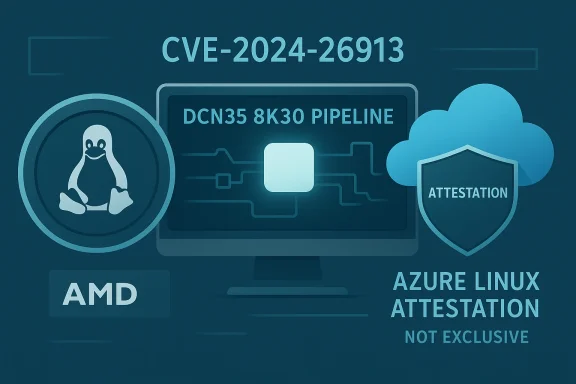 What the MSRC statement actually says — and what it does not
Microsoft’s public advisory text that appears in its update guide (summarized in community posts and advisories) is concise: “Azure Linux includes this open‑source library and is therefore potentially affected.” That sentence is an explicit, product‑level attestation: Microsoft has inventory‑checked the Azure Linux (CBL‑Mariner / Azure Linux) product family and found that the affected upstream code appears in that product. Microsoft also states it will update the CVE mapping if further internal products are discovered to ship the same component.What the statement does not say:
- It does not claim that Azure Linux is the only Microsoft product that could possibly ship the vulnerable driver. Microsoft’s wording is a positive inventory for Azure Linux, not a universarosoft artifacts.
- It does not guarantee that other Microsoft‑supplied kernels (for example WSL2 kernel binaries, linux‑azure kernel images used in some cloud images, Marketplace appliances or vendor‑modified kernels) do not include the drm/amd/display code. Whether those artifacts carry the vulnerable path depends on the actual kernel source tree, vendor backports, and kernel configuration used to build the binary — an artifact‑level property, not something that can be inferred from the attestation alone.
Why this distinction matters operationally
There are three reasons the question “Is Azure Linux the only Microsoft product that includes the vulnerable library?” is nuanced in practice:- Kernel code is upstream and portable. The drm/amd/display sources live in the upstream Linux kernel tree. Any Microsoft product that ships a Linux kernel build which includes that subtree (either built‑in or as loadable modules) could, in principe, carry the same vulnerable code until proven otherwise.
- Kernel builds vary by artifact. Two Microsoft kernels built from the same upstream release can have very different feature sets because of CONFIG_* build options. A given Microsoft kernel may have AMDGPU/drm disabled, in which case the artifact won’t expose the driver. Conversely, a Microsoft kernel could have it enabled and also include vendor backports that reintroduce the issue. This mification necessary.
- Distributions and vendors backport fixes. A distribution may ship an older kernel version number but include a precise backport of the upstream remediation. Conversely, a shipped kernel might be vulnerable despite appearing to be a later version if the fix was not backported. Distribution advisories and package changelogs are therefore required evidence when assessing exposure. Public trackers (NVD, OSV, vendor advisories) list which distribution packages were patched or marked Not Affected.
Who is actually at risk?
CVE‑2024‑26913 is a local vulnerability that requires an attacker to exercise the affected driver code path. That means:- Hosts with AMD GPUs where the amdgpu DRM driver (or related DRM components) are loaded and used are the primary exposure surface.
- Virtual machine images, containers, or WSL distributions that ship or load the driver may also be affected if the kernel binary actually contains and enables the drm/amd/display code.
- Systems that do not use AMD discrete GPUs (for example, cloud VMs with virtualized GPUs or CPU‑only images where the driver isn’t loaded) are unlikely to be affected even if the kernel package contains the source — but this must be verified per artifact.
Verifying exposure across Microsoft artifacts — practical steps
If you administer systems that use Microsoft‑maintained Linux artifacts, here is a prioritized checklist to determine whether a given host or image is affected.- Inventory the kernel artifacts you run
- Identify exactly which kernels and images are in use: linux‑azure packages, WSL2 kernels, Marke and any custom Microsoft images. Attestation for Azure Linux applies to that product only; other artifacts must be checked individually.
- On each target host, check whether the AMD DRM modules are present and/or loaded
- Check loaded modules:
- lsmod | grep amdgpu
- Check module presence in the installed kernel modules directory:
- find /lib/modules/$(uname -r) -type f -name 'amdgpu' -print
- Query module metadata:
- modinfo amdgpu
- Inspect kernel configuration for amdgpu/DRM options
- Search the active kernel config:
- zgrep CONFIG_DRM_AMDGPU /proc/config.gz (or check /boot/config-$(uname -r))
- Look for:
- CONFIG_DRM_AMDGPU=y or =m
- CONFIG_DRM=y and other DRM options
- Confirm whether the running kernel contains the vulnerable path
- If modules are present, you can check the module file for symbols or strings referencing DCN or dcn35 paths; if the module exists and is loadable, assume exposure until vendor advisories say otherwise.
- For packaged environments (Debian/Ubuntu/RHEL/Azure Linux), consult the distribution’s security advisories and package changelogs. Public trackers (Ubuntu security notices, Red Hat CVE feed, Amazon ALAS, etc.) will list whether the package was patched or marked Not Affected.
- For WSL2: verify the WSL kernel build
- Microsoft publishes WSL kernel source and binary artifacts for some WSL releases; whether those kernels enable amdgpu depends on the build config ct at the time. If you deploy WSL in enterprise images, check the WSL kernel build and module list. Microsoft’s product attestation does not automatically cover WSL unless explicitly stated.
- For cloud Marketplace images and appliances: treat each image as a separate artifact
- Marketplace appliances and vendor images bundle kernel binaries. If the image’s kernel contains the drm/amd/display subtree and the amdgpu driver is present, it should be treated as potentially affected until verified.
Short remediation playbook
If you determine a host or image is affected, apply this prioritized approach.- Preferred fix: Apply the vendor patch / update the kernel to a CVE‑patched release. Distributors and upstream stable kernels have commits that remediate the defect; install the distribution package that contains the patched kernel or backport. Public trackers and distribution advisories will show which package versions include the fix.
- Short‑term mitigations (when immediate patching is impractical):
- If the system does not require AMD GPU display functionality, unload or blacklist the amdgpu module until the host can be patched:
- rmmod amdgpu (if not in use)
- echo "blacklist amdgpu" > /etc/modprobe.d/blacklist-amdgpu.conf
- rebuild initramfs if necessary so the module is not pulled in at boot
- On systems using the driver in a VM (e.g., hardware passthrough), consider disabling GPU passthrough until patched.
- For virtualized environments where the guest has no access to physical AMD hardware, the driver is usually not loaded; verify and enforce module blacklisting in guest images if necessary.
- Monitoring:
- Watch distribution security advisories and your vendor patch channels for CVE‑specific updates. Use your configuration management / patch automation to test and roll out patched kernel packages quickly once they are available. Public vulnerability databases and vendor trackers will list patched kernel package versions.
Technical verification: what the upstream fix changed
The upstream remediation for CVE‑2024‑26913 is narrowly scoped: it adds the missing ODM calculation in the pipe‑split policy path on DCN3.5 hardware so that arithmetic operations cannot underflow and produce invalid values that the driver later uses to program hardware registers. The fix is a small, localized change in the drm/amd/display code and was merged into stable kernel trees; it was mapped to CVE records and distribution tracking entries. The kernel commits associated with the fix are referenced in public advisories and OSV/NVD entries.Because the fix is small and deterministic, most vendors have been able to backport it into stable releases without large behavioral changes. That said, verifying a vendor’s package changelog or advisory is the only reliable way to know whether a particular distribution kernel includes the remediation.
Why “Azure Linux is the only Microsoft product” is a dangerous shorthand
When Microsoft writes that Azure Linux “includes this open‑source library and is therefore potentially affected,” defenders should treat that as a positive signal that Azure Linux images are inventory‑checked and that Microsoft has taken steps to report back to customers. Howeverretations create risk:- False exclusivity: assuming no other Microsoft product could include the driver (wrong). Microsoft’s attestation is a product‑scoped inventory statement, not a global artifact fingerprint for all Microsoft distributions. Other Microsoft kernel artifacts may or may not contain the code.
- Ignoring artif: assuming a single kernel version number means the same feature set across products. Build configuration (CONFIG flags) and backports determine the actual runtime behavior; only a per‑artifact check or an authoritative product attestation (CSAF/VEX) for that artifact provides that assurance.
Cross‑referencing — independent verification from public trackers
To ensure the technical claims and remediation timeline are accurate, we cross‑checked multiple independent trackers that reference the upstream fix:- The National Vulnerability Database (NVD) entry for CVE‑2024‑26913 summarizes the problem and references the upstream commit and CVSS score reported for the issue. It documents the vulnerability description consistent with the upstream commit text.
- Open‑source vulnerability aggregators (OSV and Aqua Security’s AVD) include references to the exact git commits and also list downstream distribution mappings and affected kernel versions; these sources corroborate the technical description and point to the stable kernel patches.
- Distribution trackers (for example Amazon Linux ALAS and other distro advisories) indicate per‑platform results (patched / not affected) and are the primary operational signal for administrators who run those distributions. These trackers demonstrate divergence between distributions: some mark Not Affected for certain Amazon kernels while others list patching guidance.
Practical checklist for Microsoft cloud and endnage Microsoft cloud images, WSL distributions, or Windows hosts that include embedded Linux artifacts, take these actions immediately:
- For Azure cloud customers:
- Accept Microsoft’s Azure Linux attestation as authoritative for Azure Linux images and prioritize patching or validation of those VM images accordingly. Microsoft’s attestation indicates Azure Linux images were inventory‑checked and found to include the upstream component implicated in the CVE.
- If you use custom Marketplace images or third‑party appliances in Azure, verify the kernel in each image — don’t assume the attestation extends to third‑party images.
- For WSL administrators and packagers:
- Inspect the WSL kernel binary and build configuration for amdgpu/drm components. If a WSL kernel contains the driver and is used on machines that expose AMD hardware to WSL, plan for patching or a temporary module blacklist.
- For enterprise patch managers:
- Target hosts with AMD GPUs or where the amdgpu module is present before general rollouts. Use the verification commands in the earlier checklist to triage quickly.
- Monitor your distribution vendor advisackage and kernel version numbers that include the upstream fix.
Risks, edge cases and unresolved questions
- False negatives from attestation absence: Because Microsoft’s CSAF/VEX program is being rolled out product by product, the absence of an attestation for a Microsoft artifact is not definitive proof that the artifact is unaffected. Treat un‑attested Microsoft artifacts as “unverified” and apply the verification checklist.
- Backport complexity: Vendor backports can make a kernel that appears old actually patched, or conversely make a kernel with a newer version number vulnerable if the patch wasn't applied. The only authoritative source here is the vendor’s package changelog or advisory.
- Hypervisor/guest confusion: In many cloud environments, guests do not have direct access to AMD GPU hardware; in those cases the amdgpu driver is often not used and the practical exposure is low. However, if you run GPU‑passthrough or have virtualized GPU capabilities, the exposure is real and must be validated.
- Local vs remote exploitation: CVE‑2024‑26913 is a local driver issue. Its exploitability depends on whether an attacker can execute code or otherwise exercise the driver from within the host. That means threat models emphasizing remote exploitation without prior access should deprioritize this CVE relative to remotely exploitable kernel vulnerabilities.
Conclusion
CVE‑2024‑26913 is a real, fixed Linux‑kernel driver bug that affects the AMD DRM display stack. Microsoft’s statement that “Azure Linux includes this open‑source library and is therefore potentially affected” is a precise, product‑level attestation: it tells Azure Linux users they should treat their Azure Linux images as in‑scope and remediate accordingly. However, it should not be read as evidence that no other Microsoft product includes the vulnerable code. Other Microsoft artefacts (WSL kernels, linux‑azure images, Marketplace appliances, etc.) may or may not include the same upstream code depending on build configuration and backports, and each must be verified on its own merits.Operationally: treat Microsoft’s Azure Linux attestation as actionably authoritative for Azure Linux, but follow the verification checklist in this article to validate other Microsoft kernels and images you rely on. Patch where possible, apply module blacklisting only as a temporary mitigation when needed, and maintain a short evidence log (kernel version, config, module lists, package changelog) for each artifact so you can demonstrate remediation and a clean supply‑chain posture.
Source: MSRC Security Update Guide - Microsoft Security Response Center
