

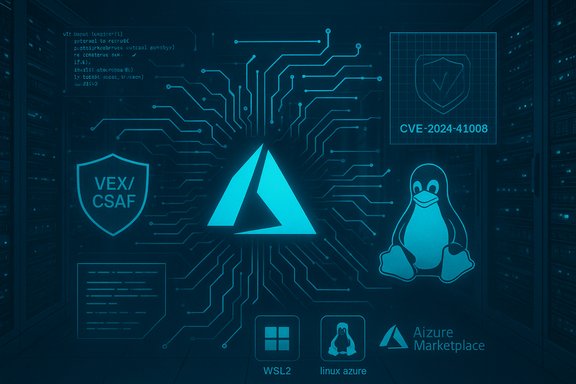
Microsoft’s MSRC advisory that “Azure Linux includes this open‑source library and is therefore potentially affected” is an authoritative, product‑scoped attestation — but it is not a categorical guarantee that no other Microsoft product contains the same vulnerable AMDGPU code; Azure Linux is the only Microsoft product Microsoft has publicly attested so far, and other Microsoft kernel artifacts may still carry the vulnerable code until they are inventoried and declared Not Affected or Fixed.
Background / Overview
CVE‑2024‑41008 is a Linux kernel change/fix recorded against the AMDGPU DRM driver that modifies how the driver manages the vm->task_info object. The upstream patch converts task_info into a dynamically allocated, reference‑counted object and introduces helper functions to manage its lifecycle (amdgpu_vm_get_task_info and amdgpu_vm_put_task_info). The change was published as a defensive robustness fix to prevent lifecycle errors such as double‑free, use‑after‑free, or other memory-management pitfalls in the AMDGPU VM code. This is a kernel‑space fix, not a userland library patch: practical exposure depends entirely on whether a particular kernel image was built with the AMDGPU driver present (built‑in or as a module) and whether that kernel revision predates the upstream change. Distribution advisories and security trackers (Ubuntu, Red Hat, Oracle, Debian, Rocky/Alma, and others) have mapped the fix into distro kernel packages and published update guidance.What Microsoft Actually Said — and Why It Matters
Microsoft’s public note for the CVE (the MSRC entry) states that Azure Linux includes this open‑source library and is therefore potentially affected, and that the company began publishing machine‑readable CSAF/VEX attestations (starting with Azure Linux) to make this mapping clear and automatable. The statement also explicitly promises to update the CVE/VEX mapping if additional Microsoft products are later found to include the same upstream component. This phrasing is procedural: it reports what Microsoft has already validated for the Azure Linux product family and commits to expanding attestations as inventory work continues. Put plainly: Microsoft’s attestation is authoritative for Azure Linux images you run. It is not a universal negative assurance for every Microsoft artifact (WSL2 kernels, linux‑azure kernels, Marketplace images, internal or partner images, device/IoT images). Absence of a product name in Microsoft’s attestation feed is absence of attestation, not proof of absence.Technical anatomy: what CVE‑2024‑41008 changed
- The bugfix changes vm->task_info handling to a reference‑counted, dynamically allocated object to reduce lifetime and concurrency errors.
- Two helper functions were added to acquire and release references safely: amdgpu_vm_get_task_info (refcount up) and amdgpu_vm_put_task_info (refcount down).
- Multiple patch revisions hardened defensive checks (NULL checks, correct reference increments/decrements, avoidance of duplicate debug messages).
Is Azure Linux the only Microsoft product that includes this library?
Short answer: No — Azure Linux is not necessarily the only Microsoft product that could include the vulnerable AMDGPU code. It is the only Microsoft product Microsoft has publicly attested to include it so far. That attestation is critical and actionable for Azure Linux customers, but it does not prove exclusivity. Microsoft explicitly framed the statement as the result of product inventory work for Azure Linux and committed to update the public VEX/CSAF attestations if other Microsoft products are identified as carriers. Why that distinction matters:- Microsoft ships multiple, independent kernel artifacts: Azure Linux images (attested), the WSL2 kernel binary and source tree, linux‑azure kernel packages used for Azure VMs, Marketplace VM/appliance images, and possibly curated kernel images for specialized device offerings.
- The presence of the AMDGPU source files in a Microsoft‑maintained kernel tree (for example the WSL2 kernel source) is a plausible carriage mechanism — but whether a product is actually affected depends on per‑artifact build configuration (was AMDGPU enabled? and the kernel version/commit (was the patch applied or backported?.
Which Microsoft artifacts could carry the vulnerable code?
Plausible Microsoft artifacts to check (prioritized):- Azure Linux VM images — Microsoft has attested these explicitly; patch these first.
- WSL2 kernel builds (Windows Subsystem for Linux) — Microsoft publishes the WSL2 kernel sources (drivers/gpu/drm includes AMDGPU sources), so some WSL kernels could include the code depending on config. Verify WSL kernel version and update if necessary.
- linux‑azure kernel packages used by some Ubuntu/Azure VM images — distro trackers map linux‑azure variants in CVE records and patch lists; check package updates for these images.
- Azure Marketplace images or third‑party appliances that bundle Microsoft kernels — vendor responsibility varies; do not assume Microsoft’s Azure Linux attestation covers these.
- Microsoft internal or partner images, dev/test images, and specialized IoT appliances that embed Linux kernels — these must be inventoried separately and may not yet appear in public attestations.
Practical, prioritized checklist to verify exposure (for operators)
- Inventory Microsoft‑published artifacts first.
- List all Azure VM images, Marketplace appliances, and Windows devices in your environment that run WSL. Prioritize Azure Linux VM instances.
- On each Linux host/image, verify kernel and module presence:
- Check running kernel version: uname -r
- Check for AMDGPU module: lsmod | grep amdgpu
- Inspect module files: ls -l /lib/modules/$(uname -r)/kernel/drivers/gpu/drm/amd
- Check kernel config for CONFIG_DRM_AMDGPU: zcat /proc/config.gz 2>/dev/null | egrep 'CONFIG_DRM_AMDGPU|CONFIG_DRM' || grep -i CONFIG_DRM_AMDGPU /boot/config-$(uname -r)
These quick commands confirm whether the kernel image includes amdgpu and whether the kernel version likely predates the upstream fix.
- For WSL2 instances:
- Inside WSL2: uname -r and compare the kernel release to patched kernel versions listed in distro advisories.
- If using Microsoft‑shipped WSL kernels, watch for WSL kernel updates or rebuild custom WSL kernels from patched upstream commits.
- For Marketplace images and appliances:
- Treat these as separate supply‑chain artifacts. Extract or inspect the image to find kernel modules or check vendor advisories for the appliance. Do not assume Azure Linux attestation covers third‑party Marketplace items.
- Map kernel package versions to upstream commits:
- Use your distro’s security tracker / changelogs to confirm whether the kernel package includes the upstream commit(s) that fixed CVE‑2024‑41008. Distro advisories list fixed package numbers and dates.
Short‑term mitigations if you cannot patch immediately
- Restrict access to DRM device nodes (/dev/dri/*):
- Tighten udev rules and device group membership; remove untrusted users from GPU access groups.
- Avoid mounting /dev/dri into untrusted containers or CI runners (no --device=/dev/dri unless necessary).
- Isolate GPU hosts:
- Keep GPUs off multi‑tenant hosts where untrusted workloads run; use dedicated hardware for trusted GPU workloads.
- Monitor and hunt:
- Add SIEM rules to detect kernel oops or panic logs containing "amdgpu" or NULL dereference traces. Capture dmesg or serial console logs for forensics.
- Reboot after patching:
- Kernel fixes require a reboot into the patched kernel; include reboots as part of remediation playbooks.
Patching and verification guidance
- For Azure Linux images: follow Microsoft’s remediation guidance in the MSRC/VEX attestation for Azure Linux and apply image updates or patched kernels supplied by Microsoft. Treat the MSRC VEX entry as canonical for Azure Linux artifacts.
- For Ubuntu, Red Hat, SUSE, Oracle, Rocky/Alma and other distro images: install distro kernel security updates that include the fix. Distro advisories list package names and versions that include the upstream commits.
- For WSL2: confirm the WSL kernel release inside WSL, and if necessary update WSL or rebuild the WSL kernel with the patched upstream commits. Microsoft publishes the WSL2 kernel source tree publicly, which makes verification possible.
- For custom kernels and appliances: backport the upstream commits into your kernel tree and rebuild the kernel image; validate by auditing the relevant source files (search for the change to vm->task_info and the amdgpu_vm_get/put helpers).
- Boot into the patched kernel and confirm uname -r matches the updated kernel package.
- Verify module files or kernel source contain the upstream changes (search for amdgpu_vm_get_task_info and amdgpu_vm_put_task_info).
- Reproduce the workload that previously triggered failures if safe to do so; confirm no kernel oopses.
Risk analysis and critical considerations
Strengths of Microsoft’s approach:- Publishing VEX/CSAF attestations (starting with Azure Linux) improves automation and reduces ambiguity for customers by providing machine‑readable, product‑scoped mappings. That helps prioritize remediation for Azure Linux tenants quickly.
- Microsoft’s explicit promise to update CVE mappings if additional artifacts are found is a transparent operational commitment that reduces the chance of leaving products un‑triaged.
- Inventory lag: Microsoft’s initial rollout covers Azure Linux first; other Microsoft artifacts will be inventoried over time. Until they are, absence of attestation for those artifacts should not be interpreted as proof they are unaffected. Customers must verify per artifact.
- Per‑artifact variability: kernel configuration and per‑product packaging mean the vulnerable code may appear in some images/offerings but not others — making blanket statements dangerous without artifact inspections.
- Operational exposure: this CVE is predominantly an availability/robustness issue, but deterministic crash primitives in privileged drivers are operationally severe on multi‑tenant hosts and GPU‑shared infrastructure. Prioritise patching where /dev/dri is accessible to untrusted processes.
Flagging unverifiable or time‑sensitive claims
- If a customer asks whether every Microsoft product has been scanned and declared Not Affected, that claim is unverifiable from the public MSRC note alone. Microsoft’s wording makes clear that Azure Linux is the product they have validated and that further attestations will be published as inventory completes; it does not assert completion of inventory across all Microsoft artifacts. Treat it as authoritative for Azure Linux and incomplete for other artifacts until the VEX feed is expanded.
- Product‑level risk can change as Microsoft updates VEX or as distributions push new kernel packages. For the current status of any Microsoft product you run, perform the artifact‑level checks above and consult the Microsoft VEX/CSAF feeds and distro security advisories for up‑to‑date package mappings. The situation requires periodic re‑verification.
Recommended runbook (concise, actionable)
- Immediately patch Azure Linux images using Microsoft’s provided updates (treat VEX as canonical for Azure Linux).
- Inventory other Microsoft artifacts (WSL2, linux‑azure kernels, Marketplace images). Collect uname -r and /lib/modules listings from representative hosts.
- On each host:
- Run: uname -r
- Run: lsmod | grep amdgpu
- Run: ls -l /lib/modules/$(uname -r)/kernel/drivers/gpu/drm/amd
- Run: zcat /proc/config.gz 2>/dev/null | egrep 'CONFIG_DRM_AMDGPU|CONFIG_DRM' || grep -i CONFIG_DRM_AMDGPU /boot/config-$(uname -r)
- Compare kernel versions to distro advisory fixed package lists.
- If amdgpu is present and kernel predates fix: schedule kernel update and reboot; restrict /dev/dri access until patching completes.
- For WSL2 fleets: instruct developers to update WSL or update enterprise WSL kernel builds to include the fixes.
Conclusion
Microsoft’s MSRC statement that “Azure Linux includes this open‑source library and is therefore potentially affected” is an important, verifiable, and actionable attestation for customers who run Azure Linux images — and Microsoft’s move to publish VEX/CSAF attestations improves transparency and automation in triage. However, that statement is not the same as asserting Azure Linux is the only Microsoft product that could include the vulnerable amdgpu code. Other Microsoft kernel artifacts — notably WSL2 kernel builds, linux‑azure packages, Marketplace images, and custom appliance kernels — are plausible carriers depending on build configuration and kernel version. Operators should treat the MSRC VEX as authoritative for Azure Linux, but perform artifact‑level inventory and verification for any other Microsoft artifacts in their estate, then patch or mitigate as required.For teams that need it, the runbook above provides a practical starting point to identify, prioritize, and remediate exposures — beginning with Azure Linux (patch now), then expanding to WSL2 and any other Microsoft‑supplied kernels in use.
Source: MSRC Security Update Guide - Microsoft Security Response Center
