

The libsoup vulnerability tracked as CVE-2025-32052 — a heap buffer over-read in the library’s sniff_unknown() routine — is real, has been widely patched across Linux distributions, and is expressly called out by Microsoft on its Security Update Guide as affecting the Azure Linux distribution; however, Azure Linux is not necessarily the sole Microsoft-delivered component that could contain libsoup, and organizations should treat the issue as a supply‑chain and detection problem rather than a single‑product checklist.
Libsoup is an HTTP client/server library used throughout the GNOME ecosystem and by many applications that rely on the GLib/GObject stack. The library provides content sniffing, header parsing, caching and other HTTP-level functions for applications that do not embed full web engines. The bug fixed under CVE-2025-32052 is a heap buffer over-read in the library’s sniff_unknown() code path. The vulnerability allows a malicious or misconfigured HTTP server to send crafted responses that can lead a libsoup-based client to read memory past its allocated buffer.
From a technical perspective this is an out-of-bounds read (CWE-126). The immediate effects reported by multiple distributors include application crashes (denial-of-service) and, depending on surrounding memory layout and mitigations, theoretical exposure of memory contents that could aid more advanced exploitation. Scoring agencies and distribution advisories placed the issue in the Medium severity band (CVSS ≈ 6.5), primarily because the exploit vector is network‑facing and requires no privileges but — as typically is the case for read-only memory-corruption issues — the real-world exploitability and impact depend heavily on context (what process links libsoup, whether ASLR/stack‑canaries are present, etc.).
Longer explanation: Microsoft’s advisory identifies Azure Linux as the Microsoft product that the company has validated and is actively tracking via CSAF/VEX. That is an accurate statement and reflects Microsoft’s phased transparency approach. It does not – and cannot, practically speaking – prove a negative (that no other Microsoft product, service, or internal appliance contains libsoup). Several important reasons explain why a blanket “only Azure Linux” answer would be risky:
Follow your distribution vendor’s fixes, subscribe to Microsoft’s VEX/CSAF feeds for product‑level attestations, and incorporate SBOM-driven detection into your image and software lifecycle. That combined approach — patch, detect, and demand transparency — is the defensible path when a widely used open‑source library like libsoup is found to have a memory‑safety defect.
Source: MSRC Security Update Guide - Microsoft Security Response Center
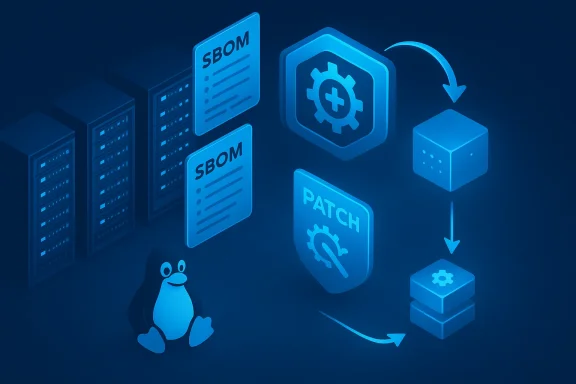 Background / Overview
Libsoup is an HTTP client/server library used throughout the GNOME ecosystem and by many applications that rely on the GLib/GObject stack. The library provides content sniffing, header parsing, caching and other HTTP-level functions for applications that do not embed full web engines. The bug fixed under CVE-2025-32052 is a heap buffer over-read in the library’s sniff_unknown() code path. The vulnerability allows a malicious or misconfigured HTTP server to send crafted responses that can lead a libsoup-based client to read memory past its allocated buffer.From a technical perspective this is an out-of-bounds read (CWE-126). The immediate effects reported by multiple distributors include application crashes (denial-of-service) and, depending on surrounding memory layout and mitigations, theoretical exposure of memory contents that could aid more advanced exploitation. Scoring agencies and distribution advisories placed the issue in the Medium severity band (CVSS ≈ 6.5), primarily because the exploit vector is network‑facing and requires no privileges but — as typically is the case for read-only memory-corruption issues — the real-world exploitability and impact depend heavily on context (what process links libsoup, whether ASLR/stack‑canaries are present, etc.).
What Microsoft has said — and what that actually means
Microsoft’s public advisory text for this CVE makes two clear statements:- Microsoft confirms that Azure Linux (the Azure Linux Distribution, the successor name for the distribution previously known as CBL-Mariner) includes the vulnerable library and therefore the distribution’s images are potentially affected.
- Microsoft also explains a transparency step: since October 2025 it publishes machine‑readable CSAF/VEX attestations that describe which Microsoft products contain which third‑party components and whether they are impacted. Microsoft’s stated approach is to start with Azure Linux and expand VEX coverage over time; if other Microsoft products are later found to include the vulnerable library, Microsoft will update the CVE entries and VEX attestations accordingly.
Is Azure Linux the only Microsoft product that could include libsoup?
Short answer: No — but with nuance.Longer explanation: Microsoft’s advisory identifies Azure Linux as the Microsoft product that the company has validated and is actively tracking via CSAF/VEX. That is an accurate statement and reflects Microsoft’s phased transparency approach. It does not – and cannot, practically speaking – prove a negative (that no other Microsoft product, service, or internal appliance contains libsoup). Several important reasons explain why a blanket “only Azure Linux” answer would be risky:
- Microsoft distributes libsoup via developer tooling. The Microsoft vcpkg package manager (an official Microsoft open-source project used by developers and by some build pipelines) contains a libsoup port and publishes libsoup versions in its release notes. That means Microsoft as an organization has published libsoup artifacts under its tooling umbrella, and developers using those artifacts could introduce libsoup into software that eventually ships inside a different Microsoft product or partner solution.
- Many Microsoft-hosted or Microsoft-managed services and appliances run Linux-based components under the hood. Services that accept customer workloads (containers, VMs, marketplace images), internal support tools, or partner appliances may include third‑party packages installed from distribution repositories. The mere existence of Linux platforms in Microsoft’s cloud estate means the possibility of libsoup appearing in places outside Azure Linux images, depending on how the image or appliance was built and maintained. Vendor-level attestations like MSRC’s VEX aim to reduce this uncertainty, but the attestation program is phased and may not yet cover every product at the time of a given CVE.
- Microsoft’s advisory explicitly reserves the right to update the CVE if impact on additional products is identified. That is both a legal and operational recognition that software supply chains are complex and that discovery and verification can lag initial public reports.
Where libsoup commonly shows up (real-world inventory)
To help readers understand whether their Microsoft-supplied or Microsoft-hosted systems might be affected, here are the common places libsoup can be found in the wild:- Desktop and server GNOME applications — many Linux desktop utilities, helper daemons, and GNOME components link against libsoup for simple HTTP I/O. Distributors (Red Hat, Ubuntu, SUSE, Oracle, Amazon Linux) routinely ship patched libsoup packages.
- Embedded and appliance software — router firmware, hardware management consoles, and other vendor appliances sometimes use libsoup in service components. Large vendors such as IBM have reported finding libsoup in their Power HMC software. These appliances are often delivered as binary images and updated through vendor channels.
- Container images and CI pipelines — libsoup appears transitively in container images (for example through packages installed in base images or runtime images for apps that use GTK/WebKitGTK stacks). Static analysis and container scanners flagged CVE-2025-32052 across many images and distro derivatives.
- Developer packaging ecosystems — vcpkg (Microsoft’s C/C++ package manager) publishes libsoup ports. That does not make every vcpkg user or downstream product vulnerable, but it means developers building Microsoft‑hosted projects could intentionally or accidentally include libsoup.
- Windows Subsystem for Linux (WSL) — WSL runs user-chosen Linux distributions that may include libsoup. WSL itself is a Windows feature that hosts Linux userland; if your organization uses WSL images that have libsoup installed, they are subject to the same vulnerabilities as the underlying distribution package. WSL is not a Microsoft product that inherently contains libsoup in the Windows host; rather, libsoup runs in the guest Linux environment the user or admin chooses. (Check your WSL distro’s package manager.)
Verified vendor responses and the patch situation
Multiple major Linux distributors published advisories and updates for the set of libsoup issues appearing in April–May 2025, including the sniff_unknown() fix:- Ubuntu added fixes to its libsoup packages across supported releases and documented which releases were fixed and which needed extended‑support patches. The Ubuntu security notice and USN describe the fixes and which package versions include them.
- Red Hat published errata addressing CVE-2025-32052 across RHEL 8/9 lines and classified the fixes as important; Red Hat’s advisories and downstream errata describe the patched package versions.
- SUSE published updates that bundle CVE-2025-32052 with related libsoup CVEs, marking the update important and including fixed package versions.
- Amazon Linux, Oracle Linux, Alma/AlmaLinux and other community/enterprise distros likewise issued advisories and released patched libsoup packages (details vary by platform and release).
- Vulnerability scanning and database vendors (Snyk, Wiz, Tenable, Aqua, Rapid7) catalogued the CVE, mapped affected versions and recommended upgrades or mitigations. Several vendors noted that the vulnerability affects libsoup versions prior to 3.6.1 in certain branches.
How to determine if a Microsoft product you use contains libsoup
If you need to establish whether a Microsoft-branded product, service or image in your environment includes libsoup, apply the following checklist:- Inventory the software and images under your control:
- For Linux VMs and images in Azure, run package queries (rpm -q, dpkg -l) against the image or use your image builder manifests.
- For containers, scan images with an SBOM tool or container scanner that surfaces package lists.
- For WSL instances, query the WSL distro’s package database.
- Search product SBOMs and Microsoft’s VEX/CSAF attestations:
- Check the product’s public SBOM (if available) and Microsoft’s published VEX/CSAF files — Azure Linux is already supported by Microsoft’s VEX publishing, and other products will be added over time. Use those attestations as a first pass.
- Inspect binaries for dynamic links:
- For suspect services, use ldd or readelf to find whether libsoup is linked into a running binary or library dependencies. This approach finds statically linked or packaged builds only if the binary includes the symbol names; for static linking you must check build logs or SBOMs.
- Review build pipelines and developer dependencies:
- If your vendor or internal team uses Microsoft tools like vcpkg, check vcpkg manifests and ports for libsoup usage; vcpkg explicitly lists libsoup ports in its repository history.
- Ask the vendor:
- If the product is a Microsoft-managed service or appliance and you cannot discover an SBOM, open a support case asking whether the product contains libsoup or is covered by the CVE attestation process. Microsoft has committed to responding via the MSRC process and to updating the CVE if other Microsoft products are affected.
Recommended actions for enterprises and admins
Given the supply-chain nature of this problem, treat CVE-2025-32052 as a detection and remediation exercise rather than relying solely on vendor-scope statements.- Immediate steps (0–48 hours)
- If you run Azure Linux images, apply Microsoft’s Azure Linux updates or image refreshes as soon as the vendor-provided patched packages are available. Use your standard scheduling for image updates in Azure.
- For non-Azure Linux hosts (RHEL, Ubuntu, SUSE, Oracle, Amazon Linux, Alma, Rocky): apply the vendor patches described in the vendor advisories. Prioritize publicly exposed hosts and any workload that consumes untrusted HTTP responses.
- For container images, rebuild images with patched base packages and redeploy. Use CI gates to prevent use of old images.
- Short-term detection controls (days)
- Scan your estate with SBOM and binary scanners to detect libsoup traces.
- Lock down or audit inbound HTTP connections to services that use libsoup when possible.
- Add checks in CI that forbid unpatched, vulnerable libsoup package versions in images.
- Medium-term policy (weeks)
- Integrate VEX/CSAF attestations into your vulnerability management process once vendor attestations are available for products you consume. Microsoft’s VEX rollout began with Azure Linux and will expand; consuming VEX feeds reduces false positives and helps answer “am I affected?” faster.
- Require vendors to provide SBOMs for appliances and third‑party images; prioritize those that accept arbitrary HTTP responses or process web content.
- Longer-term resilience (months)
- Improve dependency hygiene: prefer well-maintained libraries and limit direct exposure to less-audited stacks for network-facing components.
- Implement continuous SBOM generation for all software images and publish them to your internal catalog so detection is automatic and auditable.
What to watch for from Microsoft and other vendors
There are three concrete signals security teams should monitor:- Microsoft VEX/CSAF expansions: Microsoft promised to publish CSAF/VEX attestations starting with Azure Linux and then broaden coverage. When Microsoft publishes VEX entries for additional products, those attestations will explicitly declare whether a product includes libsoup and whether it’s exploitable in that product context. Subscribe to MSRC advisories and the VEX feed for updates.
- Vendor errata and patched package versions: track the fixed package versions from your distribution vendor. If you maintain managed appliances from vendors, demand their advisory and patch schedule. Distributors such as Red Hat, SUSE, Ubuntu and Oracle have already published updates for this grouping of libsoup vulnerabilities.
- Runtime discovery outcomes: watch your image and runtime scanners for libsoup references and prioritize remediation for exposed workloads. If a scanner identifies libsoup in a Microsoft-supplied image and Microsoft’s VEX says “not affected,” the combination of SA SANS and SBOM data will help you assess whether the deployed configuration is actually exploitable.
Risk analysis: how serious is CVE-2025-32052 for Microsoft environments?
Context matters. The technical classification as a heap buffer over-read gives the vulnerability a credible path to denial-of-service and, in tight scenarios, to information disclosure that can facilitate advanced attacks. For the majority of deployments the risk profile looked like this in vendor advisories:- Network-facing services that consume untrusted responses and use vulnerable libsoup versions are the highest priority because the attack vector is remote and does not require authentication.
- Desktop or internal-only applications that call out to controlled or internal endpoints are lower risk but still merit patching as part of normal lifecycle maintenance.
- Microsoft-managed cloud services: if the service hosts customer VMs or containers, the risk depends on whether the service images or management plane include libsoup in a path that processes untrusted HTTP responses. Microsoft’s VEX approach will reduce this uncertainty over time, but until attestations are complete, assume a detection-first approach is safer.
Practical checklist for WindowsForum readers (concise)
- If you run Azure Linux: treat Microsoft’s advisory as authoritative for that product and apply the published Azure Linux patches.
- If you manage other Linux distributions on Azure or elsewhere: apply the vendor-supplied patches (RHEL, Ubuntu, SUSE, Oracle, Amazon Linux all published fixes).
- If you operate containers: rebuild base images with patched libsoup and redeploy.
- If you run WSL or developer environments: check the distro inside WSL and patch accordingly; do not assume Windows host updates protect the guest environment.
- If you rely on Microsoft-managed services and cannot find a VEX attestation: open a support case requesting SBOM/VEX clarification, and implement compensating detection controls until you receive confirmation.
Conclusion
Microsoft’s public advisory that Azure Linux includes libsoup and is potentially affected is correct, but it is a scoped statement, not a universal guarantee that no other Microsoft product could include the library. The reality of modern software supply chains — the presence of libsoup in many Linux distros, its inclusion in developer package ecosystems such as vcpkg, and the use of Linux components inside cloud-hosted services — means security teams should proactively search, scan and patch where they find libsoup, and rely on VEX/CSAF attestations only as a complementary, not exclusive, source of truth.Follow your distribution vendor’s fixes, subscribe to Microsoft’s VEX/CSAF feeds for product‑level attestations, and incorporate SBOM-driven detection into your image and software lifecycle. That combined approach — patch, detect, and demand transparency — is the defensible path when a widely used open‑source library like libsoup is found to have a memory‑safety defect.
Source: MSRC Security Update Guide - Microsoft Security Response Center
