

The Linux kernel has a newly recorded vulnerability, CVE-2025-40338, that fixes a use‑after‑free risk in the ASoC Intel AVS audio stack where a single allocated name pointer was shared between components — the remedy duplicates the name and updates the initialization order to prevent component teardown from dereferencing freed memory.
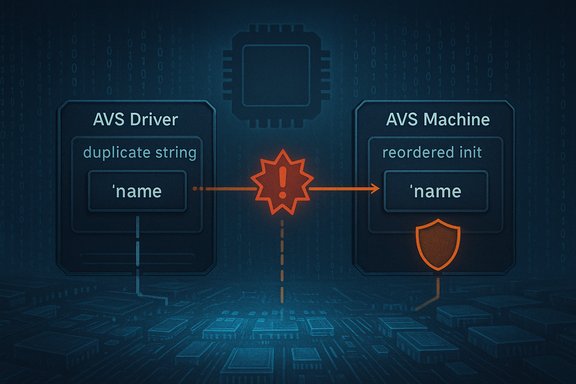
Audio support for Intel cAVS (Intel AVS) is provided in the kernel’s ASoC (ALSA System on Chip) subsystem by the snd-soc-avs driver family. The recent CVE entry describes a correctness bug where the framework and drivers ended up sharing a pointer to a component name string directly between multiple components. When one component was torn down this shared pointer could be freed while another component still held and later dereferenced it, producing a classic use‑after‑free in kernel space. The public advisories note two corrective actions: stop sharing the pointer (duplicate the string) and update the order of operations so that pre-set component->name fields are respected and handled safely. This vulnerability is recorded in NVD / OSV and has been published to canonical trackers; as of the first public entries the NVD record is awaiting enrichment while OSV and other trackers provide summarized details and links to the upstream kernel commits that implement the fixes.
Source: MSRC Security Update Guide - Microsoft Security Response Center
 Background / Overview
Audio support for Intel cAVS (Intel AVS) is provided in the kernel’s ASoC (ALSA System on Chip) subsystem by the snd-soc-avs driver family. The recent CVE entry describes a correctness bug where the framework and drivers ended up sharing a pointer to a component name string directly between multiple components. When one component was torn down this shared pointer could be freed while another component still held and later dereferenced it, producing a classic use‑after‑free in kernel space. The public advisories note two corrective actions: stop sharing the pointer (duplicate the string) and update the order of operations so that pre-set component->name fields are respected and handled safely. This vulnerability is recorded in NVD / OSV and has been published to canonical trackers; as of the first public entries the NVD record is awaiting enrichment while OSV and other trackers provide summarized details and links to the upstream kernel commits that implement the fixes. Why this matters: kernel UAFs are different from userland bugs
A use‑after‑free in userland usually crashes a single process; in the kernel it frequently produces an oops or panic that can destabilize an entire host. Kernel UAFs are high‑risk defects because privileged code paths execute with full system privileges and can control physical memory layout in ways that occasionally allow more than just denial‑of‑service outcomes. In practical operations, the most immediate consequence is availability loss: audio sub‑systems failing, kernel oops log spam, or even host reboots. Public trackers reported the fix as addressing a teardown sequencing and pointer-lifetime bug rather than a remotely exploitable, unauthenticated RCE vector — but the presence of a UAF warrants conservative treatment because exploitation potential depends on local configuration, mitigations (KASLR, SMEP/SMEP), and attacker capabilities.Technical anatomy: what went wrong and what changed
The flawed pattern
- Kernel code allocated or referenced a name string (for example, via kstrdup/kasprintf).
- That same pointer was assigned into multiple component objects without duplicating it.
- During component teardown one object’s destructor freed the string; other objects still held the pointer and later dereferenced it, producing a use‑after‑free.
The two-part fix
- Duplicate the name: Callers no longer assign the same allocated pointer into multiple component->name fields; instead, the code duplicates the string so each component owns its own copy and can free it safely.
- Adjust the initialization order: Because a prior commit allowed a component->name set via configuration to survive into the initializer call, maintainers also updated the order of operations so the framework does not unintentionally override or mis-handle a pre-set component->name. This avoids surprising ownership transfers that yielded a dangling pointer.
Affected code and how to check if you are exposed
What component is involved
- Component: ASoC: Intel AVS (snd-soc-avs and associated machine/board drivers).
- Config symbol commonly present: CONFIG_SND_SOC_INTEL_AVS (module name: snd-soc-avs). The AVS tree is present across recent kernel series and includes several machine drivers for common codecs and boards.
Quick inventory: commands to help triage hosts
Run these checks on a Linux host to identify potential exposure:- Check if the AVS driver is built or available:
- grep -i snd_soc_intel_avs /boot/config-$(uname -r) || zgrep -i snd_soc_intel_avs /proc/config.gz
- See if AVS modules are present or loaded:
- lsmod | grep snd_soc_avs
- modinfo snd-soc-avs || true
- Inspect dmesg / journal for ASoC/AVS traces:
- journalctl -k | grep -iE 'avs|snd_soc|snd-soc-avs'
- dmesg | grep -i avs
Impact, exploitability and realistic risk model
- Attack vector: Local. An attacker or buggy local code must be able to exercise the ASoC AVS component creation/teardown paths. This typically requires local process access or ability to load kernel modules (or trigger specific board probe flows). Remote, unauthenticated exploitation is not the default attack model.
- Privileges required: Low-to-moderate depending on device permissions. On many desktops and embedded devices, unprivileged users can interact with audio device nodes or trigger driver reprobes; on hardened servers device nodes are restricted.
- Complexity: The public trackers list varying complexity assessments. Some enrichers caution High complexity to convert this particular UAF into reliable code execution, while others treat it as a reliability/DoS fix. In short: the immediate, credible impact is Availability (DoS); escalation to code execution would require additional conditions and exploitation techniques and is not demonstrated in public advisories at disclosure.
Detection and forensic guidance
Look for runtime evidence that maps to the AVS/ASoC teardown mistakes:- Kernel oops messages, oops stack traces or KASAN reports that contain ASoC/AVS symbols or strings referencing component teardown or name handling.
- Reproducible crash patterns triggered by module unload or device teardown operations involving snd-soc-avs machine drivers.
- Repeated audio failures or inability to re-initialize audio components after driver reloads.
- Centralize kernel logs (journalctl -k) and search for AVS/ASoC frames.
- Retain vmcore or kdump captures when reproducing the issue in test environments to enable symbolized backtrace analysis; compare the trace to the upstream commit diffs referenced in the public advisories.
- Use simple reproducers in a lab (safe, instrumented environment) that create and tear down AVS components repeatedly; if a crash replicates, capture the full stack and correlate to upstream commit IDs.
Remediation and mitigation
Definitive remediation
- Apply vendor/distribution kernel updates that include the upstream stable commit(s) referenced by the CVE (distribution changelogs and security advisories will list the fixed package names). Upstream maintainers published the fix into the stable kernel trees specifically so distributors can cherry‑pick/backport it. Reboot into the patched kernel to complete remediation.
Practical mitigation if you cannot patch immediately
- Restrict unprivileged access to device nodes that permit triggering audio driver probe/teardown.
- Avoid running untrusted containers with /dev access to audio or platform devices on hosts where AVS is enabled.
- For embedded devices where kernel images are vendor-managed (Android, SoC OEM images), contact the vendor and request backports or updated firmware images.
Recommended patching checklist (step‑by‑step)
- Inventory hosts that show AVS present (see earlier “Quick inventory”).
- Map your running kernel package to distribution security trackers and identify fixed package versions.
- Test the patched kernel in a staging environment on representative hardware (audio subsystems often require hardware tests).
- Schedule vendor-backed rollouts for production systems and reboot into the patched kernel.
- Validate by re-running reproducers and verifying that crashing traces no longer appear.
Vendor response, timeline and public records
- The CVE was published in public trackers with upstream commit references and has been ingested into aggregation services (OSV, CVE mirrors, distro trackers). NVD initially marked the record as awaiting enrichment while other mirrors displayed summary details and commit links. SUSE and other maintainers listed the CVE and indicated it was new in their tracking pages.
- Upstream kernel commits implementing the two-part fix (duplicate the string + reorder initialization) were merged into stable trees; distribution maintainers are expected to backport those fixes into packaged kernel updates. Where possible, prefer vendor-supplied kernel packages rather than manual upstream patches for production use.
Cross‑reference and context: why AVS bugs are common triage items
ASoC subsystems and machine drivers routinely manipulate small strings, names, and device descriptors during probe and teardown. Several recent ASoC and audio-related CVEs have been defensive‑programming fixes (missing NULL checks, incorrect pointer wiring, lifecycle mistakes) that produce oopses or memory corruption under certain board or topology conditions. These classwise observations illustrate why small API contract mismatches (ownership and initialization order) frequently lead to kernel stability issues and why fixes tend to be surgical: duplicate ownership where necessary and add defensive checks to eliminate crash primitives. The broader pattern is documented across multiple advisories covering regmap pointer bugs, NULL checks in topology parsing, and kobject/name lifecycle issues.Critical analysis: strengths of the fix and remaining operational risks
Strengths
- The upstream correction is small and focused: duplicating a string and reordering initialization are low‑risk changes that maintainers can backport easily. That reduces regression surface and speeds distribution uptake.
- The change is aligned with safer ownership semantics: when in doubt, each object keeps its own copy or a clear owner is assigned.
- Public trackers ingested the CVE quickly and linked to stable commit references, giving distro maintainers and operators a clear triage path.
Remaining risks and caveats
- Long tail of vendor kernels: Embedded devices, OEM Android kernels, and SoC vendor forks often lag upstream; those devices may remain vulnerable long after mainline fixes are available. Inventory and vendor engagement are essential.
- Backport correctness: Small fixes can be misapplied when backporting; test patched kernels on representative hardware because pointer-lifetime bugs may vary with subtle API differences across kernel versions.
- Detection gaps: Kernel oopses can be noisy and sometimes hard to correlate; without centralized oops collection and symbolization, fleet-wide detection will miss hits. Preserve vmcore traces and centralized kernel logs for accurate mapping.
What administrators and firmware maintainers should do now
- Inventory systems that compile/load the AVS driver (CONFIG_SND_SOC_INTEL_AVS, snd-soc-avs modules).
- Consult your distribution or vendor security advisory for the CVE mapping and the exact patched kernel package names. Prefer vendor kernels for production systems.
- Schedule test windows to validate patched kernels on representative hardware (audio probe and playback tests).
- If you cannot patch immediately, temporarily restrict /dev access for untrusted containers and limit module loading on sensitive hosts.
- Centralize kernel logs and retain vmcore captures for any reproductions; correlate any oopses with upstream commit diffs to validate the fix.
Conclusion
CVE-2025-40338 is a correct‑and‑important kernel hardening fix in the ASoC Intel AVS audio stack that prevents a use‑after‑free by duplicating shared name pointers and making the initialization order explicit. The fix is surgical and low-risk in upstream terms, but operators must treat this as a standard kernel‑level priority: inventory hosts, apply vendor/backported kernel updates, test on representative hardware, and harden access to audio device interfaces until kernels are patched. Long‑tail exposures in vendor forks and embedded devices remain the primary operational concern, so device inventories and vendor coordination are essential to close the exposure comprehensively.Source: MSRC Security Update Guide - Microsoft Security Response Center
