

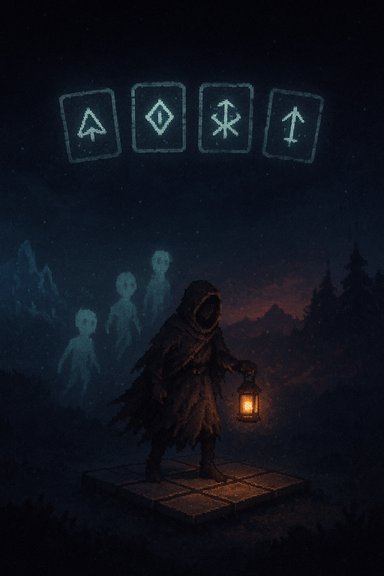
Death Howl arrives as a dark, tactile experiment in grief and game design: a soulslike deck-builder that marries retro pixel art, grid-based tactical combat, and a quietly devastating narrative about a mother’s attempt to bring her lost child back from the spirit world.
Death Howl is developed by the Copenhagen-based indie studio The Outer Zone and published by 11 bit studios. The title first surfaced in early 2025 as a demo-driven project, and the studio positioned the game as an emotional, mechanically layered hybrid—part deck-builder, part tactical grid combat, part exploratory soulslike. The game’s demo launched in January 2025 and the full PC release arrived via Steam on December 9, 2025. Console releases and additional editions rolled out across 2026. At its core the game follows Ro, a huntress and mother who crosses into the spirit realm to reunite with her deceased son. That central premise is the engine for both narrative and mechanical design: grief is not only the story’s subject, it’s part of the resource economy and player progression. The way Death Howl ties emotional beats to gameplay choices is the feature that separates it from many genre peers.
This integration of story and mechanics is one of Death Howl’s most striking design moves: narrative choices affect deck construction and vice versa. The game’s parables—short, resonant side-quests that echo Ro’s situation—lend the experience emotional heft without turning the story into a lecture.
That said, the title’s emotional intensity and steep learning moments mean it will not be for everyone. Success for Death Howl depends on continued post-launch tuning and the developer’s ability to maintain tonal balance—keeping the story thoughtful while ensuring systems remain accessible enough to let players experience the narrative without frustration. With publisher backing, a clear PC launch, and planned console rollouts in 2026, Death Howl looks positioned to be a memorable indie release—one that rewards patience and careful play.
Death Howl offers an uncommon combination: a somber, well-crafted narrative about love and loss built around a deliberate tactical core. For players who seek indie games that aim to do more than entertain—to make you feel and think through mechanics—Ro’s hunt through the spirit realm is one of the more compelling reasons to boot up a controller this year.
Source: Windows Central https://www.windowscentral.com/gaming/indies-idxbox/death-howl-preview-xbox-pc/
 Background
Death Howl is developed by the Copenhagen-based indie studio The Outer Zone and published by 11 bit studios. The title first surfaced in early 2025 as a demo-driven project, and the studio positioned the game as an emotional, mechanically layered hybrid—part deck-builder, part tactical grid combat, part exploratory soulslike. The game’s demo launched in January 2025 and the full PC release arrived via Steam on December 9, 2025. Console releases and additional editions rolled out across 2026. At its core the game follows Ro, a huntress and mother who crosses into the spirit realm to reunite with her deceased son. That central premise is the engine for both narrative and mechanical design: grief is not only the story’s subject, it’s part of the resource economy and player progression. The way Death Howl ties emotional beats to gameplay choices is the feature that separates it from many genre peers. Overview: What Death Howl Is, Mechanically
The genre blend
Death Howl defines itself as a soulslike deck-builder with tactical, grid-based combat. Players explore an open spirit realm split into distinct biomes, collect materials and “death howls” from fallen spirits, and craft cards that form Ro’s combat deck. The systems are deliberately interlocked: exploration unlocks card components, and every combat encounter is a puzzle of movement, range, and card economy.Key numbers and scope
- Over 160 craftable cards, offering a wide breadth of tactical options and archetypes.
- The spirit world is split into 4 realms composed of 13 regions, each contributing unique cards and mechanics.
- The game lists 30+ enemy types and a runtime estimate of 25+ hours, though completion time will vary widely depending on build choices and difficulty preferences.
Combat and Deck-Building: How the Game Feels
Grid-based encounters meet card economy
Combat begins when Ro steps onto enemy-occupied tiles; battles play out on small tactical grids where positioning is as important as the cards you hold. Cards have an action cost, and Ro has a limited number of movement and action points each turn. Cards are not purely damage tools—many combine movement constraints, range requirements, and secondary effects like pushback or status application (poison, bleed, etc.. The result is a chess-like loop: manipulate enemy position, chain a card sequence, and manage your limited resources to avoid getting overwhelmed. A few representative design points:- Some cards only work at range (for example, a stone-hurling attack that is unusable if an enemy is adjacent).
- Other cards require adjacency but have utility (pushback, stun) that create follow-up windows.
- Realm-specific cards can cost more or behave differently when used outside their home region, encouraging players to adapt decks to their immediate environment.
Crafting loop and progression
Cards are crafted from materials gathered in the spirit realm—leaves, animal parts, and the titular “death howls” harvested from fallen foes. Death howls not immediately used for crafting can be converted into tears or other progression currencies that unlock passive abilities and permanent upgrades. This creates a layered risk/reward system: use your death howls now to make a situational card, or bank them to unlock long-term improvements for Ro. The deck size is intentionally capped (20 cards in many cases), forcing players to choose favored strategies and prune redundancies—an important balance to prevent the game from becoming a “collect and spam” exercise. Decision-making is front and center: which cards define your playstyle, which are utility fillers, and which will be sacrificed for stronger synergies?Narrative Design: Grief as a Gameplay Motif
Death Howl treats its story with unusual restraint and weight. Ro’s arc—her desperation, bargaining, and the moral complexities of “forcing” the spirit world to reverse death—underpins every region and many side quests. The game doesn’t shy away from bleakness; instead, it frames episodic encounters and parables about loss to mirror the stages of mourning. These narrative vignettes often deliver mechanical effects: helping a spirit might yield a new card or a crafting material, while aggressive or selfish choices can hurt long-term prospects.This integration of story and mechanics is one of Death Howl’s most striking design moves: narrative choices affect deck construction and vice versa. The game’s parables—short, resonant side-quests that echo Ro’s situation—lend the experience emotional heft without turning the story into a lecture.
Art, Sound, and Presentation
Pixel-driven, modern presentation
Death Howl uses retro pixel art layered with contemporary lighting and cinematic framing. The aesthetic reads as a deliberate choice: the dated palette and coarse sprites amplify the uncanny nature of the spirit realm and make occasional graphical flourishes—lighting, camera shakes, and particle work—stand out. The result is a low-fi look that still conveys a surprisingly wide range of mood and tone.Score and audio design
The soundtrack leans toward ritualistic percussion and haunting vocal textures; publisher materials and the Deluxe Edition blurb emphasize a soundtrack crafted to match the ritual and shamanic themes central to Ro’s culture. Sound design plays a functional role in combat and exploration—environmental audio cues and the cries of restless spirits help telegraph danger and reinforce the emotional stakes of the narrative.Platforms, Editions, and Release Details
- PC (Steam) release: December 9, 2025.
- Console releases (PlayStation 5, Xbox Series, Nintendo Switch): scheduled across early 2026; multiple outlets report a mid-February 2026 console window for retail and digital releases.
- Price and editions: Base digital price is $19.99, with a Deluxe Edition (soundtrack, artbook, relics) offered at a slight premium in some storefronts. The game is listed on the Xbox storefront and included in relevant Game Pass tiers where applicable.
Accessibility, Performance, and System Requirements
The Steam store lists modest minimum and recommended PC specs: a quad-core CPU, 4 GB RAM minimum (8 GB recommended), and roughly 4 GB of disk space. The game targets a wide set of machines and is explicitly playable on handhelds and lower-powered PCs, given its pixel-art aesthetic and modest 3D requirements. That said, dynamic lighting and effects can change performance on older integrated GPUs, so players should expect to tune settings for handheld or lower-end laptops. On consoles, the game is listed as compatible with PC gamepads and cloud saves where the platform supports them. The Xbox storefront advertises achievements and cloud save support for PC/Game Pass buyers.Strengths: Where Death Howl Really Shines
- Narrative integration — The marriage of grief-based storytelling to mechanical systems is mature and purposeful, making every run feel thematically coherent. Ro’s journey isn’t window dressing; it’s the scaffolding for design choices.
- Tactical depth — Grid-based constraints plus 160+ cards produce emergent variety: positioning, pushback chains, and realm-dependent cards reward thoughtful play over brute-force repetition.
- Accessible scope — With modest system requirements and a focused run-length, the game is approachable for indie fans and Game Pass subscribers who want a contained yet deep experience.
- Polished presentation for an indie — Pixel art with modern lighting and a haunting score give the game an identity that will stick with players long after the credits.
Risks and Limitations: Where to Be Cautious
- Difficulty tuning and learning curve — The soulslike scaffold and tactical grid combat can create steep early friction. Players who do not enjoy repeated, high-difficulty learning loops may find the experience punishing. Early demo reports flagged tuning as a point of iteration; the final product still leans toward challenge. Be prepared for trial-and-error learning.
- Scope vs. polish — Small teams delivering 160+ cards across many regions face balancing and QA complexity. There’s a risk that some cards or realms will feel under-tuned or repetitive if the development team cannot iterate on balance post-launch. The publisher’s support helps, but careful long-term patching and tuning will be necessary.
- Narrative weight vs. player taste — Death Howl’s subject matter—parental grief and the ethics of reversing death—is intense. Some players will find it emotionally resonant; others may find it distressing. The game’s themes are not light entertainment and are handled earnestly rather than for shock value. Content warnings and player discretion are appropriate.
- Platform timing ambiguity — Reporting shows slight inconsistencies in exact console and physical release timing. While PC launch is firm (December 9, 2025), console dates and physical edition shipping windows vary by source—expect announcements and small date shifts.
Practical Advice for Players
- Try the demo first (if available) to sense the combat rhythm and camera/controls; the demo historically focused on early biomes and the combat loop.
- Embrace deck pruning early: the 20-card cap rewards focused archetypes rather than bloated “jack-of-all-trades” collections.
- Build with environment in mind: realm-specific cards get cheaper or more effective in their home biome—plan routes when exploring to maximize card utility.
- Expect to learn from failure: the game’s soulslike DNA means each defeat is meant to teach and reframe approach, not just punish.
- If you are sensitive to heavy themes, consider pacing your play and being mindful that several side quests and narrative beats can be emotionally demanding.
The Business Angle: Publisher Support and Distribution
11 bit studios’ role as publisher brings a visibility and support structure that can make a meaningful difference for an indie studio like The Outer Zone. The publisher has been explicit about demo support, storefront sales timing, and expanded editions—actions that generally boost discoverability and post-launch support. Game Pass inclusion (where listed) increases the game’s potential audience and lowers the entry cost for many players, but it also shifts the economics for the developer toward discovery-driven engagement rather than pure unit sales. Physical and Deluxe editions listed by retailers suggest a modest collector market appeal—soundtrack and artbook inclusions reinforce the creative emphasis of the title. These bundles matter because they increase revenue per-customer and give collectors tangible value. However, small studios must balance that marketing lift against the logistical costs of manufacturing and distribution.Final Assessment
Death Howl is a brave, compact experiment: ambitious in its emotional aim, conservative in scope, and mechanically rich where it matters most. Players who enjoy tactical, high-stakes deck-building and who are comfortable with heavy themes will find a game that delivers both mechanical satisfaction and narrative resonance. The grid combat plus card economy create a strong, replayable loop, and the crafting/progression systems encourage experimentation without permitting simple power creep.That said, the title’s emotional intensity and steep learning moments mean it will not be for everyone. Success for Death Howl depends on continued post-launch tuning and the developer’s ability to maintain tonal balance—keeping the story thoughtful while ensuring systems remain accessible enough to let players experience the narrative without frustration. With publisher backing, a clear PC launch, and planned console rollouts in 2026, Death Howl looks positioned to be a memorable indie release—one that rewards patience and careful play.
Death Howl offers an uncommon combination: a somber, well-crafted narrative about love and loss built around a deliberate tactical core. For players who seek indie games that aim to do more than entertain—to make you feel and think through mechanics—Ro’s hunt through the spirit realm is one of the more compelling reasons to boot up a controller this year.
Source: Windows Central https://www.windowscentral.com/gaming/indies-idxbox/death-howl-preview-xbox-pc/