

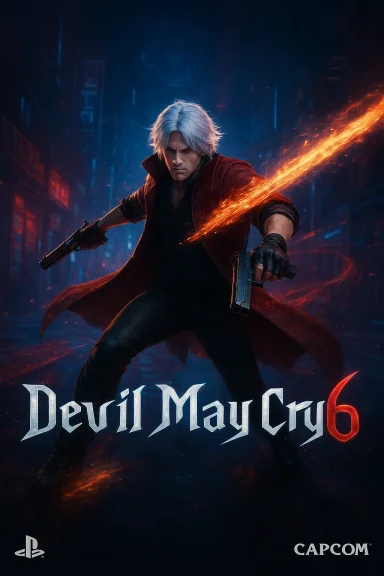
Capcom may be preparing what one insider called a “bomb”: multiple outlets are now reporting that an anonymous leaker known as TripleSeven claims Devil May Cry 6 will be revealed during an upcoming PlayStation State of Play, a rumor that — if true — would make the title one of the first big AAA reveals of the year and a high-profile finish to Sony’s show.
Background / Overview
State of Play has become Sony’s go-to platform for curated publisher reveals and cinematic trailers since the series’ relaunch, and third-party partners frequently use the broadcast to drop large-scale teasers and full trailers rather than tiny sizzle clips. Capcom, in particular, has leaned on PlayStation presentations to showcase major materials: recent State of Play broadcasts included substantial Capcom segments such as the PRAGMATA reveal and other headline moments.The rumor chain is straightforward: a poster using the handle TripleSeven said DMC6 will be shown “this year” and later qualified that claim with “most likely at the next Sony event.” That single note combined with increased chatter about a near-term State of Play has been picked up and re-posted by multiple sites and aggregators, producing the familiar rumor-to-hype loop that precedes most modern AAA announcements.
This article parses the available signals, evaluates the credibility of the leak, explains why a State of Play reveal makes strategic sense for Capcom and Sony, and lays out realistic scenarios for what a DMC6 reveal might look like — while flagging the pitfalls of reading too much into early claims.
Why a State of Play reveal would make sense
Sony’s showcase strategy and Capcom’s past behavior
State of Play is staged to balance first-party showpieces and third-party “surprise” finishes. Sony has used this format repeatedly to highlight cinematic trailers and timed exclusives, and publishers that want a focused PlayStation audience often deliver their splashiest trailers there. Capcom has leaned into that cadence recently: the publisher’s PRAGMATA segment and other Capcom presentations at Sony-organized shows have tended to be full-length, cinematic trailers and extended reveals rather than one-line teases. That history explains why fans immediately link the rumor to a potential State of Play “bomb.”From a marketing perspective, there are multiple strategic benefits to dropping Devil May Cry 6 at a PlayStation event:
- PlayStation’s State of Play reaches a captive core-audience of action fans who historically care about stylish, single-player action titles.
- Sony’s production often frames third-party reveals as climactic “finale” moments, giving a publisher like Capcom strong, polished spotlight time.
- A surprise reveal resets conversation around the franchise and gives Capcom a marketing hook that extends across social and earned media channels in the weeks following the show.
Capcom’s timing incentives
Capcom is in a busy release window with several high-profile projects on the calendar. Announcing DMC6 early in the year would buy the studio runway for follow-up communications (trailers, developer interviews, hands-on demos) while they stagger coverage across major events. The company has also shown a preference for cinematic, high-production announcements that capture attention and then follow with deeper gameplay showcases at later events — a cadence that would fit a State of Play teaser-first, gameplay-later approach.Parsing the leak: who is TripleSeven and how credible are they?
Identity and track record
At present there is no public, verifiable dossier on TripleSeven’s reliability. The name surfaces as an anonymous handle in multiple reposts of the claim, but reporters and aggregators reiterate the origin without being able to point to a consistent, independently verifiable history of accurate scoops from that account. That matters: leak credibility is a function of past accuracy combined with corroborating signals from other insiders or accidental publisher slips. In this case, the primary corroboration is media re-reporting rather than an independent confirmation from a known, high-signal leaker.Corroborating signals and their limits
Rumors gain momentum when multiple, unrelated signals converge — for example, a leak plus a mis-timed social post by an industry figure, or matching datamined strings. Some aggregators have pointed to peripheral signs (increased scheduling chatter about a State of Play in February and other rumor threads), but there’s no hard signal such as a premature press release, a storefront listing, or a direct company confirmation. Until such secondary confirmations appear, treat the TripleSeven claim as unverified and potentially noise.What form might a Devil May Cry 6 reveal take?
If Capcom and Sony are indeed preparing a “bomb,” here are the realistic reveal formats and what each implies:1) Cinematic announcement trailer (most likely)
- What it would be: A high-production-value, story-driven trailer that confirms the project’s existence, tone, and protagonist lineup without showing conditioned gameplay.
- Why this matters: Capcom frequently uses cinematic teasers to control messaging, set expectations for tone, and build anticipation before handing the mic to gameplay-focused events. This is precisely the type of content that fits the “State of Play bomb” language.
- Probabilities and follow-ups: Expect subsequent gameplay breakdowns at larger showcase events (for example, a dedicated developer deep-dive or a summer show floor).
2) Extended gameplay trailer (possible but less likely at first reveal)
- What it would be: A combination of cinematics and curated gameplay segments, potentially showing combat loops, camera style, and platform performance targets.
- Why this matters: An extended gameplay trailer would emphasize the series’ trademark combat and might be used if Capcom wanted to immediately demonstrate the evolution of the action system.
- Trade-offs: Gameplay reveals increase scrutiny — technical expectations, platform parity questions, and immediate performance analysis from outlets.
3) Surprise release or firm release window (unlikely)
- What it would be: A dramatic “surprise-release” or an announced release date very soon after the trailer.
- Why this matters: Surprise launches carry enormous operational risk for a AAA action title; Capcom’s past behaviour (for example, Devil May Cry 5’s staged reveal and later release cadence) suggests the studio prefers a measured trailer-then-build-up approach. DMC5’s reveal and timeline are a useful comparison: it was announced at major events in 2018 and released in March 2019 after staged demos and previews.
Technical and platform considerations (what fans should watch for)
Platforms and parity
Capcom’s major franchises in recent years have launched across PlayStation, Xbox, and PC. If DMC6 follows that pattern, a PlayStation-centered reveal would not imply PlayStation exclusivity — it could simply reflect a strategic partnership for the event slot. Watch the trailer for any language on platform exclusivity or temporary timed content; the absence of such language almost always signals a multiplatform release strategy.Engine, camera, and combat expectations
Devil May Cry is a combat-first franchise with a strong technical pedigree. The biggest questions on day-one reveal will be:- Is the game continuing the franchise’s signature high-speed, precision combo systems?
- Does the camera remain third-person, or will Capcom experiment with different cinematics or perspective blends?
- What performance targets does Capcom appear to favor (60 fps competitive targets vs. 30 fps cinematic fidelity)?
Risk assessment: hype, misinformation, and publisher strategy
The danger of treating leaks as gospel
Leaks perform two roles in the attention economy: they energize fandoms and they pressure publishers to accelerate messaging. That pressure can be useful — it forces clear dates and answers — but it can also create disappointment if a claim proves false. The TripleSeven rumor presently lacks the kind of multi-source corroboration that makes a leak high-confidence. Expect:- Rapid amplification across low-credibility sites.
- Social media speculation that will quickly become “accepted narrative” without verification.
- Opportunistic framing by some outlets as “confirmed” even when it’s not.
Why publishers sometimes let the ambiguity play out
There is a commercial logic to not immediately denying every rumor: leaving interpretation room can seed free publicity and compel outlets and influencers to re-run your brand in their coverage. But publishers can also suffer reputational damage if they allow speculation to overshoot messy realities (delays, changed scope, or cancelled projects).Tracking credibility: practical signals to trust (and those to ignore)
If you want to separate signal from noise as the story unfolds, use this checklist:- Official slots: Watch for a State of Play announcement from Sony. An official listing or a PlayStation blog post is the clearest, highest-confidence indicator that a reveal will occur.
- Publisher confirmation: Capcom social channels (official Twitter/X, corporate news posts) are the second-most authoritative source. A Capcom press release supersedes all leaks.
- Reputable insiders: Established, historically accurate insiders or reporters (with a verifiable track record) are higher-confidence than anonymous handles. If TripleSeven is later corroborated by multiple recognized leakers, confidence grows.
- Storefront and rating board filings: Early presence in ratings databases or storefront metadata (with platform listings or ESRB/PEGI entries) provides tangible signals beyond chatter.
- Cross-platform friction: If you see contradictory claims (for example, a leak says PS exclusive while game store entries list PC and Xbox), prefer confirmed, contemporaneous publisher/storefront data.
What Devil May Cry fans should expect in the short term
- If a State of Play reveal happens, expect a cinematic trailer first and gameplay details later. This is Capcom’s familiar playbook and what the format favors.
- Plan for incremental information: cinematic trailer → developer interviews → gameplay trailer or demo → release window announcement.
- Don’t expect immediate release details or full cross-platform performance breakdowns on day one — those are typically follow-ups.
- Keep an eye on verified PlayStation and Capcom feeds; those will contain the definitive information.
Critical takeaways and editorial analysis
- The rumor that Devil May Cry 6 will be shown at State of Play is plausible from a strategic standpoint: Sony’s event is well-suited to big cinematic reveals, and Capcom has used similar stages to showcase major material. That alignment explains why the TripleSeven claim spread quickly.
- Credibility is the bottleneck. TripleSeven’s post is currently an uncorroborated leak; multiple reposts across smaller outlets amplify it but do not raise it to confirmed status. Treat it as possible but unverified until Sony or Capcom confirm.
- The most likely reveal format — a cinematic trailer that confirms the project and sets tone — would fit both Capcom and Sony’s historical behavior. That format minimizes immediate technical scrutiny while maximizing PR impact.
- Fans should balance excitement with restraint. The franchise’s last major entry, Devil May Cry 5, followed a careful reveal-to-release cadence: staged announcements, gameplay reveals at major shows, and an eventual release after months of build-up. Using that pattern as precedent suggests Capcom will likely follow a measured rollout rather than a surprise drop.
Practical next steps for readers and community managers
- Subscription strategy: Follow the official PlayStation State of Play announcement feeds and Capcom corporate channels for authoritative confirmations.
- Verification checklist: If you see a new claim attributed to TripleSeven or another anonymous source, look for two independent confirmations: a reputable journalist or a secondary leak with a track record, and a publisher/store/ratings filing.
- Avoid amplification of single-source rumors: share official confirmations rather than speculation to limit the spread of misinformation and community disappointment.
Conclusion
The TripleSeven rumor that Devil May Cry 6 will be revealed at a forthcoming State of Play has enough structural logic to make it plausible: the timing, the format, and Capcom’s recent use of Sony showcases all line up. But plausibility is not proof. For now the claim remains unverified and should be treated as a rumor — an exciting one for fans, but one that requires corroboration from Sony or Capcom before it graduates to confirmed news.Expect the announcement cycle, if it happens, to follow Capcom’s familiar pattern: a cinematic trailer first, followed by staged gameplay reveals and a gradual flow of technical details. Until then, keep an eye on official PlayStation and Capcom channels, and prefer established sources when the next wave of confirmations (or denials) arrives.
Source: IXBT.games Devil May Cry 6 to be shown at State of Play. Capcom is preparing a "bomb" - insider
