

Dispatch arrived this autumn like a small, improbable comet: an episodic, voice-led superhero workplace comedy that has already reshaped expectations for narrative games in 2025, selling through extraordinary audiences, validating a modern spin on the Telltale formula, and prompting a cross-platform expansion that will put the game on handhelds next month.
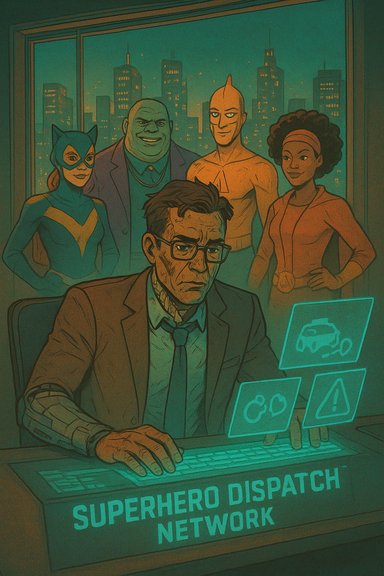
Dispatch is an episodic narrative-adventure from AdHoc Studio, a team largely composed of alumni from the Telltale era. The game launched on Windows PC (Steam) and PlayStation 5 in October 2025 as an eight-episode season delivered across October and November. It centers on Robert Robertson III—Mecha Man—whose battle suit is destroyed and who must reinvent himself as a desk-bound dispatcher in the Superhero Dispatch Network (SDN), coordinating a ragtag team of rehabilitated villains. The Steam store lists the game’s initial release as October 22, 2025 and shows full season availability following the staggered episode rollouts. AdHoc marketed Dispatch as a “superhero workplace comedy,” but beneath the marketing sheen the game deliberately blends tonal registers—wry comedy, empathic character work, and moments of genuine moral consequence—into a compact interactive series that leans heavily on script, performance, and episodic pacing. The studio's pedigree and the episodic format are explicit selling points in their promotional materials.
There is also a documented production history tying AdHoc to early contributions on The Wolf Among Us 2. Multiple reports and interviews indicate AdHoc personnel worked on scripting and cinematics for the sequel prior to shifting the studio’s focus to Dispatch when that collaboration entered uncertain territory. AdHoc’s founders have acknowledged writing material for The Wolf Among Us 2 but also emphasized they pivoted away to ensure studio momentum; whether AdHoc’s scripts are used in any future Wolf Among Us 2 release remains uncertain, as Telltale retains project control and has not published a public timeline for the sequel. That caveat is important—AdHoc’s involvement was substantial at one point, but the final fate of their material is not confirmed.
That success does not erase genuine design questions. The franchise must now weigh sequel ambitions against the risk of diluting what made Season 1 special, clarify ambiguous cross-studio credits tied to prior Telltale projects, and prove that the experience can translate well across handheld hardware without losing its cinematic heartbeat.
For players and designers interested in narrative games, Dispatch is an instructive, invigorating example: it shows the commercial viability of story-first games done with cinematic care and modest but meaningful systems—and it also reminds studios that momentum and goodwill are fragile currencies that must be stewarded carefully if creative ambitions are to be sustained.
Source: Windows Central https://www.windowscentral.com/gami...vorite-superhero-stories-2025-season-2-hopes/
 Background
Dispatch is an episodic narrative-adventure from AdHoc Studio, a team largely composed of alumni from the Telltale era. The game launched on Windows PC (Steam) and PlayStation 5 in October 2025 as an eight-episode season delivered across October and November. It centers on Robert Robertson III—Mecha Man—whose battle suit is destroyed and who must reinvent himself as a desk-bound dispatcher in the Superhero Dispatch Network (SDN), coordinating a ragtag team of rehabilitated villains. The Steam store lists the game’s initial release as October 22, 2025 and shows full season availability following the staggered episode rollouts. AdHoc marketed Dispatch as a “superhero workplace comedy,” but beneath the marketing sheen the game deliberately blends tonal registers—wry comedy, empathic character work, and moments of genuine moral consequence—into a compact interactive series that leans heavily on script, performance, and episodic pacing. The studio's pedigree and the episodic format are explicit selling points in their promotional materials. What Dispatch is — gameplay and structure
A dispatch desk as a game loop
At its core, Dispatch mixes a choice-driven narrative with a lightweight management layer: players act as a dispatcher assigning heroes (and reformed villains) to city incidents based on character strengths, cooldowns, and relationships. These tactical dispatch moments form the game's primary interactive loop; they’re interleaved with longer, heavily scripted dialogue scenes that resolve the episode arcs.- The dispatch mechanic requires selecting one or more heroes for each call, balancing abilities and interpersonal dynamics.
- Many narrative beats are resolved through branching dialogue; the game emphasizes who you send and why over twitch-based inputs.
- Short quick-time or mini-game interludes are used sparingly to vary pacing and introduce moments of urgency.
Episodic delivery and pacing
AdHoc released Dispatch in episodes, culminating in a full eight-episode season in November 2025. The episodic cadence was part of the design: staggered drops encouraged conversation, Let’s Plays, and reaction content, amplifying the title’s viral momentum across platforms. The format also allowed the studio to recalibrate pacing and dialogue delivery across the season, tighter than many episodic experiments of the past. Steam and multiple outlets note the episodic scheduling and its execution across October–November.Story, themes, and tone
Dispatch reframes superhero fiction by focusing on the aftercare of heroism—the bureaucracy, the HR headaches, and the improbable emotional work of reclaiming moral agency for formerly villainous characters. That reframing turns a familiar trope—redemption arcs—into a workplace drama with comic shorthand and real stakes.- Central theme: redemption vs. accountability—the game interrogates whether performance (being “useful” in dispatchable missions) is sufficient for moral redemption.
- Tone: bittersweet comedy—Dispatch often trades in deadpan humor, then punctures it with scenes of genuine human flaw and fallout.
- Relationship systems: optional romance arcs are integrated naturally into character beats rather than shoehorned in, and they feed into the drama of trust and leadership.
Performance and voice cast
One of the headline draws for Dispatch is its voice cast. Aaron Paul headlines as Robert Robertson (Mecha Man), delivering a near-depressed, sarcastic dispatch lead whose weary humor anchors the script. Paul has publicly described the role as a rare opportunity to work in a deeply scripted interactive drama, and press interviews frame his involvement as both a first major video-game acting role and a key factor in attracting broader attention to the project. Supporting voices include established performers like Laura Bailey, Erin Yvette, and Jeffrey Wright, whose contributions further underwrite the game's production values and help explain why the narrative has drawn such a large and enthusiastic audience. Steam and multiple press outlets list the cast and have praised the acting as a core element of Dispatch’s emotional effectiveness.Commercial performance and platform rollout
Rapid sales and player milestones
Dispatch’s commercial trajectory has been notable by any standard for an indie narrative game. Within ten days of launch the studio confirmed more than one million copies sold, and by late November AdHoc Studio publicly thanked “two million players” for joining the title in roughly a month—an achievement repeatedly cited in press coverage and echoed across developer social channels. Those milestones were celebrated by the studio in public posts, and outlets reported the figures as shared by AdHoc. That sales momentum matters in practical terms: AdHoc has claimed the game would surpass its planned three-year sales target within months—an extraordinary overperformance that affords the small studio both runway and leverage. Industry reporting framed those performance metrics as a market signal: there’s still a healthy appetite for single-player, narrative-driven episodic experiences when executed with cinematic quality and modern production values.Pricing, store performance, and promotions
On Steam, Dispatch carries a $29.99 base price for the standard edition, with a digital deluxe tier available, and temporary discounts applied during launch and seasonal promotions. Steam storefront data and storefront snapshots confirm the $29.99 MSRP and the presence of deluxe/soundtrack bundles. Steam user ratings have been overwhelmingly positive, and community review counts are in the tens of thousands, reflecting a high engagement rate for a new IP.Switch 1 and Switch 2 ports
AdHoc has moved to widen platform availability: Nintendo eShop listings and developer confirmations indicate Dispatch will launch on both Nintendo Switch (current-gen) and Nintendo Switch 2 on January 28, 2026, with a free upgrade path from the Switch version to a Switch 2 native version. Reporting around the Switch release came from multiple outlets after an eShop listing surfaced and AdHoc confirmed the date; a handful of sources initially reported minor day-of-week discrepancies (some regional eShop pages listed the 29th), but the developer’s announcement clarified the 28th as the intended roll-out date for many territories. The Switch price for pre-order is being offered temporarily at a 10% discount. These platform additions broaden the title’s reach to handheld audiences and provide a lower-friction entry point for players who prefer Nintendo hardware.Critical reception and community response
Dispatch has drawn high praise for its writing, voice work, and production values. User response on Steam is emphatically positive, with many players praising the combination of humor and pathos, the dispatch gameplay hook, and the quality of the performances. Critical reviews have largely followed suit—while some review outlets flagged a lack of gameplay depth outside the dispatch segments, most critics found the narrative, character work, and episodic pacing compelling. Several outlets have described the title as a modern refinement of the Telltale-style narrative game, often noting that it succeeds where the genre had faltered in recent years. That enthusiasm also extended into community economies: creators and streamers quickly embraced the episodic schedule, producing long-form reaction videos and serialized playthroughs that amplified word-of-mouth and likely contributed to the rapid sales climb. The symmetry between strong narrative craft and shareable content is a notable commercial win for a small studio.The Telltale lineage — continuity and divergence
Dispatch’s creative DNA is unmistakable: several core AdHoc team members previously worked on titles like The Wolf Among Us and Tales from the Borderlands. That lineage explains the game’s emphasis on branching dialogue, moral compromise, and episodic structure, but Dispatch is not merely a retread; it introduces a systems backbone (the dispatch layer) and a tonal restraint that broadens the genre beyond its earlier, often melodramatic peaks.There is also a documented production history tying AdHoc to early contributions on The Wolf Among Us 2. Multiple reports and interviews indicate AdHoc personnel worked on scripting and cinematics for the sequel prior to shifting the studio’s focus to Dispatch when that collaboration entered uncertain territory. AdHoc’s founders have acknowledged writing material for The Wolf Among Us 2 but also emphasized they pivoted away to ensure studio momentum; whether AdHoc’s scripts are used in any future Wolf Among Us 2 release remains uncertain, as Telltale retains project control and has not published a public timeline for the sequel. That caveat is important—AdHoc’s involvement was substantial at one point, but the final fate of their material is not confirmed.
Strengths — what Dispatch does right
- Narrative craftsmanship: Tight, emotionally intelligent writing frames every episode; the script balances humor and pathos with deliberate restraint.
- Performance-first design: High-caliber voice talent—including Aaron Paul and Laura Bailey—elevates scenes and gives players invested, cinematic character moments.
- Accessible price point: A $29.99 MSRP with deluxe options positions Dispatch as a good value for a full episodic season and helps lower the barrier to entry for narrative-centric audiences.
- Smart digital rollout: Episodic release and timely streamer engagement amplified organic discovery, enabling the studio to scale visibility without massive marketing spend.
- Meaningful systems integration: The dispatch layer creates a modest but effective gameplay hook that differentiates Dispatch from purely passive interactive movies.
Risks, caveats, and open questions
Even with Dispatch’s success, there are risks and design limitations worth noting.1) Choice impact vs. narrative illusion
The game inherits a classic criticism of episodic narrative design: some player choices can feel cosmetic when the larger plot scaffolding remains fixed. While Dispatch improves the trope—making some choices influence who is available later or how relationships settle—there are still moments where decisions feel like coloring rather than structural game-changers. This is a perennial tension in branching narratives: greater consequence typically requires significantly more production work and narrative branches. Reviewers have praised Dispatch’s refinements but stopped short of claiming a fully revolutionary consequence system.2) Season-two pressure and creative sustainability
AdHoc has hinted at the possibility of a second season but has not committed formally. The reality of consumer expectation after a breakout success is complex: a rushed follow-up risks diluting the qualities that made the first season special, while a long gap could lose momentum. The studio faces the “difficult second album” problem—how to capture the original’s emotional and design strengths without repeating itself or over-indexing on fan service. Industry commentary has highlighted this tension as the central strategic question for the studio.3) Porting and technical trade-offs
Switch ports are being offered with a free upgrade to a Switch 2 native build, but handheld versions inherently trade graphical fidelity and possibly frame-rate for portability. While the dispatch gameplay fits handheld play well, there will be a technical and design expectation gap between PS5/PC and Switch 1; the Switch 2 version should mitigate that for owners of the newer hardware, but the exact performance profile for each handheld SKU will matter for players sensitive to animation quality and frame consistency. AdHoc and partners have announced the policy but detailed technical specs for each port remain to be verified after launch.4) The Wolf Among Us 2 ambiguity
AdHoc’s prior work on The Wolf Among Us 2—particularly scripting and cinematics—remains in an ambiguous state. Several interviews and industry reports indicate AdHoc produced significant material that Telltale had commissioned, but Telltale’s project timelines and choices about integration are opaque. This adds a reputational footnote: AdHoc’s creative work influenced expectations, but the public cannot verify how much of that material, if any, will appear in any eventual Telltale release. Treat claims about direct creative credit in the final Wolf Among Us 2 product as unverified until an official cross-studio credit is published.What a second season would need to deliver
If Dispatch moves forward with Season 2, certain narrative and design priorities would help sustain and expand its success:- Carryover consequences that feel earned: stronger, persistent mechanical or story repercussions that flow directly from Season 1 decisions.
- Expanded dispatch systems: add new mission types, deeper hero interactions, and consequences to failure beyond simple narrative branches.
- Technical polish on ports: ensure the Switch 2 build preserves the cinematic feel by scaling animation and frame-rate appropriately.
- Manage pacing expectations: avoid stretching the episodic format into filler; maintain the season’s sharp narrative momentum.
Broader industry implications
Dispatch’s breakout performance has several ripple effects for the games industry. First, it demonstrates continuing market appetite for well-produced single-player episodic experiences when they combine strong writing, charismatic performances, and a modest-but-compelling gameplay hook. Second, the title underscores the marketplace power of high-profile actors crossing into gaming in meaningful roles; Aaron Paul’s presence likely accelerated press pickup and discovery beyond traditional narrative game audiences. Finally, Dispatch provides a case study in modern indie scaling: smart episodic rollouts, creator-community amplification, and timely inexpensive platform extensions (like Switch ports) have produced outsized returns for a smaller studio.Conclusion
Dispatch is a rare success: a debut that confidently reworks a familiar genre into something tonally and mechanically distinctive. The combination of high-caliber voice acting, crisp writing, a compact gameplay loop, and a shrewd episodic release strategy created a breakout phenomenon that has already translated into millions of players and a broader platform roadmap.That success does not erase genuine design questions. The franchise must now weigh sequel ambitions against the risk of diluting what made Season 1 special, clarify ambiguous cross-studio credits tied to prior Telltale projects, and prove that the experience can translate well across handheld hardware without losing its cinematic heartbeat.
For players and designers interested in narrative games, Dispatch is an instructive, invigorating example: it shows the commercial viability of story-first games done with cinematic care and modest but meaningful systems—and it also reminds studios that momentum and goodwill are fragile currencies that must be stewarded carefully if creative ambitions are to be sustained.
Source: Windows Central https://www.windowscentral.com/gami...vorite-superhero-stories-2025-season-2-hopes/
