

On 29 October 2025 John Donovan published what he says is the unredacted transcript of a conversation with Microsoft Copilot about Royal Dutch Shell’s ethics — a public flashpoint that crystallises three decades of commercial disputes, a sprawling online archive of leaked documents, and an argument about how far multinational corporations will go to monitor and discredit persistent critics. The episode is more than an amusing corner case of what an AI assistant will say about a corporate giant: it is a revealing lens on the Donovan–Shell saga, the documentary record Donovan has built, the contested claims about private intelligence firms such as Hakluyt, and the structural risks that arise when generative assistants summarise contested archives without transparent provenance. The following feature unpacks the facts and claims, cross‑checks key points in the public record, highlights what is provable and what remains plausible but unverified, and draws practical governance lessons for journalists, researchers and corporate counsel.
John Donovan’s conflict with Royal Dutch Shell is not a late‑breaking grievance: it began in commerce, escalated in courts, and matured into a years‑long public campaign built around an unusually comprehensive, adversarial archive. Donovan and his family — originally trading as Don Marketing — created promotional games and campaigns for forecourt brands in the UK and beyond. The family’s account of those early dealings, including the well‑known “Make Money” promotion, and the later litigation against Shell is corroborated by contemporaneous trade coverage and by Don Marketing’s own historical record. The Don Marketing account remains publicly accessible and shows how a supplier dispute metastasised into a protracted legal and reputational confrontation. From that starting point Donovan and his relatives built royaldutchshellplc.com and a cluster of related sites. Over decades those pages accumulated thousands of posts: press clippings, internal emails and memos, court disclosures, Subject Access Request (SAR) outputs, and anonymous tips. Donovan presents the network as an archival repository: a single‑family operated clearinghouse where whistleblower submissions, litigation documents and formally released material sit alongside commentary and dossiers grouped by controversy — Nigeria and Ogoniland, Brent Spar and North Sea safety, domain disputes, and alleged surveillance operations. The scale and persistence of that archive are significant; mainstream outlets have repeatedly used it as a lead generator and occasionally as a direct source for stories. Reuters and other international agencies referenced royaldutchshellplc.com in coverage of leaked Shell emails in 2009 and 2010. But the archive is also unusual: it mixes court‑traceable materials (litigation filings, WIPO decisions, SAR disclosures) and clearly sourced reporting with anonymous or redacted internal notes whose provenance cannot always be independently reassembled. That dual nature is central to how the archive is used and how it should be treated.
Two broad truths follow from this case. First, archives and revelations matter: persistent, publicly accessible records force questions, elicit responses and, occasionally, illuminate corporate practice. The WIPO decision, Reuters’ 2009 reportage and the Sunday Times’ 2001 reporting about Hakluyt show that the Donovan archive sits in a matrix of public evidence and independent reporting. Second, provenance is everything. Generative AI sits between archives and audiences; it can summarise and amplify but it cannot substitute for chain‑of‑custody or primary‑source verification. The Copilot transcript episode — and allied examples where an assistant invented a dramatic personal cause of death — illustrate the real risk: models will smooth disputed records into readable narratives unless design and editorial safeguards force conservatism and require provenance. That insight should be the guiding principle for journalists, platform designers and boards alike: preserve archives, but demand verification; use AI to assist, not to assert; and always treat highly consequential operational claims with the scepticism that the procedural record requires.
The Donovan story endures because it combines stubborn persistence, demonstrable archival value, and unresolved evidentiary gaps that invite further investigation. For scholars, reporters and governance professionals the useful takeaway is straightforward: treat adversarial archives as fertile starting points, not definitive endpoints; require independent corroboration for the most consequential claims; and design AI systems and editorial workflows that foreground provenance, hedging and human judgment where reputations and legal exposures are at stake.
Source: Royal Dutch Shell Plc .com Donovan Shell Copilot Transcript: AI, Surveillance, and the Archive Saga
 Background / Overview
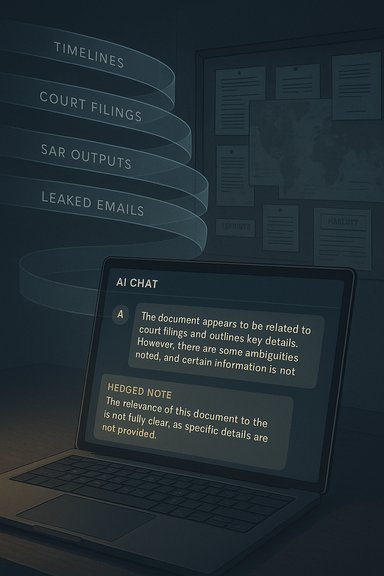
John Donovan’s conflict with Royal Dutch Shell is not a late‑breaking grievance: it began in commerce, escalated in courts, and matured into a years‑long public campaign built around an unusually comprehensive, adversarial archive. Donovan and his family — originally trading as Don Marketing — created promotional games and campaigns for forecourt brands in the UK and beyond. The family’s account of those early dealings, including the well‑known “Make Money” promotion, and the later litigation against Shell is corroborated by contemporaneous trade coverage and by Don Marketing’s own historical record. The Don Marketing account remains publicly accessible and shows how a supplier dispute metastasised into a protracted legal and reputational confrontation. From that starting point Donovan and his relatives built royaldutchshellplc.com and a cluster of related sites. Over decades those pages accumulated thousands of posts: press clippings, internal emails and memos, court disclosures, Subject Access Request (SAR) outputs, and anonymous tips. Donovan presents the network as an archival repository: a single‑family operated clearinghouse where whistleblower submissions, litigation documents and formally released material sit alongside commentary and dossiers grouped by controversy — Nigeria and Ogoniland, Brent Spar and North Sea safety, domain disputes, and alleged surveillance operations. The scale and persistence of that archive are significant; mainstream outlets have repeatedly used it as a lead generator and occasionally as a direct source for stories. Reuters and other international agencies referenced royaldutchshellplc.com in coverage of leaked Shell emails in 2009 and 2010. But the archive is also unusual: it mixes court‑traceable materials (litigation filings, WIPO decisions, SAR disclosures) and clearly sourced reporting with anonymous or redacted internal notes whose provenance cannot always be independently reassembled. That dual nature is central to how the archive is used and how it should be treated.The archive: composition, strengths and limitations
What the collection contains
- Traceable legal documents: court filings, WIPO correspondence and formal arbitral decisions are present and, where cited, can be cross‑checked in public records. The WIPO domain decision on the royaldutchshellplc.com dispute (2005) is an explicit example of a formal, searchable administrative outcome.
- SAR / Data Protection disclosures: Donovan’s sites include outputs he says were supplied via UK Data Protection Act / SAR requests in 2009–2011; these are often presented as attachments or redacted screenshots.
- Leaked internal communications: emails and memos that Donovan attributes to Shell employees or third‑party contractors. Some of these were republished by mainstream outlets in 2009 after being posted on Donovan’s site. Reuters, for example, reported on leaked internal Shell emails that were first published on royaldutchshellplc.com.
- Anonymous tips and whistleblower claims: names, allegations and unsigned memos that are harder to independently verify without original metadata. These are frequently annotated by Donovan but not always corroborated externally.
Strengths: persistence, discoverability, and agenda setting
Donovan’s archive has preserved a large body of material that might otherwise have been scattered across court dockets, ephemeral sites and private records. For longitudinal researchers tracing Shell’s corporate conduct, the site’s continuity provides a searchable time‑series of allegations, responses and selected internal documents. That archival persistence matters: it has repeatedly seeded mainstream reporting (for instance, coverage in 2009 that cited the site’s published leaks) and forced corporate responses. Reuters’ 2009 reportage referencing the site illustrates how a fringe archive can become a mainstream source of new leads.Limitations: provenance gaps and editorial control
The tight coupling of anonymous tips and redacted documents with argumentative commentary creates inherent verification challenges. Where documents are copies of court filings, WIPO panels or formally disclosed SAR material, they are strong and verifiable leads. Where they are anonymous submissions or poorly dated internal notes, independent corroboration is required. Donovan himself sometimes acknowledges limits of proof in particular episodes, and readers should treat sensational operational claims that lack chain‑of‑custody proof as plausible but unproven.Legal and reputational skirmishes: Don Marketing, WIPO and domain battles
The initial flashpoint was contractual and IP‑related. Don Marketing’s “Make Money” and other promotions underpin the family’s original claims that Shell appropriated their ideas without adequate credit or compensation — a dispute that led to litigation in the 1990s and to further writs and high‑court actions in subsequent years. Don Marketing’s own site and period trade coverage corroborate the basic outline of those historical disputes. A later and highly symbolic front in the fight was the domain name dispute. When Royal Dutch Shell reorganised and used the new legal name Royal Dutch Shell plc in 2004, Alfred Donovan had already registered royaldutchshellplc.com. Shell challenged ownership through UDRP/WIPO proceedings in 2005; the resulting WIPO decision (D2005‑0538) and related arbitration documents are public, and the panel’s ruling is available on WIPO’s site. The panel found that the domain owner did not register the names in bad faith for the purposes of the UDRP test, primarily because the site was non‑commercial and used for criticism. That outcome has continued to amplify Donovan’s visibility and to bind the domain dispute into the public narrative. The domain fight is not merely a historical oddity: it highlights the modern intersection of trademark strategy, online reputation management, and freedom‑of‑speech issues. Corporations that attempt to litigate away criticism risk amplifying the critic’s platform, particularly where the plaintiff’s case is framed as a reputation‑management exercise against a non‑commercial critic.The surveillance allegations: Hakluyt, operatives and the evidentiary picture
One of the most explosive and enduring claims in Donovan’s catalogue is that Shell used private intelligence contractors to monitor, infiltrate or otherwise target critics — and that those activities intersected with influential institutional ties, including persons linked to the Church of England.What is corroborated
- Hakluyt’s historical activities and the Schlickenrieder story: The 2001 Sunday Times investigation reported that Hakluyt & Company — a corporate intelligence firm founded by former intelligence officers — employed an operative named Manfred Schlickenrieder (code‑name “Camus”) whose work included gathering information on Greenpeace and other environmental activists. That reporting is widely referenced and reproduced in investigations of corporate intelligence activity.
- Hakluyt’s client base and its personnel profile: Independent profiles and investigative pieces have documented Hakluyt’s founding by ex‑intelligence officers and its use by energy companies. The firm’s staffing by former national intelligence personnel is well documented in press accounts and watchdog reporting.
What is disputed or remains unproven
Donovan has accused Hakluyt and Shell of operational surveillance specifically targeted at him and his family. He posts contemporaneous emails and correspondence that he argues show Shell monitored his activities and that private intelligence firms had roles in corporate intelligence directed against critics. Those materials create a strong contextual case: the pattern of corporate legal and intelligence engagement is visible in public reporting; the attribution of individual covert acts to specific Hakluyt operatives or explicit instructions naming Donovan is much harder to prove in the public domain. Donovan himself sometimes writes that he “cannot prove Hakluyt’s involvement” for certain episodes. That distinction matters: readers should treat operational attributions to named operatives as plausible but partially unverified until a smoking‑gun internal document with clear chain‑of‑custody appears.Institutional links and normative concerns
Donovan’s correspondence with the Church of England over lawyers who concurrently advised private intelligence firms raised ethical questions about revolving‑door relationships. Such personnel linkages (senior lawyers or officials moving between public institutions and private intelligence advisers) are on the public record and merit governance scrutiny. The normative question is whether religious, public‑benefit or other civic institutions should give cover — implicitly or explicitly — to firms whose activities include covert information gathering. Donovan’s focus on Sir Anthony Hammond’s dual roles is an example of how personal overlaps can create accountability questions for institutions.The Copilot transcript episode: what it shows and why it matters
In late October 2025 Donovan published what he describes as an unredacted transcript of a conversation with Microsoft Copilot about Shell’s ethics. The exchange is notable on several levels:- It shows how a persistent critic can use retrieval‑augmented generative AI to summarise, synthesise and rehearse public and semi‑public material about a corporate subject.
- It exposes attribution risk: an assistant compresses a complex, contested history into a readable narrative that may appear authoritative even when underlying documentary provenance is thin.
- It multiplies amplification risk: once an assistant’s output is posted and framed as an authoritative chat transcript, it can be redistributed, republished and consumed as if it were a vetted expert summary.
- It raises practical questions about enterprise assistants: what do corporate clients expect when an assistant is asked to comment on internal legal matters, whistleblower evidence or allegations of surveillance? What auditability and provenance metadata should accompany such responses?
Three concrete risks highlighted by the episode
- Provenance erosion — When an assistant synthesises claims drawn from an archive that itself contains unverified items, the output tends to smooth contested truth into a single narrative. Casual readers may not distinguish between court‑record facts and anonymous tips.
- Hallucination and narrative smoothing — Large language models optimise for coherence and readable arcs; where the documentary record is fragmentary they will often fill gaps in ways that are rhetorically effective but factually unsupported. The Donovan case contains concrete examples where an AI invented a dramatic cause‑of‑death claim that conflicts with Donovan’s own published record — demonstrating the real reputational harms this tendency can produce.
- Legal and moderation exposure — Enterprise assistants operating within or adjacent to corporate systems may be asked to summarise whistleblower material or interpret legal exposure. Without conservative defaults, provenance metadata and human review, those outputs risk prompting legal escalation or being weaponised in reputational warfare.
Cross‑checking key claims: what independent records show
To avoid presenting unverified charges as established fact, it is useful to cross‑check the archive’s most consequential claims against independent public records.- WIPO domain decision (2005): The WIPO arbitration for royaldutchshellplc.com is public and the panel’s decision is accessible through WIPO’s database (D2005‑0538). The panel’s reasoning — that the domain was used for non‑commercial criticism and that bad faith registration was not proven — is a decisive procedural outcome that Donovan correctly highlights in his account of the domain battle.
- Mainstream reportage of leaked emails (2009–2010): Reuters and Dow Jones carried stories in 2009 that explicitly referenced material posted on royaldutchshellplc.com, including an internal email listing senior executive appointments and other leaked internal communications. Those stories establish that Donovan’s site functioned as an early channel for internal Shell material that later became the subject of mainstream coverage.
- Hakluyt and the Schlickenrieder revelations (2001): The Sunday Times’ 2001 investigation into Manfred Schlickenrieder’s undercover work for Hakluyt (and the use of such operatives to gather intelligence on environmental NGOs) is widely reported and reproduced in watchdog compilations and secondary sources. Those pieces verify the broader pattern that private intelligence firms have historically been used by energy firms to track activist campaigns.
Critical analysis: achievements, weaknesses and systemic risks
Achievements and public value
- Archival persistence: Donovan’s sites have kept a substantial body of corporate history accessible in one place — a real resource for historians, journalists and rights advocates. That continuity has demonstrable value for reconstructing long‑running corporate behaviour.
- Agenda setting and accountability pressure: The archive has occasionally seeded mainstream reporting and forced public corporate responses; even if every claim is not independently verified, the process has increased transparency in some episodes.
- Demonstrating governance gaps: The Hakluyt episodes and domain fights highlight gaps in oversight for private intelligence work and in corporate approaches to online reputation management.
Weaknesses and hazards
- Verification and provenance gaps: The archive’s mix of strong legal documents and anonymous memos demands rigorous corroboration. Amplifying anonymous tips without third‑party verification invites error and potential defamation risk.
- Bias and motive: Donovan’s dispute began with commercial litigation and evolved into a personal campaign. That context does not invalidate documents, but readers and journalists should weigh motive alongside content and apply standard verification routines.
- AI‑enabled amplification of uncertain claims: Generative models that consume adversarial archives without provenance metadata are likely to produce confident summaries that flatten nuance into narrative — a systemic risk for reputations and for public understanding. The Copilot transcript episode is an empirical demonstration of that hazard.
Areas requiring caution
- Treat items traceable to courts, WIPO decisions, or formal SAR disclosures as stronger evidence than anonymous tips.
- Avoid republishing incendiary operational claims unless corroborated by independent forensic or documentary proof with traceable chain‑of‑custody. Where Donovan flags limits of proof, those caveats should be preserved in any downstream coverage.
Practical takeaways: what journalists, researchers and boards should do
For researchers and journalists- Use Donovan’s archive as a lead generator, not as a final arbiter. Follow basic verification steps: locate court filings, SAR outputs, contemporaneous reporting and other primary anchors before publication.
- Preserve the full context when using AI to summarise contested archives: store prompts, assistant outputs and provenance metadata to maintain an audit trail for editorial review.
- Apply extra verification cadence to anonymous submissions; when in doubt label claims explicitly as unverified.
- Reassess and publicly disclose governance controls for third‑party intelligence engagements; require documented legal, ethical and reputational sign‑offs for any surveillance‑adjacent activity. The historical pattern of private intelligence use by energy firms suggests predictable reputational blowback when such relationships become public.
- Prioritise provenance metadata in retrieval‑augmented generation pipelines. When assistants summarize contested archives, default to conservative, hedged language and require primary‑source anchors for sensitive biographical claims. The Donovan episode — where one AI invented a dramatic cause‑of‑death claim — is a stark example of the harm that can follow from missing provenance.
Conclusion — what to keep, what to check, and why the Donovan case endures
The Donovan–Shell saga is instructive because it sits at the intersection of long‑running private grievance, formal legal contestation, and the modern dynamics of archival persistence. John Donovan’s websites have become both repository and lightning rod: they contain verifiable court materials and SAR disclosures that mainstream journalism has used, but they also publish anonymous tips and redacted memos that require rigorous corroboration.Two broad truths follow from this case. First, archives and revelations matter: persistent, publicly accessible records force questions, elicit responses and, occasionally, illuminate corporate practice. The WIPO decision, Reuters’ 2009 reportage and the Sunday Times’ 2001 reporting about Hakluyt show that the Donovan archive sits in a matrix of public evidence and independent reporting. Second, provenance is everything. Generative AI sits between archives and audiences; it can summarise and amplify but it cannot substitute for chain‑of‑custody or primary‑source verification. The Copilot transcript episode — and allied examples where an assistant invented a dramatic personal cause of death — illustrate the real risk: models will smooth disputed records into readable narratives unless design and editorial safeguards force conservatism and require provenance. That insight should be the guiding principle for journalists, platform designers and boards alike: preserve archives, but demand verification; use AI to assist, not to assert; and always treat highly consequential operational claims with the scepticism that the procedural record requires.
The Donovan story endures because it combines stubborn persistence, demonstrable archival value, and unresolved evidentiary gaps that invite further investigation. For scholars, reporters and governance professionals the useful takeaway is straightforward: treat adversarial archives as fertile starting points, not definitive endpoints; require independent corroboration for the most consequential claims; and design AI systems and editorial workflows that foreground provenance, hedging and human judgment where reputations and legal exposures are at stake.
Source: Royal Dutch Shell Plc .com Donovan Shell Copilot Transcript: AI, Surveillance, and the Archive Saga
