

The Department of Telecommunications (DoT) has approved an interim extension for Ravi A Robert Jerard to continue holding additional charge as Chairman and Managing Director (CMD) of Bharat Sanchar Nigam Limited (BSNL), Mahanagar Telephone Nigam Limited (MTNL) and Bharat Broadband Network Limited (BBNL), a move that keeps a seasoned DoT official at the helm of India’s state-run telecom assets while the search for a regular incumbent remains unresolved. The precise duration of the latest extension is reported inconsistently across publications — some outlets describe it as a six‑month approval beginning 15 October 2025, while others record a three‑month interim extension to 14 January 2026 — and the divergence underscores both the administrative complexity and the opacity that can attend interim appointments for public‑sector enterprises.
Until the DoT’s formal order or the MTNL/BSNL regulatory filing is consulted for a definitive timeline, stakeholders should treat the extension as an interim continuity measure, verify contractual and procurement commitments against the official order, and watch the PESB/ACC process for signals that a permanent appointment is forthcoming. The trajectory of India’s public telecom firms — and their ability to convert recent operational gains into sustainable market competitiveness — will hinge on whether short‑term stewardship transitions into decisive, long‑term leadership.
Source: Storyboard18 DoT approves six-month extension for Ravi A Robert Jerard as CMD of BSNL, MTNL, and BBNL
 Background
Who is Ravi A Robert Jerard?
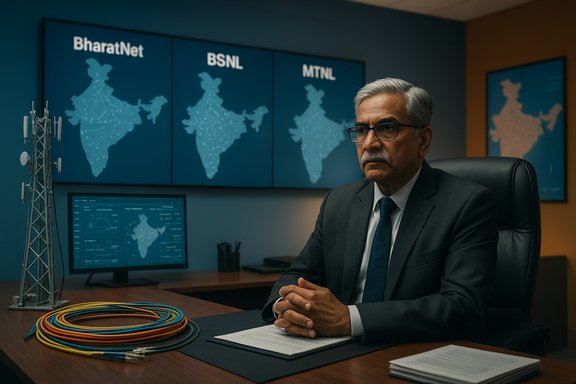
Ravi A Robert Jerard is an Indian Telecommunication Service officer serving as Deputy Director General (Standards, Research & Innovation) in the DoT. He holds a B.Tech in Electronics & Communication Engineering and an MBA, and has spent more than three decades in telecom administration and standards roles. Jerard was first asked to take additional charge of BSNL, MTNL and BBNL in mid‑2024 following a decision not to extend the tenure of the incumbent CMD at that time. The arrangement has been repeatedly prolonged in successive short bursts ever since.The immediate administrative history
- July 13–15, 2024: Jerard was first given additional charge of BSNL and MTNL after the Appointments Committee of the Cabinet (ACC) declined an extension to the previous CMD.
- January 2025: DoT extended the additional charge for a further period (reported as six months at that time), continuing the interim arrangement.
- July–October 2025: The DoT again extended Jerard’s charge for a further short period, and regulatory filings recorded an extension through mid‑October 2025.
- October 15, 2025 onward: Multiple outlets report a new DoT order effective 15 October 2025; however, the reported length of this most recent extension varies between three months and six months depending on the publication. Readers should treat the precise end date with caution until the DoT’s formal order is consulted.
What the orders say — and what they do not
Multiple published reports share several consistent administrative features of the interim arrangement:- The extension is an interim, stop‑gap measure intended to ensure that the post of CMD — for BSNL, MTNL and BBNL — does not remain vacant while a regular appointment process continues.
- The ACC’s approval (or DoT’s order subject to ACC clearance) has been reported as the authorising instrument. Some outlets describe this as ex‑post or conditional approval; others present it as a routine short‑term entrustment.
- The order(s) explicitly state that Jerard will not receive any additional remuneration for the period during which he holds the additional charge. This is a standard feature of many “additional charge” appointments.
- The duration of the most recent extension is inconsistent in media reports. Storyboard18 characterises the approval as a six‑month extension effective 15 October 2025, while New Indian Express, ET Telecom and a cluster of industry outlets report a three‑month extension running to 14 January 2026. The discrepancy should be resolved by consulting the DoT’s formal order or the MTNL/BSNL regulatory filings that attach the order text.
Why this matters: stability, strategy and the stakes for state telecoms
Continuity vs. decisive leadership
The DoT’s repeated reliance on short interim extensions reflects two competing impulses in public‑sector stewardship:- The positive case: Continuity. Keeping an experienced DoT official in charge reduces transitional friction, ensures ministries can coordinate policy and operational priorities (for example, 4G rollouts and BharatNet), and provides an insider who understands both technical standards and government imperatives. Jerard’s background in standards, research and innovation positions him as a pragmatic caretaker for technical rollouts.
- The downside: Indecision and limited mandate. Interim appointees typically lack the political capital or the longer mandate necessary to undertake deep organisational reforms, make bold capital allocation decisions, or negotiate complex public‑private partnerships. Repeated short extensions can delay structural choices (asset monetisation, vendor consolidation, long‑term financing) that require a full‑time, empowered CMD. Several industry observers have flagged the risk that prolonged acting arrangements may blunt the impetus for decisive reform.
Operational stakes for BSNL, MTNL and BBNL
State telecom companies are at a critical moment:- BSNL has been executing a network modernisation and revival programme that includes expanding 4G coverage, adding mobile towers, and pursuing BharatNet broadband rolls. Several outlets report back‑to‑back quarterly profits and meaningful subscriber additions in 2025 — signals that the turnaround path is delivering operational improvements, though sustainability remains a question.
- BBNL remains central to the government’s rural broadband ambitions (BharatNet), where tendering, vendor execution and timely capital flows determine whether promised village connectivity targets are met on schedule. Jerard’s DoT role — and his experience with standards and BharatNet procurement — makes him a familiar choice to supervise coordination among ministries and PSUs.
Timeline — compact, verifiable milestones
- July 13–15, 2024: Additional charge assigned to Ravi A Robert Jerard after ACC denied extension to previous CMD.
- January 16, 2025: DoT issued a continuation order extending Jerard’s additional charge (reported as six months beginning 15 July 2024 in earlier orders).
- July 15, 2025: DoT again extends the additional charge through mid‑October 2025 to avoid vacancy.
- October 15, 2025: DoT issues a new extension order effective this date — the most recent order’s length is reported variably as three months or six months; consult the DoT/MTNL filing for the authoritative end date.
Cross‑checking the principal claims (verification and divergence)
The five most important factual claims in coverage of the extension — and how they stand up to cross‑checking — are:- The DoT issued an order effective 15 October 2025 entrusting additional charge to Jerard. This is reported consistently across multiple publications.
- The length of the latest extension: conflicting reports — Storyboard18 calls it six months, but New Indian Express and ET Telecom report three months to 14 January 2026. This is an important discrepancy and is currently unresolved in public reporting. Flagged: verify against the DoT order.
- Jerard will not draw additional remuneration while holding additional charge. This is consistently reported and matches the usual practice for “additional charge” arrangements.
- Jerard’s background (DDG, DoT; technical qualifications) is consistently stated in public reporting.
- The ACC’s involvement or approval is referenced in filings and press reports as the authorising mechanism; some reports describe ex‑post approval while others describe prior authorisation. Readers should consult the ACC/DoT order text for the formal legal posture.
What the extension tells us about government strategy for PSUs
Short‑termism or deliberate staging?
The repeated short extensions suggest the government is balancing competing priorities:- Ensuring day‑to‑day continuity and risk mitigation for network rollouts and BharatNet execution, while
- Keeping the appointment window open for a full‑time CMD, possibly to allow for a better‑vetted selection process or to align the appointment with inter‑ministerial timing and approvals.
Political and regulatory constraints
Appointing a CMD for major PSUs requires vetting by the Public Enterprise Selection Board (PESB) and approval of the ACC. Reports indicate that PESB interviews and recommendations in 2025 did not yield a clear recommended candidate for a permanent CMD post at BSNL — a factor that likely contributes to repeated interim extensions. The absence of an approved full‑time chief complicates strategic signalling to investors, vendors and employees.Operational implications for BSNL and the broader telecom market
For BSNL
- Short‑term operational continuity: Jerard’s technical background and DoT position facilitate coordination with the ministry and downstream PSUs on 4G rollout and BharatNet implementation. This is valuable when tight timelines and coordination across agencies matter.
- Strategic investment and capital allocation: A prolonged acting mandate can complicate long‑range decisions such as tower asset monetisation, vendor consolidation, or network financing packages (including viability gap and capex timelines). External investors and partners typically prefer a permanent leadership team to negotiate such deals.
- Market confidence: Recent quarterly profit reports and subscriber additions have been treated positively in the market; however, durability of these gains will depend on sustained capex and competitive service launches. Interim leadership keeps day‑to‑day momentum but may limit transformational deals.
For MTNL and BBNL
- MTNL: Continued alignment with DoT priorities helps maintain metro network operations and legacy services while modernisation work proceeds. However, MTNL’s long‑term revival still depends on structural reforms and asset rearrangements that require an empowered board and permanent executive leadership.
- BBNL: As custodian of BharatNet, BBNL’s success depends on procurement, inter‑agency coordination and vendor performance. A DoT‑aligned acting CMD reduces coordination frictions but cannot substitute for long‑term capital and programmatic certainty.
Strengths, weaknesses and risks — a concise assessment
- Strengths:
- Operational continuity and faster coordination between DoT and PSUs while major network rollouts and rural broadband programmes proceed.
- Jerard’s technical credentials make him a pragmatic caretaker for standards and rollout oversight.
- Weaknesses:
- Interim status limits authority: strategic, long‑duration deals and large financing packages are harder to execute under repeated short extensions.
- Perception risk: Markets, suppliers and employees may view the absence of a permanent leader as institutional uncertainty.
- Risks to watch:
- Policy and procurement delays if the PESB/ACC appointment process remains inconclusive.
- Execution risk on capital projects (4G, BharatNet) if leadership continuity is interrupted or if short‑term leadership cannot commit needed capital.
Practical takeaway for stakeholders
- Investors and vendors: Treat the appointment as a sign of operational continuity but verify commercial commitments and timelines against formal board or ministry communications before pricing long‑term deals.
- Employees and suppliers: Expect continued emphasis on rollout milestones (4G site activations, BharatNet tenders), but be cautious about long‑term contractual pivots until a permanent CMD is in place.
- Policymakers: If the objective is rapid transformation of state telecoms, convert interim stewardship into a faster, transparent process for permanent appointments; otherwise, short extensions risk prolonged institutional drift.
Conclusion
The DoT’s decision to retain Ravi A Robert Jerard as acting CMD of BSNL, MTNL and BBNL underscores an administrative preference for continuity during a delicate phase of network expansion and PSU revival. Jerard’s technical grounding and DoT role make him an efficient steward for ongoing program delivery. Yet the public record’s conflicting descriptions of the extension’s length — three months in several mainstream industry reports versus six months in at least one outlet — highlight how even straightforward administrative decisions can be reported inconsistently. That inconsistency matters because a permanent, clearly mandated leadership would better position BSNL, MTNL and BBNL to execute multi‑year investments, negotiate large vendor and financing packages, and respond to competitive pressures from private telcos.Until the DoT’s formal order or the MTNL/BSNL regulatory filing is consulted for a definitive timeline, stakeholders should treat the extension as an interim continuity measure, verify contractual and procurement commitments against the official order, and watch the PESB/ACC process for signals that a permanent appointment is forthcoming. The trajectory of India’s public telecom firms — and their ability to convert recent operational gains into sustainable market competitiveness — will hinge on whether short‑term stewardship transitions into decisive, long‑term leadership.
Source: Storyboard18 DoT approves six-month extension for Ravi A Robert Jerard as CMD of BSNL, MTNL, and BBNL
