

Geralt’s voice actor has sparked fresh conversation in The Witcher community by naming a surprising winner in the long-running “Yennefer vs. Triss” debate — and it isn’t either of the two sorceresses most fans immediately think of. In a wide‑ranging interview released on February 20, 2026, Doug Cockle — the long‑standing English voice of Geralt of Rivia — said he ranks Shani as Geralt’s best romantic match in The Witcher 3: Wild Hunt, placing Triss second and Yennefer third, and offered candid reasons for his choices as well as a few revealing reflections on playing the game while hearing his own performance.
The Witcher 3: Wild Hunt remains one of the most discussed RPGs of the last decade, not only for its layered storytelling and open world but for the morally ambiguous choices that shape Geralt’s relationships and endings. Romance in the game is not only a matter of decoration — it’s mechanically and narratively consequential: choosing a romantic partner affects final outcomes, character arcs, and, for many players, the emotional tenor of Geralt’s journey.
Doug Cockle has been the voice of Geralt in CD Projekt Red’s Witcher games for many years and has become inseparable from the character for English‑speaking audiences. His interpretation of Geralt is widely cited as a major factor in the series’ success and cultural impact.
The interview that prompted this article was conducted by YouTuber GoatedSynro and circulated through multiple outlets on February 20, 2026. Cockle’s statements include both playful, personal preferences and observations formed from his unique vantage point as the man who has voiced Geralt in cutscenes, trailers, and spinoffs — the actor who, in essence, is Geralt for many fans.
Why Shani resonates in Cockle’s take:
In short, this is a small story that magnifies a few large themes about authorship and play. It reminds us that games live simultaneously as authored texts, played systems, and cultural artifacts — and that the people who help give characters life (like Cockle) can help steer the conversation in interesting directions. The best response for the community is not outrage or uncritical agreement, but curiosity: replay the scenes you love, look for what resonated with Cockle, and remember that, in a game built around choice, there is room for many “best” answers.
Conclusion: whether you’re Team Yennefer, Team Triss, Team Shani, or Team “Geralt should never settle down,” Doug Cockle’s take is a salutary reminder that our attachments to fictional relationships are shaped by performance, design, and personal taste — and that sometimes the most persuasive voices in a conversation are the ones behind the microphone.
Source: IXBT.games https://ixbt.games/en/news/2026/02/...iu-v-the-witcher-3-eto-ne-ien-i-ne-triss.html
 Background
The Witcher 3: Wild Hunt remains one of the most discussed RPGs of the last decade, not only for its layered storytelling and open world but for the morally ambiguous choices that shape Geralt’s relationships and endings. Romance in the game is not only a matter of decoration — it’s mechanically and narratively consequential: choosing a romantic partner affects final outcomes, character arcs, and, for many players, the emotional tenor of Geralt’s journey.Doug Cockle has been the voice of Geralt in CD Projekt Red’s Witcher games for many years and has become inseparable from the character for English‑speaking audiences. His interpretation of Geralt is widely cited as a major factor in the series’ success and cultural impact.
The interview that prompted this article was conducted by YouTuber GoatedSynro and circulated through multiple outlets on February 20, 2026. Cockle’s statements include both playful, personal preferences and observations formed from his unique vantage point as the man who has voiced Geralt in cutscenes, trailers, and spinoffs — the actor who, in essence, is Geralt for many fans.
What Cockle actually said — the news in plain terms
- Cockle said he considers Shani the most compelling romance option in The Witcher 3, calling her “good fun” and praising a grounded chemistry that appealed to him more than the epic, high‑magic entanglements with sorceresses.
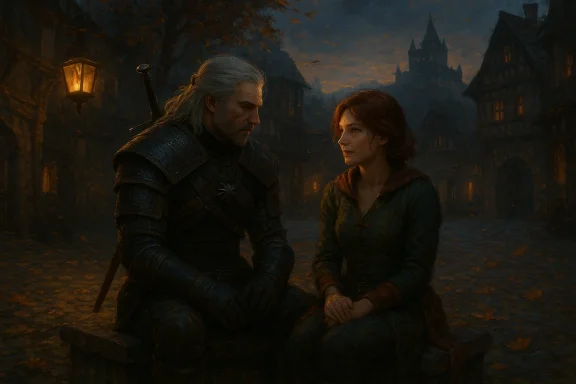
- He placed Triss second and Yennefer third in his personal rankings, noting a fondness for Triss’s personality and even joking about being “partial to redheads.” He described Yennefer as brilliant and formidable but, in his words, “more like a naggy mom” in contrast to Triss’s lighter attitude.
- Separately, Cockle revealed he had played through The Witcher 3 only once and achieved what he called the game’s “best” ending — the one where Geralt ends up with Triss and Ciri becomes a witcher — by instinct rather than exhaustive choice‑tracking. He said he didn’t have time for multiple playthroughs and was satisfied with the one he made.
- He admitted being driven “bonkers” by the expansive Bloody Baron questline due to the tedious back‑and‑forth travel before discovering fast travel, and ranked locations like Skellige and Kaer Morhen highly while downgrading Velen for its traversal demands.
Why this statement matters (and why the reaction is not purely trivial)
At first glance, a voice actor’s ranking of romances might feel like celebrity gossip: harmless, fanservicey, and ephemeral. But Cockle’s comments carry outsized weight for several reasons:- Cultural authority. Cockle’s vocal performance has shaped how English‑language audiences perceive Geralt — his tone, timing, and delivery map onto the character’s emotional life for millions. When the actor who is Geralt publicly says “Shani works best for me,” many fans will reconsider interactions they previously locked into canonical frames.
- Canonical ambiguity. The Witcher’s narrative has always been a negotiation between player choice and source‑material canon. The book trilogy and game trilogy sometimes diverge on romantic implications; Cockle’s viewpoint adds another interpretive layer, complicating debates about what is “best” versus what is “canon.”
- Community debate drivers. Romance arguments are not just sentimental; they shape mods, fanfiction, cosplay, and even how new Witcher projects choose to treat relationships. A respected insider weighing in gives new oxygen to existing debates and can influence creators and community content.
- Design and player experience implications. Cockle’s comments about the Bloody Baron quest and travel frustrations are tangible critiques of game design. When the actor who lived in the role even for a single playthrough finds one of the game’s most celebrated quests tedious because of mechanical friction, that critique invites retrospection about how narrative and traversal mechanics are balanced.
Dissecting Cockle’s choices: Shani, Triss, Yennefer — personality, screen time, and player expectations
Shani: the unexpected champion
Cockle’s elevation of Shani is the clearest eyebrow‑raiser for many players. Shani is a relatively small figure in The Witcher 3 compared to the two sorceresses, but she embodies a grounded, human, and less melodramatic option.Why Shani resonates in Cockle’s take:
- Groundedness over grandeur. Shani’s arc is unsurprisingly more down‑to‑earth, which can feel tonally right for a weathered monster‑hunter who’s been burdened by destiny and political machinations.
- Role and chemistry. For Cockle, the chemistry felt real in a different register than the high‑stakes, high‑emotion entanglement with Yennefer or the long‑standing history with Triss. This reflects how intimacy and compatibility can be read on multiple axes—emotional safety vs. passion vs. shared practical values.
Triss: the warm second
Cockle’s fondness for Triss is easier to contextualize. Triss is present across the Witcher games, has a long shared history with Geralt in the medium of the games themselves, and is written to be affectionate and approachable. Cockle’s joke about hair color signals a light‑hearted, personal element influencing his ranking — a candid, humanizing moment rather than a rigorous literary criticism.Yennefer: the powerful (and polarizing) presence
Yennefer’s position at third in Cockle’s list will sting some fans who view her as Geralt’s canonical partner from the books. Cockle’s description of her as “more like a naggy mom” is playful but also reveals the actor’s sense of tonal mismatch between Geralt’s wry, roguish persona and Yennefer’s intensity. This is not an intellectual refusal but a preference for certain interpersonal dynamics. Readers should note this is subjective commentary from an actor, not a revisionist claim about the novels’ canonical stance.What Cockle’s playthrough revelation tells us about actor vs. player perspectives
Cockle’s admission that he only played through The Witcher 3 once — and that he achieved his desired ending by instinct — opens an interesting window into the dissonance between acting for a role and gaming as a player.- Actors experience their characters in a controlled, performance‑first environment: Cockle recorded lines in a studio and approached Geralt as a professional task. He was not obligated to exhaust the game’s branches in the way players often do.
- Players often experience Geralt as an embodied agent whose choices feel consequential: many fans obsessively replay to unlock endings and reconcile romantic options with personal values. Cockle’s “one perfect run” challenges the assumption that the actor must or will approach the game the same way as a player.
- There’s an authenticity in not over‑engineering the narrative: Cockle’s approach — go with instincts, accept the emotional truth of a single playthrough — mirrors how some players report their most meaningful experiences arise naturally rather than through exhaustive min‑maxing.
Design lessons and community implications
Cockle’s interview offers several indirect design lessons and community discussion points that matter to developers, modders, and community managers alike.1. Romance as gameplay: clarity matters
The Witcher 3’s romance systems are rich but sometimes opaque: the emotional consequences of certain choices were not always signposted to players. Cockle’s instinctive achievement of his preferred ending suggests one player (an experienced voice actor) can reach a gratifying resolution by following narrative cues rather than codified choice checklists. But many players needed hard guides and replay guides, implying:- Designers should consider clearer feedback loops when romance outcomes are meaningful to endings.
- Developers can support both types of players: those who want to be surprised and those who want to pursue outcomes deliberately.
2. Traversal friction can undermine even the best narrative
Cockle’s irritation with the Bloody Baron quest’s back‑and‑forth trekking is a blunt reminder: no matter how good a quest is narratively, clumsy traversal mechanics can sour the experience. That complaint reinforces the modern design expectation that large worlds need robust fast‑travel options, quality‑of‑life navigation aids, and careful pacing of fetch/return errands. Players and critics who still praise the Bloody Baron quest must continue to acknowledge how mechanical friction interacts with narrative satisfaction.3. Community debates have staying power — and commercial influence
A high‑profile remark from Cockle will resurface existing debates, affect discoverability of fan content (searches for “best romance Witcher 3” spike after such coverage), and influence new players’ expectations. Franchise custodians need to be mindful of how off‑hand comments by creative contributors can shift community attention and sentiment. The Witcher brand — spanning games, TV, and animation — is now an ecosystem where statements in one medium ripple across the others.How fans should read Cockle’s remarks (and what to treat with caution)
Cockle’s comments are valuable but should be interpreted correctly. Here’s how to parse them:- Treat them as personal preference, not as canon: Cockle is a performer, not the series’ narrative editor. His ranking of Shani over Yennefer or Triss is an opinion shaped by his own tastes and a single playthrough. It does not rewrite the novels or CD Projekt Red’s canonical choices.
- Give weight to his design critiques: When Cockle criticizes traversal or praises particular locations, he is commenting on player experience in a meaningful way because he played the game and reacted like an ordinary player would. Those remarks have design currency.
- Beware of conflating out‑of‑context jokes with analysis: Cockle’s quip about hair color is playful and humanizing; it doesn’t constitute a literary argument. Reporters and fans should avoid stretching such lines into sweeping claims.
- Recognize the power of perspective: Actors can change fan discourse simply by revealing what they found resonant in their runs. That’s worth noting, but not overvaluing.
A quick technical and contextual verification
It’s necessary to verify the record of claims and context against multiple reputable outlets:- The assertion that Cockle placed Shani above Triss and Yennefer was reported by GamesRadar on February 20, 2026, following the GoatedSynro interview.
- PC Gamer independently covered Cockle’s interview, highlighting his single playthrough, the “best” ending he achieved (Triss + Ciri as witcher), and his candid frustrations with the Bloody Baron quest.
- Additional reporting syndicated via outlets such as Yahoo/Tech reiterated Cockle’s ranking and provided context around his playthrough and preferences.
- Background verification of Doug Cockle’s long association with the character and his role in The Witcher franchise is established via his public profile and aggregated coverage. This gives weight to why his opinions matter to fans.
What this means for the future of the franchise
Cockle’s comments arrive in a larger moment for The Witcher franchise: animated features, the Netflix live‑action series, and a new generation of games (remakes and sequels) continue to expand the property. Several threads are relevant:- Creators will watch community sentiment: fan responses to voices from within the franchise matter when designing new characters and relationship arcs. Cockle’s preference for grounded relationships could embolden designers to explore quieter, emotionally realistic romances in future entries.
- The line between canon and player choice remains porous: future projects will need to communicate how they approach previous endings and relationships. A new game or adaptation could explicitly adopt Triss as the canonical partner, or it could treat the game’s endings as divergent possibilities. Actor comments feed into how players and creators negotiate that ambiguity.
- Narrative fidelity and mechanical polish must coexist: Cockle’s praise for specific locations (Skellige, Kaer Morhen) and critique of traversal friction provide a reminder that future Witcher titles should aim for both evocative set pieces and player-friendly navigation.
Practical takeaways for players, modders, and content creators
- Players: If you’ve never tried the Shani romance, Cockle’s comments are a good nudge to replay select questlines with an eye toward the more grounded, human options. You may discover narrative subtleties that feel more emotionally authentic in the context of Geralt’s life as a witcher.
- Modders: Consider creating or promoting mods that make romance outcomes more accessible or extend the Shani route (if you agree with Cockle’s take) — community appetite is often shaped by high‑profile endorsements. Mods that smooth traversal or enhance fast‑travel in Velen would also respond directly to the actor’s critique.
- Content creators and journalists: Attribute Cockle’s remarks accurately as personal preference and situate them in the larger web of franchise narratives. Avoid treating actor opinions as institutional declarations of canon.
Final analysis: why a voice actor’s romance ranking is both small news and a meaningful cultural prompt
Doug Cockle’s declaration that Shani is Geralt’s best romance is, in one view, charmingly trivial — a celebrity preference that will delight or irritate fans for a few news cycles. But parsed more carefully, it’s a useful provocation: it forces players to reexamine the emotional registers at work in The Witcher’s relationships; it underscores how perspective — actor, player, author — shapes interpretation; and it surfaces tangible gameplay issues (traversal and quest pacing) that shaped even the actor’s experience.In short, this is a small story that magnifies a few large themes about authorship and play. It reminds us that games live simultaneously as authored texts, played systems, and cultural artifacts — and that the people who help give characters life (like Cockle) can help steer the conversation in interesting directions. The best response for the community is not outrage or uncritical agreement, but curiosity: replay the scenes you love, look for what resonated with Cockle, and remember that, in a game built around choice, there is room for many “best” answers.
Conclusion: whether you’re Team Yennefer, Team Triss, Team Shani, or Team “Geralt should never settle down,” Doug Cockle’s take is a salutary reminder that our attachments to fictional relationships are shaped by performance, design, and personal taste — and that sometimes the most persuasive voices in a conversation are the ones behind the microphone.
Source: IXBT.games https://ixbt.games/en/news/2026/02/...iu-v-the-witcher-3-eto-ne-ien-i-ne-triss.html
