

Delhi University’s Executive Council has approved the creation of a dedicated Centre for Odia Studies in the Faculty of Arts, a move that will introduce a two‑year MA in Odia alongside plans for certificate, diploma and undergraduate elective offerings — and which arrived alongside decisions to rename a renovated convention hall Vande Mataram Hall, set a ₹1,651.42‑crore budget estimate for 2026–27, and propose use of 3.7 acres in the Dhaka Complex for a new girls’ hostel.
Delhi University’s Executive Council discussed and approved multiple institutional priorities at its recent meeting: the new Centre for Odia Studies; the two‑year MA in Odia and support for doctoral and post‑doctoral research; the renaming of an Arts Faculty convention hall to Vande Mataram Hall; budget estimates for the next fiscal year; and reuse of vacant land in the Dhaka Complex for student housing. The EC set the university’s budget estimate for financial year 2026–27 at ₹1,651.42 crore, and the land reuse plan would combine parcels totalling 3.7 acres for a girls’ hostel. This development places a classical Indian language—Odia, already recognised by the Union government as a Classical Language—into the national capital’s academic infrastructure and signals a renewed institutional emphasis on language area studies and cultural scholarship. Odia’s classical status (first conferred by the Government of India in 2014) gives the subject a weighty scholarly pedigree and provides a ready justification for a Centre that can act as a hub for research, pedagogy and public outreach.
This is not a trivial staffing exercise: it involves sanctioned posts, UGC/DU appointment rules, and possibly new chair positions depending on the Centre’s scale. No appointment roadmap was provided in the EC announcement. This is a practical implementation item that requires prompt university action.
Source: The Hindu DU to set up Odia Studies centre
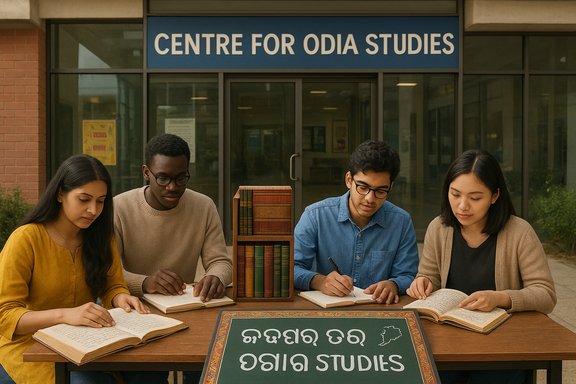 Background / Overview
Delhi University’s Executive Council discussed and approved multiple institutional priorities at its recent meeting: the new Centre for Odia Studies; the two‑year MA in Odia and support for doctoral and post‑doctoral research; the renaming of an Arts Faculty convention hall to Vande Mataram Hall; budget estimates for the next fiscal year; and reuse of vacant land in the Dhaka Complex for student housing. The EC set the university’s budget estimate for financial year 2026–27 at ₹1,651.42 crore, and the land reuse plan would combine parcels totalling 3.7 acres for a girls’ hostel. This development places a classical Indian language—Odia, already recognised by the Union government as a Classical Language—into the national capital’s academic infrastructure and signals a renewed institutional emphasis on language area studies and cultural scholarship. Odia’s classical status (first conferred by the Government of India in 2014) gives the subject a weighty scholarly pedigree and provides a ready justification for a Centre that can act as a hub for research, pedagogy and public outreach. What the Centre for Odia Studies will (officially) do
Core academic offerings
- Launch a two‑year MA in Odia, described in official statements as the Centre’s initial flagship programme. News reports say the course will be backed by plans to support PhD and post‑doctoral research and to provide shorter certificate and diploma programmes.
- Introduce an undergraduate generic elective in Odia through the University’s Undergraduate Curriculum Framework 2022, enabling exposure at the BA level and the potential to generate interest and feeder pipelines for higher degrees. The UGCF rollout across DU already lists Odia among languages taught at the undergraduate level, which supports the feasibility of a GE offering.
Research and cultural remit
The Centre is tasked with exploring the historical evolution of the Odia language and its literature, as well as art, architecture, dance, folklore, oral traditions, philosophical practices, reform movements and customs. The scope is deliberately broad: the stated aim is to position Odia Studies as an interdisciplinary field bridging language, humanities, performance studies and cultural history. Several news outlets picked up the university’s summary of the Centre’s remit.Verifying the facts: what is confirmed and what needs follow‑up
The most load‑bearing, verifiable facts are:- The EC approved creation of a Centre for Odia Studies and a two‑year MA in Odia. Multiple national outlets reported the decision after the EC meeting.
- The EC also approved renaming the Arts Faculty convention hall as Vande Mataram Hall following renovation. This was publicly announced as part of the same meeting’s outcomes.
- The budget estimate for 2026–27 (₹1,651.42 crore) and the 3.7 acres land‑use proposal for a girls’ hostel were recorded in the EC paperwork and reported across media outlets. These figures appear consistently in the press coverage.
- One report named an initial intake of 60 students for the MA programme; that detail appears in a single outlet’s coverage and does not (yet) appear in a formal DU notification or in the EC’s public statement widely reproduced in the press. Until DU publishes the programme’s sanctioned intake and admission rules, the seat‑count should be treated as reported but unconfirmed. Caution advised.
- The timelines for faculty recruitment, research funding, course syllabi, and external collaborations were not detailed in the press statements and will require follow‑up with DU academic affairs or the Faculty of Arts for concrete schedules and budgets.
Why this matters: cultural, academic and policy significance
Strengthening area and language studies at the national level
Setting up an institutional Centre for Odia Studies in Delhi is symbolically and practically significant. It brings attention and resources to a major Indo‑Aryan language with a deep literary tradition, and it creates a focal point for scholars, students and cultural organisations based in the capital and beyond.- A Delhi‑based Centre can amplify Odia scholarship nationally and internationally, making primary sources more visible to scholars who do not have easy access to Odisha’s regional archives and institutions.
- It can act as a bridge between Delhi’s research infrastructure (libraries, funding bodies, inter‑university programmes) and Odia institutions in Bhubaneswar, Cuttack and Koraput, enabling collaborative projects, visiting chairs and joint research grants.
Education policy alignment
The Centre’s stated plan to offer undergraduate electives is aligned with the University’s Undergraduate Curriculum Framework 2022 under NEP 2020 reforms — a structural context that encourages multidisciplinary exposure and language study at the UG level. Integrating Odia as a generic elective fits current DU curricular practice and helps scaffold student progression from GE to MA.Cultural diplomacy and diaspora outreach
The Centre’s remit to study Odia culture, reform movements and oral traditions gives it potential as a soft‑power node: hosting festivals, translations, and public events in Delhi can increase visibility for Odia literature and create cultural diplomacy opportunities with diaspora communities and national cultural agencies.Institutional strengths the decision leverages
- Existing national frameworks such as the Classical Language recognition and NEP‑driven curriculum reforms give the Centre legitimacy and administrative pathways for funding, chairs and research grants. Odia’s classical status (noted by the central government in 2014) strengthens the case for scholarly investment.
- DU’s scale and infrastructure: Delhi University can offer cross‑departmental collaborations (history, anthropology, performance studies, comparative literature, museum studies) that area‑study Centres benefit from. This multidisciplinary ecosystem is a structural advantage for launching a new language centre.
- Immediate student demand: national press reporting indicates an intention to offer a full MA and associated research programmes, which will likely draw applicants from across India and the Odia diaspora, assuming admissions and seat allocations are published promptly.
Risks, operational challenges and governance issues
Establishing a new Centre is comparatively straightforward on paper, but the operational path can be rocky. Key risks include:1. Funding and recurring budget commitments
The EC meeting set a high overall budget estimate for DU (₹1,651.42 crore for 2026–27), but a high figure for the university does not guarantee dedicated, recurring funds for a new Centre. Creating sustainable programmes requires:- recurring salary lines for permanent faculty and programme staff,
- library acquisitions, archival digitisation budgets and travelling fellowships,
- operating funds for conferences, outreach and visiting chairs.
2. Faculty recruitment and subject expertise
Quality language and literary programmes require experienced scholars, long‑term faculty appointments and postgraduate supervisors. Recruiting scholars with strong Odia language credentials to Delhi — and providing competitive packages so they can relocate or take joint appointments with Odisha institutions — will be central to the Centre’s credibility.This is not a trivial staffing exercise: it involves sanctioned posts, UGC/DU appointment rules, and possibly new chair positions depending on the Centre’s scale. No appointment roadmap was provided in the EC announcement. This is a practical implementation item that requires prompt university action.
3. Curriculum design and quality assurance
An MA in Odia must balance philology, literature, cultural history, and applied language pedagogy to be academically robust and employable. Syllabi, admission criteria, duration, credit structure and assessment modes must be visible well before admissions open. DU’s adoption of the UGCF and NEP 2020 principles offers a framework, but the Centre needs departmental curriculum committees and external peer review to meet national and international standards.4. Political and symbolic optics: the hall renaming
Renaming the renovated Arts Faculty convention hall Vande Mataram Hall is a high‑visibility symbolic act with political connotations. While proponents argue it honours a patriotic anthem, critics often view such renamings through a politicised lens; universities are contested public spaces and institutional naming decisions can provoke debate about pluralism, campus culture and academic neutrality. The EC’s coupled decisions — language Centre and renaming — will invite scrutiny from across the public sphere and require measured administrative reasoning to defuse potential polarisation.5. Land‑use, stakeholders and inter‑unit rights
The Dhaka Complex land reuse plan draws on parcels previously allotted to other units; recombining 3.7 acres will require legal clearances, consent from the units involved and careful stakeholder engagement. Inter‑unit land disputes and legacy conditions (such as time‑bound allotment clauses) can slow the hostel project unless the administration publishes a clear land transfer and construction timetable.Practical roadmap: nine tasks DU should publish (recommended)
- Publish an official Centre charter and sanctioned posts list (professors, associate professors, assistant professors, librarians, admin).
- Release the MA in Odia programme sanction: seat count, intake procedure, fee structure, credit matrix and admission timeline.
- Announce a seed‑funding and recurring budget allocation for the Centre for the next three years.
- Convene an external advisory board with Odia scholars and representatives from Odisha’s universities and cultural bodies.
- Publish a phased hiring plan and visiting scholar programme to ensure immediate course delivery.
- Commit to library and archival acquisitions, including digitisation plans for Odia manuscripts.
- Issue an MoU roadmap for collaboration with Odisha institutions (Utkal University, Utkal University of Culture, Central University of Odisha) and national bodies (Sahitya Akademi).
- Set a transparent land‑use timeline for the Dhaka Complex hostel project, including stakeholder consultations and legal clearances.
- Prepare a public-facing communications plan explaining the rationale for the hall renaming and the Centre’s academic mission to head off politicised misinterpretation.
Opportunities for partnership and impact
- The Centre can host translation fellowships, enabling Odia texts to reach Hindi, English and other language audiences — a tangible cultural outreach product that serves both scholarship and the public.
- Establishing visiting chairs (external funding permitted) and joint PhD supervision with Odisha institutions would strengthen cross‑regional academic ties and attract research grants.
- Short certificate courses in Odia language pedagogy can supply teaching expertise for school systems and promote language preservation.
- Public events, film festivals and performance series in the capital will raise Odia culture’s profile and offer practical experiential learning for students.
Broader context: where this fits in India’s language policy and higher education landscape
The Centre addition to DU follows a pattern in Indian higher education where central and state universities expand area studies and classical language chairs. The state of Odisha has long lobbied for institutional support for Odia scholarship at the national level, and the Centre at Delhi could be an important node for nationwide visibility for the language — especially given the government’s classical language policy that makes dedicated support feasible. That said, national recognition alone does not create sustainable academic capacity: a durable Centre requires careful resourcing, governance and scholarly leadership.Conclusion
Delhi University’s decision to create a Centre for Odia Studies and to launch a two‑year MA in Odia is a concrete, publicly announced step toward expanding India’s higher‑education architecture for regional and classical languages. The EC’s package of decisions — including the Vande Mataram Hall renaming, a ₹1,651.42‑crore budget estimate, and the Dhaka Complex land plan for a girls’ hostel — underscores an administrative momentum that combines cultural, infrastructural and fiscal priorities. The potential upsides are significant: better preservation and study of Odia language and culture, richer interdisciplinary scholarship, and new opportunities for students. The central caveat is implementation: quality depends on published programme approvals, transparent funding lines, credible faculty appointments, and inclusive stakeholder engagement — all of which remain to be made public in DU’s formal notifications. Until DU issues detailed sanction orders, seat matrices and staffing plans, key operational details — including initial intake numbers reported by a single outlet — should be treated as provisional and verified against the university’s official circulars. If executed with scholarly rigor, transparent governance and a clear commitment to academic freedom, the Centre can become an important national hub for Odia studies. If it is allowed to stall or is inadequately resourced, the approval will risk becoming another headline with little long‑term impact. The coming weeks should make the Centre’s true trajectory clear: official DU notifications about the programme structure, sanctioned posts and budget allocations will be the concrete markers to watch.Source: The Hindu DU to set up Odia Studies centre