

The European Commission is preparing to push member states toward a unified, bloc‑level exclusion of Chinese mobile‑network vendors Huawei and ZTE — a policy shift that would turn the EU’s voluntary 2020 “5G Cybersecurity Toolbox” into enforceable, cross‑border rules and sharply accelerate the continent’s long‑running geopolitical decoupling from Chinese telecom equipment.
The EU’s 5G Cybersecurity Toolbox was published in 2020 as a set of recommendations for member states to assess and mitigate risks from so‑called “high‑risk vendors.” It deliberately left implementation to national governments, creating a patchwork of responses: some countries used the toolbox to restrict or ban Huawei and ZTE, while others kept national markets open to the vendors so long as stricter technical or contractual controls were imposed. Since early 2025 Brussels officials have grown increasingly vocal that that voluntary approach has not achieved a consistent security baseline across the single market. EU Technology Commissioner Henna Virkkunen has publicly urged members to speed up implementation and explore ways to make the toolbox harder to ignore; MEPs and policy coalitions have asked the Commission to convert it into a legally binding instrument. Those calls intensified after a high‑profile corruption probe in Brussels that involved allegations tied to Huawei lobbying activity, prompting the Commission and Parliament to reopen political debate on vendor trustworthiness. Thomas Régnier, a Commission spokesperson, framed the argument in stark terms during a Brussels briefing: “The security of our 5G networks is crucial for our economy… Huawei represents materially higher risks than other 5G suppliers… A lack of swift action would expose the EU as a whole to a clear risk.” That language signalled Brussels’ shift from urging to pressing.
The Commission’s likely push represents a major inflection point in Europe’s digital infrastructure policy: it is an explicit pivot from voluntary mitigation to harmonised, security‑first procurement. The policy aim — a resilient, auditable, and interoperable European telecom base — is sound. The implementation challenge is to achieve that objective without imposing disproportionate costs or prompting supplier concentration and service delays. A successful outcome will depend less on headlines and more on carefully designed transition rules, transparent cost assessments, and a coordinated industrial strategy that grows genuine European alternatives while protecting consumers and critical services.
Source: TechJuice European Commission Moves Toward Banning Chinese 5G Vendors
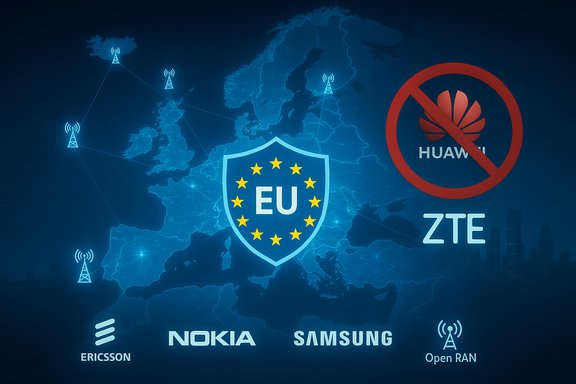 Background: the 5G toolbox, political context and what’s changed
The EU’s 5G Cybersecurity Toolbox was published in 2020 as a set of recommendations for member states to assess and mitigate risks from so‑called “high‑risk vendors.” It deliberately left implementation to national governments, creating a patchwork of responses: some countries used the toolbox to restrict or ban Huawei and ZTE, while others kept national markets open to the vendors so long as stricter technical or contractual controls were imposed. Since early 2025 Brussels officials have grown increasingly vocal that that voluntary approach has not achieved a consistent security baseline across the single market. EU Technology Commissioner Henna Virkkunen has publicly urged members to speed up implementation and explore ways to make the toolbox harder to ignore; MEPs and policy coalitions have asked the Commission to convert it into a legally binding instrument. Those calls intensified after a high‑profile corruption probe in Brussels that involved allegations tied to Huawei lobbying activity, prompting the Commission and Parliament to reopen political debate on vendor trustworthiness. Thomas Régnier, a Commission spokesperson, framed the argument in stark terms during a Brussels briefing: “The security of our 5G networks is crucial for our economy… Huawei represents materially higher risks than other 5G suppliers… A lack of swift action would expose the EU as a whole to a clear risk.” That language signalled Brussels’ shift from urging to pressing. What the Commission can — and can’t — do legally
The current legal landscape
Telecom infrastructure is primarily a national competence: member states decide which equipment may be used in their critical communications networks. The 2020 Toolbox therefore relied on peer pressure and mutual guidance rather than supranational enforcement. Converting recommendations into a mandatory EU rule would require a formal legislative instrument (a directive or regulation) that respects treaty limits and the EU’s competence allocation. That is precisely the option now under active discussion in Brussels.How a binding instrument might work
If the Commission tabled a directive, it could:- require all member states to prohibit new procurement of equipment from listed high‑risk vendors;
- set common deadlines for the phase‑out of critical functions supplied by those vendors (for example, core network elements);
- create an EU‑level monitoring and enforcement mechanism tied to the toolbox’s risk‑assessment framework.
Who’s already acted — a fragmented patchwork
The member‑state response to Huawei and ZTE is mixed.- Early adopters of restriction or exclusion include Sweden and several Baltic states; Germany has agreed national measures obliging operators to remove critical Chinese components from 5G core functions by specific deadlines; Finland and others have also tightened rules.
- Large operators in traditionally Huawei‑friendly countries have begun re‑assessing exposure: for example, Telefónica announced plans to replace Huawei 5G equipment in Spain and Germany to meet domestic rules, while keeping Huawei kit in non‑restricted markets such as Brazil. That shows commercial adaptation can outpace national policy in some cases.
- Other member states have kept open procurement policies or have been slower to act — a stance driven by industrial partnerships, operator footprints, and political calculations. Greece and Spain historically hosted significant Huawei infrastructure and business ties; in practice, operator roadmaps and new national measures are changing the field even in those markets.
Technical and economic reality: “rip and replace” is messy and expensive
A Commission‑led ban brings a technically complex and costly practical challenge: how to remove equipment already in service without harming coverage or service continuity.- “Rip and replace” costs vary wildly in public estimates. Industry‑tied reports and some analyst briefings have produced high figures — a widely quoted estimate put the cost at up to €55 billion and suggested roll‑out delays of up to 18 months if Chinese vendors were quickly excluded. Other independent analyses place the one‑time replacement bill much lower: a Strand Consult study estimated replacement at a fraction of that sum, and U.S. federal reimbursement programmes have documented multi‑billion‑dollar replacement needs there. These discrepancies reflect different scopes (full replacement versus replacement of non‑upgradeable kit), different timelines, and differing assumptions about vendor pricing and capacity. Treat headline figures cautiously: they are model outputs, not audited bills.
- Operators argue a long, phased approach reduces incremental costs because mobile providers already refresh sites over time. UK operators’ post‑ban estimates showed materially smaller incremental costs when phase‑outs are stretched to several years. That provides a practical model for the EU: a binding rule with long, enforceable transition periods will lower immediate shock while still delivering the strategic objective of supplier diversification.
- Beyond direct capex for hardware swaps there are indirect costs: supply‑chain strain as Ericsson, Nokia and Samsung absorb large new orders; systems‑integration and testing; re‑certification; spectrum re‑planning; and operational risk as live networks are upgraded. These operational costs — delays, temporary service degradation risk, and the need for spare parts for mixed fleets — are real and must be part of any EU-level implementation plan.
Strategic implications: security, industrial policy, and market structure
Security and resilience gains
A continent‑wide exclusion of companies assessed as “high‑risk” promises more standardised risk reduction: unified vetting criteria, shared incident reporting, and harmonised supplier rules reduce the chance that adversaries could exploit regulatory gaps between countries.- Standardised rules would make auditing and cross‑border forensic work easier and avoid the “weakest link” problem where an attacker leverages less protected networks to pivot. It also simplifies public procurement and critical‑infrastructure protection across EU supply chains.
Industrial and innovation consequences
Removing Huawei and ZTE reshapes the vendor landscape.- Winners: European vendors Ericsson and Nokia — and non‑Chinese suppliers such as Samsung — would likely gain orders, while Open RAN and software‑defined RAN suppliers could accelerate adoption. That offers a strategic opportunity to deepen European industrial capacity and to couple 5G roll‑outs with sovereignty goals.
- Risks: less competition can push equipment prices up, slowing roll‑outs or increasing consumer costs. The supplier concentration risk is real: if market power concentrates with a small number of vendors, Europe may trade one dependency for another unless diversification programs and industrial investment are implemented in parallel. Internal Commission and industry analyses emphasise the need for procurement strategies that blend competition, standards, and funding for European suppliers.
Geopolitics and trade fallout
A bloc‑wide ban escalates tech geopolitics. China may retaliate economically or strategically in areas where it wields influence; conversely, a coordinated EU stance would align Europe more closely with U.S. and other allies that have already restricted Chinese vendors, creating a shared regulatory front on telecom supply chains. That helps intelligence and operational cooperation but raises trade friction and potential reciprocal measures.Implementation choices and policy tradeoffs
If Brussels moves ahead, it faces several design decisions that determine political acceptability and technical feasibility:- Transition timelines: long (multi‑year) windows reduce commercial shock but prolong exposure; short windows accelerate security gains but raise costs and rollout risk.
- Scope of exclusion: prohibiting new procurements is politically easier than forcing total removal of legacy gear from all network layers (radio access, transport, core).
- Financial support: funding mechanisms to offset replacement costs for smaller operators or less wealthy member states would reduce uneven burdens across the single market.
- Certification and alternative standards: investment in testing labs, interoperability certification, and common procurement frameworks can accelerate non‑Chinese supplier readiness.
- Sectoral carve‑outs: some national critical services may require bespoke exemptions or guardrails; the EU must balance collective security with national security prerogatives.
What telecom operators and enterprises should prepare for
- Inventory: map all critical network dependencies by vendor, product, and life‑cycle status. This must include RAN, transport, core, and OSS/BSS stacks.
- Transition planning: build phased replacement plans tied to vendor end‑of‑life schedules that preserve service continuity.
- Contract and procurement audits: add exit clauses, spare‑parts guarantees, and independent audit rights into new procurement.
- Technical mitigations: deploy multi‑vendor, disaggregated architectures (Open RAN where mature), customer‑owned keys, hardened monitoring and immutability for critical control planes.
- Engage in public‑private dialogues: operators need to work with national governments and the Commission to secure funding and timeline realism.
Strengths and shortcomings of the Commission’s likely approach
Strengths
- A unified rule reduces regulatory arbitrage and raises the collective security floor.
- It creates political momentum for supply‑chain diversification and targeted industrial policy to expand European supplier capacity.
- A directive, if designed with sensible transition measures, can give operators a predictable regulatory horizon to plan multi‑year upgrades.
Shortcomings and risks
- Cost uncertainty remains large; public estimates vary dramatically depending on scope and assumptions. Much of the highest‑cost messaging comes from industry‑commissioned studies and should be treated as one input among many rather than a single truth. These divergent numbers must be reconciled with transparent, third‑party audits.
- Supplier capacity is constrained: rapid procurement shifts can create bottlenecks, raising prices and delaying deployments.
- Political pushback from member states that host significant Huawei activity — or that prize industrial ties to China — can slow or dilute binding legislation unless offset by funding and negotiated exemptions.
- Overreliance on a small set of alternative vendors risks substituting one vendor concentration with another unless EU industrial policy and procurement create genuine multi‑vendor ecosystems.
Why some claims need caution — flagging the unverifiable
Several widely cited claims should be treated cautiously:- The oft‑repeated €55 billion / 18‑month figure originates from industry studies whose methodologies are not fully transparent. Independent analysis shows that assumptions about which equipment must be replaced and how fast alternative vendors can deliver materially change the outcome. Policy debates should demand transparent, third‑party cost modelling before treating those figures as definitive.
- Assertions that a quick EU ban would “break” 5G rollout or leave entire sectors unserved are overstated when they ignore phased transition options and the capability of European vendors to deliver on multi‑year procurement roadmaps; these are plausible but not inevitable outcomes. Independent empirical evidence on rollout impacts is limited.
Bottom line: security gains are real, but the execution problem is the policy
Brussels’ move toward a bloc‑wide restriction on Huawei and ZTE reflects a sober assessment of supply‑chain risk and political contagion risks inside the single market. Making the 5G toolbox binding would close a regulatory loophole and harmonise protections for cross‑border infrastructure. That’s a defensible security policy objective. However, the policy’s benefits will only materialise if the EU couples legal restrictions with transparent cost estimates, transition funding, supplier capacity‑building, and active procurement policies that create a competitive, multi‑vendor European ecosystem rather than replacing one dependency with another. The political and industrial levers required — funding for replacements, certification labs, coordinated procurement, and possibly export‑control diplomacy — are as important as the headline ban. Internal policy analysis and industry forums repeatedly stress that strategic autonomy is achievable but will be costly and time‑consuming unless designed pragmatically.What to watch next (practical timeline)
- Formal Commission proposal: monitor for a legislative text or communication converting the toolbox into a binding instrument (short term: Commission signals and impact assessments).
- Member‑state negotiations: expect intense trilogue bargaining that will reveal the final scope and timelines (medium term).
- Operator commitments and funding announcements: national and EU‑level funding packages to offset replacement costs will be decisive for adoption speed (medium term).
- Supply‑chain responses: watch procurement pledges by Ericsson, Nokia, Samsung, and Open RAN players; assess vendor capacity against projected EU procurement needs (operational term).
- Litigation and trade diplomacy: legal challenges by affected vendors or trade counters may follow, alongside potential Chinese diplomatic responses (longer term).
The Commission’s likely push represents a major inflection point in Europe’s digital infrastructure policy: it is an explicit pivot from voluntary mitigation to harmonised, security‑first procurement. The policy aim — a resilient, auditable, and interoperable European telecom base — is sound. The implementation challenge is to achieve that objective without imposing disproportionate costs or prompting supplier concentration and service delays. A successful outcome will depend less on headlines and more on carefully designed transition rules, transparent cost assessments, and a coordinated industrial strategy that grows genuine European alternatives while protecting consumers and critical services.
Source: TechJuice European Commission Moves Toward Banning Chinese 5G Vendors
