

Google has quietly withdrawn its formal antitrust complaint against Microsoft’s cloud licensing practices in the European Union, a move that follows the European Commission’s decision to open a broader market investigation into cloud computing under the bloc’s Digital Markets Act framework and leaves regulators — not rivals — to lead the inquiry into alleged vendor lock‑in across the cloud market.
The complaint that Google filed with EU authorities accused Microsoft of using its dominant software licensing and contractual terms to lock customers into Microsoft Azure, making it commercially and technically harder for enterprises to move workloads to competing cloud providers. Google’s cloud unit framed the complaint as a way to “give voice” to customers and partners concerned about restrictive licensing and alleged steep penalties for running Microsoft software on non‑Azure platforms.
In parallel, a separate and earlier settlement between Microsoft and a European cloud industry trade body produced concessions intended to ease those exact concerns for a subset of European cloud providers. That settlement, which included commitments on pay‑as‑you‑go licensing and other remedies, was quantified in the low tens of millions of euros and prompted industry debate about whether private deals can sufficiently address sector‑wide competition issues.
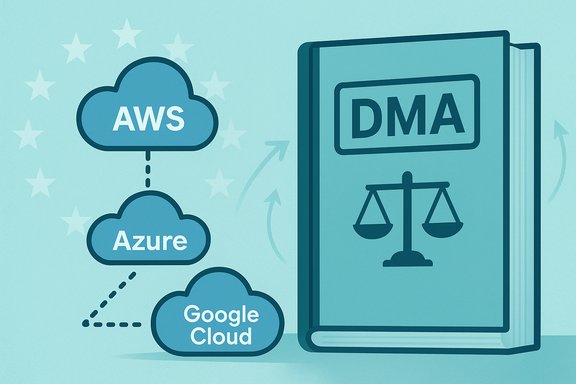
Weeks after Google’s complaint was first filed, European regulators reframed the line of inquiry themselves: the European Commission announced a market investigation into cloud computing services under the Digital Markets Act (DMA), including probes into whether the two largest cloud players should be designated as “gatekeepers” and whether structural features of the cloud sector reinforce market concentration.
Google’s withdrawal comes after that regulatory pivot — the company publicly said it was pulling its complaint “in light of the recent announcement that the Commission will assess problematic practices affecting the cloud sector under a separate process.” The withdrawal does not mean Google has abandoned its core arguments; the company said it still stands by the concerns it had raised and intends to continue advocating for openness and choice in cloud services.
The probe has three distinct strands:
It’s important to note that some quantitative claims in the public debate are estimates. For example, industry‑level calculations of annual licensing “penalties” for European customers depend on methodology and specific assumptions about customer deployment patterns and licensing choices. Those numbers should be treated as indicative rather than definitive; they reflect real concerns but are not incontrovertible single‑point measurements.
Key elements of that settlement included:
For enterprises, the immediate takeaway is to audit contractual dependencies and cloud architectures while monitoring regulatory developments closely. For cloud providers, the path forward requires balancing legitimate commercial rules with a growing legal expectation that infrastructure markets remain open and contestable.
The Commission’s probe will take time — possibly a year or more — and it will reshape the cloud competitive landscape either through targeted remedies, gatekeeper obligations, or a blend of regulatory and enforcement tools. In that sense, Google’s tactical withdrawal may be just a pause before a much larger structural conversation about who controls the cloud and how choice, portability, and competition can be preserved in a world built on hyperscale platforms.
Source: TyN Magazine Google drops EU antitrust complaint against Microsoft - TyN Magazine
 Background
The complaint that Google filed with EU authorities accused Microsoft of using its dominant software licensing and contractual terms to lock customers into Microsoft Azure, making it commercially and technically harder for enterprises to move workloads to competing cloud providers. Google’s cloud unit framed the complaint as a way to “give voice” to customers and partners concerned about restrictive licensing and alleged steep penalties for running Microsoft software on non‑Azure platforms.In parallel, a separate and earlier settlement between Microsoft and a European cloud industry trade body produced concessions intended to ease those exact concerns for a subset of European cloud providers. That settlement, which included commitments on pay‑as‑you‑go licensing and other remedies, was quantified in the low tens of millions of euros and prompted industry debate about whether private deals can sufficiently address sector‑wide competition issues.
Weeks after Google’s complaint was first filed, European regulators reframed the line of inquiry themselves: the European Commission announced a market investigation into cloud computing services under the Digital Markets Act (DMA), including probes into whether the two largest cloud players should be designated as “gatekeepers” and whether structural features of the cloud sector reinforce market concentration.
Google’s withdrawal comes after that regulatory pivot — the company publicly said it was pulling its complaint “in light of the recent announcement that the Commission will assess problematic practices affecting the cloud sector under a separate process.” The withdrawal does not mean Google has abandoned its core arguments; the company said it still stands by the concerns it had raised and intends to continue advocating for openness and choice in cloud services.
Why the EU probe matters: context and scope
What regulators are asking
The Commission’s market investigations are explicitly focused on whether structural attributes of cloud markets — such as interoperability barriers, data access and portability issues, tying and bundling of services, and imbalanced contractual conditions — are creating self‑reinforcing advantages for the largest providers.The probe has three distinct strands:
- Two market investigations will evaluate whether the cloud services offered by Amazon and Microsoft functionally act as important gateways between businesses and consumers and therefore should be designated as gatekeepers under the DMA.
- A broader investigation will assess if the DMA’s current obligations can effectively address practices that limit competitiveness and fairness in the cloud sector.
Why gatekeeper designation matters
If a cloud provider is designated a gatekeeper under the DMA, it faces a set of ex ante obligations meant to prevent anti‑competitive behavior. Those obligations are designed to:- Prevent self‑preferencing and unfair tying of services.
- Ensure minimum levels of interoperability and data portability for business users.
- Impose transparency requirements around platform rules and business terms.
- Restrict the use of sensitive data gathered from business customers.
The players and the market picture
Market shares and dynamics
The cloud market remains concentrated at the top. The incumbents hold very large shares of global infrastructure cloud, with the largest hyperscalers collectively commanding most new enterprise cloud deployments. Market share estimates put Amazon Web Services at roughly three tenths of the market, Microsoft in the low‑to‑mid twenties percent range, and Google Cloud trailing in the low‑teens. These figures vary slightly by geography and by how services are categorized, but the broad hierarchy is a persistent feature of the market.Competing strategies
Each major cloud vendor has worked to entrench its position through product breadth, customer lock‑in mechanisms, and platform ecosystems:- Amazon Web Services (AWS) has historically led on breadth of services and enterprise adoption.
- Microsoft Azure leverages a massive installed base of enterprise software (Windows Server, Office, SQL Server) and a large catalogue of enterprise contracts.
- Google Cloud Platform (GCP) emphasizes open tooling, data‑centric capabilities, and multi‑cloud portability — and was the complainant in this case.
What Google alleged — and what is verified
Google’s formal complaint centered on three core claims:- That Microsoft’s licensing terms and certain contractual conditions make it significantly more expensive or operationally difficult for customers to run Microsoft workloads on competing clouds.
- That customers face substantial financial penalties if they shift workloads away from Azure — a figure that was described in some industry analyses as up to a substantial sum annually across the market.
- That these practices contribute to market concentration and harm competition, innovation, and customer choice.
It’s important to note that some quantitative claims in the public debate are estimates. For example, industry‑level calculations of annual licensing “penalties” for European customers depend on methodology and specific assumptions about customer deployment patterns and licensing choices. Those numbers should be treated as indicative rather than definitive; they reflect real concerns but are not incontrovertible single‑point measurements.
Microsoft’s response and the CISPE settlement
Microsoft has publicly rejected the broadest accusations of anti‑competitive intent. The company highlights the settlement with a prominent European cloud trade association as evidence that many of the most pressing commercial concerns were addressed at the negotiation table.Key elements of that settlement included:
- Commitments to enable certain licensing models (including pay‑as‑you‑go variants) for participating cloud providers.
- New or enhanced product offerings aimed at giving European cloud providers features comparable to what Azure customers enjoy.
- A mechanism for monitoring and reviewing Microsoft’s compliance with the commitments over an agreed timeframe.
Strategic reading: why did Google withdraw?
From a strategic standpoint, Google’s withdrawal of the formal complaint can be read in several complementary ways:- Tactical consolidation of leverage — by deferring to a Commission‑led market probe, Google removes the risk of duplicative processes and positions itself to influence a systemic inquiry that could yield broader remedies than a firm‑level antitrust case.
- Recognition of shifting regulatory terrain — the DMA‑led market investigations are specifically aimed at platform structural issues. Google’s team may have judged that a DMA process has a higher probability of producing enforceable, market‑wide rules than an isolated antitrust complaint.
- Reputational signalling — withdrawing the complaint but reiterating the same concerns allows Google to maintain its public advocacy for openness while letting the Commission carry the political burden of any intervention.
- Practical acceptance of partial remedies — Microsoft’s settlement with the trade body removed some of Google’s near‑term leverage, and the company may have concluded it would not benefit from a parallel process that could be dismissed as redundant.
Regulatory pathways and likely outcomes
The Commission’s market investigations open several possible trajectories. These outcomes are not mutually exclusive, and multiple measures could follow in parallel:- No gatekeeper designation, but policy remedies — regulators could conclude the DMA thresholds for automatic designation are not met but still identify structural concerns that warrant new regulatory guidance or competition remedies.
- Gatekeeper designation for cloud services — the Commission could declare that Azure or AWS qualify as de facto gatekeepers for cloud services, imposing DMA obligations that force changes to contractual terms, interoperability, and data portability.
- Sector‑wide transparency and monitoring obligations — regulators could require enhanced disclosure of contractual terms and pricing, plus the establishment of independent monitoring mechanisms to ensure compliance.
- Antitrust enforcement actions — if specific practices are found to have unlawfully harmed competition, the Commission could launch targeted antitrust cases against involved firms, separate from DMA remedies.
What this means for customers and partners
Immediate effects
For enterprise customers and cloud partners, the shift from private litigation to regulator‑led probes results in a more centralized, potentially durable process. Short‑term commercial relationships may remain unchanged during the investigation, but vendors that rely on Microsoft software in multi‑cloud architectures should remain vigilant about contractual terms and migration costs.Practical implications
- Procurement and contract review: Customers should review existing licensing and migration clauses, especially around indemnities, audit rights, and cross‑billing practices.
- Multi‑cloud planning: Organizations with multi‑cloud ambitions should examine technical portability, Identity and Access Management (IAM) dependencies, and data residency considerations, since these are areas likely under regulatory scrutiny.
- Negotiation leverage: Smaller cloud providers may gain negotiating leverage if regulators require broader licensing access or impose interoperability obligations on gatekeepers.
Broader market and policy implications
Competition policy meets infrastructure policy
The Commission’s choice to investigate cloud markets under the DMA is notable because the DMA was principally designed for platforms operating as digital gatekeepers facing consumer audiences. Extending its remit — or applying its conceptual tools — to infrastructure markets like cloud signals a new regulatory willingness to treat foundational infrastructure as a site for ex‑ante rules.Europe’s cloud sovereignty and AI ambitions
Cloud services are the backbone of contemporary AI development. Any regulatory changes that make cloud markets more open, or that push hyperscalers to honor interoperability, could accelerate adoption of alternative clouds and local sovereign stacks. The Commission’s inquiry, therefore, has strategic implications for European sovereignty in data and AI.Risk of fragmentation or regulatory overreach
There are countervailing risks. Heavy‑handed obligations could:- Raise costs for smaller providers if compliance burdens increase.
- Create fragmentation if national exceptions proliferate.
- Slow innovation if platform vendors must rewrite core platform behaviors and integrations.
Strengths and weaknesses of the current approach
Strengths
- Systemic focus: A regulator‑led probe can examine market structure holistically and provide remedies that work across the entire sector.
- Scope for durable remedies: DMA obligations, if applied, can create structural, long‑lasting changes to market conduct.
- Clarity for customers: A regulatory decision — positive or negative — reduces legal uncertainty and sets a public benchmark for acceptable cloud contracting.
Weaknesses and risks
- Complex technical realities: Cloud interoperability is technically complex; regulatory prescriptions that lack engineering nuance risk unintended consequences.
- Selective private settlements: Private agreements with subsets of providers can create perceptions of back‑room deals that do not solve market‑wide issues.
- Enforcement challenges: DMA enforcement and compliance monitoring are resource‑intensive and may generate prolonged legal contests.
Key uncertainties and unverifiable claims
Several contested or hard‑to‑verify items remain central to the debate:- Aggregate licensing cost estimates for customers are model‑dependent and should be treated as indicative rather than definitive.
- Individual pricing practices (for example, claims about multi‑hundred‑percentage markups on running specific software outside Azure) are allegations that require careful contractual audit to confirm on a per‑customer basis.
- Future regulatory remedies are uncertain: whether the Commission will pursue gatekeeper designations, sectoral guidance, or antitrust enforcement remains the central open question.
What to watch next
- The Commission’s information requests — who receives them, and what documents and contracts are sought, will indicate the probe’s direction.
- Responses from Microsoft and other cloud providers — public commitments or newly announced product programs will signal how vendors will adapt.
- Industry reactions — statements by cloud customers, trade bodies, and competitor providers will shape the political and public policy environment.
- Legal challenges — any eventual gatekeeper designation or formal antitrust action will plausibly be followed by judicial review.
Conclusion
Google’s withdrawal of its EU complaint against Microsoft does not mark the end of scrutiny over cloud market conduct — it effectively hands the baton to regulators and reframes the fight as a systemic question about how infrastructure platforms should be governed in the era of cloud and AI. The European Commission’s decision to examine cloud services under the Digital Markets Act signals a willingness to apply platform rules to foundational infrastructure, and that could yield far‑reaching changes to licensing practices, interoperability norms, and contractual fairness.For enterprises, the immediate takeaway is to audit contractual dependencies and cloud architectures while monitoring regulatory developments closely. For cloud providers, the path forward requires balancing legitimate commercial rules with a growing legal expectation that infrastructure markets remain open and contestable.
The Commission’s probe will take time — possibly a year or more — and it will reshape the cloud competitive landscape either through targeted remedies, gatekeeper obligations, or a blend of regulatory and enforcement tools. In that sense, Google’s tactical withdrawal may be just a pause before a much larger structural conversation about who controls the cloud and how choice, portability, and competition can be preserved in a world built on hyperscale platforms.
Source: TyN Magazine Google drops EU antitrust complaint against Microsoft - TyN Magazine
