

The Federal Trade Commission has quietly escalated a wide-ranging antitrust inquiry into Microsoft, issuing civil investigative demands to multiple rivals to determine whether the software giant’s cloud licensing, interoperability rules and product-bundling practices unfairly lock customers into Microsoft’s Azure ecosystem and extend its dominance into artificial intelligence services. ([news.bloomberglaw.omberglaw.com/artificial-intelligence/ftc-ratchets-up-microsoft-probe-queries-rivals-on-cloud-ai)
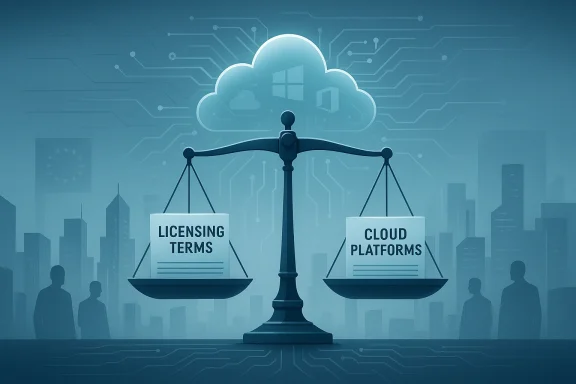
Microsoft’s position at the intersection of desktop operating systems, productivity software and cloud infrastructure has long attracted regulatory attention. Today’s inquiry centers on three overlapping concerns: whether Microsoft’s licensing and technical rules disadvantage rival cloud platforms; whether bundling of AI, security and identity features into Windows and Office forecloses competition; and whether Microsoft’s investments and commercial ties to AI labs like OpenAI create an unfair edge in the emerging AI market.
This probe builds on a chain of regulatory activity across jurisdictions: formal complaints and investigations in Europe (including a high-profile complaint from Google), a UK Competition and Markets Authority (CMA) review of cloud-market dynamics, and prior requests from the FTC about Microsoft’s AI operations and dealings with OpenAI. Those international inquiries and an earlier settlement with a European cloud trade group form the broader context for Washington’s renewed scrutiny.
Sources reporting on the current inquiry say the FTC’s recent CIDs were delivered to at least six companies that compete with Microsoft in business software and cloud computing and probe matters including:
Opponents argue that licensing language and price schedules introduced in recent years raise the out‑of‑pocket cost for customers who run Microsoft workloads on non‑Azure infrastructure. Global cloud rivals and some trade groups have said those mechanics translate into a compliance or switching “tax” that is not justified by technical constraints. The CMA and complainants have framed these differences as a competitive barrier.
Microsoft counters that some interoperability differences derive from genuine technical distinctions and from security-driven design choices. The company has also said it has modified policies in response to complaints and has negotiated arrangements with European cloud providers to ease multi-cloud deployment. Those changes and agreements factor into how regulators judge whether behavior is anti‑competitive or simply business‑oriented product design.
Investigators are seeking to understand both the commercial incentives (for example, loyalty driven by integrated Copilot/AI features) and the technical paths (APIs, platform-level hooks, licensing triggers) that make those features easier to use inside Microsoft’s platform and harder to replicate or substitute when a customer migrates workloads to another cloud.
European regulators have already probed those 2019 changes, and many of the questions contained in the FTC’s demands reportedly echo the UK’s earlier work. The trans‑Atlantic alignment of investigatory threads strengthens the factual record regulators can assemble, because similar complaints and documentary evidence arise in different markets.
Microsoft responded to some of these pressures with targeted policy changes and a negotiated settlement with a group of European cloud providers that produced concessions intended to help smaller providers host Microsoft workloads more cost‑effectively. Those changes are material in any US assessment because they show both remedial willingness and the possibility that Microsoft’s earlier practices were responsive to regulatory attention rather than irreversible design choices.
The case’s strengths are the cross‑jurisdictional corroboration and the tangible customer pain points documented by rivals and trade bodies. The weaknesses are legal complexity, genuine technical justifications Microsoft can marshal, and the political uncertainty that accompanies agency leadership changes. For enterprises, the practical fallout will hinge on whether regulators secure enforceable remedies that reduce switching costs and make competing clouds more viable without eroding legitimate technical integration.
Regulators and market participants alike must now translate dense contractual and technical evidence into a coherent legal narrative — a process that will determine whether the next chapter of cloud competition is governed by market forces, negotiated remedies, or litigation that clarifies the rules for the software‑defined future.
Conclusion: The FTC’s intensified inquiry is not simply a regulatory spectacle — it’s a consequential probe with the potential to reshape enterprise cloud economics, the business models of AI vendors, and the balance between integration and interoperability in the platforms that underpin modern computing.
Source: News Ghana https://www.newsghana.com.gh/us-regulators-intensify-microsoft-antitrust-probe-over-cloud-practices/
 Background
Microsoft’s position at the intersection of desktop operating systems, productivity software and cloud infrastructure has long attracted regulatory attention. Today’s inquiry centers on three overlapping concerns: whether Microsoft’s licensing and technical rules disadvantage rival cloud platforms; whether bundling of AI, security and identity features into Windows and Office forecloses competition; and whether Microsoft’s investments and commercial ties to AI labs like OpenAI create an unfair edge in the emerging AI market.This probe builds on a chain of regulatory activity across jurisdictions: formal complaints and investigations in Europe (including a high-profile complaint from Google), a UK Competition and Markets Authority (CMA) review of cloud-market dynamics, and prior requests from the FTC about Microsoft’s AI operations and dealings with OpenAI. Those international inquiries and an earlier settlement with a European cloud trade group form the broader context for Washington’s renewed scrutiny.
What regulators are asking — civil investigative demands, explained
Civil investigative demands (CIDs) are powerful fact-gathering tools the FTC uses to compel documents and testimony during an investigation. They are not charges or enforcement actions, but they do substantially raise the stakes by forcing market participants to produce internal records and answer detailed questions about business practices.Sources reporting on the current inquiry say the FTC’s recent CIDs were delivered to at least six companies that compete with Microsoft in business software and cloud computing and probe matters including:
- Microsoft’s cloud licensing terms and fee schedules, particularly the rules that govern how Windows Server and Office are licensed when deployed on non-Microsoft clouds.
- Product bundling and technical integration, especially the embedding of AI features, identity and security tools into Windows and Office products.
- Interoperability limitations — whether Microsoft’s policies or technical choices make it harder to run Microsoft workloads on rivals’ clouds, or raise the cost of doing so.
Timeline and institutional context
- November 2024 — Sources say the FTC opened the inquiry during the final months of the prior administration, requesting extensive information about Microsoft’s AI and cloud strategies going back several years. That initial stage included questions about AI model training costs, data-center capacity and licensing.
- Throughout 2024–2025 — European regulators and trade bodies pursued parallel lines of inquiry. Google filed formal complaints with EU authorities; the UK’s CMA examined cloud market structure and licensing practice; and Microsoft reached a settlement with a European cloud providers’ group (CISPE) that produced concessions aimed at easing access for smaller providers.
- January 20, 2025 — Leadership at the FTC changed when Andrew N. Ferguson was designated chair of the agency. The inquiry that began under the prior FTC leadership has continued under the new chair. The agency’s personnel changes add a political and strategic angle to how the case may evolve.
The core factual claims under scrutiny
Licensing differentials and the “Azure discount” allegation
One of the central factual questions is whether Microsoft’s licensing terms effectively make Windows Server, SQL Server and other Microsoft products cheaper to run on Azure than on competing clouds — and whether those price differentials serve as a de facto lock-in.Opponents argue that licensing language and price schedules introduced in recent years raise the out‑of‑pocket cost for customers who run Microsoft workloads on non‑Azure infrastructure. Global cloud rivals and some trade groups have said those mechanics translate into a compliance or switching “tax” that is not justified by technical constraints. The CMA and complainants have framed these differences as a competitive barrier.
Microsoft counters that some interoperability differences derive from genuine technical distinctions and from security-driven design choices. The company has also said it has modified policies in response to complaints and has negotiated arrangements with European cloud providers to ease multi-cloud deployment. Those changes and agreements factor into how regulators judge whether behavior is anti‑competitive or simply business‑oriented product design.
Bundling of AI and security features into core software
Regulators are also asking whether Microsoft’s strategy to bundle AI, identity and security tools into Windows, Office and cloud services effectively forecloses rivals that supply analogous capabilities. The question is not whether integration exists — integration is often a product virtue — but whether Microsoft’s pricing, licensing or compatibility choices convert integration into exclusionary conduct.Investigators are seeking to understand both the commercial incentives (for example, loyalty driven by integrated Copilot/AI features) and the technical paths (APIs, platform-level hooks, licensing triggers) that make those features easier to use inside Microsoft’s platform and harder to replicate or substitute when a customer migrates workloads to another cloud.
Ties to OpenAI and the competitive landscape for foundational models
Microsoft’s deep commercial relationship with OpenAI, often characterized in reporting as a multi‑billion‑dollar investment and exclusive cloud partnership, is a third vector of competitive concern. Regulators have asked detailed questions about Microsoft’s investments, the economics of OpenAI model training on Azure and whether exclusive or preferential arrangements with AI model owners skew market access for other cloud providers and software vendors. Estimates of Microsoft’s cumulative investment into OpenAI since 2019 are commonly reported at roughly $13 billion or more; that number appears in regulatory filings and earnings disclosures and has been widely cited in press coverage.Why the 2019 licensing changes matter
In 2019 Microsoft updated licensing rules that, according to critics, introduced complexity and new conditions affecting how customers can run Windows Server and SQL Server on third‑party clouds. That vintage is significant because it marks a visible shift in how Microsoft tied licenses and cloud consumption together — the sort of commercial architecture that lawyers and economists study when assessing exclusionary effects.European regulators have already probed those 2019 changes, and many of the questions contained in the FTC’s demands reportedly echo the UK’s earlier work. The trans‑Atlantic alignment of investigatory threads strengthens the factual record regulators can assemble, because similar complaints and documentary evidence arise in different markets.
International pressure: EU and UK actions that shaped the landscape
The current US probe did not arise in a vacuum. In 2024 Google filed an antitrust complaint with EU authorities accusing Microsoft of using licensing to stifle cloud competition; the complaint alleged that customers faced heavy penalties or operational hurdles when moving Microsoft workloads to rival clouds. The UK’s CMA similarly found that Microsoft (and Amazon) had market positions and practices that risked restricting competition in the cloud market. Those findings and filings gave regulators concrete documentary leads and bolstered the case for deeper fact‑gathering in the US.Microsoft responded to some of these pressures with targeted policy changes and a negotiated settlement with a group of European cloud providers that produced concessions intended to help smaller providers host Microsoft workloads more cost‑effectively. Those changes are material in any US assessment because they show both remedial willingness and the possibility that Microsoft’s earlier practices were responsive to regulatory attention rather than irreversible design choices.
Legal theory: what would regulators need to prove?
Antitrust enforcement in cases involving platform companies typically asks two questions:- Does the defendant hold market power in a relevant market? For Microsoft the relevant markets under debate could include desktop productivity suites, enterprise operating systems, infrastructure cloud services, and increasingly, foundational AI models and AI‑enabled productivity features.
- Has the defendant taken exclusionary or anticompetitive actions that harm competition and consumers in those markets? This requires showing that the conduct makes entry or expansion for rivals materially harder, raises costs for customers in a non‑procompetitive way, or results in market outcomes (higher prices, less innovation, less choice) that reduce consumer welfare.
Strengths of the reguoordinated international scrutiny: Parallel complaints and findings from the CMA and EU bodies create independent corroboration of the same problematic facts (pricing differentials, switching costs). Those independent lines of inquiry make regulators’ casework stronger and accelerate document discovery.
- Documentary evidence from customers and rivals: Civil investigative demands to multiple independent companies can produce contemporaneous documents about contract negotiations, pricing comparisons and the operational impact of Microsoft’s policies — which are often more persuasive than theoretical arguments.
- A clear consumer‑facing narrative: Lock‑in and higher costs for customers who want to move to alternative clouds is an understandable harm that resonates beyond academic antitrust debates.
Weaknesses and legal risks for regulators
- Technical explanations and security justifications: Microsoft can plausibly argue that some interoperability gaps are driven by legitimate technical differences, security requirements, or regulatory constraints, not an intent to exclude rivals.
- Remedies complexity: Even if abuse is proven, ordering structural remedies (like forcing unbundling) is politically fraught and legally challenging. Behavioral remedies (e.g., changing license terms) are easier to craft but harder to police over time.
- Changing leadership at the FTC: Political shifts and leadership turnover at the FTC can alter enforcement priorities and trial strategy. The agency’s capacity to bring a sustained, high‑stakes case could be affected by changes at the top and by judicial scrutiny.
What this means for enterprise IT and cloud customers
For IT leaders the investigation raises immediate and practical questions:- Contract diligence: Enterprises should review Microsoft licensing terms and their cloud‑provider contracts to understand termination and migration costs. Short‑term planning should include explicit cost models comparing Azure and third‑party cloud options for Microsoft workloads.
- Multi‑cloud and contingency planning: A renewed regulatory focus on interoperability underscores the value of designing workloads to be portable where feasible and of documenting dependencies that could create vendor lock‑in.
- Security vs. portability tradeoffs: Customers must balance the benefits of integrated security controls provided by a single vendor against the potential risk of reduced bargaining power. Enterprises should demand clear interoperability guarantees and evaluate the operational impact of any vendor‑specific features.
- Procurement leverage: Large customers and public sector organizations may gain negotiating leverage because regulators are scrutinizing the practices that produced previous lock‑in effects. But leverage varies by size and sector: small and midsize businesses often lack the bargaining power of large enterprises.
Potential industry consequences
An adverse regulatory outcome could reshape cloud market economics in several ways:- Pricing and licensing reform: Changes to licensing rules could reduce the effective price gap between Azure and other clouds for Microsoft workloads, making multi‑cloud strategies more economically viable.
- Unbundling or interoperability mandates: If regulators require Microsoft to make APIs, data flows or feature sets available under non‑discriminatory terms, rivals could more easily offer competing AI or security features.
- Competitive rebalancing: A remediation that reduces lock‑in would likely increase opportunities for Google Cloud, AWS and specialized cloud providers — particularly in regions where smaller European cloud vendors have argued they were disadvantaged.
- Investment reallocation: If Microsoft’s exclusive ties to AI labs are limited or if preferential commercial arrangements are constrained, tech firms may seek other partnership models or invest more in internally developed foundation models.
Risks and unintended consequences
Regulatory interventions carry collateral risks. Heavy‑handed remedies could:- Fragment product integration, forcing enterprises to rebuild integration that Microsoft currently provides as convenience and causing short‑term productivity losses.
- Increase compliance and contracting complexity across the industry if regulators impose rigid rules that do not account for technical nuance.
- Create global regulatory divergence if US, EU and UK remedies differ — which would complicate operations for multinational customers and software vendors.
What toal milestones
- Document productions and witness interviews: The next phase will generate factual firepower; Bloomberg and others report that CIDs were already distributed, so expect internal disclosures and third‑party responses to appear in regulatory records over the coming months.
- Formal enforcement decisions or consent negotiations: If the FTC finds probable cause for unlawful conduct, it can seek remedies in federal court; otherwise the agency may negotiate changes without litigation. Outcomes could range from modified license commitments to injunctive relief or negotiated consent decrees.
- Parallel actions in Europe and the UK: CMA and EU progress may influence US calculus. A coordinated remedy across jurisdictions would be more disruptive to Microsoft’s current commercial posture than a single‑market fix.
Critical takeaways and newsroom analysis
- The FTC’s use of civil investigative demands to multiple firms signals a methodical, documentary-focused inquiry rather than an immediate move to litigation. This is the classic pattern for building a complex, multi‑market case.
- Regulators have plausible, evidence‑oriented grounds to probe Microsoft’s licensing and bundling practices because similar facts already produced friction and formal complaints in Europe. Multiple jurisdictions have already captured customer testimony and comparative pricing data that will be relevant.
- Microsoft’s commercial relationship with OpenAI and the scale of its Azure investments create a layered competition question that straddles cloud infrastructure, software ecosystems and the nascent market for foundation models. That complexity magnifies the legal and economic analysis regulators must undertake.
- For customers, the prudent immediate step is defensive: audit licensing exposures, formalize multi‑cloud contingency plans and seek contractual clarity on portability and interoperability. The regulatory process will be prolonged; companies should prepare for a market environment that could shift materially depending on the FTC’s findings and any resulting remedies.
Final assessment
This investigation marks a consequential escalation in how antitrust authorities are approaching the cloud and AI era. The FTC’s document demands, informed by parallel European work, are designed to illuminate whether a century‑old enforcement framework can adapt to the hybrid reality where operating systems, productivity software, cloud infrastructure and AI models are commercially intertwined.The case’s strengths are the cross‑jurisdictional corroboration and the tangible customer pain points documented by rivals and trade bodies. The weaknesses are legal complexity, genuine technical justifications Microsoft can marshal, and the political uncertainty that accompanies agency leadership changes. For enterprises, the practical fallout will hinge on whether regulators secure enforceable remedies that reduce switching costs and make competing clouds more viable without eroding legitimate technical integration.
Regulators and market participants alike must now translate dense contractual and technical evidence into a coherent legal narrative — a process that will determine whether the next chapter of cloud competition is governed by market forces, negotiated remedies, or litigation that clarifies the rules for the software‑defined future.
Conclusion: The FTC’s intensified inquiry is not simply a regulatory spectacle — it’s a consequential probe with the potential to reshape enterprise cloud economics, the business models of AI vendors, and the balance between integration and interoperability in the platforms that underpin modern computing.
Source: News Ghana https://www.newsghana.com.gh/us-regulators-intensify-microsoft-antitrust-probe-over-cloud-practices/
