

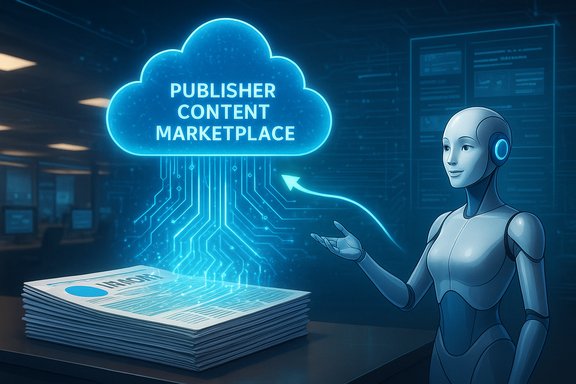
Gannett has quietly expanded its AI playbook, announcing a licensing alignment with Microsoft intended to feed publisher content into Microsoft's emerging Publisher Content Marketplace — a move that positions the USA TODAY Network to monetize AI-driven uses of its journalism while tying Gannett into the core content supply chain for Copilot-style assistants.
Background
Gannett at a glanceGannett Co., Inc. is the parent of the USA TODAY Network and a major U.S. regional-media operator, with more than 250 daily newspapers and a broad portfolio of digital-marketing services and brands. The company has repositioned over the last several years toward digital subscriptions, local advertising products, and strategic licensing of its content to third-party platforms.
Why publishers and platforms are striking licensing deals now
Platform makers and AI vendors are rapidly moving from ad hoc scraping of web content toward negotiated licensing arrangements with publishers. Microsoft has signaled that it wants to offer publishers a structured route to monetize their journalism for AI features — an initiative that Microsoft describes as part of a broader Publisher Content Marketplace and which has already produced several content licensing pilots and paid integrations. Microsoft’s recent publisher agreements and the broader industry trend demonstrate both product-level motivations (improving Copilot answers with vetted sources) and legal/commercial incentives (reducing copyright friction and litigation risk). Where Gannett’s announcement fits
Gannett’s reported licensing arrangement with Microsoft — disclosed by company leadership in investor communications — appears timed to coincide with Microsoft’s push to onboard selected U.S. publishers for the Publisher Content Marketplace. The arrangement was described publicly by Gannett’s management during its quarterly updates, though contract-level financial terms and usage specifics were not disclosed in those announcements.
What the licensing agreement (as reported) actually says
Summary of the public claims
- Gannett confirmed an AI licensing arrangement with Microsoft tied to the Publisher Content Marketplace initiative; the company framed the deal as part of a multi-pronged content-monetization strategy.
- Microsoft’s Copilot family is expected to be the initial consumer of licensed publisher content, with the marketplace concept intended to bring other AI participants on board over time.
- Gannett also continues to sign agreements with other AI platforms (for example, a separate, publicized licensing deal with Perplexity for USA TODAY Network content), indicating a multi-partner approach rather than exclusive reliance on a single buyer.
What is not yet public and should be treated cautiously
- Fee structure: public comments and filings do not disclose headline fees, revenue shares, or minimum guarantees tied to the Microsoft arrangement. Any stated dollar amounts in market commentary are therefore speculative unless Gannett or Microsoft publishes them.
- Scope of rights: it is not clear from public remarks whether the license covers display-only excerpting, retrieval and summarization for answer-generation, or training/fine-tuning usage for underlying models — each represents materially different value and risk profiles for publishers and for Microsoft’s products.
Financial context: why Gannett needs these deals
Current financial snapshot (discrepancies and verification)
Gannett’s financial profile shows a company still resolving legacy balance-sheet leverage while attempting to grow digital revenue streams. Public financial-data aggregators report the company’s market capitalization in the low hundreds of millions and show valuation ratios that vary between data sources (P/E, P/S, P/B vary by provider and update cadence). For example, independent data providers report a low P/S (around 0.24–0.26) and a P/E that can appear modest depending on trailing earnings calculations. Debt metrics and leverage remain the more consequential story: several financial trackers show a high debt-to-equity ratio and historically constrained interest coverage, indicators that motivated management to highlight deleveraging progress alongside strategic licensing moves. Caveat on numbers: public market metrics vary by provider and by the precise timing of quarterly reports. Analysts should treat any single snapshot with caution and prefer the most recently filed 10-Q or 10-K for audit-backed figures. Gannett’s investor comments flagged a completed cost-reduction program that materially improved its leverage metrics in the latest quarter, and independent coverage noted debt falling below the $1 billion mark for total indebtedness in recent filings.Why licensing matters to Gannett’s top line
- Immediate revenue diversification: licensing for AI can create a new revenue channel that is not dependent on advertising market cycles or local ad sell-through rates.
- Higher-margin monetization: content licensing is typically less variable-cost intensive than local ad sales, assuming contract terms (minimums, perpetual vs. time-limited rights, indexing, etc. are favorable.
- Strategic leverage: participating in publisher marketplaces can preserve visibility for USA TODAY Network content inside high-usage assistants like Copilot and downstream consumer applications.
Strategic analysis: benefits and upside
For Gannett
- Monetization of archival and local reporting: AI when paired with differentiated local content can command a premium over generic web-scraped materials.
- Scale distribution: Copilot and Microsoft’s productivity channels reach enterprise and consumer endpoints that local sites alone do not, increasing potential audience and referral traffic when properly attributed.
- Risk mitigation vs litigation: negotiated licenses reduce the legal exposure from unauthorized training/data use and provide contractual clarity about permitted uses. Gannett’s discussions with platform buyers therefore serve both commercial and defensive goals.
For Microsoft
- Content quality and trust: licensing reputable publisher content helps Copilot return answers grounded in editorially-vetted material, improving user trust and reducing hallucination impact.
- Product differentiation: exclusive or preferred access to publisher libraries can be a competitive advantage for Copilot versus other assistants that lack similar content deals.
Broader market effects
- Marketplace dynamics: if Microsoft’s Publisher Content Marketplace scales, it creates a hosted, platform-managed channel for publishers to sell specific AI-use rights — accelerating standardization in pricing and permitted use cases.
- Competitive follow-through: other platform vendors (search engines, cloud AI providers, assistant makers) are likely to accelerate their own publisher programs, creating both pricing competition and more options for publishers.
Risks, trade-offs, and unresolved governance issues
1. Economics and opacity
Many public reports show that Microsoft and other platforms are not disclosing headline payments. That opacity leaves publishers negotiating from asymmetric information — a weaker position for smaller outlets and a structural challenge to fair-value determination. Until publishers and platforms publish comparable deal terms, market participants will find it hard to benchmark compensation.2. Editorial independence and reuse controls
Licensing content to an assistant raises editorial governance questions:- How will articles be excerpted, summarized, or transformed?
- Will publishers retain the right to control the form of derivative outputs?
- Who is responsible if a Copilot response derived from licensed content is incorrect or harms a user?
3. Training vs retrieval rights
There is a key technical and legal distinction between:- Retrieval-grounded use (the model cites and uses content at query time to construct answers), and
- Training/fine-tuning use (content is used to update model weights).
4. Concentration and platform dependence
For publishers, the commercial temptation of large platform checks must be balanced against dependence risk. Giving a dominant cloud and productivity vendor preferential access to a publisher’s archive can have long-term strategic costs if it reduces direct traffic or weakens the publisher’s negotiating power for other partners.5. Consumer transparency and UX
AI answers that use licensed publisher content need clear provenance so users can evaluate the reliability and context of an answer. If Copilot surfaces “facts” without clear links back to the original reporting or without timestamps and versioning, trust gains from using publisher content will be undermined. Independent reporting on other publisher deals has already made provenance a central demand from newsrooms.Technical and operational implications for IT teams and Windows admins
What to expect inside Microsoft 365 and Copilot
- Increasing presence of “sourced” answers: Copilot features will likely display or embed publisher-sourced passages in consumer and enterprise contexts, especially for facts and explainers where the publisher license applies.
- Governance knobs on retrieval: enterprises should expect (or require) administrative controls that allow disabling external content retrieval for sensitive workspaces or limiting content sources for internal compliance. IT leaders should map Copilot configuration options to corporate recordkeeping, IP and data-retention policies.
- Contractual attention to non-training clauses: organizations that repurpose Copilot outputs into downstream models or archives should verify platform contracts and publisher license terms to avoid unintentional re-use that violates rights.
Practical checklist for WindowsForum IT professionals
- Inventory Copilot-enabled endpoints and document flows that will interact with external content retrieval.
- Work with procurement to add audit, provenance, and non-training clauses in any third-party licensing addendums.
- Prepare user training on provenance signals and how to verify assistant-sourced claims.
- Update DLP (data loss prevention) and record-retention rules to account for AI-generated summaries that incorporate licensed content.
What to watch next (milestones and red flags)
- Published contract terms: watch for any public filings from Gannett or Microsoft that disclose the license scope, term length, payment structure, and permitted uses. Until contractual specifics are released, financial modeling of the deal is speculative.
- Product UX for provenance: observe whether Copilot surfaces inline citations, links back to original articles, timestamps, and content snapshots — these will be practical signals of how publishers’ editorial controls are preserved.
- Competitor deals and market pricing: large comparable agreements (for example, with other major publishers) will create benchmarks that change negotiation dynamics for smaller outlets and for future renewals.
- Regulatory scrutiny: antitrust and disclosure regulators may examine bundled marketplace arrangements or exclusive access terms if they materially reshape media distribution economics.
Cross-check and verification notes
- Gannett’s management publicly referenced an AI licensing agreement with Microsoft in investor communications; this disclosure was reported by financial outlets covering Gannett’s quarterly results. The statements are traceable in the company’s earnings commentary and press reporting, but the detailed contract terms were not published at the time of those disclosures.
- Independent corroboration that Microsoft is actively paying or licensing publisher content to power Copilot-style products is published by reputable outlets and has precedent in other publisher agreements: Microsoft’s content licensing and publisher-payout experiments have been documented publicly and are consistent with the Publisher Content Marketplace narrative.
- Financial metrics for Gannett (P/E, P/S, market cap, debt ratios) differ across third-party aggregators and update with new filings and market movements. Multiple providers were consulted and show consistent themes (low P/S, substantial leverage, improving but still material debt). Where exact ratios are critical, rely on Gannett’s SEC filings for the definitive audited figures.
Bottom line: pragmatic optimism with guarded realism
Gannett’s licensing alignment with Microsoft is a strategically sensible step for a publisher seeking durable revenue beyond display advertising and local ad cycles. The deal dovetails with Microsoft’s clear product objective — improving the factual grounding and editorial provenance of Copilot — and with the industry-wide pivot toward negotiated licensing over ad hoc scraping.That said, the commercial and legal contours matter more than the headlines. The value capture for Gannett will depend on precise licensing scope (retrieval vs training), payment mechanics, renewal terms, attribution and UX guarantees, and how the arrangement affects direct audience relationships. Publishers that preserve editorial control, demand provenance and updates, and secure non-training protections where they want them will maximize both short- and long-term benefits.
For IT professionals and Windows administrators, the rise of publisher-backed content inside Copilot signals a near-term need for governance work: update Copilot configuration policies, prepare user education on provenance, and treat AI content flows as part of the organization’s compliance and DLP posture.
The Gannett–Microsoft licensing note is an important chapter in the evolving economics of journalism and AI. It is evidence that publishers can sell the unique value of verified reporting into the AI value chain — provided they negotiate with both commercial rigor and editorial safeguards. Monitoring the release of full contract terms, product-level provenance features, and comparable market agreements will be essential to judge whether these deals materially improve publisher economics or merely repackage existing value for platforms that control attention.
Source: GuruFocus Gannett (GCI) Enters AI Licensing Agreement with Microsoft
